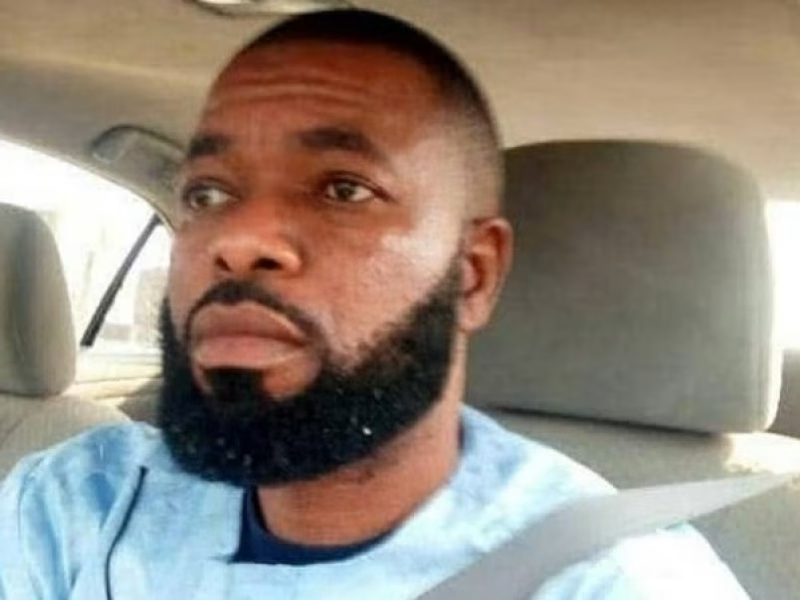
Comrade Ibrahim Ayoade’s journey as an Uber driver in Lagos began with hope and ended with hard-earned lessons-four cars lost, countless challenges faced, and a new resolve to fight for drivers’ rights.
Ayoade, now the founding Secretary of Nigeria’s e-hailing drivers’ union (AUATON), shared his story in an interview, reflecting on eight turbulent years behind the wheel. “I needed a way to support my family,” he recalled, after losing his job at Coca-Cola in 2016. Introduced to Uber by a friend, he was drawn by the promise of flexible hours and decent earnings.
But the road was never smooth. “I made three attempts and underwent several tests before I was accepted,” Ayoade said, describing a rigorous registration process that has since become more relaxed. Early on, Uber offered premium services and generous incentives. “Demand was high, and earnings were satisfactory. I enjoyed the freedom of being my own boss and the opportunity to meet new people daily.”
However, as competition increased and Nigeria’s economy worsened, things changed. More drivers joined, fares dropped, and incentives dwindled. “Things took a turn for the worse around 2020 when Uber introduced new policies that negatively impacted drivers’ incentives and benefits,” he said.
Ayoade’s greatest setbacks were personal. Over the years, he lost four cars: two were stolen and sold by drivers who disappeared abroad, one was wrecked in an accident, and another was lost to flooding in Lekki. The last car’s engine failed from wear and tear. Uber’s insurance, he said, was not enough to cover these losses.
“Unfortunately, Uber’s insurance coverage was not comprehensive enough to cover all of these losses, and I could not afford to replace the cars on my own,” Ayoade explained.
Determined to make a difference, Ayoade helped organize drivers into a union-first through WhatsApp groups, then as the National Union of Professional App-Based Transport Workers (NUPA-BTW). This union later merged with others to form the Amalgamated Union of App-based Transporters of Nigeria (AUATON), which now fights for better working conditions and policies.
“While we have made progress, we still have work to do for our members. Many drivers and I recognised the importance of collective bargaining power to negotiate with companies like Uber for improved policies and benefits,” he said.
Ayoade urges Uber to improve support for drivers, including comprehensive insurance, guaranteed minimum earnings, and transparent policies. “Ultimately, Uber should actively engage with our union and maintain integrity and compliance in addressing the current challenges we face,” he concluded.
Ayoade’s story is a stark reminder of the highs and lows of Nigeria’s e-hailing industry-and the power of collective action to drive change.


