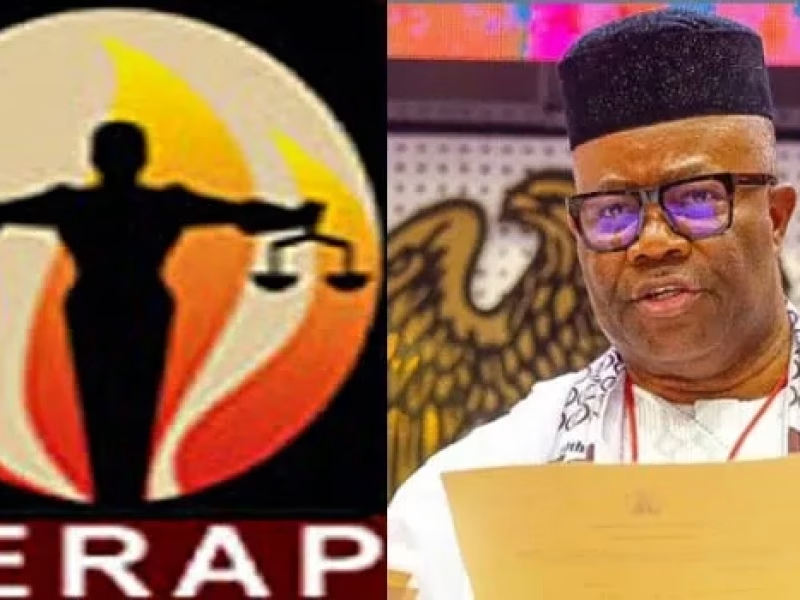
The Socio-Economic Rights and Accountability Project (SERAP) has called on Nigeria’s Senate President, Godswill Akpabio, and Speaker of the House of Representatives, Tajudeen Abbas, to withdraw a proposed amendment to the Nigeria Data Protection Act 2023. The bill, which has already passed its first and second readings in the Senate, has sparked widespread criticism for its potential to curtail digital freedoms and stifle free expression.
The proposed legislation, titled “A Bill for an Act to Amend the Nigeria Data Protection Act, 2023,” seeks to mandate social media platforms and bloggers operating in Nigeria to establish physical offices within the country’s borders. Failure to comply within 30 days could result in punitive measures, including outright bans.
In a letter dated April 12, 2025, SERAP’s Deputy Director, Kolawole Oluwadare, described the bill as “repressive” and warned that it could be used to censor dissenting voices and punish individuals or organizations critical of government policies. According to SERAP, the legislation would impose mandatory registration requirements on bloggers and force them to join recognized national associations—measures it says are incompatible with the right to freedom of expression under Nigeria’s Constitution and international human rights treaties.
“If passed, this bill would have a chilling effect on freedom of expression,” SERAP stated. “It could lead to censorship or restraint while undermining press freedom by forcing bloggers to disclose their sources.”
The group also expressed concern that the bill could be exploited by authorities to block access to major social media platforms such as Facebook, Instagram, WhatsApp, TikTok, YouTube, and X (formerly Twitter).
Beyond human rights implications, critics have highlighted the potential economic fallout of the proposed amendment. SERAP warned that requiring international tech companies to establish physical offices in Nigeria could lead many to exit the country’s digital space entirely. This would not only restrict Nigerians’ access to information but also disrupt businesses reliant on foreign digital tools and platforms.
“The proposal fails to consider the borderless nature of digital communication,” SERAP said. “It risks undermining Nigeria’s digital economy at a time when global connectivity is essential for growth.”
SERAP has vowed to challenge the bill in court if it becomes law. “Should this bill be signed into law by President Bola Tinubu, we will take appropriate legal action to ensure it is never implemented,” the organization said.
Legislative Progress and Public Backlash
The controversial bill has moved swiftly through legislative processes, passing its first two readings in the Senate. While its proponents argue that it will strengthen data protection frameworks and enhance compliance with international standards, critics see it as an attempt to reintroduce previously rejected social media regulations through a back door.


