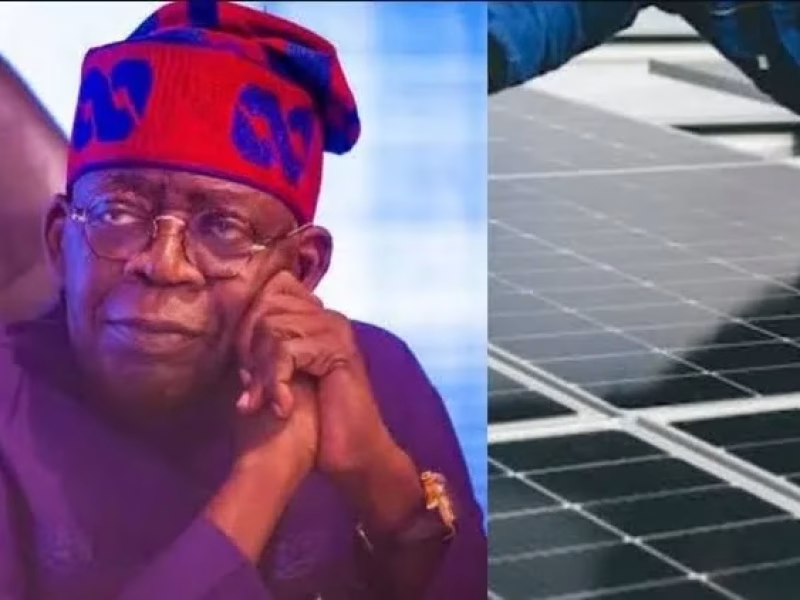
The Federal Government has justified its decision to install a ₦10 billion solar power grid at the Aso Rock Presidential Villa, describing the move as necessary to curb what it calls an “unsustainable” annual electricity bill of ₦47 billion.
The announcement was made Friday by Dr. Mustapha Abdullahi, Director-General of the Energy Commission of Nigeria (ECN), during a press briefing in Abuja. According to Abdullahi, the project-approved by President Bola Tinubu-aims to provide uninterrupted, clean energy to the seat of power, reduce the cost of governance, and lessen pressure on the national grid.
“This project will not only ensure steady power supply at the Villa but also create jobs and foster innovation among Nigerian engineers and energy experts,” Abdullahi stated.
Earlier this year, the Abuja Electricity Distribution Company (AEDC) threatened to disconnect the Presidential Villa and other government agencies over a collective ₦47.1 billion debt, with Aso Rock’s share initially reported as nearly ₦924 million. President Tinubu intervened, directing immediate settlement after a reconciliation process revealed the actual outstanding bill was ₦342 million.
Government officials argue that the solar project aligns with Tinubu’s energy diversification agenda and could attract further investment in Nigeria’s power sector. Abdullahi revealed that development partners have earmarked about $5.3 billion for grid expansion and related initiatives.
However, the decision has sparked debate among citizens and energy experts. Critics question the timing and cost of the project, especially as millions of Nigerians face high electricity tariffs and unreliable supply. Supporters, meanwhile, see it as a step toward sustainability and a model for other public institutions.


