
Lagos State’s ongoing Geographic Information System (GIS) mapping and house numbering initiatives are expected to strengthen the adoption of property technology (PropTech) solutions as the real estate sector gradually embraces digital transformation. According to Roland Igbinoba, Chief Executive Officer of PropCrowdy Ltd., during the Africa Real Estate Entrepreneurship Bootcamp (AREEB) 2026 held in Lagos, stated that improved access to reliable land and property data could accelerate innovation and investment across the sector. Igbinoba said Lagos State’s reforms, including cadastral digitisation and digital house numbering, are laying the foundation for more efficient property transactions and technology-driven real estate services. The good news is that Lagos State is actively working on improvements such as GIS mapping, cadastral digitization, and house numbering systems. These developments will support future PropTech adoption” – Igbinoba He stated that PropTech adoption in Lagos remains relatively low, rating it between two and three on a scale of 10. According to him, limited access to verified land records and incomplete digitisation of land registries continue to slow innovation in the sector. The Lagos State Government earlier launched a project to identify and formalise informal land assets estimated at about N3 trillion. Authorities said the initiative is aimed at improving land governance, increasing transparency, and expanding the formal property market. The digitised land records and automated property systems could improve transparency, reduce fraud, and attract more investment into the real estate market. They also say digital tools can lower entry barriers for investors and improve access to property financing. Igbinoba stated that technology is already increasing investment participation, with some platforms allowing entry with as little as N20,000 to N30,000. Igbinoba also said commercial lending rates of up to 35% remain unsustainable for long-term real estate development. He also warned that the absence of real-time access to land registry data limits the deployment of advanced systems such as blockchain-based property management. However, concerns about infrastructure gaps, weak policy implementation, and high financing costs continue to limit growth. Lagos State’s digital land reforms could position the state as one of Africa’s leading PropTech hubs within the next few years if implementation continues successfully. The state government has also expanded its digital reform agenda by automating building approvals through the Electronic Physical Planning Process System (EPPPS), to modernise land administration and improve efficiency in the property sector.

NIMC expands digital identity reforms to improve security, public services
The National Identity Management Commission (NIMC) says it is strengthening Nigeria’s digital identity system to improve public service delivery, enhance national security, and support the digital economy of the country. Speaking at a digital conference in Abuja themed “Building Africa’s Digital Foundations Together”, NIMC Director-General, Abisoye Coker-Odusote said the agency is expanding reforms and partnerships to build a secure and inclusive digital identity ecosystem. According to NIMC, the National Identification Number (NIN) has become central to Nigeria’s digital transformation strategy. The commission said the identity system is now being used for biometric verification, authentication, and access to government and private sector services. Coker-Odusote, represented by the Head of Infrastructure Technology and Identity Databases, Sulaiman Falade, said a presidential directive issued on April 5, 2024, instructed Ministries, Departments and Agencies (MDAs) to integrate NIN into digital services involving identity verification and data capture. She said NIMC has already established implementation structures to ensure compliance across public institutions. “The federal government’s vision is to establish a unified, secure, and transparent digital identity framework capable of supporting efficient service delivery and accountability in governance” – Coker-Odusote The commission also announced the rollout of the National Public Key Infrastructure (nPKI), designed to improve trust in digital transactions and protect citizens’ data online. The unified digital identity framework could improve access to government services, reduce fraud, strengthen national security and also support financial inclusion and digital commerce. NIMC stated that digital identity integration would help create a more connected, efficient, and resilient nation. NIMC states that its database remains secure and that no data breach has occurred. However, concerns still remain around data privacy, cybersecurity risks, and the management of citizens’ personal information. The commission said it will continue working with public and private sector stakeholders to expand Nigeria’s digital identity infrastructure and improve interoperability across services.

Airtel Africa launches $110 million share buyback programme
Airtel Africa has announced a share buyback programme worth up to $110 million, as the telecoms group seeks to return value to shareholders while maintaining investment across its African operations. In a statement signed by Group Company Secretary Simon O’Hara on May 22, the company said the programme could repurchase up to 1% of its issued share capital. Airtel Africa stated that the buyback reflects its commitment to returning value to shareholders while preserving financial flexibility to support ongoing investments across its markets. Airtel Africa operates in 14 African countries and is the continent’s third-largest wireless carrier. The company has expanded rapidly in mobile data and digital payments, driven by rising smartphone adoption and increased demand for financial inclusion services. Its mobile money division has become one of its fastest-growing business segments. According to the company’s latest financial results for the year ended March 31, 2026, mobile money generated $1.08 billion in revenue, while total group revenue rose to $6.4 billion from $4.9 billion a year earlier. The company also reported pretax profit of $1.41 billion, an increase of more than 114% year-on-year. “The programme begins today and is scheduled to run until no later than November 27, 2026, unless terminated earlier” – Airtel Africa Sunil Bharti Mittal, founder of Bharti Airtel, sees Africa as a key long-term growth market for telecoms and digital payments expansion. Stakeholders say, reducing the number of outstanding shares could improve earnings per share and strengthen investor confidence. Market attention is likely to focus on the planned Airtel Money IPO and whether the share buyback improves shareholder returns in the near term.

Nigeria launches AI platform to improve access to government services
The Nigeria government has launched an artificial intelligence-powered platform called GovGuideNigeria to simplify access to public information and government services. Minister of Communications, Innovation and Digital Economy Bosun Tijani announced the initiative on Thursday, describing it as part of efforts to improve public service delivery through digital technology. According to the government, the platform is accessible through WhatsApp and the web and supports English, Hausa, Igbo, and Yoruba languages to improve accessibility for users across the country. The government said GovGuideNigeria provides information from more than 35 federal ministries and over 60 government agencies. Officials stated that the platform aims to reduce language and information barriers, particularly for underserved and low-literacy communities. The launch is projected to expand artificial intelligence adoption, improve digital infrastructure, and strengthen technology-driven public services. The initiative also builds on previous AI projects launched by the ministry, including Nigeria’s multilingual large language model known as N-ATLAS. That project was developed to support local languages and improve inclusive AI systems. GovGuideNigeria was developed through collaboration between the National Centre for Artificial Intelligence and Robotics, Meta, and Publica. “Today, we launched GovGuideNigeria, an AI-powered platform designed to make access to government information simpler, faster, and more inclusive for every Nigerian…I appreciate the strong collaboration between NCAIR, Meta, and Publica in bringing this important initiative to life” – Tijani The platform is designed to improve transparency, simplify access to government information, and help citizens interact more efficiently with public institutions, especially in underserved communities. Experts see the initiative as a sign of growing AI adoption across Africa’s public sector and a potential model for digital governance on the continent. However, concerns about internet access, digital literacy, cybersecurity risks, and data privacy concerns may affect implementation and long-term effectiveness. Officials say the government will continue working with technology companies, startups, and industry stakeholders to develop AI governance policies and expand digital access nationwide.
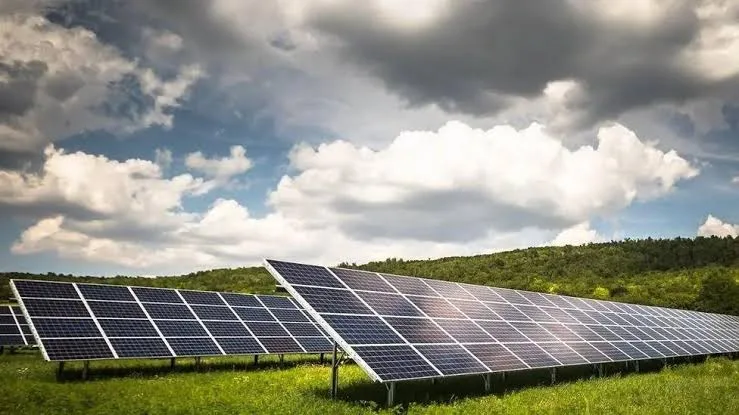
Solar energy may lead global energy supply by 2035
Solar energy is projected to become the world’s largest source of electricity by 2035, overtaking coal, oil, and natural gas, according to a new report by BloombergNEF. The report says falling solar costs and rising global electricity demand are pushing the transition toward renewable energy. However, it also warns that the expansion of artificial intelligence and data centers could keep fossil fuels relevant for decades because of their ability to provide continuous power. BloombergNEF said solar growth is being driven primarily by economics rather than government policy, with solar technology becoming affordable due to large-scale manufacturing and industrial support, particularly from China. Countries like Pakistan are already responding to energy market pressures, adding 25 gigawatts of solar power over the past two years after natural gas prices increased following Russia’s invasion of Ukraine. At the same time, electricity demand is rising due to AI systems, electric vehicles, industrial electrification, and the expansion of data centers. BloombergNEF estimates that data centers alone could drive demand for an additional 1 terawatt of utility-scale solar power, alongside major increases in natural gas and coal generation. The report forecasts that natural gas and coal could still supply 51% of additional electricity generation for data centers by 2050, despite renewable energy growth. “Tech companies and data center developers will have an outsized influence over which energy sources remain viable by mid-century” – The report Experts believe that falling solar prices and improved battery storage are making clean energy more economically competitive than fossil fuels. While others in the energy industry argue that renewable sources alone may not yet provide the reliable, around-the-clock electricity required for AI infrastructure and large-scale data centers. As a result, many operators continue to rely on natural gas and coal for stable power generation. Companies including Google are also investing in long-duration batteries and alternative energy systems to reduce fossil fuel dependence. Meanwhile, firms such as Fervo Energy and X-energy are promoting geothermal and nuclear solutions for future energy needs. BloombergNEF estimated that solar costs may fall another 30% by 2035, thereby strengthening its market position. BloombergNEF said energy independence could improve as countries expand renewable energy production and reduce reliance on imported fuels. According to the report, energy competition may likely increase on which technologies can provide both affordability and reliable electricity for fast-growing AI infrastructure. Renewable energy demand gains momentum in Africa Across Africa, the global transition toward solar energy carries major implications for electricity access, industrial growth, and digital development. Many African countries continue to face unstable power supply, rising fuel import costs, and increasing electricity demand driven by population growth and expanding digital infrastructure. Countries such as Nigeria, South Africa, Kenya, and Egypt are increasing investments in solar and renewable energy projects as governments seek alternatives to expensive fossil fuel generation and unreliable national grids. Africa’s growing fintech ecosystem, telecom networks, data centers, and AI-driven services are also increasing pressure on electricity infrastructure. According to experts renewable energy could become essential for supporting the ever expanding digital economy of the continent. They believe Africa possesses some of the world’s highest solar energy potential, yet millions of people across the continent still lack reliable electricity access. As solar technology becomes cheaper globally, African countries may likely adopt decentralized solar systems, mini-grids, and battery storage projects to improve power supply in underserved communities.

OpenAI files for IPO that could become the largest in AI history
OpenAI is preparing to confidentially file for an initial public offering (IPO) in the coming weeks, according to reports from The New York Times. The move could lead to one of the largest public offerings in the history of the artificial intelligence industry. The company behind ChatGPT is reportedly working with Goldman Sachs and Morgan Stanley on preparations for the filing. Sources told The New York Times that an IPO could occur as early as September, although the timing remains uncertain and dependent on market conditions. OpenAI has emerged as one of the most influential companies in the global AI sector since launching ChatGPT in late 2022. The San Francisco-based company was valued at approximately $730 billion following a funding round earlier this year. The expected IPO was born out of the growing interest of investors in artificial intelligence companies and preparations by several major technology firms for potential public listings. Competitors including Anthropic and SpaceX are also reportedly considering public market plans. Despite rapid revenue growth, OpenAI remains unprofitable. The company reportedly generated more than $13 billion in revenue last year but expects to spend around $115 billion over the next four years as competition intensifies. OpenAI is also facing pressure from rivals including Google, whose Gemini AI platform reportedly reached 900 million active users, matching ChatGPT’s reported monthly user base. The company recently overcame a major legal challenge after a California jury dismissed a lawsuit brought by Elon Musk, who accused OpenAI of abandoning its original nonprofit mission. Musk has said he plans to appeal the ruling. According to experts, OpenAI’s public market ambitions could accelerate AI research, expand infrastructure, and strengthen global innovation in artificial intelligence technologies. OpenAI’s potential IPO could become a defining moment for the global AI industry and broader technology market. However, fear arises that increasing commercialization may intensify concerns around AI safety, market concentration, data privacy, energy consumption, and corporate influence over emerging technologies.