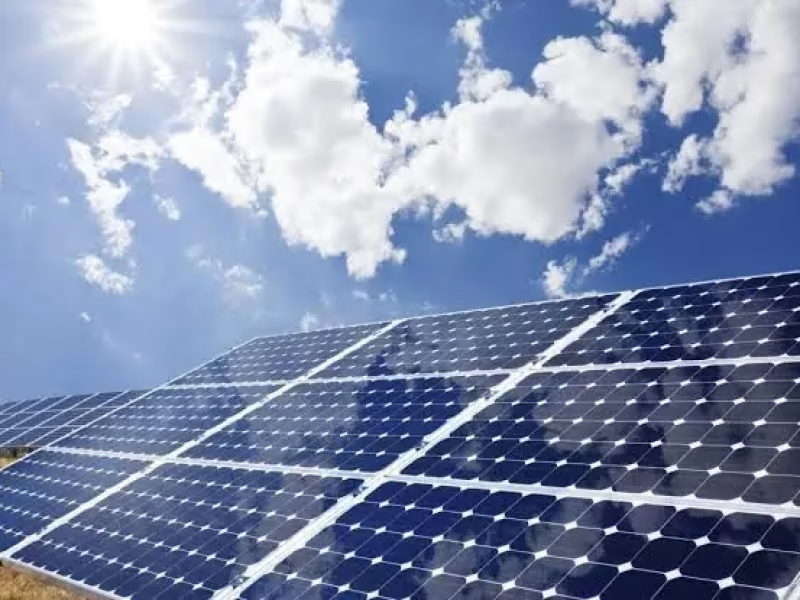
The Federal Government of Nigeria has taken a major step toward improving healthcare delivery and promoting clean energy with the commissioning of a 400-kilowatt (kW) solar power plant at Yobe State University Teaching Hospital in Damaturu.
The project, officially launched on April 14, 2025, is the first phase of a larger plan to expand the facility’s capacity to 1 megawatt (MW) in the near future. The solar installation is designed to provide reliable, round-the-clock electricity for the hospital, drastically reducing power outages that have long hampered medical services in the region.
Speaking at the commissioning ceremony, Minister of Power Chief Adebayo Adelabu, represented by the Ministry’s Permanent Secretary, Alhaji Mamuda Mamman, described the project as a strategic milestone in President Bola Ahmed Tinubu’s Renewed Hope Agenda for energy sector reform. He emphasized that the initiative is part of a broader push to decentralize energy access and promote renewable alternatives, especially in critical sectors like health and education.
“This solar power plant reaffirms our commitment to delivering sustainable and inclusive energy solutions for socioeconomic growth,” Adelabu said. “It ensures the hospital operates with reliable and clean energy for critical medical functions such as surgeries, vaccine preservation, and life-saving diagnostics.”
The new solar facility is expected to significantly cut operational costs for the hospital, which has grown from a 250-bed to a 750-bed capacity in recent years. Yobe State Governor Mai Mala Buni, represented by his deputy Alhaji Idi Gubana, praised the federal government for prioritizing the region in its renewable energy rollout, noting that the project will help the hospital better serve the community.
Dr. Muhammad Lawan Gana, Yobe’s Commissioner for Health, highlighted the impact on the Senator Mamman Ali Maternal and Child Health Complex, which houses advanced diagnostic equipment like MRI and 3D ultrasound machines. “This facility is central to our maternal and child healthcare strategy, and the solar power project will ensure continuous operation of critical equipment,” he said.
The project is also expected to create jobs in the renewable energy sector and attract private investment, as the government plans to replicate similar solar installations in hospitals, schools, and other essential public institutions across Nigeria.
The initiative aligns with the Electricity Act 2023, which encourages off-grid and decentralized energy solutions, particularly for underserved areas. The legislation also introduces incentives for private sector participation, such as Feed-in Tariffs, to accelerate the adoption of renewable energy.


