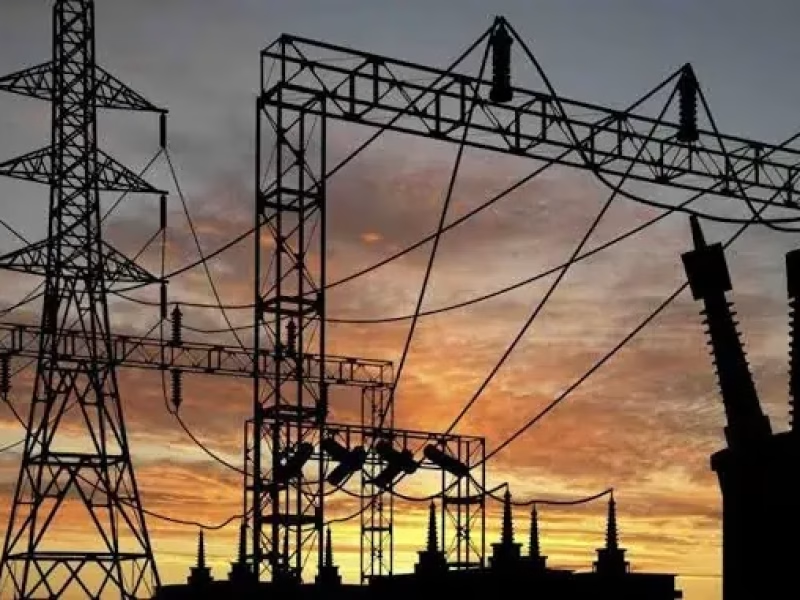
Once the beating heart of Abuja’s commercial activity, Wuse 2 is now facing a dramatic downturn as an unrelenting power crisis pushes local businesses to the brink. For the past month, salons, boutique hotels, tech startups, cafés, restaurants, and corporate offices in the district have struggled through near-total darkness, forcing owners to scale back, relocate, or shut down entirely as they grapple with skyrocketing generator costs and erratic electricity supply.
The blackout has upended daily life for business owners and workers alike. Seyi, who manages a beauty spa near Aminu Kano Crescent, described the dire situation: “We can’t afford diesel daily anymore. For every day the lights stay off, we lose customers and money. This is not sustainable”. Juliet, who left her 9-to-5 job to start a women’s clothing boutique in Wuse 2, is already considering closing shop. “I spend about N100,000 weekly on electricity. We hardly get five hours of light a day, even at the best of times, and we’re on Band A. Sometimes, for more than two straight days, we go without light. How much am I even making?” she lamented.
For many, the cost of running generators has become unmanageable, and perishable goods are spoiling as operations grind to a halt. “Businesses in Wuse 2 are dying like flies… There’s little to no electricity provision in Abuja’s commercial hub for at least a month. They can’t run fully on generators. The cost of electricity is too high for even Aso Villa, let alone small businesses,” wrote resident Fakhuus Hashim on X (formerly Twitter), echoing the frustration and despair felt across the district.
The crisis in Wuse 2 mirrors a broader national challenge. According to the Manufacturers Association of Nigeria, manufacturers spent a staggering N1.11 trillion on alternative energy in 2024-a 42.3% increase from the previous year. Energy spending jumped from N404.80 billion in the first half of 2024 to N708.07 billion in the second half, a 75% surge in just six months. These rising costs have trickled down to small and medium enterprises (SMEs), many of which now face insolvency.
The Abuja Electricity Distribution Company (AEDC) has attributed some outages to technical faults and ongoing maintenance, but for Wuse 2, the crisis has dragged on far longer than typical disruptions. Residents and business owners say they feel abandoned, with no clear plan from authorities to restore reliable power.
Industry insiders point to persistent infrastructure decay, the inability of distribution companies to meet commercial demand, and the rising price of gas and diesel as root causes of the crisis. “We were promised that metering and reforms would reduce inefficiencies. But what we have now is a system that fails at the very basic-keeping the lights on,” said Sule Muktar, a policy analyst at a local energy consultancy.
Dr. Bulus Anag of Nasarawa State University warned that neglecting energy security could derail Nigeria’s ambitions of becoming a trillion-dollar economy. “When even Abuja’s most prestigious commercial zones can’t guarantee power, what message are we sending to foreign investors, startup founders, or global tech companies eyeing Nigeria?” he asked.
For Wuse 2, the stakes are clear, without swift intervention, the district risks losing its status as a commercial powerhouse. The ongoing blackout is not just a local emergency but a stark reminder of the urgent need for sustainable energy solutions across Nigeria.


