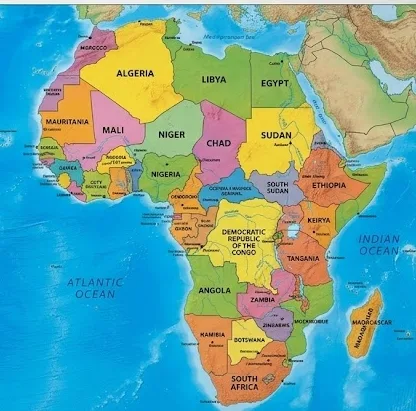
The digital economy of Africa remains highly vulnerable to prolonged internet blackouts, despite a boom in internet usage and digital infrastructure across the continent. According to a new warning from the International Telecommunication Union (ITU), the entire continent currently relies on a single repair ship to fix its submarine cables, leaving millions of everyday users and businesses at risk of extended disconnections when faults occur.The alarm was raised in the ITU’s latest global report on submarine cable resilience, a board co-chaired by the Minister of Communications, Innovation and Digital Economy of Nigeria, Dr. Bosun Tijani. The report exposes a logistical bottleneck where the vast network of underwater fibre-optic cables of the continent, which includes major systems like Equiano, WACS, and the 45,000-kilometer 2Africa network, is primarily serviced by the Léon Thévenin, an ageing cable-laying vessel owned by Orange Marine.While the ship is officially based in Cape Town, South Africa, it is stationed in the south of France. This means the vessel must often voyage thousands of miles just to reach the African coastline when a disaster strikes. If multiple cables break in different regions simultaneously, the repair delays compound quickly.The economic toll of these delays is severe when underwater rockfalls in the volatile Congo Canyon severed cables in 2020 and 2023, cross-border data flows and financial markets were heavily disrupted.More recently, in March 2024, a major cable cut disrupted internet access across 12 West African countries, costing the Nigerian economy an estimated $590 million in just four days.Globally, the underwater network suffers up to 200 faults a year, driven by commercial fishing gear and dragged ship anchors. Yet, Africa, alongside the South Atlantic and Pacific Islands, accounts for only 13% of the world’s active repair vessels. As a result, the global average response time to fix a broken cable has more than doubled over the last decade, jumping from less than 20 days to over 50. ”Despite growth in internet connectivity, Africa remains critically underserved by submarine cable repair infrastructure…Many of this region’s cables traverse vast stretches of unprotected waters, with only one permanently stationed repair vessel based in South Africa to serve the entire region…At over 10,000km, the immense transit distance would be a journey comparable to a transoceanic route, like Shanghai to Los Angeles” – the ITU report While the telecommunications industry acknowledges the crisis, relief is still years away. Orange Marine has ordered two modern, hybrid-powered cable ships to eventually replace the 43-year-old Léon Thévenin, but those vessels are not slated for delivery until 2028 and 2029. In the meantime, the ITU is urging African governments to streamline the regulatory bottlenecks, such as complex tax structures, customs duties, and lengthy permitting processes, that often delay repair ships from entering national waters.Until these hurdles are cleared, the resilience of Africa’s internet will remain precariously dependent on a single vessel navigating an unpredictable ocean.
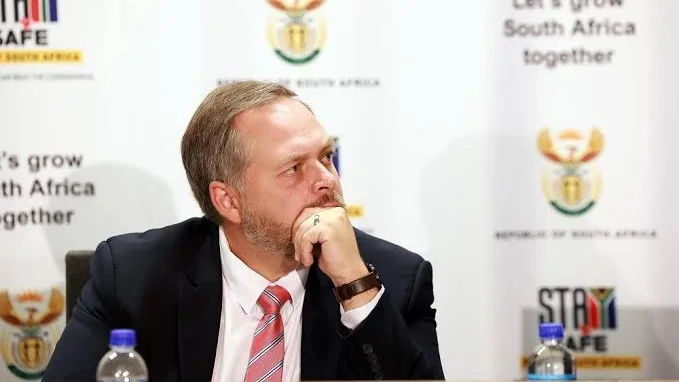
South Africa to deploy 600 handheld biometric scanners for real-time immigration checks
The South African Department of Home Affairs has opened a public tender to purchase 600 rugged, handheld biometric scanners designed to instantly verify the immigration status of any individual on the spot. This technology will allow immigration officers to scan fingerprints and take facial photographs in the field, cross-referencing them directly with government databases without having to rely on physical paperwork. Meanwhile, the Department of Home Affairs recently reported a 46% increase in inland deportations at the beginning of July, due to the initial digital upgrades managed by the Border Management Authority. The government is also plunging into digital infrastructure to patch vulnerabilities in its current field systems, amid political and social pressure to tighten immigration enforcement. This strategy is targeted at eliminating identity fraud in order to create a highly accurate verification loop which has been a bottleneck for field agents. The efficiency of this digital approach was proven during a 2025 pilot program in Cape Town’s District 6, where immigration officers used mobile scanners to quickly identify and arrest 25 undocumented foreign nationals whose data failed to match official state records. According to the official specifications, the new mobile devices are built specifically for rigorous outdoor enforcement rather than comfortable office spaces. The units must run on an Android 10 operating system or higher, feature a minimum of 128GB of storage to log new data, and hold at least an eight-hour battery life. The devices must be fully waterproof and drop-resistant to survive active field operations. The built-in cameras are also required to meet international passport-quality standards, ensuring that any facial images captured on the streets can be permanently integrated into the national immigration database for future tracking. South Africa’s Home Affairs Minister Leon Schreiber stated that giving field agents direct, remote access to central department records would completely change how immigration laws are enforced on the ground; “This will increase the arrests on those found to be illegal in the country, as there will be an immediate response on status for contravention with the departmental legislation” – Schreiber The department plans to sign a 36-month contract with selected vendor, with an option to extend the partnership for an additional two years. Meanwhile, the appointment of the supplier and the deployment of the first wave of scanners to field agents will begin across South African in late 2026.

After 16 years of sidelining Africa, PayPal abandons the account-first model for partnership
PayPal has announced the launch of PayPal World in Africa, scheduled for 2026. This was confirmed by Otto Williams, PayPal’s Senior VP for the Middle East and Africa, to end the decade-long standoff where African entrepreneurs were restricted from receiving funds overseas.The new platform acts as a cross-border bridge that connects existing local mobile money wallets directly to millions of global merchants, rather than forcing users to open traditional Western-style PayPal accounts.For nearly 20 years, PayPal’s relationship with Africa was defined by distrust over fraud and high chargeback rates. The company also maintained a send-only policy in many African nations, including Nigeria. This created a digital wall for freelancers and small businesses who could pay for global services but could not get paid.During this absence, Africa built its own financial world. Systems like M-Pesa (Kenya) and MTN MoMo to revolutionize mobile finance, turning Africa into the global leader for mobile money, accounting for 70% of the world’s transaction value. PayPal’s 2026 entry is an admission that it can no longer win a wallet war against these homegrown giants.Under the PayPal World model, users won’t need a separate PayPal account. They can simply click a PayPal button at an international checkout, which then links directly to their M-Pesa, MTN, or Flutterwave wallet to complete the payment. Africa follows a 2024-2025 rollout in India (via UPI), China (WeChat Pay), and Brazil (Mercado Pago). By 2026, a Kenyan user could scan a M-Pesa QR code to pay a merchant who only uses PayPal, and vice versa.To support this rollout, PayPal has committed $100 million for venture investments and innovation in the Middle East and Africa (MEA) region, including hiring local staff to scale regional compliance and operations.

Tesla launches first African base in Morocco, aiming to build EV manufacturing hub
Tesla is launching its first official operation on the African continent in Morocco, thereby creating job openings in Casablanca. Tesla intends to leverage with the rapid growth in the automotive sector and favorable electric vehicle (EV) policies in Morocco over South Africa, which was historically the continent’s largest vehicle market.The new Country Leader will be responsible for sales, delivery, daily operations, and market expansion, placing Tesla for both sales and potentially future manufacturing in North Africa.While South Africa traditionally holds the largest vehicle sales market, Morocco has aggressively placed itself as the automotive manufacturing and EV production leader of the continent.Tesla’s establishment of a presence in Casablanca, its first official subsidiary in Africa, is expected to have far-reaching implications for the entire African automotive industry. Tesla’s presence will likely accelerate EV adoption across Morocco, supporting the country’s targets of 10,000 public charging stations by 2030 and 20% EV penetration in new vehicle sales.The move increases competition, particularly with Chinese EV manufacturers like BYD, which has been investing in South Africa. This competition is expected to drive greater overall investment and innovation in African electric mobility.Tesla’s decision will likely encourage other global automakers to invest in North Africa, capitalizing on Morocco’s favorable investment environment and EV incentives.Tesla’s entry into Morocco is seen not just as a sales strategy but as a strategic long-term play, potentially setting up the North African kingdom as the primary EV manufacturing and distribution hub for the entire continent. South Africa will need to quickly implement its announced EV incentives and ramp up local EV production to remain competitive in the face of this global shift towards sustainable mobility.

Equinix to launch $22 million data center in Lagos
Global digital infrastructure leader Equinix has announced plans to open LG3, a $22 million data center in Lagos, Nigeria, marking its first purpose-built facility in West Africa set to launch in early 2026.LG3 designed to provide high-quality infrastructure and connectivity, will support local businesses and attract international companies by enabling seamless connection to global cloud services and partners through Equinix Fabric.Equinix Managing Director for West Africa, Wole Abu, described the Lagos facility as instrumental in bridging Africa’s digital divide; We’re not just building data centres; we’re fostering growth, empowering innovation, and laying the foundation for an interconnected African economy – Abu LG3 aims to elevate local startups, banks, fintech firms, e-commerce platforms, and AI enterprises by providing reliable, global-standard data services in Nigeria.Cedarview Managing Director Olawale Owoeye stressed the critical role of LG3’s connectivity and performance. Access to Equinix’s global ecosystem will enable Cedarview to expand its digital footprint and deliver high-performance solutions The upcoming LG3 data center will be a cornerstone for Africa’s digital transformation, enhancing technological capacity across Nigeria and the region.

Truecaller faces privacy investigation in South Africa over alleged data violations
Truecaller, the popular caller ID app, is under investigation by South Africa’s Information Regulator for allegedly violating the country’s Protection of Personal Information Act (POPIA) through misuse of user data.The investigation follows complaints that Truecaller improperly labels some businesses as spam and demands payment for removal, charges the company denies. Truecaller insists it does not charge for whitelisting and that its use of contact permissions complies fully with POPIA regulations. Known for identifying unknown callers and blocking spam, Truecaller argues that accessing users’ contact lists is necessary for core app functions, not for collecting or misusing personal data. However, privacy experts remain sceptical, especially about how Truecaller displays information about individuals who have never downloaded the app or given consent. Senior associate Lucinda Botes of Phukubje Pierce Masithela Attorneys explained that displaying information on non-users raises legal concerns under POPIA’s principle of “openness,” which requires clear communication about how personal data is collected and used. Many individuals featured in Truecaller’s database may not have consented to their data being shared via others’ contact lists. The law protects businesses, which can request removal or clarification of wrongly tagged information to protect their reputations.