
Kanessa Muluneh, a seasoned entrepreneur and investor originally from Ethiopia, has launched a new Web3 battle royale game titled Rise of Fearless, aiming to create a culturally rich gaming experience rooted in African heritage. The game, which debuted on May 3, offers a peer-to-peer (P2P) multiplayer battle royale format where players engage in combat using traditional African weapons and compete on leaderboards. Although early users have experienced some technical challenges such as long matchmaking times and buffering, Muluneh and her team are actively addressing these issues. A recent tournament event significantly boosted the game’s downloads from just 100 to over 1,000 on the Google Play Store. Muluneh’s vision for Rise of Fearless is ambitious. Drawing inspiration from the historic Battle of Adwa, where Ethiopia successfully resisted colonial forces, the game aims to blend storytelling with competitive gameplay to engage Africans at home, the diaspora, and black communities worldwide. The game’s roadmap includes launching a play-to-earn (P2E) feature, enabling players to earn NFTs that hold real-world value, a model proven successful by games like Axie Infinity, whose developers are collaborating on this project. Born in Dire Dawa, Ethiopia, Muluneh moved to the Netherlands as a child due to civil conflict. She has since built and sold multiple startups, including a medical tech company at age 21. Now based in Dubai, she invests in AI and blockchain ventures while maintaining a strong commitment to African tech innovation. Monetization plans for Rise of Fearless include in-game advertising and NFT collectibles. Muluneh is currently closing a $700,000 funding round to enhance marketing and development but remains cautious about large investments that could dilute ownership. She envisions the game growing into a billion-dollar enterprise with a target of 100,000 users in its first year. Muluneh acknowledges the challenges ahead, particularly around regulatory hurdles for digital assets and fragmented payment systems across African markets. However, her approach focuses on community-led growth and continuous improvement of the game’s graphics and storytelling.

Netflix raises subscription prices in South Africa starting June 2025
Netflix has quietly increased the prices of its subscription plans in South Africa, with changes set to take effect from June 2025. The streaming giant’s price adjustment affects the Mobile, Standard, and Premium plans, while the Basic plan remains unchanged. What’s Changing?Mobile Plan: This plan sees its first-ever price increase, jumping 20% from R49 to R59 per month. Basic Plan: No change, still at R99 per month. Standard Plan: Increased by 13%, from R159 to R179 per month. Premium Plan: Up 15%, moving from R199 to R229 per month. Netflix has started notifying subscribers via email about the upcoming changes, with the new prices applying from their next billing cycle after June 7, 2025. Subscribers billed before this date will continue paying the current rates for an additional month. While Netflix has not issued a detailed public statement, it cited general factors such as inflation, local taxes, service improvements, and new content as reasons behind the price adjustments. The company’s website notes that pricing changes can also reflect local market conditions. This marks the second time Netflix has raised prices in South Africa since launching in 2016, with the previous increase occurring in October 2021. South African subscribers will now pay more for the same access to Netflix’s growing library of movies and TV shows. For many users, especially those on the Mobile plan, this is the first time they will see a price increase. Netflix’s move aligns with similar hikes recently seen in other markets, including Nigeria, the US, and the UK.

Jumia shares soar over 41% following strong Q1 2025 performance
Shares of Jumia Technologies AG (NYSE: JMIA) surged more than 41% month-to-date on the New York Stock Exchange after the company released its first-quarter 2025 financial results, signaling a notable recovery and renewed investor confidence. Jumia reported a significant reduction in its pre-tax loss to $16.4 million for Q1 2025, down sharply from $39.6 million in the same period last year. The company’s active customer base grew to 2.1 million, up from 1.9 million, while orders processed rose to 5.1 million compared to 4.6 million a year earlier. This marks Jumia’s strongest quarterly performance in two years, driven by increased consumer engagement despite ongoing challenges in some markets. Revenue for the quarter stood at $36.3 million, a 26% decline year-over-year, largely due to reduced corporate sales in Egypt and currency devaluations. Gross merchandise value (GMV) also fell by 11% to $161.7 million. However, excluding corporate sales, GMV grew by 10%, underscoring the resilience of Jumia’s consumer segment. Operating loss widened to $18.7 million from $8.3 million in Q1 2024, and adjusted EBITDA loss increased to $15.7 million. Yet, the company improved its loss before income tax by 58%, helped by a $33.5 million improvement in net finance results, reflecting better cost management and reduced finance costs. Jumia’s CEO, Francis Dufay, acknowledged the progress made but emphasized that profitability remains a key focus. “The gap is clear, and closing it is our top priority,” he said. He highlighted rising usage trends during the quarter as a positive sign and reaffirmed the company’s guidance to reach breakeven on a loss-before-income-tax basis by Q4 2026, with full-year profitability expected in 2027. The company’s stock, which started the year at $3.85 before falling to a low of $1.78 in early April, has rebounded strongly since early April, reaching $3.33 by May 12, supported by a monthly trading volume of 27 million shares.
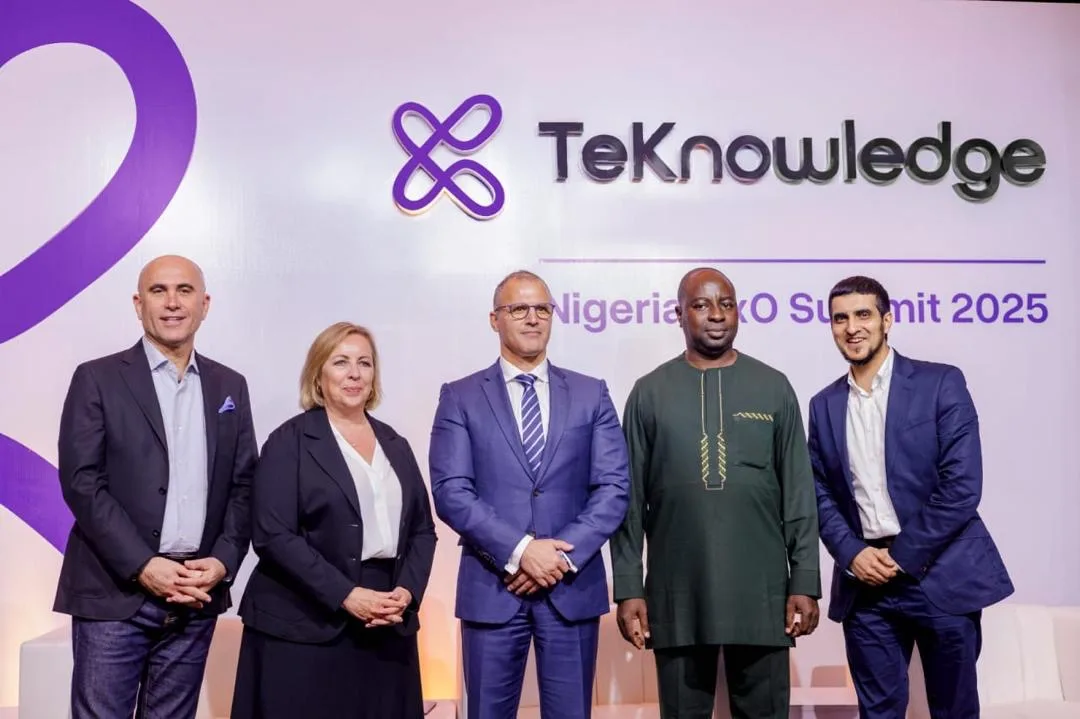
TeKnowledge launches AI-First services to accelerate Africa’s digital transformation
TeKnowledge, a leading global technology services provider, has officially launched its AI-First Expert Technology Services in Nigeria, marking a major step in its seven-year journey of driving digital innovation across Africa. The announcement was made at the 2025 TeKnowledge Nigeria CxO Summit held at the Oriental Hotel in Lagos, where industry leaders gathered to celebrate the company’s growth and vision for Africa’s technology future. TeKnowledge now employs over 2,000 local experts and delivers services to more than 90 countries worldwide. The company focuses on AI-driven transformation, talent development, and cybersecurity, partnering with both public and private sectors to build sustainable digital ecosystems. “Our new AI-First service model reflects our commitment to people, trust, and progress,” said Olugbolahan Olusanya, TeKnowledge’s Africa Territory Director. “Nigeria’s leadership in applied AI is a testament to the country’s long history of transformation and innovation.” In collaboration with Microsoft, TeKnowledge has trained thousands of Nigerians in AI skills, including over 1,000 women through targeted ICT programs. The company supports more than 40 Nigerian organizations with solutions spanning digital transformation, skilling, and managed services. Cybersecurity remains a core pillar of TeKnowledge’s offerings. Its Security Operations Center in Nigeria uses AI-driven systems to detect and respond to cyber threats in real time, enhancing resilience and customer trust. “Nigerian business leaders are not just exploring AI-they are acting on it with urgency and vision,” said Nidal Abou-Ltaif, Chief Revenue and Transformation Officer at TeKnowledge. “Our goal is to help clients scale ethical, locally relevant AI solutions that deliver lasting impact.” With a workforce of over 6,000 experts across 19 global hubs, TeKnowledge combines global reach with local expertise. Its partnerships with Microsoft and Genesys enable the delivery of advanced AI-first solutions that improve enterprise productivity and customer experience.

Kenyan court orders Worldcoin to delete biometric data over privacy violations
The Kenyan High Court has ordered Worldcoin, the controversial cryptocurrency project co-founded by OpenAI CEO Sam Altman, to permanently delete all biometric data collected from Kenyan citizens. The ruling came after the court found that Worldcoin violated Kenya’s Data Protection Act of 2019 by failing to conduct a mandatory Data Protection Impact Assessment (DPIA) and by obtaining consent through financial incentives, which the court deemed unlawful. Worldcoin launched in Kenya in April 2023, offering cryptocurrency tokens worth about $45 in exchange for iris scans using special devices called “Orbs.” These scans created a unique digital identity called “World ID,” intended to verify users as human in an AI-driven world. Over 350,000 Kenyans signed up, making the country the global leader in Worldcoin participation. However, privacy advocates and regulators raised concerns about the project’s data practices. The Katiba Institute and the International Commission of Jurists Kenya challenged Worldcoin’s operations, arguing that the project compromised citizens’ constitutional right to privacy by collecting sensitive biometric data without proper legal safeguards. The court agreed, ruling that consent obtained through monetary offers was not freely given and therefore invalid. It ordered Worldcoin to delete all iris and facial data within seven days under the supervision of Kenya’s Office of the Data Protection Commissioner. The court also banned any further biometric data collection without completing a DPIA and securing valid consent. This decision follows earlier government actions, including a suspension of Worldcoin’s operations in August 2023 and a police raid on the company’s warehouse. The ruling has global implications as several countries, including Spain and Germany, have also scrutinized Worldcoin’s data practices. “This is a landmark victory for digital rights advocates,” said Joshua Malidzo Nyawa, counsel for the Katiba Institute. The ruling underscores the importance of protecting citizens’ privacy in the face of emerging technologies. Following the court’s decision, Worldcoin’s token value dropped more than 10 percent, reflecting the impact of the ruling on the project’s future in Kenya. The case sets a powerful precedent for data protection laws in Africa and worldwide, emphasizing that technological innovation must respect constitutional rights and privacy regulations.

Airtel Africa partners with SpaceX to bring Starlink satellite internet to underserved regions
Airtel Africa has entered into a strategic partnership with SpaceX to roll out Starlink’s high-speed satellite internet services throughout its 14-country footprint on the continent. SpaceX has already secured operating licenses in nine of these countries-including Nigeria, Kenya, Zambia, Malawi, Rwanda, Niger, Chad, Madagascar, and the Democratic Republic of Congo-with licensing applications underway for the remaining five markets: Tanzania, Uganda, Gabon, Republic of the Congo, and Seychelles. This collaboration will see Airtel Africa integrate Starlink’s low Earth orbit (LEO) satellite technology into its existing network infrastructure. The goal is to extend reliable internet access to underserved and remote communities, including schools, health centers, small businesses, and rural populations where traditional terrestrial networks are limited or non-existent. Airtel Africa’s CEO, Sunil Taldar, described the partnership as a “significant step” in advancing Africa’s digital economy through strategic investments and collaborations. He emphasized that next-generation satellite connectivity will ensure “every individual, business, and community have reliable and affordable voice and data connectivity-even in the most remote and currently underserved parts of Africa.” Beyond expanding internet access, the partnership will explore leveraging Starlink’s satellite backhaul capabilities to enhance mobile network coverage in hard-to-reach locations. At the same time, SpaceX will benefit from Airtel’s extensive ground infrastructure and technical expertise across the continent, helping scale Starlink’s footprint and accelerate digital transformation. Chad Gibbs, SpaceX’s Vice President of Starlink Business Operations, highlighted the strategic value of the deal: “Working with Airtel to complement our direct offering across Africa makes great sense for our business and will help bring the transformative benefits of Starlink to more people in new and innovative ways.” Starlink is already operational in over 20 African markets, and this partnership signals a new era of cooperation between satellite internet providers and mobile network operators.