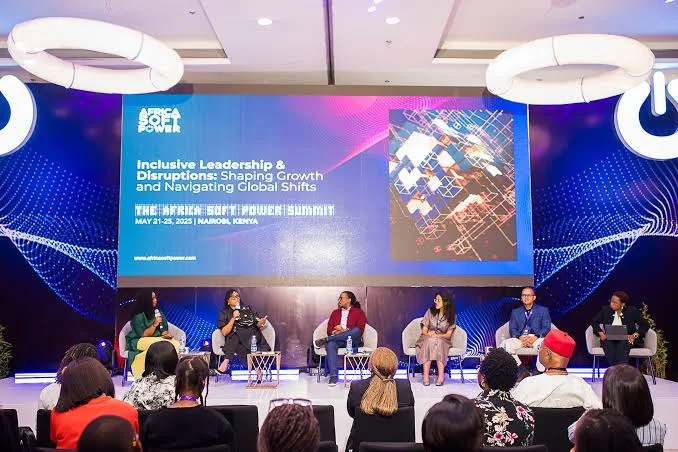
At the recently concluded Africa Soft Power Summit 2025, global tech giants Google and Meta urged African stakeholders to prioritize AI sovereignty by developing data and technology systems rooted in the continent’s languages, cultures, and unique challenges. Speaking at the summit held from May 21 to 25, Lorna Omondi, Partnerships Lead at Google Research Africa, emphasized the importance of training AI models on African datasets and ensuring multilingual access to serve underserved communities. “AI must solve the problems that matter most to African users in agriculture, healthcare, energy, and legal services,” she said, highlighting Google’s commitment to sourcing local language data and enabling African startups to innovate on shared foundations. Echoing this call, Kojo Boakye, Meta’s Vice President of Public Policy for Africa, the Middle East, and Türkiye, stressed the urgency for Africa to move beyond being mere consumers of AI technologies to becoming co-creators and global contributors in the AI space. The summit, now in its fourth edition, brought together leaders, innovators, policymakers, and investors from across Africa to discuss themes of economic self-determination, AI governance, and digital inclusion. Experts warned against allowing Africa to become a testing ground for unregulated AI and biotech products, calling instead for robust governance frameworks and AI literacy initiatives tailored to the continent’s needs. Edwin Macharia, co-founder of Axum.Earth, highlighted the need for economic nationalism and local leadership in funding African startups to build sustainable, billion-dollar businesses rooted in cooperation rather than foreign dependence. The event also showcased initiatives like Meta’s Llama Impact Grant, aimed at supporting African startups and researchers leveraging open-source AI models to address regional challenges. As Africa seeks to harness AI’s potential to boost its economy, projected by the UNDP to add $1.2 trillion by 2030, participants underscored the need for strategic investments in talent, infrastructure, and policies that foster innovation and ethical AI development. The Africa Soft Power Summit 2025 thus reinforced a growing continental momentum toward AI sovereignty, digital empowerment, and sustainable technological growth driven by African voices and priorities.

Equity Group fires 1,200 employees in historic anti-fraud crackdown
Equity Group, Kenya’s second-largest bank by assets, has dismissed over 1,200 employees in one of the largest anti-fraud purges in the country’s banking history. The move follows a months-long internal investigation that uncovered widespread collusion between staff and fraudsters, resulting in losses exceeding $15.4 million (KES 2 billion) over the past two years. CEO James Mwangi announced the sweeping layoffs on May 29, emphasizing a zero-tolerance stance on internal fraud. “The moment of reckoning has come. It doesn’t matter how many I will lose. I don’t even care. I have just started the journey. I will protect the customers and the bank. I will be ruthless,” Mwangi said during a press briefing. The probe revealed that some stolen funds were illicitly transferred to offshore accounts, including a high-profile case involving transfers to Abu Dhabi. Employees across multiple departments were found to have either facilitated or ignored suspicious transactions involving clients. The investigation scrutinized staff bank accounts and mobile money wallets, with even minimal contact with known fraud suspects leading to dismissal. The purge began quietly on May 20 with the firing of 200 employees but escalated sharply this week. Equity Group employs over 14,000 people across seven African markets, and Mwangi indicated that the investigation would continue, potentially leading to further dismissals. This bold move highlights persistent governance challenges within Kenya’s banking sector, which has faced numerous fraud scandals in recent years. Equity’s aggressive approach aims to restore trust and strengthen internal controls amid rapid digitization and growing transaction volumes. Employees affected by the layoffs received immediate termination notices with compensation packages including pay until their last working day, unused leave, and severance.
MultiChoice and COSOMA crack down on piracy in Malawi, arrest two suspects
MultiChoice Africa, in partnership with the Copyright Society of Malawi (COSOMA) and the Malawi Police Service, has successfully dismantled a piracy ring in Malawi following an intensive anti-piracy training and enforcement operation held in May 2025. From May 20 to 23, 21 participants, including police officers, prosecutors, and Ministry of Justice representatives, attended a four-day training session in Lilongwe focused on piracy types, enforcement strategies, and legal frameworks. The training quickly yielded results. On May 21, acting on intelligence and new enforcement tactics, the Malawi Police Service, supported by COSOMA, raided an illegal streaming operation in Lilongwe. Two suspects were arrested, and several hundred pieces of pirate streaming equipment were confiscated. MultiChoice highlighted that piracy severely undermines the creative industry by diverting revenue from content creators and legitimate broadcasters. It also causes significant losses in government tax revenue, which hinders national development and public services. Additionally, consumers using pirate streaming services risk exposure to malware and compromised personal data, with no assurance of content quality or safety. Rachael Kabango, Assistant Licensing Officer at COSOMA, cited Malawi’s Copyright Act, which imposes fines up to MWK 10 million and prison terms for possession of devices intended for piracy, emphasizing the serious legal consequences. Frikkie Jonker, MultiChoice Group Africa Anti-Piracy Director, praised the collaboration, calling the raid “the first of many” and a testament to the power of strong partnerships and dedicated training. MultiChoice reaffirmed its commitment to working with local authorities to protect creative rights and ensure a safe, legal entertainment environment in Malawi and across Africa. MultiChoice continues to lead anti-piracy efforts through education, enforcement, and industry collaboration to support the continent’s creative economy. This successful operation marks a significant step forward in Malawi’s fight against digital piracy, signaling more enforcement actions to come.

Tanzania blocks X after hackers falsely announce President’s death
LTanzania’s government has blocked access to the social media platform X (formerly known as Twitter) after hackers took over the official police account and falsely announced the death of President Samia Suluhu Hassan. The incident, which unfolded on Wednesday, sent shockwaves across the country and prompted swift action from authorities to prevent the spread of misinformation. According to NetBlocks, an independent internet monitoring group, X became inaccessible on all major Tanzanian internet providers shortly after the fake announcement was posted. “Live metrics show X has become unreachable on major internet providers in Tanzania; the incident comes as a compromised police account posts claims the President has died, angering the country’s leadership,” NetBlocks reported. The government’s decision to block X comes amid heightened political tension. Just last August, authorities temporarily took X offline following the arrest of opposition leader Tundu Lissu. Lissu, who survived an assassination attempt in 2017, was recently arrested again and charged with treason. His political party, Chadema, has also been barred from contesting in the upcoming presidential election scheduled for October 2025. Minister of Information, Communications and Technology, Jerry William Silaa, confirmed the hacking incident in parliament. He revealed that the country’s tax authority’s YouTube account was also compromised. “The reason these accounts were compromised is that their security protocols were not sufficiently robust. These accounts have since been restored,” Silaa told lawmakers. President Suluhu had earlier this week instructed security agencies to “protect social media,” underscoring the importance of digital security in safeguarding national interests. Police say they are actively searching for the individuals behind the cyberattack and have warned the public against sharing or amplifying the false information. The situation has been further complicated by the recent detention of Kenyan activist Boniface Mwangi and Ugandan attorney Agather Atuhaire, who were reportedly in Tanzania for civil society work. Their current whereabouts remain unknown, adding to the atmosphere of uncertainty.

South Africa considers BEE workaround to welcome Starlink internet service
South African officials are preparing to offer Elon Musk’s satellite internet company, Starlink, a special exemption from the country’s Black Economic Empowerment (BEE) ownership rules to enable its operation in the country. This move comes ahead of a strategic meeting between Musk or his representatives and a South African delegation traveling with President Cyril Ramaphosa. The BEE policy requires that at least 30% of ownership in telecommunications companies be held by historically disadvantaged South Africans. Starlink has cited this requirement as a major obstacle to launching its services locally, claiming on social media that the company is blocked because Musk is not black—a claim the South African government has denied. To address these challenges, South Africa is considering an “equity equivalence” option. Instead of direct ownership, Starlink would invest in infrastructure, training programs, or provide satellite kits to rural schools, helping to expand internet access in underserved areas. This approach mirrors previous arrangements with companies like BMW and Toyota, which set up investment funds to support empowerment goals. Communications Minister Solly Malatsi supports the equity equivalence plan, emphasizing its potential to attract foreign investment while maintaining transformation objectives. However, some political figures, including Khusela Sangoni Diko, chairperson of the Portfolio Committee on Communications and Digital Technologies, warn against any attempts to undermine the BEE legislation. The upcoming meeting is also seen as a diplomatic effort to ease tensions between South Africa, Elon Musk, and the United States ahead of President Ramaphosa’s visit to the White House. If successful, the deal could mark a significant step toward improving South Africa’s notoriously unreliable internet, especially in rural communities where only 1.7% of households currently have access. “Starlink’s technology could be a game-changer for South African internet users,” said a government official involved in the talks. “We want to ensure that while we open doors for innovation, we also protect our country’s hard-won empowerment goals.” The outcome of this meeting will likely shape how South Africa balances local laws with the demands of global tech companies seeking to expand on the continent.

Starlink surges ahead of local ISPs in Sub-Saharan Africa, but challenges remain
Starlink, the satellite internet service from SpaceX, is rapidly transforming the broadband landscape in Sub-Saharan Africa, outpacing traditional internet providers and offering new hope for underserved communities. A new report from Ookla, released May 13, highlights Starlink’s strong performance in the first quarter of 2025, with median download speeds exceeding 40 Mbps in most Sub-Saharan African countries where it operates. In Botswana, Ghana, Rwanda, Eswatini, Burundi, Sierra Leone, and Mozambique, users saw median speeds of 75 Mbps or higher-more than double what most terrestrial networks currently provide. For many rural residents, these speeds are a game-changer. Traditional broadband infrastructure remains scarce or unreliable outside urban centers, making Starlink’s satellite service a vital alternative for households and businesses seeking consistent connectivity. “We’ve seen a dramatic improvement in internet reliability,” said a local business owner in Ghana. “Our operations are smoother, and we can finally participate in the digital economy.” Even in countries where Starlink’s speeds were lower-such as Nigeria, Zimbabwe, South Sudan, Kenya, and Madagascar, where median speeds fell below 50 Mbps-the service still outperformed local ISPs. Starlink’s decision to pause new sign-ups in some regions to manage network demand may have contributed to these lower speeds, but the service remains a lifeline for areas with limited internet penetration. Latency, a crucial factor for real-time applications like video conferencing and gaming, has also improved. Kenya recorded a median latency of 53 milliseconds, Nigeria 60 ms, and Rwanda 67 ms in early 2025. These gains are credited to the deployment of local Points of Presence (PoPs), which act as ground-based gateways and reduce data travel times. Starlink’s technical edge comes from its constellation of Low Earth Orbit (LEO) satellites, which orbit closer to Earth than traditional satellites. This means lower latency and faster speeds, especially when combined with local PoPs near high-speed fiber networks. Upload speeds are also on the rise. Kenya’s median upload speed more than doubled to 14.85 Mbps, while Rwanda, Malawi, and Zambia saw increases of over 60%. These improvements are critical for users who need to upload large files, join video calls, or run cloud-based businesses. However, the service is not without challenges. Regulatory hurdles vary across the region, with some governments imposing restrictions on satellite internet providers. The cost of Starlink’s service, while competitive in some markets, remains out of reach for many low-income households. Additionally, inconsistent electricity access in rural areas limits the impact of internet-enabled devices, even when connectivity is available. Despite these obstacles, Starlink’s expansion is helping to close the digital divide in Sub-Saharan Africa. The service is increasingly fixed broadband access, spurring competition, and empowering communities with new digital tools.