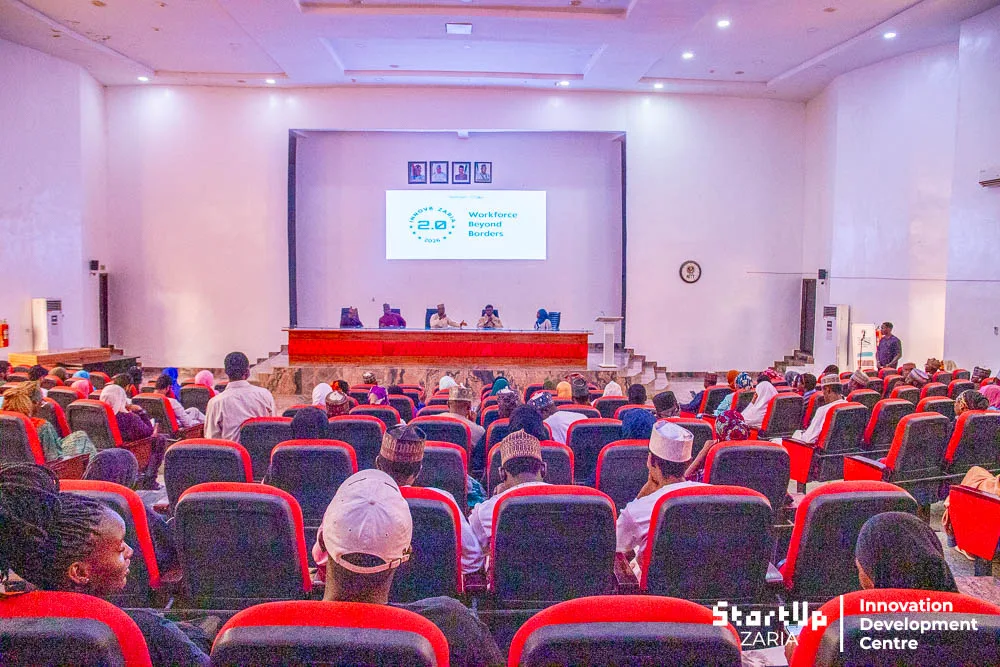
All through my day at Innov8Zaria, I kept thinking about the people who were not there. The people with certain barriers – barriers that something as simple as knowing and exposure could solve. Those without media reach or a communication ecosystem. Those totally disconnected from growth conversations. And they are not only in the grassroots. They are on the roadside. In offices. In stores. At mechanic workshops. At mai shayi joints. They are the people who do not see value in public speaking events. Sitting in one of the Day 2 sessions, I realised that everything being discussed – skills, positioning, relevance, global opportunities – assumed one thing: that you already knew what to look for. That you already had language for it. The room was full of people being told how to integrate skills, how to upskill, how to stay relevant. But outside that room are thousands who don’t even know what they are supposed to integrate into. If you no know, you no go know weytin you need. We talk a lot about the informal economy powering the majority of our people. Yet, these same people are often excluded – and programmes are intentionally not designed with them in mind. They have nuances: language barriers, limited time, gaps in concept understanding, and mindset limitations that mere motivational talks could begin to shift. As a boy, I used to wonder: if Nigeria is the giant of Africa, why is it so hard to thrive? Now over 230 million strong, with the North alone accounting for more than half of that population, the scale of potential is impossible to ignore. Nearly 70% of young people in the North-East and North-West are under 25 – that’s tens of millions of possible dynamos. But I’ve learned that population only signals potential, not prosperity. According to Nigeria’s National Bureau of Statistics, about 93% of the employed workforce – roughly 66 to 70 million people – operate within the informal sector. In the North and North-East, young people rely heavily on doing informal work in agriculture, petty trade, and services, often due to insecurity, limited access, and skills gaps. The informal economy keeps people alive. But without the exposure, structure, and pathways, it also quietly traps many of us in repeated cycles of low productivity work and limited growth. And that is the gap Day 2 kept reminding me of – not a lack of talent, but a lack of access to knowing what is even possible.
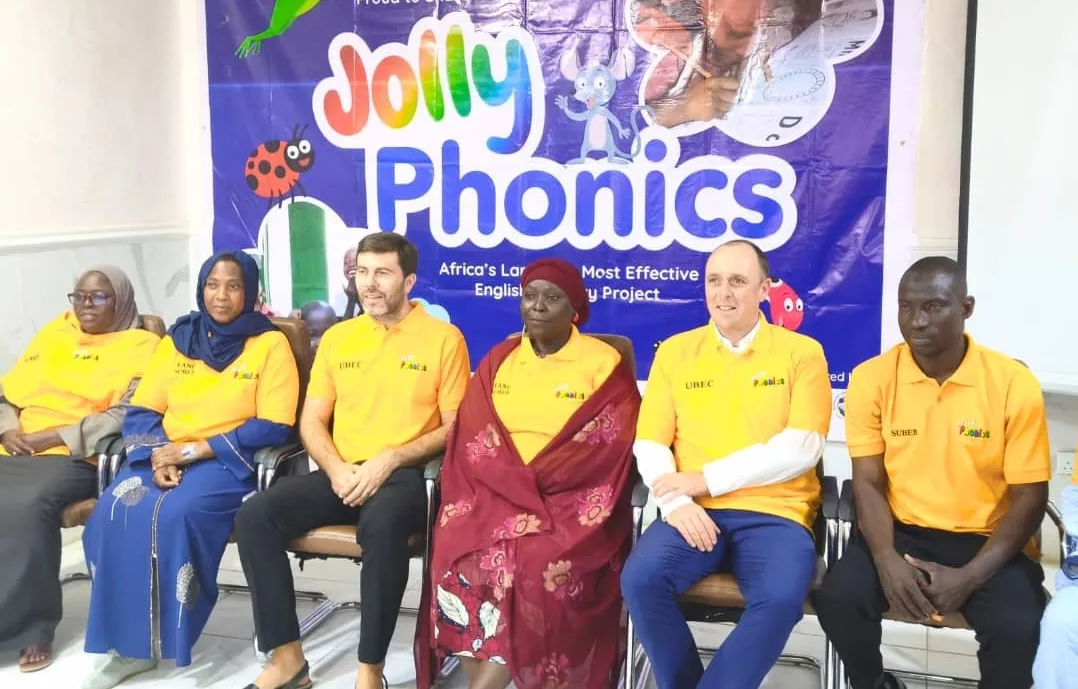
States hail Jolly Phonics project for transformative impact on early literacy in Nigeria
State Universal Basic Education Boards (SUBEBs) across Nigeria, including Kano, Lagos, Kaduna, Adamawa, Zamfara, Akwa Ibom, and Jigawa, among others, have commended the Jolly Phonics Project for its remarkable contribution to early grade literacy, describing it as one of the most successful education interventions in the country’s history.Their commendation follows the release of the 2025 Phonics Screening Exercise results by Universal Learning Solutions Initiative under the UBEC 2023/2024 TPD programme. The assessment, which covered 72,127 pupils across 33 states, represents the largest early-grade literacy assessment ever conducted in Nigeria.Findings reveal that pupils taught using the Jolly Phonics methodology consistently outperform their peers in reading and writing, with steady progress recorded in every assessment cycle since 2019. The 2025 screening marks the third major nationwide phonics assessment, following earlier exercises in 2019 and 2021, and the data shows a clear upward trajectory in literacy achievement.In Primary 1, the proportion of pupils meeting the English words reading benchmark rose from one in five in 2019 to one in three in 2025, a “remarkable 60% increase”. These results are truly inspiring. In a context where many education projects have failed to show measurable impact, Jolly Phonics has delivered consistent, evidence-based results. With greater investment and support, its reach and impact could be even stronger – Patrick Uzu, Country Director of Universal Learning Solutions (ULS) Major international studies, including the UK’s Rose Review (2006) and the US National Reading Panel, have long affirmed that systematic synthetic phonics provides the most reliable foundation for early reading.Across Nigeria, SUBEBs have echoed similar praise, citing the programme’s proven ability to strengthen early literacy outcomes. Alhaji Yusuf Kabir, Executive Chairman of Kano State SUBEB, noted the programme’s transformational effect; Among the various early grade literacy interventions in Kano State, Jolly Phonics stands out for its significant impact and achievements. We’ve witnessed remarkable improvements in pupils’ reading and writing skills, increased teacher motivation, and classrooms filled with enthusiasm and confidence. Jolly Phonics has laid a strong foundation for literacy in Kano State What began as a small pilot in a single school in Akwa Ibom State in 2006 has evolved into a nationwide success story, implemented today across all 36 states and the Federal Capital Territory.Reflecting on this progress, Gary Foxcroft, CEO of Universal Learning Solutions, remarked; It’s incredible to think that Jolly Phonics started in a single school in Akwa Ibom State 19 years ago and is now active across every state in Nigeria. We are proud of the strong teams, from teachers to state coordinators, SUBEBs, and UBEC, delivering evidence-based literacy interventions that are changing children’s lives. Nigeria is now leading the way in showing how a consistent phonics-based approach can transform reading outcomes The success of Jolly Phonics in Nigeria has been driven by strong collaboration among UBEC, SUBEBs, Universal Learning Solutions, and the Federal Ministry of Education. Through this partnership, 241,227 primary school teachers from 120,738 schools, along with 7,182 education officials, have been trained. An estimated 30 million pupils have benefited from the programme, supported by data-driven monitoring to ensure accountability and sustainability.Uzu commended UBEC and state governments for their commitment: UBEC has been a key partner in ensuring this isn’t just another short-term project but a national literacy strategy. SUBEBs across the country have shown real ownership, ensuring teachers are supported and data is collected to sustain impact. Nigeria should be proud of what it has achieved through this collaboration Jolly Phonics is rooted in synthetic phonics, an internationally recognised, evidence-based approach that teaches reading by linking sounds to letters and blending them into words. Independent evaluations globally have found that children taught with Jolly Phonics not only learn to read faster but also perform better across other subjects, since literacy underpins learning in every area.The approach has been particularly effective in strengthening foundational skills in large, diverse classrooms, a common challenge across Nigerian schools.With the 2025 results confirming sustained progress, education experts are urging policymakers to deepen investment and broaden training. The data speaks for itself. If we can achieve this level of improvement with modest resources, imagine what could be done with stronger support. Every Nigerian child deserves the chance to learn to read early, and Jolly Phonics has shown it can make that happen – Foxcroft Alhaji Kabir reaffirmed Kano State’s commitment to expanding teacher training: Our goal is for every child in Kano State, and across Nigeria, to read confidently by the end of Primary 2. Jolly Phonics gives us the proven tools to make that goal a reality.
The tragedy of our social media mindset
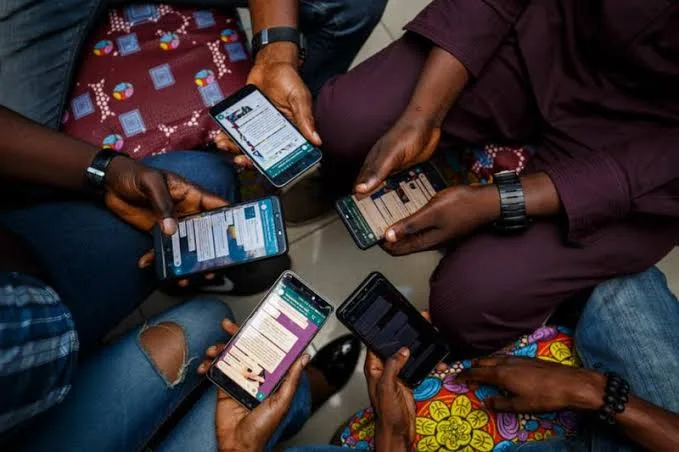
By; Dr Kabiru Danladi Lawanti There are moments when you scroll through Nigeria’s social media space and feel a deep sense of shame and embarrassed, not for yourself, but for the nation we are becomingq. The kind of ignorance and hate that freely circulates online today is frightening. You read certain posts and wonder how people who went through the same schools, lived in the same communities, and claim to serve the same God can descend into such moral darkness. I woke up this morning to yet another hateful post shared by someone on Facebook calling himself”Evangelist”, and what disturbed me was not just the comment itself, but the comments under the post. People hailing him as a hero, grown men and women, educated adults, clapping for ignorance. Earlier, I had engaged one such extremist who shared a clip of another dullard, who appeared on a national TV, claiming that a Christian girl from “Guoza” in “Bruno” State was denied admission into the University of Abuja despite scoring 277 in the “UDME.” He also claimed she was denied indigene letter by the “Bruno” state liaison office in Abuja. The thick headed moron was displaying ignorance with the confidence of someone delivering gospel truth. When I challenged the sharer, someone appeared to claim that Christian are not offered admission in universities in the north. When I asked him to produce evidence, he went silent. I even asked him to give me four names of Muslims who graduated from Nnamdi Azikiwe University (UNIZIK), since his profile suggested he studied there and promised to tag fifteen Christian classmates from my days in Ahmadu Bello University, Zaria, including Igbos, to prove how false his claim was. The fool never replied. This is what our national discourse has become – a theatre of ignorance, anger, and religious superiority. On WhatsApp alumni groups, you will find adults forwarding divisive and hate-filled messages without a single thought. Many don’t even read what they share. They just see “us versus them” and hit forward. In groups dominated by either Muslims or Christians, the level of hate-mongering is alarming. How, in all honesty, can we talk about good governance or national development with this kind of mindset? When people define truth only through their religion or region, how can competence thrive? We have replaced merit with mediocrity, and facts with prejudice. Positions that should require expertise now go to those with the “right” tribe, religion, or political godfather. This is why we keep recycling failure. A people who cannot think beyond identity cannot build lasting institutions. This problem is not only about the government – it is about us. The hate we spread online eventually seeps into our real lives, poisoning workplaces, classrooms, and even our places of worship. We cannot build a sane country while living in digital madness. Social media was supposed to expand our minds; instead, it has exposed how narrow they have become. Many Nigerians do not debate to understand – they argue to attack. They do not seek truth, they seek validation. We can’t change everyone. Some minds are so hardened that even deradicalisation won’t help, just like Boko Haram members who see every difference as an enemy. But we can change the tone of our spaces. We can choose not to forward that divisive message. We can insist that evidence matters. We can stop rewarding hate with applause. If Nigeria must heal, it won’t start from Aso Rock or the National Assembly. It will start from ordinary citizens who decide that decency, not hate, will define how they engage. That’s how a society begins to rebuild – one honest conversation, one responsible post, and one verified truth at a time.
Crossroads in Africa’s Bioeconomy: Innovation or Extraction?
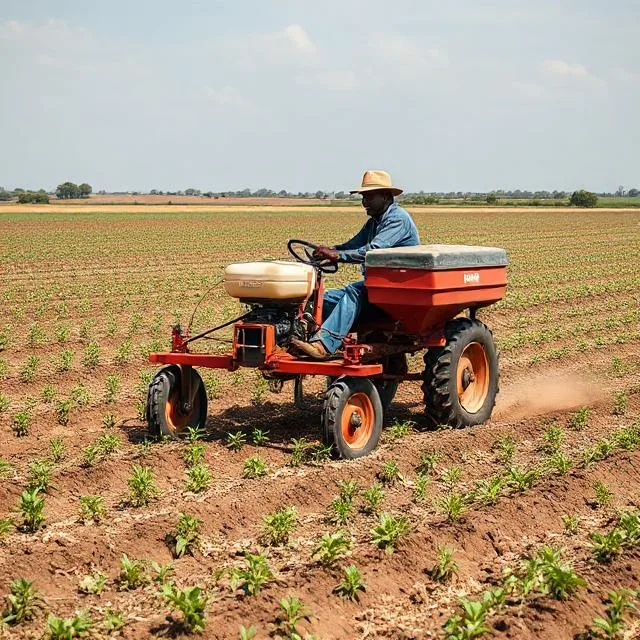
Biotechnology is often sold to Africa as a gateway to self-reliance and development. It can be defined as the application of biological systems or living organisms/parts of living organisms to develop or create products and technologies used in relation to different purposes. It includes many different methods that either occur naturally or are man-made varieties such as fermentation and genetic engineering. Politicians describe it as a means of securing food security, improving public health and creating jobs in an era of climate shocks and population growth. Development agencies present it as the inevitable pathway to modernity. However, the actual experience of biotechnology in the daily lives of a large number of people on the continent points to an altogether more complex picture. It is the tale of how Africa has consistently been denied tangible authority and proprietorship in spite of the genetic resources that we have, the seeds, knowledge and information that contribute to a global industry worth trillions of dollars. It only takes a short glance to see how this plays out. In eastern Uganda’s Busoga region, maize has long been central to livelihoods. It is second only to sweet potatoes in importance, providing both food and a small source of cash for rural families. A decade ago, surveys by the Organisation for Rural Development revealed the frustration farmers felt about their inability to access good quality seed. Climate change was making their planting seasons harder to predict. They wanted drought-tolerant varieties that could withstand new weather extremes. But the formal maize seed supply systems were either weak or non-existent. Hybrid seeds sold by private traders with little oversight dominated the market. The farmers were convinced that these hybrids would mature faster and bring in more money than the indigenous seeds they had always relied on. What followed was a quiet collapse in seed security. Poor quality hybrid seeds became widespread. Many farmers in Bugiri District who were once proud of their ability to select and preserve seed, found themselves at the mercy of middlemen and commercial seed companies. The yields they expected never came, especially as changing weather patterns made hybrid seeds even less reliable. Families which had used their meager earnings to buy seeds, had to meet their losses which could not be absorbed. Meanwhile, elderly farmers still indicated as an argument that the traditional maize varieties which were slower to mature, never fail at all times to produce something, even during drought. They were more nutritious and marketable. This is not a small detail. It is a reminder that innovation in Africa is often defined from outside the continent, without listening to what smallholder farmers know about. The pattern repeats in health research. The 1996 Pfizer Trovan trial in Kano, Nigeria is one of the clearest examples of what happens when Africa is treated as a laboratory rather than a partner. In the middle of a meningitis outbreak, 200 children were given an experimental drug without proper consent or safeguards. Eleven of them died and many others were left disabled. The fallout created lasting mistrust of Western medicine across parts of northern Nigeria. The families who recalled what had taken place in Kano boycotted the polio vaccination campaigns. To this day, foreign pharmaceutical companies have been accused of conducting clinical trials in Africa without full African supervision and with no data and benefit sharing with local health systems. This same inequity extends into the realm of genomics. The numbers are clear. More than 80% of the genetic data held in major international databases comes from populations of European ancestry, even though they make up less than a fifth of the world’s population. Africans hold the greatest genetic diversity on the planet but only account for a tiny fraction of the datasets that are now driving drug discovery, personalised medicine and gene therapies. Treatments are being designed on the basis of data that do not reflect African genetic realities. Meanwhile, global biotechnology companies and consumer genomic testing companies are gathering African genetic resources with little oversight as to how it is utilised or commercially exploited. This is the 21st century version of extracting resources, as a growing number of 3rd world scholars now label it as genomic colonialism.. Agricultural biotechnology has delivered similar disappointments. The Gates Foundation-supported Alliance For A Green Revolution In Africa (AGRA) established in 2006, had vowed to pull millions of farmers out of poverty by means of improved seed, fertiliser and accessibility to markets. More than 15 years later, independent assessments show that AGRA has failed to meet its goals. In several of the countries where AGRA has concentrated its work, hunger has increased. The smallholder farmers who were supposed to benefit are often deeper in debt because they cannot keep up with the cost of commercial inputs. These initiatives have created dependency rather than resilience. There are other older reminders of how Africa’s knowledge and biodiversity have been exploited. In southern Africa, the San people used the Hoodia cactus for generations as a natural appetite suppressant. In the 1990s, the plant’s active compounds were patented by a British company and sold to Pfizer for $21 million. The San received no royalties until they took legal action. Even then, they were awarded just 6-8% of the profits. That case is a blueprint for how indigenous resources can be turned into global products without fair benefit-sharing. These examples are not accidents. They are part of a systemic pattern in which the continent’s genetic resources and human data are extracted, exported and monetised elsewhere. African governments, researchers and communities are too often left with little control over how these resources are used and with even less share in the profits. The global biotechnology industry justifies this as necessary for efficiency and innovation. But the reality is that Africa’s role has been reduced to that of a supplier, not a stakeholder. However, there are reasons to believe this trajectory can be changed. Already, some institutions already have shown what biotechnology capacity building in African terms
Electric Vehicles in Africa: Green Revolution or Neocolonial Resource Grab?
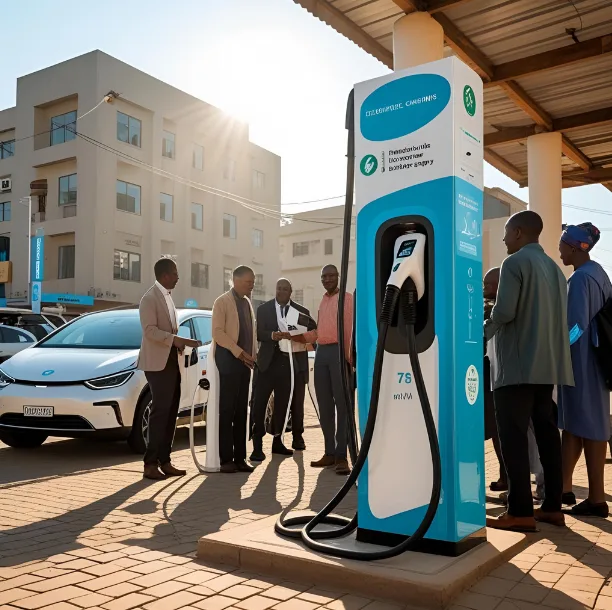
In 2021, Kenya’s first electric bus factory, BasiGo, launched amid fanfare, promising to cut emissions and pioneer Africa’s EV future. Several months later, the buses sat idle in Nairobi depots. The reason for this was the $40,000 price tag, which was triple the cost of alternatives like diesel as at then and no charging stations outside the city center. Fortunately for the company, things did go a bit well later after the implementation of its Pay-As-You-Drive model in 2022. Meanwhile, in the Democratic Republic of Congo (DRC), children as young as 7 mined cobalt under armed guards, their hands raw from extracting the mineral powering smartphone and electric car batteries. This dissonance defined Africa’s EV revolution as a global push for green mobility that entrenches resource extraction, sidelines our local needs, and prioritises foreign markets over our sovereignty. Africa’s Electric Vehicle Market Is Growing But Faces Challenges Africa’s EV market is projected to hit $28 billion by 2030, driven by climate pledges and mineral demand. Yet the continent’s roads tell a different story. In Lagos, traffic jams burn ₦4 trillion yearly in fuel with most cars in the country being imported from Asia, Europe and North America. The EV boom, rather than solving these crises, risks amplifying them by replacing oil dependency with battery colonialism. Congo Supplies Most Cobalt But Workers Are Poor and Suffer The DRC produces 70% of the world’s cobalt, a key EV battery component. Yet, Congolese miners earn less than $2 a day digging up the mineral, which is shipped raw to Chinese refineries and sold to Tesla, LG, and Volkswagen. In Kolwezi, villages near mines report toxic runoff poisoning water supplies, yet no EV giant funds cleanup. They take the cobalt to save their environment.Foreign firms like CMOC and Glencore dominate mining, while African governments lack leverage to demand local refining or fair royalties. The DRC’s 2018 mining code, which sought to raise cobalt royalties from 2% to 10%, was gutted after EU and U.S. lobbyists threatened divestment. Electric Vehicles Pushed on Africa Are Too Expensive and Not Practical There is a mirage of green mobility. Foreign automakers and NGOs push EVs ill-suited to African realities. Volkswagen’s pilot in Rwanda offered over $40,000 ID.4 electric SUVs, which were unaffordable in a nation where 60% of the population lived under $2/day. UNDP’s e-mobility grants fund charging stations in Accra to drive the green transition but ignore the 600 million Africans lacking constant, reliable and affordable electricity. Even China’s BYD, which also dominates Kenya’s e-bus market, relies on imported batteries, creating a trade deficit that cancels emission gains. Africa’s Public Transit Crisis Is Being Ignored The fixation on private EVs ignores Africa’s true mobility crisis, which is a collapsing public transit. In Lagos, where 17 million residents rely on rickety “danfo” buses, foreign investors pour millions into ride-hailing apps like Bolt and Uber, which serve the elite while worsening traffic.Amid the chaos, African innovators are redefining e-mobility on their own terms. Roam, an e-mobility company in Kenya designs electric motorcycles for matatu drivers, using swappable batteries charged via solar kiosks. Priced at $1,500, they pay for themselves in a year. Kiira Motors, a state owned enterprise in Uganda built Africa’s first electric bus, the Kayoola. Ampersand, an electric transport energy company in Rwanda retrofits gas bikes with batteries, cutting the fuel costs of riders by 50% and earning carbon credits reinvested in local grids. These solutions prioritize affordability and context. When Roam’s bikes faced range anxiety in rural Kenya, engineers partnered with asset financiers like Mogo to open in-store locations to facilitate more access. Foreign Aid Supports EVs But Blocks African Industry Growth But climate aid in Africa seems to be superficially plausible. Western nations and NGOs tout EV adoption as climate reparations while blocking Africa’s industrial leap. The EU’s Carbon Border Tax penalizes African steel and aluminum exports—materials needed for local EV factories—but exempts European automakers using Congolese cobalt.Meanwhile, Tesla’s $5 billion Berlin gigafactory sources most of its cobalt from the DRC but invests zero dollar in African battery plants. Elon Musk’s 2020 tweet—“We’ll coup whoever we want!”—haunts lithium-rich nations like Zimbabwe, where U.S. sanctions block Chinese-funded refineries. Conclusion For Africa’s EV future to empower rather than exploit, three shifts must be non-negotiable to rewrite the script: We don’t need hand-me-down tech. We need the tools to build our own. The road ahead is steep, but not impossible.
From World Expo Chronicles to Bulbling247: Tomilola Boyinde amplifies global innovation and emerging tech narratives
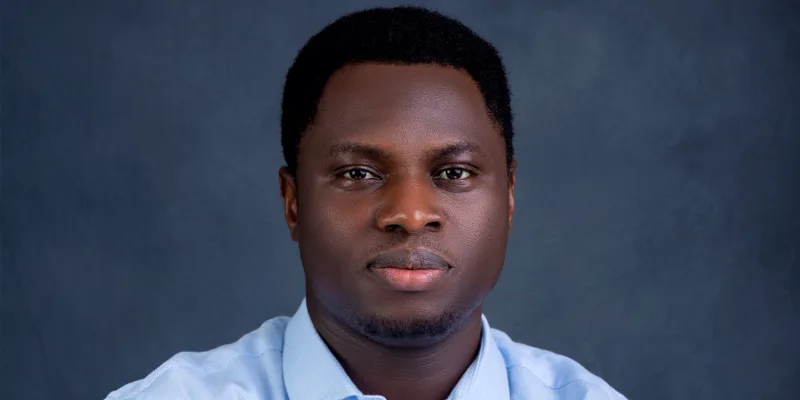
As technology continues to evolve at breakneck speed, Kehinde Tomilola Boyinde has distinguished himself as a thoughtful guide, one who doesn’t just follow innovation, but interprets it through the lens of human experience. His work consistently bridges the often-disconnected worlds of cutting-edge technology and meaningful, human-centered storytelling, offering fresh perspectives that resonate across industries and cultures. From capturing the spirit of global collaboration and innovation at the World Expo 2020 Dubai to launching the Bulbling247 platform, Tomilola has evolved into an international curator of innovation and emerging technologies narratives across the Global South and beyond. But this journey is more than just content creation, it’s about documenting the evolution of invention, celebrating unsung pioneers, and making sense of the technologies shaping our tomorrow. The Dubai spark: Where the global story began For many, World Expo 2020 Dubai was a celebration of innovation, invention, and cultural exchange. For Tomilola, it was a launchpad, a rare chance to witness the world’s brightest ideas unfold in real time. From capturing rare prototypes of new world invention to documenting national pavilions filled with cultural and technological marvels, Tomilola’s lens became a portal into the new world emerging before our eyes. “I wasn’t just observing pavilions or installations,” Boyinde recalls. “I was engaging with minds from across the globe, inventors, technologists, artists, and creators. It was like peeking into the future, one story at a time.” Bulbling247: A platform born from purpose Fast forward to today, and that storytelling impulse has grown into Bulbling247 – a dynamic podcast and content platform at the intersection of creativity, technology, and innovation. What began as personal curiosity has now become a mission to shine a spotlight on untold innovation stories, especially from Africa and the global diaspora. Each episode of Bulbling247 is a window into the minds of builders, inventors, creatives, technologists, and visionaries who are not just using technology but reimagining its place in society. Unlike typical tech media, Boyinde’s lens is distinctly human-centered. He asks, “Who is this technology for? How does it empower communities? What stories are being erased or overlooked in mainstream innovation spaces?” Whether speaking to an ecosystem builder in Lagos, a tech trailblazer in Sierra Leone or a decentralized artist in Nairobi, the goal is the same: deepen the narrative around innovation beyond buzzwords and break down complex ideas into accessible, meaningful conversations. A voice for the Global South, heard around the world Bulbling247 doesn’t just tell stories, it repositions where innovation is seen to originate. “Too often, the dominant narrative suggests that innovation flows from the developed world outward. But we’re witnessing groundbreaking work coming from places like Blantyre, Freetown, and Accra,” Tomilola notes. By creating a platform that highlights these contributions, he is challenging the status quo, offering an alternative archive of innovation, one that is inclusive, curious, and globally aware. The podcast has already hosted rising tech talents, founders, innovators and ecosystem builders. With upcoming episodes spotlighting leaders in blockchain, social impact tech, and digital creativity, Bulbling247 is just getting started. And for Tomilola, the mission remains deeply personal. “I want to keep telling stories that matter. Stories that show young people that their ideas, their inventions, their new technologies and their voices belong on the global stage,” he says. Boyinde is not just a storyteller; he is a systems thinker, blending his skills in marketing technology, generative AI automation, and creative strategy to scale his mission. Through Bulbling247, he is quietly building an ecosystem, one that nurtures creative technologists, media thinkers, and innovation storytellers. Watch all the latest Bulbling247 episodes on YouTube. Follow @Bulbling247 on Instagram.