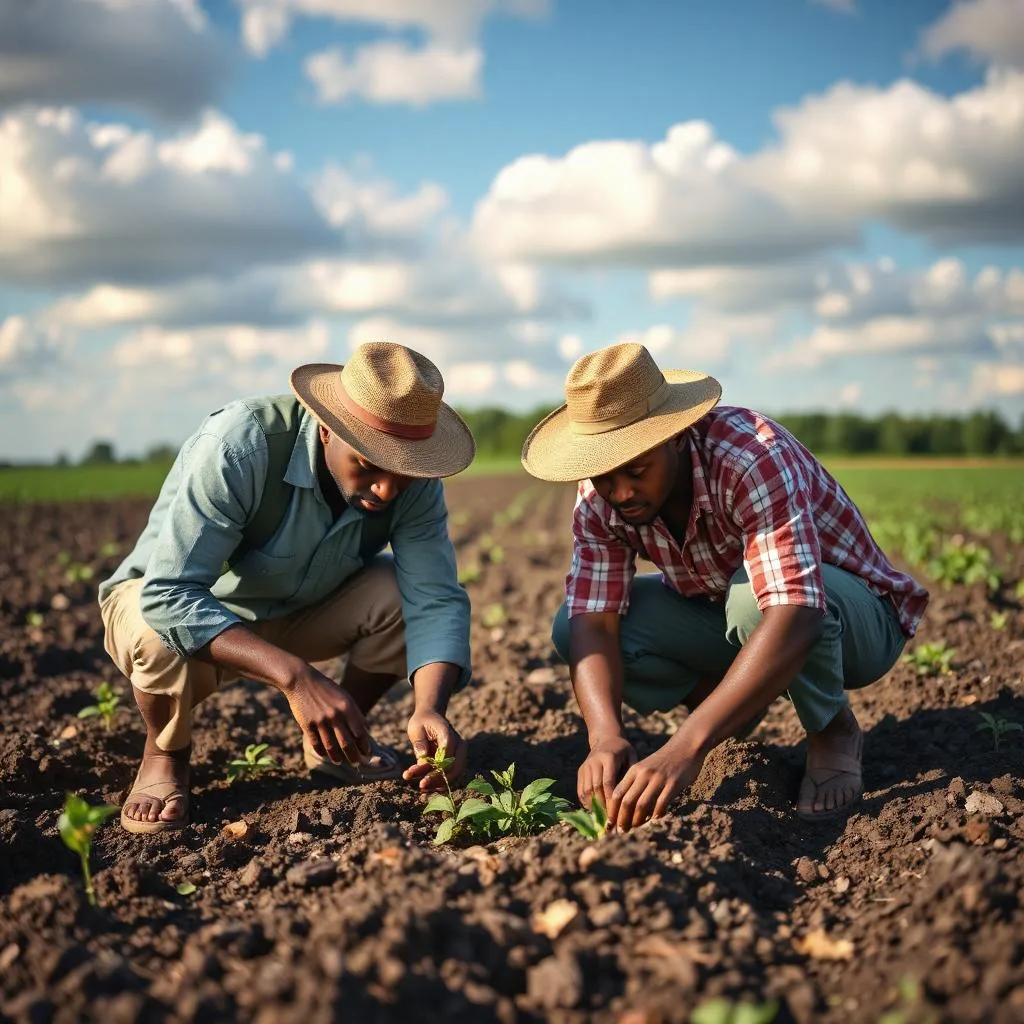
There’s a silent shift happening across Africa not loud like a protest, but deep enough to change the way we grow, eat, and think about food. Genetically Modified Organisms, better known as GMOs, have been introduced as a solution to Africa’s food insecurity. At face value, they promise bigger harvests, less crop loss, and a fighting chance against drought and pests. But not everyone sees hope in this. Some see a hand extended not to feed, but to control. Countries embracing GMO farming Countries like Nigeria, South Africa, and more recently Kenya, have opened the door to GMO farming. Their reasons are clear: more food, better yield, less hunger. In a place where millions go to bed hungry, that sounds like a dream worth chasing. Skepticism around GMO food But then, you look closer. In countries like the United States, people already mock GMO fruits and even diary products as “plastic” or “fake.” There’s this rising discomfort with food that looks too perfect, too polished as if it were made in a lab instead of grown under the sun. That discomfort has crossed oceans, and many Africans are starting to ask: Is this really what we need? Voices from Nigerian Farmers I spoke to a few people about it. Their voices say it better than any statistic could.Amarachi Ada, a local farmer at Zaria town was quick to respond: “God forbid. God already gave us natural food to eat one we can plant and reproduce. Why will I need a man-made one I can’t even cultivate?” Another local farmer, who asked to remain anonymous, didn’t hold back: “GMO has been around already, but with Bill Gates pushing it in Africa, this is a curse in disguise. We’ll be consumers, not partners. We’ll depend on others for what we used to grow ourselves.” And then there was Ada Awodi, a fellow citizen of Kaduna and an entrepreneur whose words stayed with me: “I don’t like the idea. With the trend of fake food in America, I don’t think Africa needs this in bulk. What happened to our local farmers? Why do we need GMO over natural seeds?” It’s not hard to understand this fear. Many GMO seeds are patented. That means you can’t just grow, harvest, and keep your seeds for the next planting season, a practice our grandparents lived by. Instead, farmers may have to buy seeds every year, from companies they don’t control, at prices they can’t negotiate. Potential health risks of GMOs More so, studies are now speculating that there could be “unexpected effects” from Genetically engineered foods that can put man and his health at risk. According to an article published by Center For Food Security (CFS), the unexpected effects could be: This isn’t just about seeds. It’s about power. And when power sits in the hands of a few, the rest become dependent. Gentle lessons from Burkina Faso’s GMO cotton experience Burkina Faso tells us something. It once embraced GMO cotton with open arms in 2008. But just a few years in, farmers started complaining about poor quality, and the government pulled out in the year 2015. An article by Africanews reported that “ While the bug-resistant genes produced more volume, the quality fell. Last season, the cotton farmers of Burkina Faso abandoned the GM varieties”. That retreat speaks volumes. It says: not everything that works elsewhere will work here. The thing is, GMO as a science isn’t the enemy. The World Health Organization has said that approved GM foods are safe to eat. But the way it’s being rolled out quietly, with little consultation, and big international players holding most of the cards, that’s what worries people. Especially when the ones who’ll be most affected are often left out of the conversation. And yes, some African farmers might benefit from improved crops. But will they own the process? Will they get fair prices? Or will they just become users in a system they didn’t build? This is why we need to ask: Is this a solution that empowers us or one that replaces what we already have? Conclusion GMO could help Africa fight hunger, but only if done on African terms, with clear rules, honest conversations, and respect for the people who still believe in the land.Because food isn’t just food. It’s culture, survival, memory, pride, and health.So at the end of the day, GMO in Africa: A game changer? Possibly. A game of control? That depends on who’s really holding the seeds.
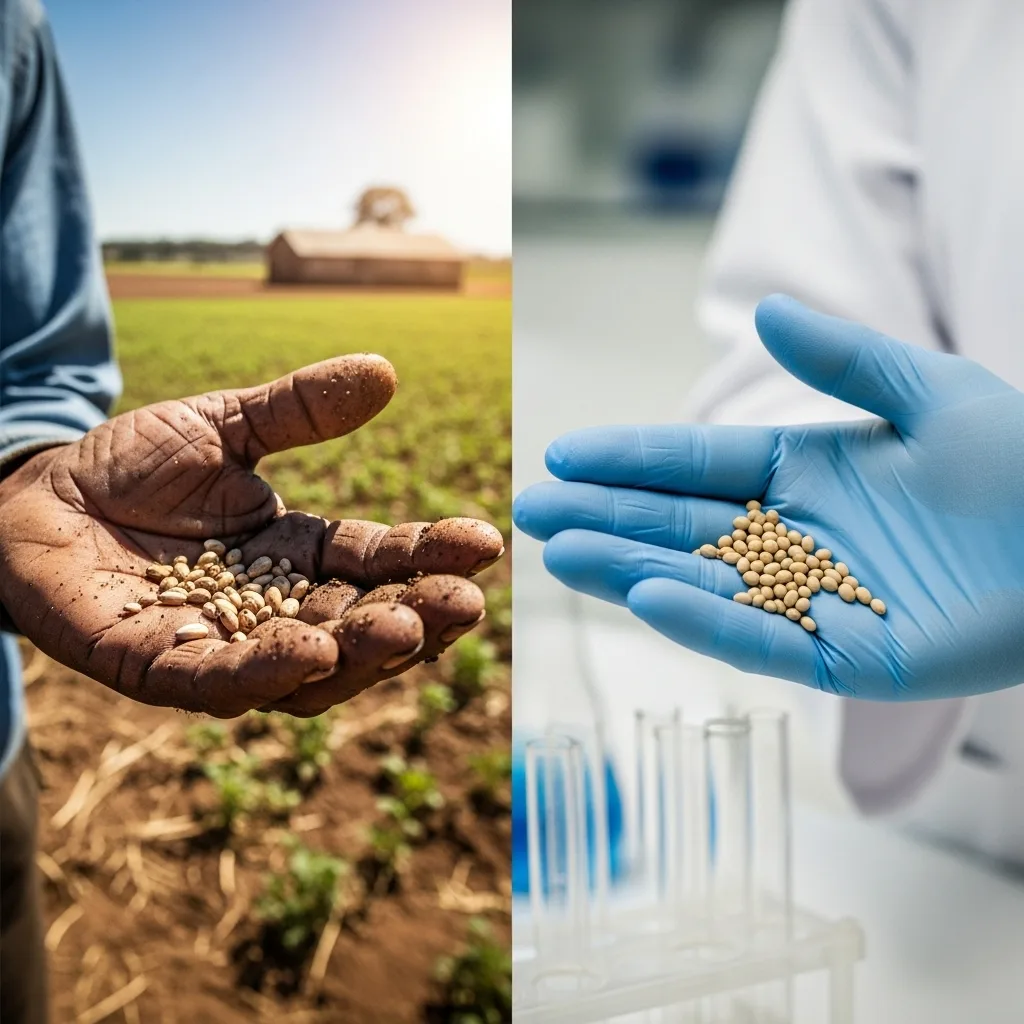
The GMO Gamble: Why Nigeria Must Think Twice Before Surrendering
It is never easy to speak plainly in a world where science, money, and politics have merged into one confusing fog. But sometimes, silence is more dangerous than simply saying things as they are, especially when the direction of an entire country’s food system is being shaped by foreign actors, financial interests, and technology we are yet to fully understand. Nigeria, like much of Africa, stands today on a knife-edge when it comes to the adoption of genetically modified organisms (GMO). It is being encouraged to embrace GMOs, told they will solve our food crisis, improve yield, resist pests, survive droughts, feed the hungry and lift farmers is out of poverty. Understanding GMOs: Science Beyond Nature First, let me make clear what genetically modified organisms are all about. GMO refers to genetically modified organism, which is a plant, animal or microbe, where the DNA is modified in a lab with the help of genetic engineering. Scientists add or delete genes to provide, among other traits, pest resistance, herbicide tolerance and a more nutritious content. This genetic modification can even cross the species threshold in ways that nature breeding could never be achieved and what has been created is a living organism that would never occur in natural life or through normal farming methods. People speak of GMOs as if they are some magic seed that will solve Africa’s hunger. They often speak of yield, of resistance, of efficiency. But technology never enters a land as a neutral guest. It carries with it the culture, control and consequences of its makers. In the case of GMOs, we’re not just talking about seeds. We’re talking about patents, dependency, contracts, monocultures and a whole ecosystem designed to be managed by companies and interests far outside Nigerian soil. And the loudest voices in that choir for a long time now have been those of wealthy foreigners, particularly Bill Gates. To some people, Bill Gates is some kind of modern saint. He is a philanthropist who has offered computers, vaccines, clean water and mosquito nets. He is constantly being presented as a man who means well, who wants to save lives, who pours money into Africa because he cares. And maybe he does. But there is a fine line between helping a man and deciding how he should live. Gates has become deeply invested in African agriculture and more specifically, in the proliferation of genetically modified crops across the continent. Billions of dollars have flowed into agricultural initiatives in Africa through the Bill & Melinda Gates Foundation that prioritize the development and distribution of genetically engineered seeds, with many of them controlled by global biotech giants. His influence doesn’t stop at funding research. It also extends into policy. He shapes partnerships between African governments and Western companies. It is behind the Alliance for a Green Revolution in Africa (AGRA) which has had a huge hand in promoting GMOs on the continent for more than a decade. The answer may lie partly in regulation. Like many other developing countries, Nigeria does not yet have the kind of strong and independent regulatory institutions that can withstand the pressures of multinational corporations or well-funded international foundations. Decisions get made quickly. Approvals are fast-tracked. The biosafety concerns are buried beneath piles of PowerPoint presentations and scientific consensus statements that conveniently omit dissenting voices. But while Nigeria is being told to open its arms to GMOs, industrialised nations with far more advanced regulatory frameworks are closing their doors. Across the European Union, genetically modified crops are either completely banned or heavily restricted. France, Germany, Austria, Greece, Hungary and many others have rejected them, noting the risks it poses to the environment, the scientific uncertainty and the public opposition. Even Russia, not exactly known for environmental activism, has drawn a line. In the United States, where GMOs have been widely adopted, there are still a considerable number of people demanding for labeling laws, transparency and further research on GMOs. So, why must Nigeria embrace what others have discarded or hesitated to use? If it’s truly beneficial, why haven’t those who invented it made it central to their own food systems? Why must Africa always be the test case, the pilot zone, the experimental field? The answer seems to lie in a cold calculation. Africa is seen as an open terrain. We are told that our food systems are broken, that our yields are too low, that our farmers need better tools, and that GMOs are the miracle we need and have been waiting for. But who defines the problem, and who benefits from the solution? The seeds that are being introduced into Nigeria are not free. They come with licenses. They are patented and are designed to be used with specific chemicals that are often produced by the same companies that make the seeds. If a farmer saves part of his harvest to plant next season as generations have done for centuries, he may find himself in a troubling situation. He becomes dependent not just on the seed but on the entire supply chain built around it. And this is a dangerous move in a country where most farmers are poor and already struggling with access to credit. It is worth noting that this dependency isn’t accidental. Companies like Monsanto (now Bayer) have made billions from enforcing seed contracts and squeezing out competition. In India, thousands of cotton farmers using GMO seeds found themselves trapped in cycles of debt and crop failure. Many committed suicide. Their experience should serve as a caution to us rather than not a footnote in some glowing report about innovation. Environmental Risks and the Loss of Biodiversity And what about the environment? Many of these crops are genetically modified not just to resist pests, but to tolerate heavy doses of herbicides like glyphosate. There have been several concerns over the years about the effects of such chemicals on soil health, water systems and human health. In fact, studies have linked glyphosate exposure to certain cancers,
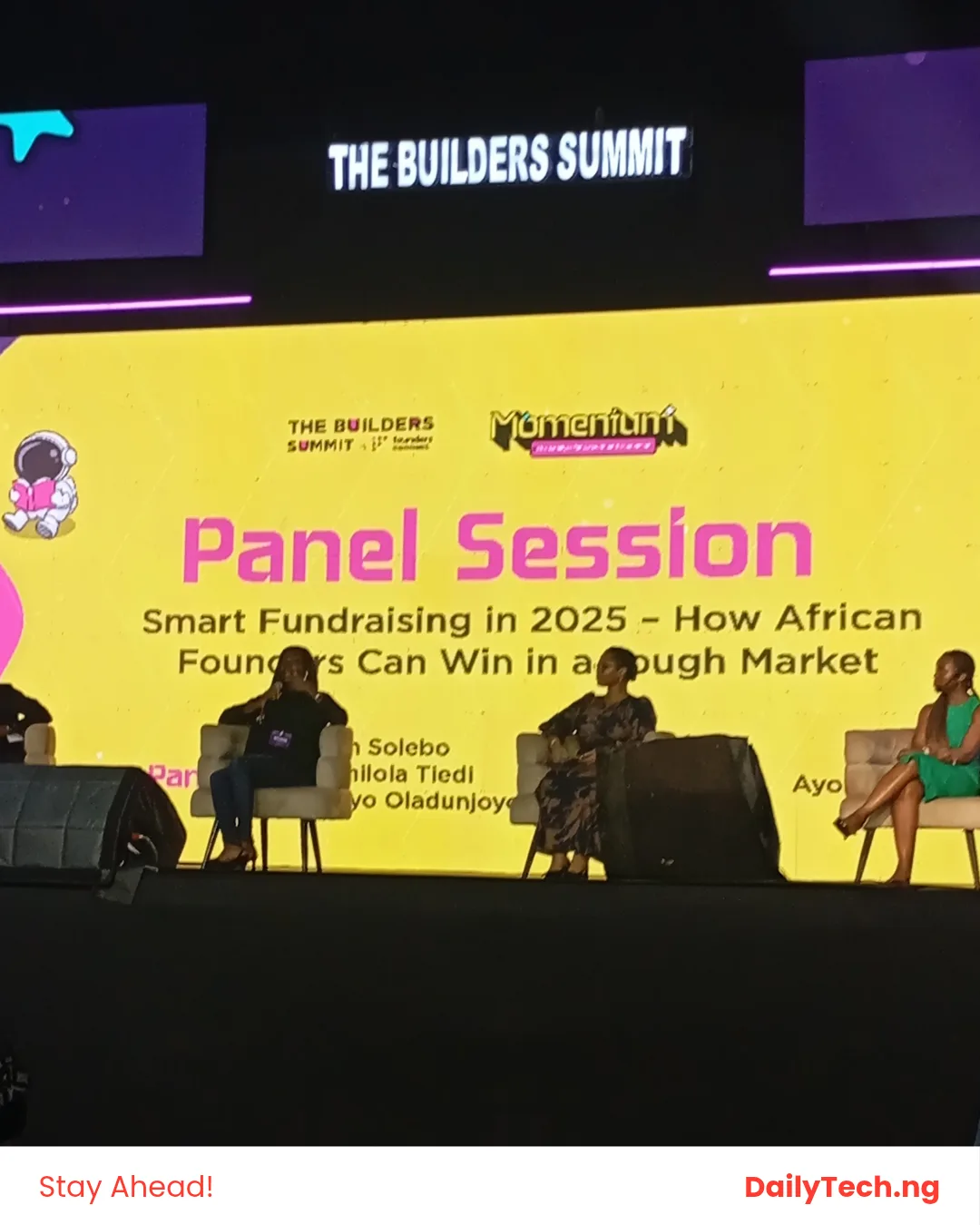
Investors prioritize startup traction alongside teams and business potential – Insights from Peace Itimi’s Builders Summit 2025 panelists
Lagos – At the recently concluded Builders Summit 2025, convened by Peace Itimi, industry experts emphasized that investors are increasingly focusing on startup traction as a critical factor when deciding where to place their funds. Drawing from the panel session moderated by Ayobamigbe Teriba, featuring Oyin Solebo, Damilola Teidi, and Ireayo Oladunjoye – several key points emerged on how startups can attract investment beyond simply having strong teams and promising business ideas. Panelists highlighted that traction, demonstrated by measurable growth indicators such as revenue, user acquisition, and strategic partnerships, serves as concrete proof that a startup’s product or service is gaining market acceptance. This real-world validation significantly reduces investment risk and boosts investor confidence. The discussion also stressed the importance of showing early signs of market fit, customer love, and month-to-month value growth, as well as tracking where customers are coming from and focusing on retention. Other practical advice shared included the benefits of engaging angel investors at the idea or early stage, maintaining transparency, sending out regular investor updates, and demonstrating good governance practices from the outset. In a keynote session, Seye Bandele, founder of PaidHR, advised founders on the art of selling and highlighted the importance of listening in sales, stating that “70% of selling comes from listening.” When asked how he scaled PaidHR, Bandele explained, “We knew that we didn’t have a lot of money to do marketing, so we were going to leverage the founder to do the marketing as organically as possible… Every story I’m telling, I’m depositing something into your mind – either about myself or about the company we’re building,” emphasizing that founders must strategically take advantage of their current reality and resources to succeed. The summit featured additional discussions on the adoption patterns of AI among African tech startups, with a particular focus on Nigeria’s evolving ecosystem. Other sessions included contributions from notable figures such as Fisayo Fosudo, Tomiwa Aladekomo, Njoku Emmanuel, David Adeleke and Douglas Kendyson, founder of Selar. Peace Itimi, the convener, is a prominent Nigerian tech storyteller and growth marketing professional. She created Founders Connect, a platform that began as a YouTube channel documenting African tech entrepreneurs’ journeys through interviews and live events, aimed at building community and preserving the history of Africa’s tech ecosystem. Her work also includes producing “Innovating Africa,” a documentary focused on Nigeria’s tech landscape. Founders Connect has become a vital space for knowledge sharing and networking, with over 70 founder interviews and successful live events in Lagos, Nairobi, and London. The Builders Summit 2025 continues this mission by equipping builders with insights to scale, learn in the curve, and secure funding in a competitive market. The event serves as a vital platform for exchanging ideas and strategies for building and scaling innovative solutions in Nigeria and beyond. Ultimately, the panelists’ advice reinforces the growing consensus that traction is a key ingredient in securing investor funding and driving startup success.
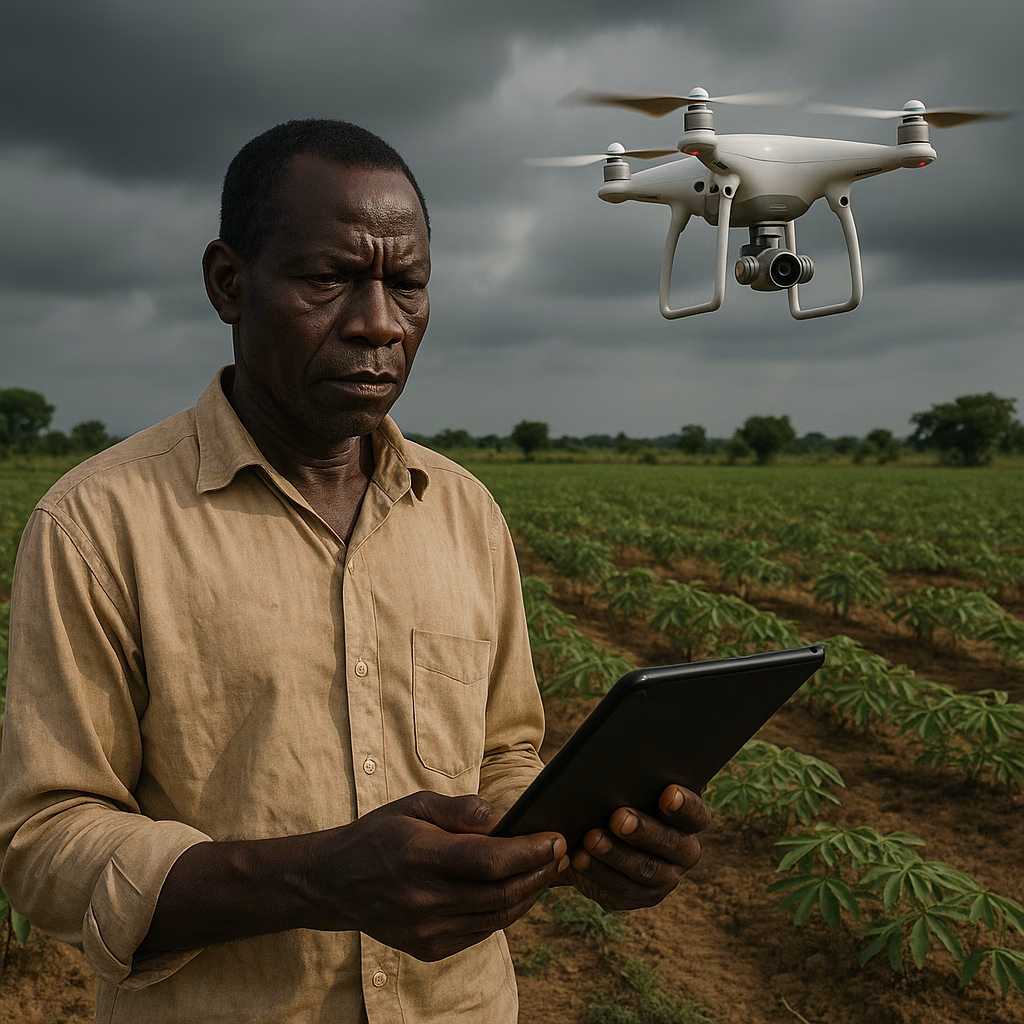
AI in the Fields: Machine Learning’s Empty Promises for Ordinary Farmers
Let’s start with a fact. 33 million smallholder farmers produce 80% of the food in sub-Saharan Africa. Another fact is that 90% of these farmers have never used an AI-powered tool. Now let’s ask the obvious question. Why is Silicon Valley hell-bent on selling machine learning as the Africa’s agricultural messiah? The answer has nothing to do with the cassava yields or soil pH, but the markets. Africa’s agricultural sector is projected to be worth $1 trillion by 2030. Tech giants and venture capitalists smell blood in the water, and AI is their harpoon, but behind the glossy demos of drone-mapped farms and chatbot agronomists lies a brutal truth, which is that most of these solutions are digital colonialism repackaged as innovation. The value proposition of artificial intelligence hinges on clean, abundant and structured data. Africa’s smallholder farms, however, are data deserts. Unlike monoculture cornfields you find in Iowa in the United States, which generate terabytes of satellite imagery and soil metrics, a typical Nigerian farm operates based on ancestral, indigenous knowledge. Crops rotate based on lunar cycles, and not algorithms, while pest outbreaks are managed with neem leaves, not neural networks. This isn’t Luddite romanticism but logistics. Less than 30% of rural sub-Saharan Africa has access to mobile internet services. And yet, startups like Apollo Agriculture and Zenvus pitch AI-driven insights as if every farmer in Kano is scrolling through agritech dashboards between prayer calls. Even when the tech works, the economics don’t. Take soil sensors. A single Zenvus unit costs $200, which is roughly six months income for the average farmer in Niger. Apollo’s SMS-based advisory service charges $5/month in Kenya, where 36% of the population live below the poverty line. This isn’t scalability in anyway but predation. Here’s how it works. A European startup partners with an NGO to collect soil samples in Ogun State. Farmers who are lured by promises of higher yields, hand over data on crop rotations, rainfall patterns, and pest outbreaks. The startup trains its AI model, patents a drought-resistant seed strain, and sells it back to Nigeria at a 400% markup. The farmers, now dependent on proprietary seeds, get to starve efficiently. Wait, does this sound familiar? It’s the same playbook used by 19th-century colonial botanists who stole rubber and palm oil know-how. Today’s loot is data, and the enablers are clueless bureaucrats signing tech partnerships that trade sovereignty for buzzwords. AI evangelists love to parrot that the old systems need to be leapfrogged but Africa isn’t skipping to IoT-enabled farms. It’s drowning in half-baked pilots. Take Ethiopia’s AI chatbot for crop diseases. The concept is sound until you realize that 75% of the Ethiopian farm labor are women with limited literacy, and the chatbot only works in Amharic and Afaan Oromo, which are major languages but which many don’t speak considering the fact that there are over 80 indigenous languages spoken in the country. Or consider Kenya’s much-hyped partnership with IBM to forecast crop yields. The project collapsed after three years because the government couldn’t afford the $10 million annual cloud computing fees. Now IBM owns Kenya’s agricultural data, while the farmers own nothing. This isn’t a rant against technology but a plea for relevance. Real agricultural progress in Africa looks like M-Pesa, which scaled mobile payments without smartphones, or Aerobotics, a South African startup that uses satellite imagery to help commercial farms cut water waste. This tool acknowledges the existing inequality between subsistence and industrial agriculture in Africa. The irony of this is that the most impactful AI tools are often the simplest to use. In northern Ghana, farmers use Esoko, a text-message platform that broadcasts real-time market prices, weather forecasts and agricultural tips and techniques. No machine learning, no blockchain, just democratized information. The Unasked Question is that why is Silicon Valley pushing AI instead of tractors? Africa has 13 tractors per 100 square kilometers of farmland. In Nigeria, it is 6.8. Europe has 1,200. No algorithm can till soil or irrigate fields, yet the Gates Foundation funds AI soil apps while ignoring Kenya’s 90% tariff on imported farming machinery. The answer is profit margins. AI is cheap to scale but tractors aren’t, and until a machine learning model can physically harvest yams, this obsession with disruption is just another form of neglect. Africa’s farmers don’t need AI. They need roads to get crops to market. They need subsidies for fertilizer, not SaaS subscriptions. They need policies that ban foreign tech firms from mining agricultural data. The next time a TED Talk bro waxes poetic about AI revolutionizing African agriculture, ask him two questions: 1. Who owns the data? 2. Who owns the land? If he hesitates, you’ve got your answer.

FOMO vs JOMO: The Today Hustle and the simple Joy of Missing Out
In a content-rich world, where social media often feels like an endless party, the Fear of Missing Out (FOMO) is real. Every weekend, TikTok and Instagram are flooded with flashy photos from Owambe weddings, party nights in Lagos, and exotic trips to Dubai. On Twitter, everyone seems to be cashing out, starting a business, or “bagging” scholarships abroad. For many Nigerians, this constant stream of success and enjoyment creates a nagging feeling: Am I missing out? Am I doing enough? What is FOMO? FOMO stands for Fear of Missing Out. It’s the anxiety or worry that others are having rewarding experiences that you’re not a part of. People with FOMO often feel the need to stay constantly connected—especially on social media—to avoid feeling left out. For example, you might feel FOMO when you see friends posting about a party, vacation, or event you weren’t invited to, even if you were otherwise content. It can lead to stress, overcommitment, and even burnout. FOMO can make you feel like life is leaving you behind while everyone else is living their best life. The fear of not being able to afford that classy night out with friends, that gorgeous wedding you dream of as a bachelor at 30 or that groundbreaking business deal or business you see online millionaires flaunt in their flashy cribs. But in the midst of all this noise, another movement is gaining ground: the Joy of Missing Out (JOMO). This isn’t about being antisocial or lazy; it’s about choosing peace over pressure, quality over clout. Nigerians and the Allure of FOMO FOMO hits differently in Nigeria, where societal expectations already weigh heavily on everyone. If you’re not at the hottest party, wearing the latest aso-ebi, or hustling to make it big, it feels like you’re being left behind, like you are Usain Bolt in reverse. Person dey drive car, but me na my depression I wan drive away! Your phone rings, a friend posts pictures from a destination wedding in Cape Town. Someone from your school just bought a Benz and is giving motivational speeches on “hard work.” Influencers are posting “soft life” videos, lounging in luxury apartments and sipping expensive wine. It’s easy to feel like you’re not doing enough, or that you’re failing at life altogether. But here’s the thing: most of what you see online is packaged content. Behind the filters and captions, many people are struggling too, but FOMO makes you believe their lives are perfect. Like a fairy tale literally many (even most influencers online) can only dream about. Enter JOMO: the Joy of Missing Out This is the mindset that says it’s okay to sit out the noise, log off social media, and focus on your own lane. JOMO isn’t about running away from life; it’s about creating space for the things that truly matter to you. Instead of feeling bad about not being at the latest party or networking event, JOMO encourages you to find joy in: For me, JOMO became a game-changer during a period when I felt overwhelmed by everyone else’s accomplishments online. Last Saturday, I stayed home, cooked Jollof rice, and watched an old Nollywood movie with my mum, instead of stressing over why I wasn’t at some hyped-up event. It was the most peace I’d felt in months. Why Nigerians need JOMO The hustle culture in Nigeria makes it hard to embrace JOMO. Everyone is on the grind, trying to “blow” or secure the next opportunity. But here’s why sometimes JOMO might be exactly what we need: Balancing FOMO and JOMO Sometimes, FOMO isn’t all bad. Attending that networking event or saying yes to a new opportunity might open doors for you. The key is finding balance. Ask yourself: Why am I doing this? Is it for clout or genuine interest? Will this add value to my life? If not, skip it. Am I being true to myself? Don’t do something just because everyone else is doing it. A Pepper Soup Bowl of Wisdom In Nigeria, we have a saying: “No be everything wey shine be gold.” Not every flashy event, trend, or achievement online is as perfect as it seems. The real joy comes from knowing what matters to you and focusing on it. So the next time your phone pings with updates about the latest party or soft life post, pause and ask yourself: Do I need this, or am I fine just where I am? Because sometimes, the greatest flex is finding joy in the quiet, meaningful moments that truly nourish your soul.

Lagos Food Delivery Boom: A Blessing for Riders?
The rise of on-demand food delivery platforms like Chowdeck, Jumia Food, and Glovo has undeniably transformed the culinary landscape in many Nigerian cities, particularly across major hotspot cities in Lagos and Abuja. While consumers enjoy unprecedented convenience, a closer look reveals a more complex picture, particularly for the riders who power this booming industry. The promise of earning up to N25,000 daily is an attractive proposition, especially in a challenging economic climate. The ability to complete multiple orders across the city offers a degree of autonomy and income potential that traditional employment often lacks. This influx of cash can be life-changing for many, providing opportunities for investment, education, and improved living standards. However, we must also consider the potential downsides. The pressure to complete numerous deliveries can lead to long hours and risky behavior on the road. The lack of traditional employee benefits, such as health insurance and pension plans, leaves riders vulnerable to financial hardship in case of accidents or illness. Furthermore, the reliance on gig work can create instability, as income is directly tied to demand and platform algorithms. As the food delivery industry continues to grow, it’s crucial to ensure that the well-being of the riders is prioritized. This includes advocating for fair compensation, access to social protections, and safer working conditions. Only then can we truly celebrate the success of these platforms as a win-win for both consumers and the workforce that makes it all possible.