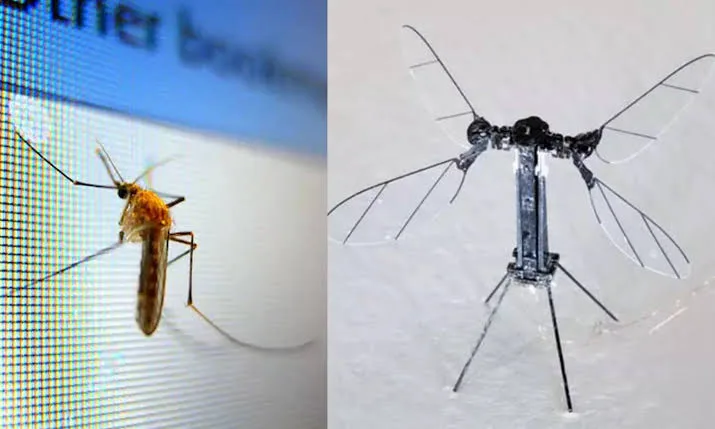
China’s National University of Defense Technology (NUDT) has introduced a tiny drone that looks and flies like a mosquito. This small drone, just 1.3 centimeters long, is made for secret spying and military surveillance. Demonstrated on China’s military TV channel CCTV 7, the drone has two leaf-shaped wings and a slim body with tiny legs. It carries small cameras and microphones that can capture pictures, sounds, and electronic signals. It can be controlled using a smartphone, making it easy to send on missions where bigger drones cannot go. Experts say this drone is hard to spot and can sneak into places like secure buildings or crowded areas without being detected. But its small size means it can only work for a short time before needing a recharge. This new drone is part of China’s broader military modernization efforts focusing on micro-robotics and intelligent warfare, joining global advancements in micro-UAV technology seen in countries like Norway and the United States. As these tiny drones become more common, they could change how spying and warfare are done. But they also raise worries about privacy and safety since they can be used to secretly listen or watch people. For now, this mosquito drone shows how technology is shrinking and getting smarter, whilst opening new possibilities for the future of military tech.
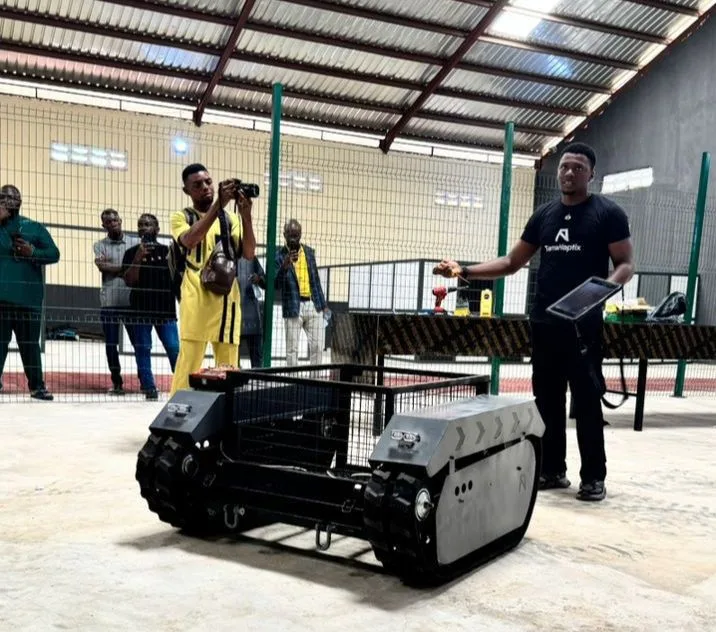
Terrahaptix rebrands as Terra Industries, sets ambitious global mission to protect critical infrastructure
Terrahaptix, the Nigerian autonomous systems startup known for pioneering infrastructure security solutions, has officially rebranded as Terra Industries. The announcement, made by CEO Nathan Nwachuku, marks a significant evolution in the company’s vision and scope. Founded in 2024 with a focused mission to protect Africa’s critical infrastructure using autonomous technologies, Terra Industries has since expanded its impact dramatically. The company now safeguards over $6 billion in assets, showcasing the growing importance of infrastructure security in the defense sector. “Our original goal was modest – to protect Africa’s critical infrastructure with autonomy,” said CEO Nathan Nwachuku. “Today, our ambitions have grown. While companies like Anduril and Helsing focus on protecting warfighters on the frontline, no one is adequately securing the infrastructure in the backline. Terra is ready to fill this vital gap.” Alongside the rebranding, Terra Industries has updated all its social media handles and launched a new website to reflect its expanded mission and global aspirations. The company aims to become a dominant player worldwide in infrastructure security, a domain it identifies as underserved but critical. Terra Industries’ innovative approach integrates AI-powered drones, solar sentry towers, and advanced software platforms to detect and neutralize threats to infrastructure such as power plants, pipelines, and communication networks. With this strategic repositioning, Terra Industries is poised to lead the next wave of defense innovation, ensuring that critical infrastructure worldwide is protected with cutting-edge autonomous solutions. Meanwhile, Daily Tech Nigeria has recently reported that Terra Industries (formerly Terrahaptix) secures a $1.2m contract to protect Nigerian hydroelectric plants.
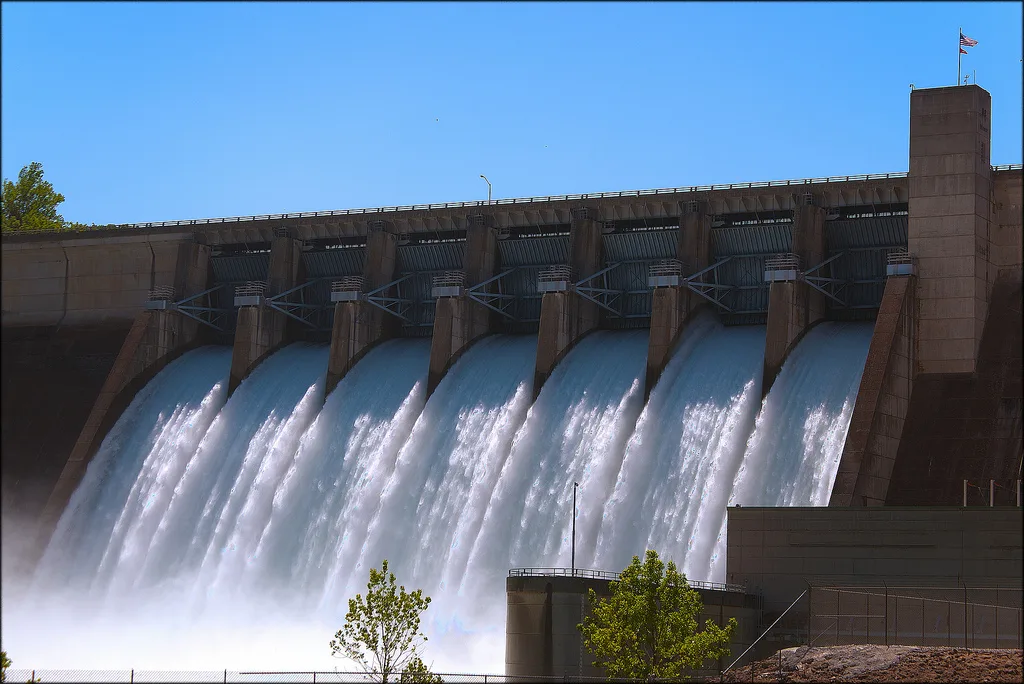
Terrahaptix secures $1.2m contract to protect Nigerian hydroelectric plants
Nigerian autonomous systems startup, Terrahaptix, has clinched a $1.2 million security contract awarded by private security firm Nethawk Solutions. The five-year deal will see the company deploy AI-powered drones and solar-powered sentry towers to secure two hydroelectric plants in Nigeria. “This is our largest contract to date and our first in the hydroelectric sector,” said Nathan Nwachukwu, CEO of Terrahaptix. In an exclusive report, the contract not only includes the initial hardware purchase but also a recurring six-figure annual software subscription fee, ensuring stable revenue for the Nigerian hardware firm. Terrahaptix will supply about 10 drones and several sentry towers, all integrated with Artemis OS – its proprietary AI system designed to detect and classify threats. The security measures come amid concerns over bandit activity around the plants. According to Nwachukwu, Artemis OS can detect intruders, assess their numbers, and even analyse their level of ammunition. Terrahaptix’s competitive advantage lies in its ability to provide an integrated end-to-end security solution, combining aerial, ground, and maritime systems under one operating platform. The company, which has rapidly expanded across Africa, operates a 15,000-square-foot factory in Abuja’s Idu Industrial District and has clients in South Africa, Ghana, Kenya, Côte d’Ivoire, and the Democratic Republic of Congo. With 75% of its sales coming from outside Nigeria, the startup has demonstrated remarkable growth. In 2024, it recorded $2 million in orders, and with this new contract, it stands a strong chance of doubling that figure in 2025. “This contract is a significant step toward our vision of becoming Africa’s leading provider of autonomous security solutions for critical infrastructure,” Nwachukwu added. Terrahaptix’s success showcases Nigeria’s growing presence in the high-tech defence sector, with local innovation driving solutions for national security challenges.