Paystack has announced the creation of a new holding company, The Stack Group (TSG), as it celebrates its 10th anniversary. The Nigerian fintech company noted that the new structure reflects how far it has grown beyond its early focus on helping businesses accept card payments. Under the new arrangement, the group (TSG) will oversee Paystack’s core payments business, the Zap consumer payments app, Paystack Microfinance Bank, and TSG Labs, its innovation and product development arm. Shola Akinlade, Paystack’s founder and CEO, will continue to lead the group. Stripe, Paystack employees, and Akinlade are listed as the founding shareholders of the new company. According to Paystack, the shift is designed to support faster product development and also maintaining shared infrastructure, compliance systems, and operational support across the group. This new structure allows us to build more products across different domains while staying focused on reliability and long term impact – Akinlade The company stated that it now serves more than 300,000 businesses across five African countries, with regulatory approvals secured in Egypt and Rwanda. Paystack recently acquired a microfinance bank in Nigeria, allowing it to build banking and credit infrastructure directly for merchants and reduce reliance on partner banks. Paystack also stated that the new structure gives the company better chance to expand into banking, consumer finance, and emerging technologies such as artificial intelligence.

Visa issued crypto cards see 525% spending surge in 2025
Spending on Visa issued crypto cards increased by 525 per cent in 2025, according to data from Dune Analytics which reveals the total spending rose from $14.6 million in January to $91.3 million by December. The growth was driven by six crypto cards issued through partnerships between Visa and blockchain projects. These included Gnosis Pay, Cypher, EtherFi, Avici Money, Exa App, and Moonwell, all of which allows end users to spend crypto assets directly. EtherFi led the six with $55.4 million in annual spending, while Cypher followed with $20.5 million. Together, the two cards accounted for the bulk of the increase. Unlike other traditional exchange linked cards, these products are connected to decentralised finance protocols, enabling users to spend stablecoins and other on-chain assets. Stablecoins powered most of the transactions, offering price stability and instant conversion to fiat currency at the point of sale. Polygon researcher Alex Obchakevich, who built the Dune Analytics dashboard, stated on X, that the figures shows not only the fast adoption of crypto cards among users, but also the importance of crypto and stablecoins global payment ecosystem for Visa. He added that the rising spending shows crypto has evolved into a fully fledged tool for everyday financial transactions. Visa has expanded its stablecoin support across four blockchains and, in mid-December, launched a dedicated advisory team to help banks, merchants, and fintech firms integrate stablecoin payments. The figures cover only six cards, but analysts say overall market activity will likely be higher in the coming months.

CBN sets 2026 priorities around banking stability, fintech oversight, inflation control
The Central Bank of Nigeria (CBN) has outlined its key priorities for 2026, placing banking system stability, inflation control, tighter oversight of fintechs, and modern payment systems at the centre of its agenda. CBN Governor Olayemi Cardoso said the focus for the year is to strengthen the financial system with reforms aimed at long-term economic stability. According to Cardoso, the CBN will continue to pay close attention to the health of the banking sector, stressing that strong supervision and good corporate governance are critical to keeping the system stable. He added that a resilient banking sector is not just important for depositors, but also for economic growth, as banks remain central to credit creation and financial intermediation in the economy. The Governor also made it clear that inflation control remains a core priority for the apex bank in 2026. He said the CBN will rely more on disciplined, data-driven monetary policy decisions to anchor inflation expectations and reduce pressure on households and businesses, following a period of elevated inflation and rising living costs. On the fast-growing fintech space, Cardoso struck a balance between encouraging innovation and tightening regulation. He said while fintech companies have helped expand access to financial services, innovation must go hand in hand with strong consumer protection and financial integrity to avoid risks that could undermine the wider financial system. The CBN also plans to modernise the payment infrastructure to make transactions faster, cheaper, and more inclusive, especially for underserved communities.

PiggyVest pays out ₦1.3 trillion as user base crosses 6 million
PiggyVest has recorded its biggest year yet in 2025, paying out ₦1.3 trillion to users and crossing 6 million user base. The fintech said the payouts represent 56% increase from the ₦835 billion disbursed in 2024, which shows a strong growth as the company approaches its 10th year of operations. PiggyVest, in an email sent to users, disclosed that its assets under management grew by 110% in 2025, although it did not state the exact figure. In 2025, the fintech launched its own in-house payment system powered by PocketApp, moving away from the virtual account numbers. Establishing our own payment infrastructure through PocketApp account numbers has given us more reliability and control over deposits and payouts – Joshua Chibueze, Co-founder and Chief Marketing Officer The performance of the company in 2025 also earned global recognition, as PiggyVest was named among CNBC’s top fintech companies of the year, alongside Interswitch, Moniepoint, and M-KOPA. Since its launch in 2016, PiggyVest has now paid out more than ₦3 trillion to users. In 2024, the fintech introduced PiggyVest Business, extending savings and investment products to small businesses through offerings such as Investify and Safelock. Community engagement also played a role in PiggyVest’s growth. The company held town halls in five Nigerian cities, including Lagos and Abuja, to gather feedback and shape product strategy. Chibueze stated that the primary community programme of the company, OpenHouse, was extended to more cities nationwide last year which brought more depth and insights into product strategy. PiggyVest plans to roll out PiggyVest Kids, a savings product for children, around Children’s Day later this year.
Best performing banking stocks in Nigeria in 2025
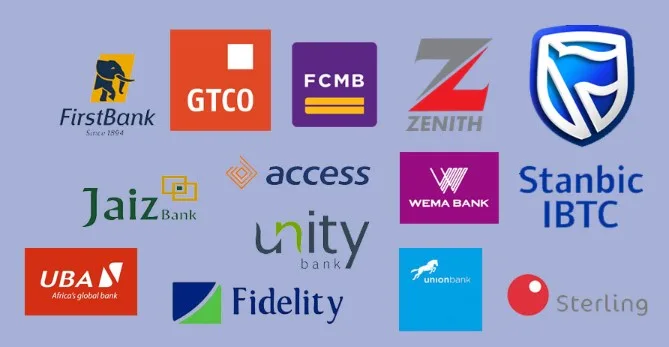
By Aminu Umar Turaki The banking stocks of Nigeria, in 2025 delivered a mixed but positive performance in 2025, with gains driven by selective investor confidence rather than broad-based sector optimism. Data from the Nigerian Exchange (NGX) revealed that the NGX Banking Index rose by 39.77% during the year. While this represents a solid recovery for banking equities, it lagged behind the 51.19% gain recorded by the NGX All-Share Index (ASI). Out of the 12 banking stocks listed on the Exchange, only five outperformed the overall market, with stronger balance sheets, clearer growth strategies, and more predictable earnings. Institutions perceived to be better positioned to manage foreign exchange volatility, rising funding costs, and regulatory pressures attracted stronger demand by investors. Wema Bank Plc emerged as the top performer of the sector, posting returns of over 100%, while several tier-one and mid-tier banks recorded strong double-digit gains. However, some major lenders notably, Fidelity Bank Plc recorded a modest gain of 8.57%, while Access Holdings Plc ended the year with an 11.95% decline, with concerns around integration risks, capital requirements, and earnings pressure. UBA’s share price rose from ₦34.00 to ₦41.65, due to support by investors in its pan-African operations, steady earnings profile, and growing digital banking footprint. Sterling advanced from ₦5.60 to ₦7.05, driven by improved sentiment around its retail banking strategy and strengthening asset quality. FCMB gained from ₦9.40 to ₦12.05, buoyed by retail-led growth initiatives and investment in digital banking services. Zenith Bank closed the year at ₦61.80, up from ₦45.50, reinforcing its reputation for earnings consistency, strong liquidity, and reliable dividend payouts. Ecobank rose from ₦28.00 to ₦41.90, supported by diversified pan-African revenues and improvements in operational efficiency. Jaiz Bank climbed from ₦3.00 to ₦4.55, due to the growing acceptance of its non-interest banking model and speculative momentum in the second half of the year. GTCO closed 2025 at ₦90.70, benefiting from a strong investor preference for well-capitalised tier-one banks with predictable cash flows. First HoldCo surged from ₦28.05 to ₦47.90, driven by renewed confidence in its restructuring efforts, capital position, and improving earnings outlook. Stanbic IBTC rose from ₦57.60 to ₦100.00, achieved by diversified earnings across banking, asset management, and pensions, as well as strong dividend appeal. The performance of banking stocks in 2025 shows a shift toward selective investing rather than blanket exposure to the sector. Investors usually prioritised earnings resilience, capital strength, and strategic clarity amid a challenging macroeconomic environment.
Naira records first annual gain in 13 years, closes 2025 at ₦1,429/$
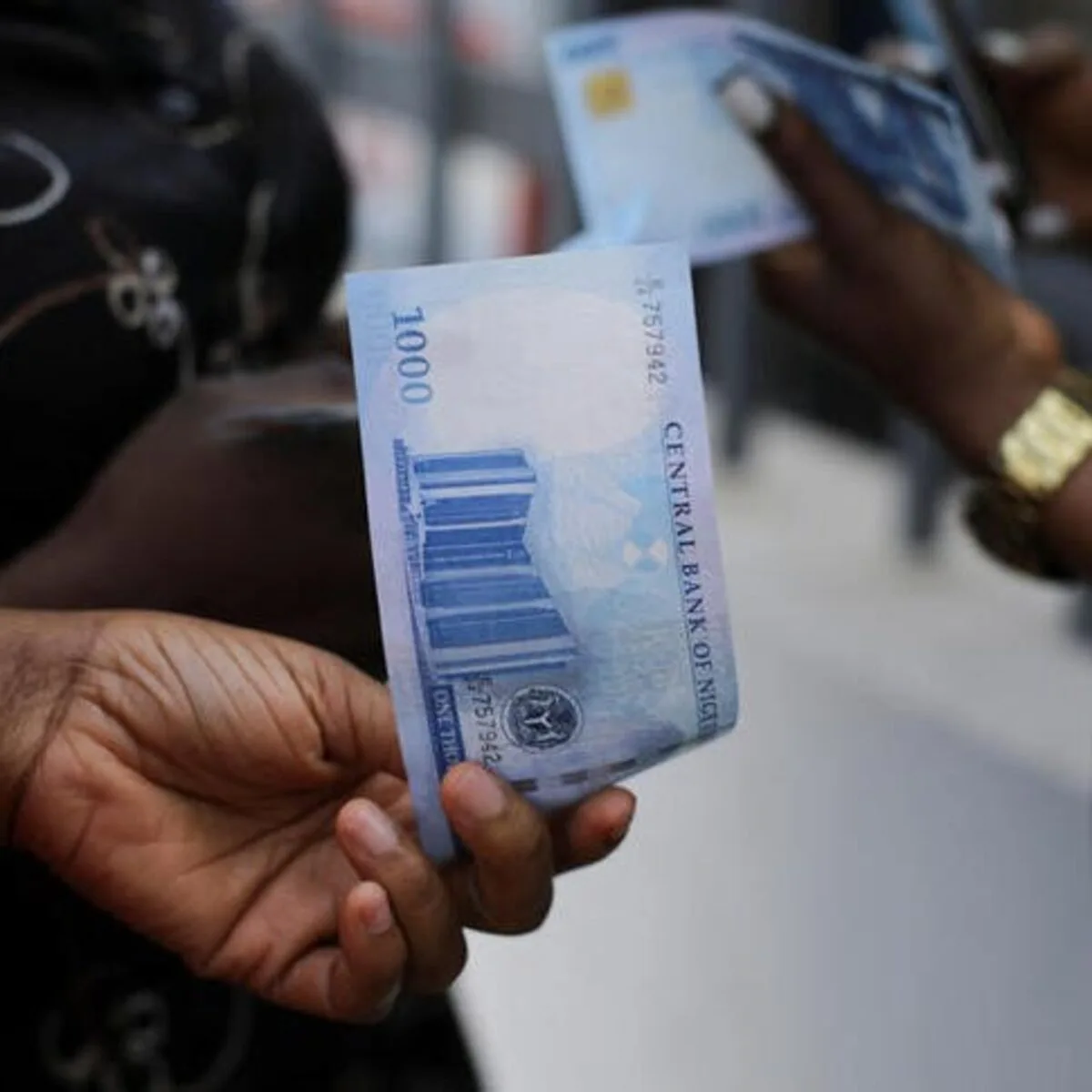
By Aminu Umar Turaki. The naira, ended 2025 on a stronger note, closing at ₦1,429 to the US dollar on December 31, according to official data from the Central Bank of Nigeria (CBN). This represents a 7.4% appreciation compared to the ₦1,535/$1 recorded at the close of 2024, marking the naira’s first full-year gain since 2012. It also ends 13 consecutive years of annual depreciation, making 2025 a turnaround for the currency. CBN data show that the naira experienced volatility during the year, with its weakest point recorded in April 2025, when it fell to ₦1,602/$1. However, a steady recovery began from May and gathered momentum in the second half of the year.The naira opened the year at ₦1,538.50/$1 in January. It traded relatively flat in February before falling in March and April.From May through June, the currency began to recover. September marked a turning point, with the naira trading below ₦1,500/$1 for most of the month. The rally continued into October, dipped slightly in November, and strengthened again in December to close the year at ₦1,429/$1. Analysts attribute the improved performance of the naira to foreign exchange reforms introduced by the Central Bank of Nigeria in 2024, alongside tighter monetary policies and improved FX inflows. This development has reduced trading and improved price transparency in the FX market.