
By Aminu Umar Turaki Nigerian commercial banks deposited an estimated ₦3.7 trillion into the Central Bank of Nigeria’s (CBN) Standing Deposit Facility (SDF) on December 24, highlighting one of the strongest liquidity buildups in recent months. CBN financial data covering December 22 to 24, 2025 shows a sharp rise in idle funds placed with the apex bank just ahead of the Christmas holiday, despite earlier efforts by the CBN to withdraw excess cash from the system. On December 22, the CBN had conducted an ₦1.7 trillion Open Market Operation (OMO) auction to mop up liquidity. However, the latest figures suggest that banks remained heavily cash-laden. What the data showsCBN records indicate that deposits placed in the SDF rose from ₦2.47 trillion on December 23 to ₦3.67 trillion on December 24, representing an increase of about ₦1.2 trillion in just 24 hours.Banks’ opening balances at the CBN also climbed from ₦163 billion to ₦223 billion, further confirming that the banking system entered the festive period with excess cash. This comes despite the CBN having raised more than ₦11.2 trillion through OMO bills since November, while repaying approximately ₦11.1 trillion, suggesting that liquidity pressures remain elevated. Analysts say the trend reflects a risk-averse lending environment, with banks preferring to earn a relatively safe overnight return of about 22.5% via the SDF rather than expand credit under tight monetary conditions. Inside the liquidity surgeThe data also points to a possible shift in the CBN’s liquidity management strategy. Rather than issuing new short-term debt aggressively, the apex bank appears to be allowing market forces to rebalance after weeks of intense OMO activity.On December 23, the CBN processed an OMO repayment of ₦1.14 trillion, part of a broader issuance-repayment cycle that saw roughly ₦22.3 trillion move through the system within eight weeks. OMO stop rates during the period ranged between 19% and 22%, but the CBN has increasingly relied on the SDF to absorb excess funds—an approach that tightens liquidity without adding to interest costs.Interest payments on OMO auctions for November and December alone reportedly approached ₦2 trillion, making passive liquidity control a more cost-efficient option. Market watchers believe the CBN may return to more aggressive OMO interventions in early 2026, particularly to rein in inflation, support foreign exchange stability, and manage government funding needs. The surge in SDF deposits highlights weak credit expansion, rising caution among banks, and limited investment opportunities in the real economy. For policymakers, it signals the need to balance liquidity control with economic growth. For investors, it suggests a banking sector adopting a wait-and-see stance as macroeconomic uncertainties persist heading into 2026. The Standing Deposit Facility (SDF) allows banks to earn interest on excess overnight funds, currently around 22.5%.The Standing Lending Facility (SLF) serves as the opposite window, offering short-term loans to banks at higher rates. Rising SDF usage indicates high liquidity but weak lending appetite.The CBN raised over ₦11.2 trillion in OMO bills between November and December 2025 and repaid nearly the same amount. Recent trends show a shift toward passive liquidity management by the apex bank.
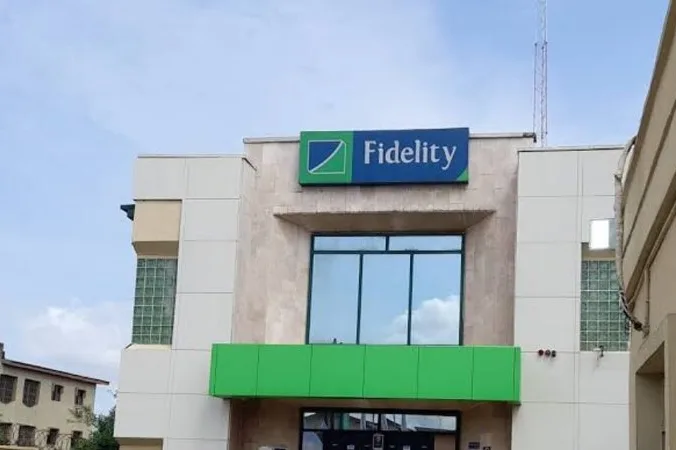
Fidelity Bank to restrict transactions, without TIN or NIN from Jan.
By Oluwatunmise Omoseyin Fidelity Bank has announced that it will begin restricting transactions on accounts that are not linked to a Tax Identification Number (TIN) or a National Identity Number (NIN) from January 1, 2026. The bank confirmed that the move is in line with the Nigerian Tax Administration Act (NTAA) 2025, which requires all bank accounts to be connected to a valid tax identity. Customers without a TIN will be required to use their NIN instead. Fidelity Bank, in a message sent across to all customers, warned that accounts without the required details may face transaction limits if the information is not updated before the deadline; Accounts that do not have a tax ID or NIN will be restricted from transacting starting January 1, 2026 – the bank stated The directive follows the federal government’s push for stronger tax compliance across the financial system. Taiwo Oyedele, Chairman of the Presidential Committee on Fiscal Policy and Tax Reforms, stated that the National Tax Administration Act (NTAA) provides the legal backing for banks to enforce full compliance nationwide. The government aims to improve tax collection, strengthen financial transparency, and reduce unreported income, by making it mandatory for all bank customers to link their bank accounts to their respective TIN or NIN. Fidelity Bank advised individuals and small business owners who have not registered a TIN or linked their NIN to do so as soon as possible, warning that failure to comply could result in limits on transfers, withdrawals, and other banking services.
Zuldal Microfinance Bank declared illegal and unlicensed, by CBN
The Central Bank of Nigeria (CBN) has issued a warning regarding Zuldal Microfinance Bank Limited, declaring it an illegal entity operating without a license.The regulator has advised all Nigerians to steer clear of the firm, which has reportedly been conducting business in major cities including Lagos, Abuja, Kaduna, and Kano.The apex bank, in a release on Wednesday made it clear that Zuldal has no regulatory approval to conduct banking business in the country. Despite marketing itself to the public, with reports even surfacing of a grand opening held at the National Women Centre in Abuja just last September, the firm is not recognized by the law.A quick check online reveals that the bank’s digital footprint is already going dark. Its website is currently inactive and password-protected, raising questions about its legitimacy.The CBN emphasized that operating without a license is a direct violation of the law. specifically citing Section 2(1) of the Banks and Other Financial Institutions Act (BOFIA) 2020, which mandates that no person or company can carry out banking business in Nigeria without a valid license issued by the CBN.The regulator warned the public that anyone doing business with the entity does so at their own peril; The said Zuldal Microfinance Bank Limited is not a licensed Microfinance Bank and has no authorisation from the Central Bank of Nigeria to operate or carry out any form of banking or microfinance business in Nigeria. The CBN remains committed to safeguarding the financial system and protecting members of the public from unlicensed and fraudulent institutions For now, Zuldal Microfinance Bank remains blacklisted, and citizens are urged to disregard any claims it makes about being a licensed operator.

FEDA invests $75 million to boost the expansion of Spiro electric vehicle across Africa
The Fund for Export Development in Africa (FEDA), part of Afreximbank, has committed $75 million to Spiro, the continent’s leading electric two-wheeler and battery-swapping network, to accelerate clean mobility across Africa.Founded in 2022, Spiro operates Africa’s largest electric motorcycle battery-swapping network, with over 60,000 electric motorcycles and 1,200 swapping stations spanning several countries.Afreximbank’s move aligns with the increasing push towards electric vehicle adoption by governments in Nigeria, Kenya, Rwanda, and Ghana, which have recently rolled out pro-EV policies. The investment supports not only local vehicle manufacturing but also regional integration and knowledge transfer within Africa’s emerging clean energy ecosystem.Marlene Ngoyi, CEO of FEDA, said; Spiro’s success to date is a clear demonstration of the strength and scalability of its business model… it underscores the demand for sustainable mobility solutions across Africa Spiro’s approach combines commercial viability with social impact, driving practical progress toward cleaner transportation. The Federal Government’s launch of National Occupational Standards for compressed natural gas and electric vehicles further complements these efforts to reposition Nigeria’s automotive industry towards a cleaner future.

PalmPay and Wema Bank complete Nigeria’s first live transaction on NPS
PalmPay and Wema Bank on November 7, 2025, executed the first live transaction on the newly launched National Payment Stack (NPS) by the Nigeria Inter-Bank Settlement System (NIBSS), heralding a new era in the digital payments landscape in Nigeria.The transaction, completed at precisely 11:56 AM in milliseconds with instant settlement, showcased the speed, security, and efficiency promised by the NPS platform. Developed and powered by NIBSS, the NPS is designed to unify Nigeria’s payment ecosystem, bringing together banks, fintechs, and other payment institutions on a seamless, interoperable infrastructure.Built on the globally recognized ISO 20022 financial messaging standard, the NPS not only ensures compatibility with international payment systems but also introduces advanced security features such as digital signatures and multi-factor authentication to safeguard customer data. Additionally, it includes cross-border payment capabilities, positioning Nigeria to play a bigger role in regional and global financial markets. NIBSS is set to gradually phase out its long-standing NIBSS Instant Payment (NIP) platform that has operated for 14 years, replacing it with the more scalable and reliable NPS to improve user experiences across the country.Premier Oiwoh, Managing Director of NIBSS, reiterated that the NPS aim to build a $1 trillion economy within eight years by providing a modern payment infrastructure that fuels innovation, financial inclusion, and effective government payments like social interventions and tax collections.NIBSS has encouraged all banks and payment service providers in Nigeria to complete their integration with the NPS to realize faster, safer, and more inclusive digital transactions for Nigerians.
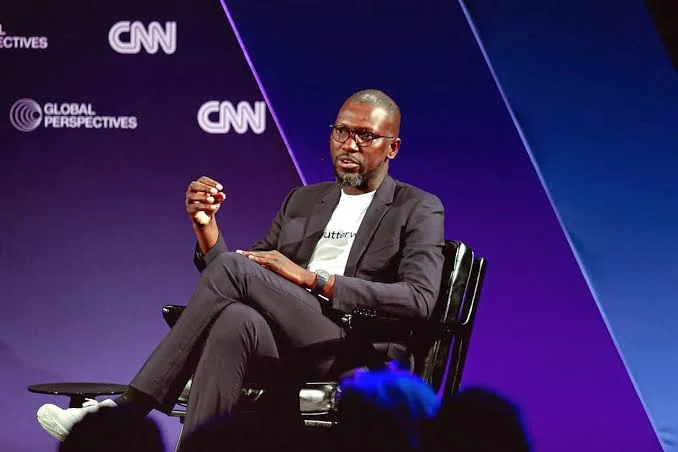
Flutterwave CEO outlines vision for Africa’s “payment superhighway” at CNN summit
Flutterwave Founder and CEO Olugbenga “GB” Agboola unveiled his vision to transform Africa’s digital economy by building a seamless “payment superhighway” hat to connect African economies and facilitates cross-border money movement. Speaking at CNN’s inaugural Global Perspectives Summit on November 8, in a session focused on “Fueling the Next-Generation Startup Ecosystem”, Agboola emphasized the critical role of regulatory collaboration and interoperable infrastructure in driving the fintech growth in Africa. Agboola outlined recent progress in regulatory cooperation, referencing the Ghana-Rwanda fintech memorandum of understanding as a notable example of efforts to harmonize cross-border financial technology operations. He praised African regulators for their understanding of market dynamics and commitment to enabling growth through supportive infrastructures.Joining Agboola on the panel were Lucy Liu, Co-founder and President of Airwallex; Alex Okosi, Managing Director of Google Africa; and Serigne Dioum, CEO of MTN Group Fintech, with veteran CNN anchor Richard Quest moderating. The panelists echoed optimism about Africa’s evolving regulatory landscape and its potential to foster financial inclusion and economic growth. Okosi stressed the growing recognition of regulators and the need for open markets, while Liu emphasized ecosystem integrity and consumer protection as key priorities. Dioum emphasized the shared vision between regulators and operators to enhance financial access continent-wide. Agboola pointed to Africa’s pioneering role in alternative payment systems, citing innovations like Kenya’s M-Pesa and Nigeria’s Inter-Bank Settlement System (NIBSS), paired with mobile money adoption. To realize this vision, Flutterwave has partnered with Polygon to develop Africa’s largest infrastructure for stablecoin payments, aiming to expand digital currency acceptance and cross-border transactions.The CNN summit, themed “Africa’s Role in a Changing World”, gathered public leaders, entrepreneurs, and innovators to explore how Africa’s youthful, vibrant economies can drive sustained inclusive global growth.