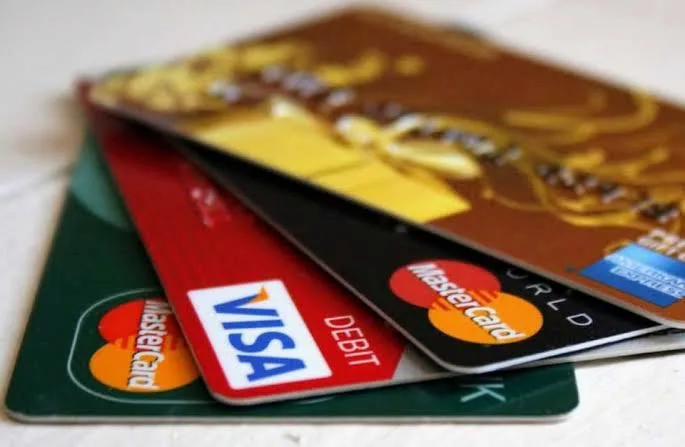
Nigerians can now shop and pay for services worldwide again as major banks have reactivated international transactions on their naira debit cards. United Bank for Africa (UBA), Wema Bank, and Guaranty Trust Bank (GTBank) announced on July 4, 2025, that their naira cards are once again enabled for global payments and withdrawals. This move ends a nearly three-year suspension caused by foreign exchange challenges and dollar shortages in Nigeria’s banking sector. UBA confirmed that all its Premium Naira Cards, including Gold, Platinum, and World variants, can now be used for online shopping, POS payments, and ATM withdrawals worldwide. Wema Bank highlighted that customers can now pay in dollars on popular platforms like Amazon, eBay, Netflix, Spotify, and YouTube using their naira Mastercards. GTBank also resumed international transactions but set a quarterly spending limit of $1,000, with ATM withdrawals capped at $500 per quarter. This reopening follows Central Bank of Nigeria’s liberalisation of the foreign exchange market, which has stabilised the naira and improved dollar liquidity. Financial experts say the improved forex availability encouraged banks to lift restrictions and restore global access for their customers. For Nigerian consumers, this means easier access to international goods and services without relying on virtual dollar cards or third-party payment methods. It also signals a positive step toward integrating Nigeria’s banking system with the global economy. Banks are expected to maintain these services and possibly expand limits, offering more convenience to users who rely on international platforms for shopping, subscriptions, and business.

Flutterwave expands US reach with 20 new money transmitter licenses, relaunches Send App
Flutterwave has secured 20 additional Money Transmitter Licenses (MTLs) in the US, boosting its total to 34 and enabling wider remittance services across many states. The company’s flagship Send App, which allows Africans in the US to send money home, has been relaunched with these new licenses. This expansion unlocks new corridors to Nigeria, Ghana, and Egypt, making it easier and faster for users to send money without intermediaries. The onboarding process now features a quick ID check, and the app supports US-issued Visa and Discover cards with enhanced security and smoother user experience. Flutterwave CEO Olugbenga “GB” Agboola said the move empowers millions of Africans in the US to support their families and contribute to Africa’s economic growth while staying connected globally. Currently, Send App operates in over 30 US states including DC, Georgia, Maryland, and Michigan, with plans to continue expanding its footprint. This development strengthens Flutterwave’s position as a leading bridge between Africa and the global economy.
Best loan apps in Nigeria without BVN or collateral (no scam)
There are some best loan apps in Nigeria without BVN or collateral that can help you loan money and pay back later. Most of us need fast cash to solve our daily problems like paying school fees, buying food, paying rent, repairing a car, or even starting a small business. There are times when you may not have the time to go to the bank or go through a long process. Others of us don’t even have a BVN (Bank Verification Number) or anything to act as collateral. This is why loan apps have become very popular. They are apps that can be downloaded on your phone, and you can borrow money in minutes when you need it. You don’t have to go out of your house or wait at the bank. But be careful since not all loan apps are safe. They can steal your information or mess up with your contacts. In this post, we will show you the top loan app in Nigeria without bvn or collateral (no scam). So, let’s get started. What is a loan app? A loan app is a mobile application that can help you borrow some money without stress, right on your phone. It doesn’t require you to go to the bank and wait in long queues and complete lots of paperwork. The process of getting a loan is simple; you can download the app, open an account, request a loan, and the money goes right to your bank account or mobile wallet as long as your application was approved. All you need is a good internet connection and your smartphone. Most loan apps operate 24/7, and you can apply at any time, day or night, as well as during weekends and even on holidays. This is very convenient since you can always use quick cash at any time of the day and especially when it’s a personal emergency.. Why do people look for loan apps without BVN or collateral? There are many reasons why people search for loan apps that don’t require BVN or collateral: Luckily, in Nigeria, there are loan apps that can get you money without BVN or collateral. Which are the best ones? Let’s see. Recommended Guide: How to get back a hacked Facebook or WhatsApp account in Nigeria (Step-by-Step) Best loan apps in Nigeria without BVN or collateral (no scam) 1. Palmcredit Palmcredit is one of the most trusted loan apps in Nigeria. It gives instant loans without asking for your BVN or collateral. After downloading the app, you have the convenience of applying for the loan and getting an introduction in a matter of minutes.. Why Palmcredit is safe: Palmcredit operates under Newedge Finance Limited, which is a reputable financial services provider in Nigeria. The company is a fully licensed and controlled company under the Central Bank of Nigeria (CBN), implying that it can work under the formal rules that can secure your information and protect users. 2. FairMoney FairMoney is another reliable application that provides fast and easy loans to clients. When it involves an increase in the loan amounts, it may require you to present your BVN, but still, it does not take a long time to get the smaller loans, as those smaller loans don’t need BVN or collateral securities. Why FairMoney is safe: FairMoney is an approved microfinance bank in Nigeria. It also has bill payments and airtime recharge. 3. Okash (by Opay) Okash is one of the loan services in the Opay app. It’s quick and easy, and you don’t need to provide a lot of personal information to get loans. You can get small loans in no time without BVN or collateral. 4. Aella Credit Aella Credit is another great loan app that can give you fast loans without BVN in the initial stage. It’s easy to use, fast, and suitable for emergency financial situations. Why Aella is safe: Aella Credit is licensed and regulated by the financial services of Nigeria. 5. QuickCheck One of the best loan apps that gives instant loans with little or no questions is QuickCheck. You don’t need to give collateral and can get funds in minutes. Why QuickCheck is safe: The app is run by a licensed company and has good reviews on the Play Store. 6. EaseMoni EaseMoni gives quick loans to Nigerians with no requirements except documents or collateral. You can use your phone to apply for the loan easily, and the money will be credited to your bank account once it’s approved. Why EaseMoni is safe: EaseMoni is run by Blue River micro-finance bank, which is licensed and regulated by the Central Bank of Nigeria (CBN). Being a division of an established financial corporation, it guarantees safe, reliable, and professional loan services to every user. How to stay safe when using loan apps Most loan apps are good, but there are also fake apps that can scam you. To stay safe, do the following: 1. Only download from the Google Play Store Don’t install loan apps when you have been referred to them by WhatsApp or any other website. 2. Read the review before installation Know what other users think. Don’t use apps that have very bad reviews. 3. Never share otp/ passwords You should never share your OTP or log in with anybody. 4. Check for CBN approval Apply apps that are licensed by the Central Bank of Nigeria (CBN) only. 5. Protect your contacts and data Some apps access your contacts and call your friends when you fail to pay back. Choose apps that don’t violate your privacy. Recommended Guide: How to check and monitor your NIN with your phone without going to NIMC office Benefits of loan apps without BVN or collateral Important notes Even though these apps don’t ask for collateral or BVN at first, you must: Conclusion Loan apps indeed make life easier for many Nigerians, especially those in need of cash urgently, without going through the bank stress. You no longer have to worry

Nigerian Fintech Okra shuts down as co-founder Fara Ashiru joins UK startup Kernel
Okra, one of Nigeria’s pioneering open banking startups, has closed down after five years, with co-founder Fara Ashiru moving to UK-based Kernel as Head of Engineering. Okra, founded in 2019 by Fara Ashiru and David Peterside, was a trailblazer in Africa’s open finance scene. It developed technology that let users securely connect their bank accounts to third-party apps, working with major financial firms like Renmoney and AIICO Insurance. The startup raised over $16.5 million in funding and expanded across the continent. In May 2025, Okra decided to wind down operations. Ashiru confirmed the closure and expressed pride in the company’s impact and the talented team behind it. She left Okra in May and started her new role at Kernel, a UK startup, in June 2025. “It was an incredible journey; we built impactful technology and helped pioneer open banking in Africa. I’m grateful for the community, customers, investors, and team who supported us over the past five years.” – Ashiru said As Okra exits, the fintech ecosystem in Nigeria continues to evolve, with startups adapting to new challenges and opportunities in digital finance.

Unity Bank awards N16 million to 30 young entrepreneurs in NYSC corpreneurship challenge
Unity Bank Plc has awarded N16 million in business grants to 30 young entrepreneurs across Nigeria through its Corpreneurship Challenge, a flagship entrepreneurship development initiative in partnership with the NYSC Skills Acquisition and Entrepreneurship Development (SAED) programme. The winners were selected after pitching innovative business ideas at NYSC Orientation Camps in 10 states, including Lagos, Cross River, Niger, Abuja, Nasarawa, Taraba, Kaduna, Plateau, Jigawa, and Anambra. The grants ranged from N800,000 for first place to N300,000 for third place. At the Lagos Ipaja camp, Adeniyi Stephen Gbemininyi won the grand prize with a fashion design business pitch. Other top winners included Kolawole Opeoluwa Darasimi, who received N500,000 for bag making, and Johnson Elizabeth Ene, awarded N300,000 for her cake and pastry business. The Corpreneurship Challenge has been running since 2019 and has become an important part of the NYSC programme, helping fresh graduates develop marketable skills and start businesses amid limited white-collar job opportunities. Over the years, Unity Bank has invested more than N100 million in the initiative, supporting over 160 winners nationwide. Mrs. Adenike Abimbola, Unity Bank’s Divisional Head of Retail and SME, said the bank aims not only to provide funding but also to nurture young entrepreneurs with the skills and confidence to create jobs and transform communities. She stated that the high quality of business ideas and the strong interest from Nigeria’s youth as proof of the programme’s impact. With thousands of applicants each year, the Corpreneurship Challenge continues to be a vital platform for turning fresh graduates’ business dreams into reality.Unity Bank plans to maintain and possibly expand this support to further boost youth-led businesses and contribute to Nigeria’s economic development.
Nigeria’s SEC wants AI surveillance to boost capital market
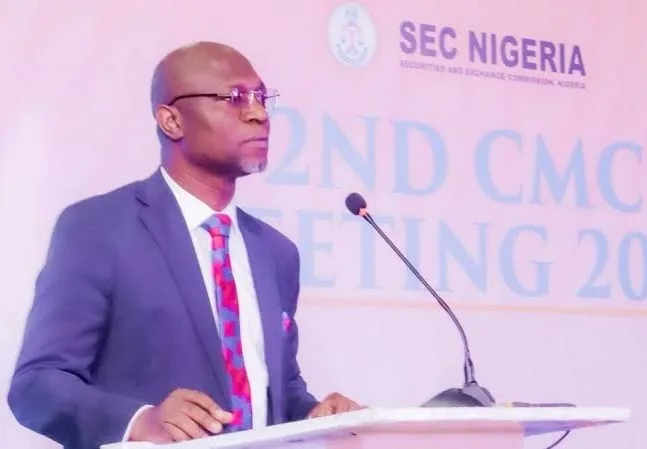
The Securities and Exchange Commission (SEC) has called for the use of Artificial Intelligence (AI) to improve how Nigeria’s capital market is monitored and regulated. At a recent lecture by the Capital Market Academics of Nigeria, SEC Director-General Dr. Emomotimi Agama explained that AI-driven systems would help regulators watch market activities in real time. This means quicker detection of fraud and better management of risks, moving away from the old reactive approach to a more predictive and tech-savvy way of overseeing the market. Dr. Agama pointed out that despite recent reforms, Nigeria’s capital market still struggles with issues like poor coordination between the SEC and the Central Bank of Nigeria, and challenges in raising capital fairly. He suggested Nigeria learn from the UK’s fintech model, which uses phased licensing and regulatory sandboxes to safely test new financial technologies. The SEC also projects Nigeria’s cryptocurrency market to grow to $52.5 million by 2028, showing the rising interest in digital assets. However, Dr. Agama stressed the need for clear regulations and stronger security to protect investors. He urged regulators, policymakers, and the private sector to work together to build a capital market that embraces innovation and gains investor trust.