
Suspended Senator Natasha Akpoti-Uduaghan made a bold return to her constituency in Kogi Central on Tuesday, defying a curfew and restrictions imposed by the state government. Arriving by helicopter in Okehi Local Government Area, she was greeted by a massive crowd of supporters who had gathered despite the ban on public gatherings. The curfew, declared earlier by Okehi LGA Chairman Amoka Eneji, aimed to prevent potential security breaches during the senator’s planned Sallah homecoming. Authorities had warned against political rallies and gatherings, citing concerns over peace and order. However, Akpoti-Uduaghan dismissed these directives, insisting that her visit was a celebration with her community and not a political rally. Speaking to her supporters, she reaffirmed her connection to her roots, stating, “Nobody and nothing can stop me from coming home. I’m an Ebira person; this is my land.” She also accused key political figures, including Governor Usman Ododo and Senate President Godswill Akpabio, of intimidation tactics. Akpoti-Uduaghan’s return comes amid her six-month suspension from the Senate for alleged rule violations and ongoing tensions with the ruling All Progressives Congress (APC).

High cost of CNG conversion hindering adoption in Nigeria, says Ogun Governor
Ogun State Governor, Dapo Abiodun, has raised concerns over the high cost of converting vehicles and machinery to run on Compressed Natural Gas (CNG), describing it as a significant obstacle to widespread adoption in Nigeria. Speaking at the third edition of the Chemical Handlers and Users Workshop organized by the State Ministry of Environment in Abeokuta, Governor Abiodun stressed the need for greater investment in clean energy solutions to reduce pollution and promote environmental sustainability. Represented by his deputy, Noimot Salako-Oyedele, the governor highlighted the importance of transitioning to cleaner energy sources like CNG but acknowledged that financial and technical barriers are slowing progress. He noted that as of May 2024, only 131 CNG conversion centers existed across the country, with Ogun State having a relatively high concentration. “Concerns over conversion costs, refueling infrastructure, and technical expertise remain major barriers to adopting CNG,” Abiodun said. To tackle these challenges, the Ogun State government is partnering with private investors to provide financing options and expand CNG infrastructure. The governor also pointed out that Ogun has been utilizing CNG for its commercial transport system since 2022, even before fuel subsidies were removed, demonstrating its commitment to clean energy solutions. Ogun State has been at the forefront of environmental sustainability efforts through programs such as the Waste-to-Resource Revolution and the Electric Mobility Leadership Program. These initiatives aim to promote cleaner energy alternatives and reduce dependence on fossil fuels. The state’s Commissioner for Environment, Ola Oresanya, echoed this sentiment during the workshop, urging stakeholders, including chemical handlers, industry players, and farmers, to adopt clean energy technologies and embrace circular economy practices. “We urge all stakeholders to prioritize environmental compliance and work together to build a legacy of sustainability that fosters economic growth and improves public health for future generations” – Oresanya CNG is derived from natural gas and burns cleaner than traditional fossil fuels, significantly reducing harmful emissions. Despite its environmental benefits, adoption has been slow due to financial constraints faced by industries, farmers, and public transport operators. A recent report revealed that many vehicle owners are reluctant to switch to CNG because of inadequate refueling infrastructure and limited space in their vehicles after conversion. The federal government has introduced several initiatives to ease adoption, including free vehicle conversions at select locations and credit schemes for businesses interested in making the transition. However, experts warn that unless financial and technical barriers are addressed comprehensively, many industries and individuals may struggle to embrace this cleaner energy alternative.

Benue State initiates comprehensive five-day training program to equip 40,000 civil servants with e-governance skills
The governor of Benue state has launched a five-day digital training program aimed at equipping 40,000 civil servants and local government staff with essential e-governance and ICT skills. The training, held in Makurdi, the state capital, is designed to enhance service delivery, improve transparency, and prepare the workforce for a digitally-driven future. During the program’s inauguration, Governor Alia highlighted the importance of embracing technology in governance. “These initiatives are empowering people, enhancing transparency, and embracing the possibilities of a digitally-driven economy while fostering a future-ready civil service that adapts to a rapidly evolving world,” he said. The event also saw the unveiling of four key e-governance platforms: Electronic Document Management System (EDMS): A tool for efficient document processing, storage, and retrieval within government ministries. Benue State Geographic Information Systems (BENGIS) Portal: A platform to streamline land management services and reduce bureaucratic delays. Benue Youth Startup and Innovation Support Portal: A hub to nurture entrepreneurship through mentorship opportunities and financial support. Office of Benue Head of Service Website: A website aimed at improving communication and information sharing within the civil service. The Managing Director of Benue Digital Infrastructure Company (BDIC), Terwase Hembaor Gbande, highlighted the state’s commitment to technological growth. He pointed out previous initiatives such as partnering with Microsoft Corporation to train 10,000 youths on ICT skills and establishing the Benue Fashion and ICT Hub. This latest effort complements another major partnership between Benue State and Google to train an additional 10,000 youths in ICT. The collaboration aims to empower young people with skills needed to thrive in Nigeria’s growing digital economy. Representatives from national agencies like NITDA, Galaxy Backbone Ltd., and the National Data Protection Commission praised the initiative. Moses Agbogbo Ode, Head of Benue State Civil Service, emphasized that transitioning from analogue to digital operations will improve efficiency and service delivery across government institutions.

Ondo State revolutionizes tax collection with new digital platform
Ondo State is set to launch a digital platform designed to streamline tax collection and other government-related payments. This innovative initiative, spearheaded by Governor Lucky Aiyedatiwa, aims to enhance revenue generation, improve accountability, and promote ease of doing business in the state. The platform, developed in partnership with BBA Consult Ltd., assigns each taxpayer a unique identification number linked to their personal profile, ensuring confidentiality and accessibility only to the individual taxpayer. It promises to eliminate bottlenecks associated with manual payments, offering seamless transactions across various sectors. Governor Aiyedatiwa emphasized that the platform will not only simplify tax payments but also significantly boost revenue, which will be directed toward critical infrastructure projects. He assured residents and businesses of the platform’s security, ease of use, and long-term economic benefits. This aligns with broader efforts to harmonize tax administration and optimize revenue collection, reflecting a national push toward enhancing fiscal policies. The platform serves as a one-stop shop for multiple government-related payments, including commerce, land, and education fees, further consolidating Ondo State’s position as a leader in innovative tax solutions.
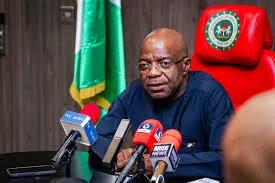
Abia State seals partnership with ipNX to revolutionize digital connectivity
Governor Alex Otti of Abia State has launched the State Wide Area Network, Internet, and Managed Network Services initiative, to expand digital access. This project aims to revolutionize how the state operates by equipping Ministries, Departments, and Agencies (MDAs) with high-speed digital tools and fibre-optic connectivity, powered by leading ICT company ipNX. The initiative includes distributing high-performance digital tools, laying fibre optic cables across public institutions, and installing infrastructure for high-speed data transmission. This will streamline government processes, enhance communication among MDAs, and improve engagement with global partners Governor Otti emphasized that the project will empower civil servants and boost economic activities by connecting artisans, entrepreneurs, and businesses to the digital economy. The goal is to ensure every community in Abia has reliable internet access within nine months, enabling businesses to thrive virtually To support this digital shift, the government is investing in training programs to upskill workers for a digitally driven economy. This marks a major milestone in Abia’s journey towards a fully digital economy
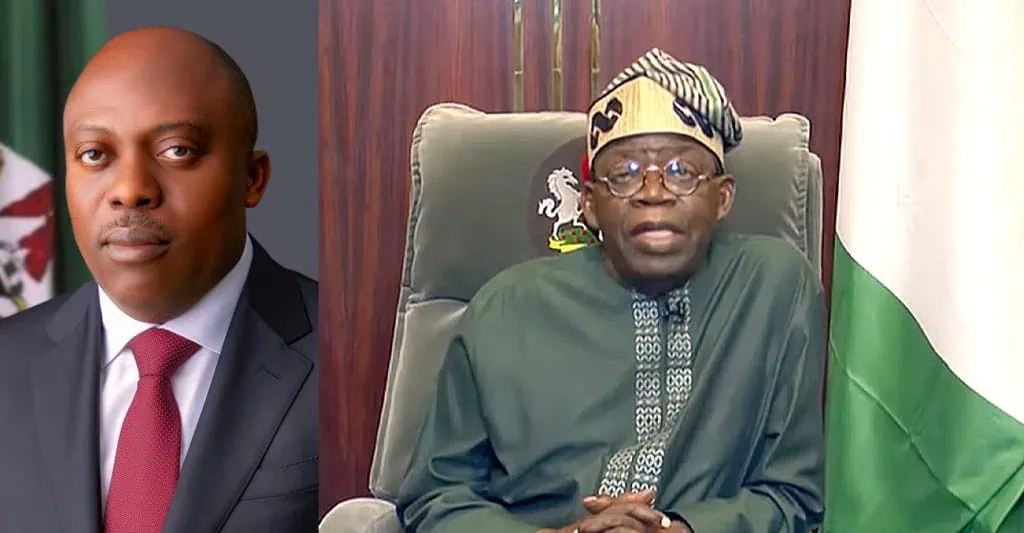
Social media on fire as Tinubu declares state of emergency in Rivers State
President Bola Tinubu’s declaration of a state of emergency in Rivers State has sent shockwaves across Nigeria, with social media platforms buzzing with reactions. The decision, announced on March 18, 2025, has suspended Governor Siminalayi Fubara, Deputy Governor Ngozi Odu, and all members of the state House of Assembly for six months. The crisis in Rivers State, fueled by political tensions and pipeline vandalism, has been extensively covered on social media, where Nigerians are expressing a wide range of opinions. From concerns about democratic overreach to support the President’s decisive action, the digital space is filled with debates on the implications of this move. President Tinubu invoked Section 305 of the 1999 Constitution to justify the declaration, emphasizing the need to restore peace and governance. Retired Vice Admiral Ibok-Ete Ibas has been appointed as administrator to oversee state affairs during this period.