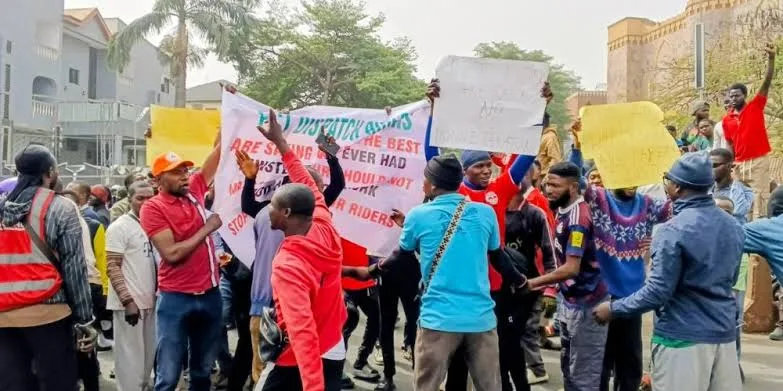
Thousands of dispatch riders in the Federal Capital Territory (FCT) staged a protest on February 19, 2026, against the introduction of a new ₦15,000 permit fee and what they describe as burdensome double taxation. The demonstrators in their numbers gathered at the FCTA Secretariat, halting logistics operations, demanding the harmonization of revenue collection across the capital. Before the protest, riders are legally required to pay annual levies to Area Councils, which include the Abuja Municipal Area Council (AMAC), Bwari, and Gwagwalada. However, the emergence of a new ₦15,000 paper permit, combined with the revenue demands from the FCT Administration (FCTA), has created an environment of double taxation.The protest was organized to resolve the recurring disputes between the central FCT authorities and the six Area Councils over who hold the constitutional right to collect operational fees from small businesses and logistics providers.Daily Tech Nigeria gathered that riders were reportedly asked to pay ₦25,000 by a new FCTA revenue collector, nearly double the ₦13,000 they usually pay to their individual Area Councils. Protesters alleged that many motorcycles have been impounded by security agents, with owners forced to pay the ₦15,000 or ₦25,000 fees to secure their release.Protesters also decries the payment of market entry fees, where riders are charged ₦300 for every single delivery made within major Abuja markets.The Dispatch Riders stressed that the current tax regime is crippling their livelihoods. They stated that they are not opposed to legitimate taxation but are being exploited by duplicate and unclear charges that do not reflect their actual daily earnings. “We riders know it is our statutory obligation to pay tax, and we have been complying… but all of a sudden, another group of tax collectors emerged from nowhere with another demand in the name of the FCT Administration, asking for a higher tax compared with what we pay to AMAC” – Olawale Ilesanmi The governing body in response to the grievances of the protesting protesters, have promised to investigate the allegations of illegal extortion and work toward a more transparent revenue framework. The protest was later suspended after an agreement between the representatives of the riders and the FCT Transportation Secretariat was reached. Meanwhile, logistics operators warned that they would resume protests if the FCT Minister, Nyesom Wike, does not intervene to permanently unify the tax collection process.

Interpol nabs 651 fraudsters, recovers $4.3M across 16 African nations
An operation led by Interpol has resulted in the arrests of 651 fraudsters and the recovery of $4.3 million across 16 African nations.The eight-week mission, titled “Operation Red Card 2.0,” which took place between December 8, 2025, and January 30, 2026, was led by Interpol to dismantle organized cybercrime networks involved in investment scams and mobile money fraud.It operated under the African Joint Operation against Cybercrime (AFJOC) framework, funded by the United Kingdom’s Foreign, Commonwealth & Development Office.According to the report by itwire, 1,247 victims worldwide suffered a combined financial loss exceeding $45 million, over fraudulent schemes during the period under review.The report also stated that Law enforcement agencies seized 2,341 digital devices and disabled 1,442 malicious IP addresses, domains, and servers used to host scams.On the Interpol list, Nigeria, Kenya, and Côte d’Ivoire emerged as primary hubs for these activities, with Nigeria alone dismantling a ring that utilized over 1,000 fraudulent social media accounts.In Nigeria, the police dismantled a syndicate that recruited young individuals for identity theft and social engineering. One notable success involved the arrest of six individuals accused of hacking a telecommunications operator’s internal platform to divert $4.8 million (N7.7 billion) in airtime and data.In Kenya, the Kenyan authorities targeted “pig butchering” investment scams, where victims were lured into making small initial payments on messaging apps before their accounts were blocked.Meanwhile, in Côte d’Ivoire, police arrested 58 individuals linked to predatory mobile loan applications that used abusive debt-collection practices to harvest sensitive financial data.Neal Jetton, Director of the Cybercrime Directorate of the Interpol, while speaking via the media, emphasized that collaboration should never be downplayed when combating transnational cybercrime; ”These cybercriminal syndicates cause significant financial and psychological harm to individuals and businesses. Operation Red Card highlights the importance of collaboration when combating transnational cybercrime” Interpol stated that these scams are spreading because many people lack digital literacy and face economic challenges. Interpol also encouraged all victims of online fraud to report incidents to local law enforcement to assist in ongoing investigations.
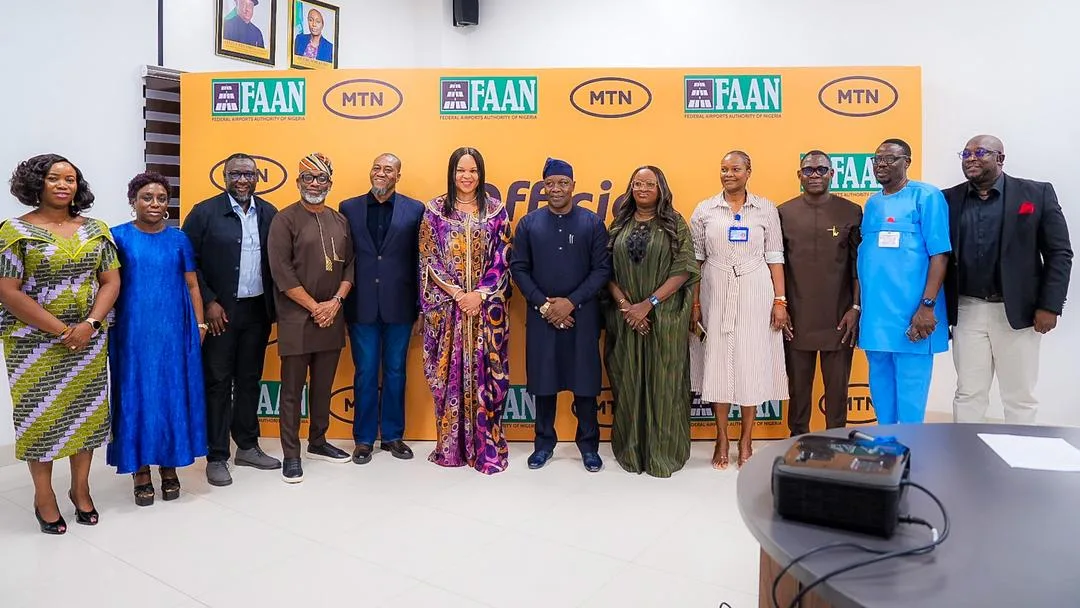
FAAN, MTN Nigeria launch free wiFi at Lagos, Abuja Airports
The Federal Airports Authority of Nigeria (FAAN) and MTN Nigeria have launched free WiFi services at the Lagos and Abuja airports. The service is currently live at the Murtala Muhammed International Airport (MMIA) Terminal 2 in Lagos and the Nnamdi Azikiwe International Airport (NAIA) in Abuja.This ends a decade-long internet blackout at Nigerian airports after the collapse of a previous partnership with Globacom in 2015. Since then, travelers have relied on personal mobile data or private lounges for connectivity. The new project operates under a Public-Private Partnership (PPP) model, where MTN Nigeria manages the infrastructure and operational costs, while FAAN provides branding and advertising spaces within the terminals. FAAN plans to extend coverage to the MMIA temporary terminal within weeks, followed by Port Harcourt, Kano, and Enugu international airports over the next three months.The partnership requires no direct capital expenditure from the government, as MTN offsets installation and maintenance costs through on-ground branding rights.Travelers can connect without a password, though the service may eventually feature time-limited sessions or bandwidth tiers. ”In 21st-century Nigeria, no Nigerian airport should be an offline island. This WiFi is our promise that FAAN is listening… we are not simply installing routers; we are building bridges between government objectives and citizen experience” – Olubunmi Kuku, FAAN Managing Director MTN stated that the infrastructure is designed to manage contention of many users drawing from the same bandwidth source during travel hours.
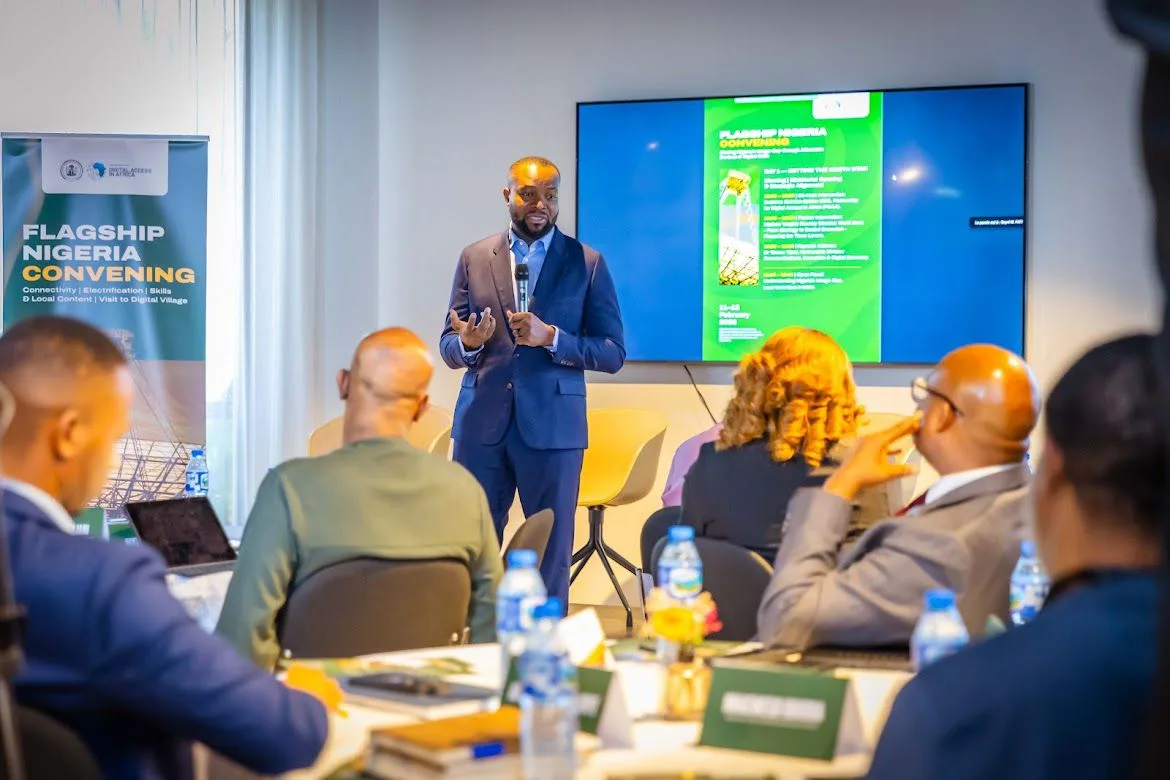
FG links power access to internet to end digital divide
The Federal Ministry of Communications, Innovation & Digital Economy is taking steps to bridge the existing digital divide by linking electricity access with internet connectivity. The decision was made during a meeting in Abuja which focused on integrating digital infrastructure development. The event, organised by the Federal Ministry of Communications, Innovation & Digital Economy in collaboration with the Partnership for Digital Access in Africa (PDAA), brought together government officials, private sector players, development finance institutions, and philanthropic organisations. The meeting was aimed at exploring how investments in electricity, broadband connectivity, affordable devices, and digital skills can expand access to digital services, particularly in underserved and rural communities. Speaking at the event, the Minister of Communications, Innovation and Digital Economy, Dr. Bosun Tijani, stressed that digital inclusion goes beyond simply expanding broadband coverage, but giving support needed to meaningfully participate in the digital economy; “Digital inclusion is not just about connectivity; it is about ensuring that Nigerians have the power, devices, skills, and support needed to meaningfully participate in the digital economy” – Dr. Bosun Tijani He emphasized that programs such as Flagship Nigeria and the 3 Million Technical Talent programme are designed to integrate electricity supply, affordable internet access, and skills development into a single coordinated strategy. According to the ministry, many rural and peri-urban communities continue to face unreliable electricity and unaffordable devices, limiting the practical use of digital tools for education, commerce, agriculture, healthcare, and public services. Meanwhile, PDAA Chief Executive Officer Ibrahima Guimba-Saidou emphasised that electricity should be treated as a foundational digital infrastructure. He stated that the partnership aims to move beyond policy discussions, and toward implementable systems that can operate at scale. The goal is to blend public and private funding as well as prioritising last-mile communities that are often left behind in digital expansion plans. Participants at the meeting discussed the need to align infrastructure rollout, funding strategies, device affordability programmes, and skills training. Without such coordination, organisers warned, communities may receive connectivity without power or digital training without functional tools. The integrated electrification-and-connectivity model seeks to reduce fragmentation in infrastructure planning by strengthening collaboration between power providers, telecom operators, device manufacturers, and training institutions.
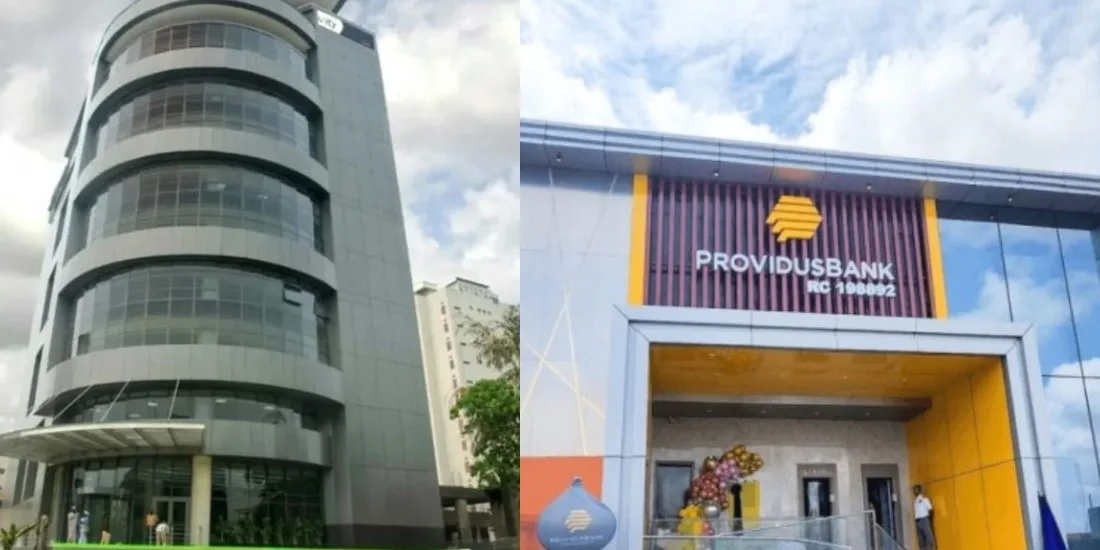
Unity bank confirms Providus merger now in integration phase
Unity Bank has confirmed that its proposed merger with Providus Bank is a done deal, dismissing reports that the transaction had collapsed. In a statement shared on Wednesday, the bank clarified that the merger has secured regulatory approvals and is currently at the integration stage. Unity Bank stated that the transaction continues to enjoy the support of the Central Bank of Nigeria (CBN), including a pivotal financial accommodation to facilitate the merger. The deal has also received a “no objection” approval from the Securities and Exchange Commission (SEC). Both banks’ shareholders had earlier endorsed the merger at a general meeting in September 2025, to formally adopt the scheme of merger. The combined institution is envisioned to have a capital base exceeding ₦200 billion, which is the minimum requirement for maintaining a national banking licence under the recapitalisation framework of the CBN. The Managing Director and CEO of Unity Bank, Ebenezer Kolawole, described the merger as a pivotal development for both institutions. He also stated that the merger will boost capital strength, operational capacity, and strategic positioning, to better support economic growth and deliver innovative financial solutions across Nigeria.

Terrahaptix gains $22 million from Silicon Valley’s Lux Capital to scale autonomous security
Terrahaptix Inc., a Nigerian defense technology firm, has raised $22 million capital to expand its autonomous surveillance operations across Africa. The investment, led by Silicon Valley-based Lux Capital and Resilience17 Capital, brings the total funding of the company to $34 million and elevates its valuation above $100 million.Terrahaptix, formerly Terra Industries, which was founded in 2024 by 22-year-old Nathan Nwachukwu and 24-year-old Maxwell Maduka, has emerged to be a defense prime on the African continent. The company specializes in building homegrown hardware and software to protect critical infrastructure, such as power plants, oil pipelines, and mining sites, from terrorism and vandalism.The Abuja-based startup operates a 15,000-square-foot manufacturing facility and has recently secured contracts to protect assets valued at approximately $11 billion across Nigeria and Ghana. The $22 million bridge round was completed in under two weeks, following an $11.8 million seed round led by 8VC, founded by Palantir co-founder Joe Lonsdale, just one month prior.The round saw participation from Flutterwave CEO Olugbenga Agboola, global venture firms, and celebrity angel investors including American actor Jared Leto.Fresh capital will fund the construction of a second megafactory in Africa, intended to boost production to 40,000 autonomous units annually.The Terrahaptix ecosystem consists of three main hardware components connected by a proprietary AI “brain” called ArtemisOS: Terrahaptix plans to break ground on its new mega-factory and has recently signed a joint venture with AIC Steel to establish a manufacturing hub in Saudi Arabia.