
Elon Musk, speaking in an interview with The Economist, says artificial intelligence (AI) could surpass the combined intelligence of all humans within the next five years, describing the pace of AI development as unstoppable and likely to usher in an era of unprecedented abundance. Musk said AI would outperform humans in virtually every task except being human. He stressed that while risks remain, including the possibility of catastrophic consequences, he no longer believes there is a realistic way to halt AI’s advancement. He added that society must adapt to the shift rather than attempt to stop its progress. “I think AI may exceed the sum of human intelligence in around five years. There really won’t be anything that AI can’t do better than humans, apart from being human, perhaps” – Musk Musk said the most likely outcome is a future of amazing abundance, where AI and robotics make goods and services widely accessible. To improve AI safety, Musk proposed that leading AI companies should hold regular meetings to discuss security concerns and allow competitors early access to evaluate powerful new AI models before they are released. Jephte Ioudom, founder of software consultancy FoubsLabs, countered Musk’s claim arguing that while AI will make significant advances over the next five years, it is unlikely to surpass the complexity and diversity of human intelligence.

Vanguard bows to pressure, restores real photo of niqab spelling bee winner
Vanguard Newspaper has restored the original photograph of 14-year-old World Spelling Bee champion Maryam Yusuf after removing an artificial intelligence (AI)-altered image that had digitally removed her niqab, following criticism and a legal demand from her solicitors. Maryam Yusuf was among four Nigerian students who represented the country at the World Spelling Bee in Shanghai, where Team Nigeria won the Gold Award in the Middle School category during the first appearance of the country at the international competition. The 14-year-old had earlier faced criticism over her decision to wear the niqab before later receiving praise following her victory at the championship. The controversy began after Muslim News Nigeria reported that Vanguard had published an altered image of Maryam in a story celebrating Team Nigeria’s victory at the 2026 World Spelling Bee in China. The report noted that the original photograph released by the event organisers showed Maryam wearing a niqab, while the version published by Vanguard digitally removed the face covering. Vanguard newspaper after facing public criticism, bow to pressure by updating the featured image in its online report on Nigeria’s victory at the 2026 World Spelling Bee in Shanghai, replacing the AI-generated image with the authentic photograph showing Maryam wearing her niqab. The development followed a legal demand served on Vanguard by the law firm Ibrahim Atanda and Co., acting on behalf of Maryam Yusuf and her mother, Mrs. Waliyah Adenike Akeju Ahmed. In a letter dated July 21, the solicitors argued that the AI-generated image was created and published without the knowledge or consent of their clients, describing it as an infringement of their constitutional rights; “Our clients are Muslims who observe the Islamic injunction of wearing the Niqab. Their religious convictions preclude them from permitting the publication of their facial representations” – the lawyers stated They argued that publishing an AI-generated facial image of Maryam was misleading and violated her rights to dignity, privacy and freedom of religion, particularly because the case involved a minor. The legal team also maintained that the publication falsely represented their clients by creating an artificial likeness and presenting it to the public without authorisation. The lawyers demanded the immediate removal of the altered image and an unreserved public apology acknowledging that the image was AI-generated and had not been authorised by the family. Although they said their clients were not seeking financial compensation at this stage, they warned that legal action could follow if the newspaper failed to comply with the demands. However, after the change on Wednesday, the newspaper had not issued a public explanation or apology at the time this report was published.
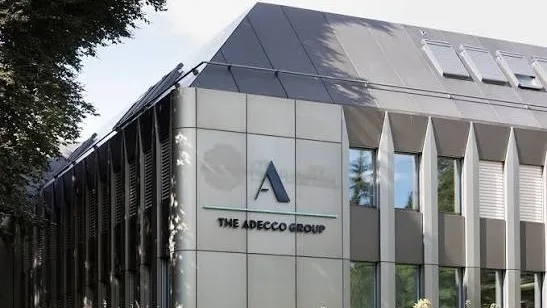
Adecco says AI will transform jobs, not trigger mass unemployment
The Adecco Group says artificial intelligence (AI) is unlikely to trigger mass job losses, stating that the technology will transform the nature of work rather than eliminate employment altogether. Adecco Chief Executive Officer Denis Machuel said AI is driving changes in workplaces but does not affect employment. “AI is bringing a massive evolution in the world of work, but a job apocalypse is not on the horizon…It’s more about changing roles and tasks than eliminating jobs.With the data we have so far, there’s no evidence we will have a different scenario with AI” – Machuel The statement came amid concerns raised over AI’s impact on employment. According to global outplacement firm Challenger, Gray & Christmas, employers attributed nearly a quarter of job cuts in the United States this year to AI adoption. Major companies, including Microsoft, HSBC, Amazon, and Standard Chartered, have also announced layoffs as they redirect investments toward artificial intelligence. However, Machuel argued that some organisations are using AI to justify job cuts that are actually driven by weaker financial performance, restructuring or other business challenges. Adecco said employment levels remain strong despite the rapid adoption of AI. According to the data from the Organisation for Economic Co-operation and Development (OECD), the company stated that employment across its 38 member countries remains at record highs, while unemployment is close to historic lows more than three years after the launch of OpenAI’s ChatGPT. Machuel compared AI with previous technological revolutions, including steam power, electricity, information technology and the internet, all of which transformed workplaces without causing mass unemployment. The company acknowledged that some entry-level office jobs are becoming more vulnerable as AI automates routine tasks. However, Machuel warned that eliminating junior positions could weaken companies’ future talent pipelines. He urged employers to redesign entry-level roles so workers can collaborate effectively with AI rather than be replaced by it. Machuel also called for investment in upskilling and reskilling employees, alongside collaboration between businesses, governments and educational institutions to prepare workers for changing job requirements in the AI era.
Substack launches AI detection tool for newsletters
Newsletter platform Substack has introduced a new feature that allows users to check whether posts and newsletters on its platform were written by humans or generated using artificial intelligence (AI). The company announced an integration with Pangram, an AI writing detection tool, which enables users to scan posts, comments and replies within the Substack app. The feature provides an estimate of how much of the content was written by a person and how much may have been generated by AI. Substack said the tool is designed to help readers better understand the origin of the content they consume rather than penalise creators who use AI-assisted writing. Chief Executive Officer Chris Best said the platform wants technology to support writers without replacing original ideas and creativity; “When I used to pitch Substack to writers, one way I would do it is… we’ll do everything for you except the hard part. You have to have something an idea that’s worth reading, that’s worth caring about, that’s worth sharing” – Best The feature will be available for any post, note, reply or comment containing more than 100 characters. Substack will also allow writers to add an optional AI author’s note, enabling them to disclose how AI was used in creating their content. In addition, publishers can use Pangram to scan their drafts before publication and request the removal of scans they believe incorrectly identify their work as AI-generated. The company said the initiative is intended to encourage transparency and help maintain trust in the quality of content published on the platform as AI tools become increasingly integrated into the writing process.

Lagos State launches online building approval system for developers, property owners worldwide
The Lagos State Government has launched a fully digital platform that allows developers and property owners to apply for and obtain building planning approvals online from anywhere in the world. The platform, known as the Electronic Planning Permit Processing System (EPPPS), is operated by the Lagos State Physical Planning Permit Authority (LASPPPA) and became fully operational on April 1, 2026. According to the state government, the platform is designed to simplify the planning permit process by reducing paperwork, speeding up approvals and improving transparency in physical planning; “The Electronic Planning Permit Processing System (EPPPS) is a digital platform created to simplify and modernise how planning permits are processed in Lagos State” The government said developers can now complete the entire application process remotely without visiting government offices. Officials said the web-based platform is fully automated, secure, available 24 hours a day and compliant with Nigeria’s data protection regulations. It also eliminate administrative bottlenecks and replace the state’s paper-based approval process. Special Adviser to the Governor on E-GIS and Urban Development, Olajide Babatunde, said all planning permit applications must henceforth be processed through the EPPPS; “All applications must now go through the EPPPS platform exclusively. Anyone processing planning permits manually from this date is engaging in an illegal activity” – Babatunde The state government said the initiative is aimed at improving regulatory compliance, making planning approvals more efficient and accessible to developers both within and outside Nigeria. This development follows the state’s earlier target of issuing between 40,000 and 45,000 building permits annually to support rapid urban development.

Airtel Nigeria expands retail network to meet surging digital demand nationwide
Airtel Nigeria has expanded its retail network to more than 200,000 customer touchpoints and over 4,000 exclusive shops across the country to improve customer access to its services amid growing demand for digital connectivity. The telecom operator said the expansion will make services such as SIM registration, airtime and data purchases, device sales, customer support and other digital offerings more accessible through partner stores, neighbourhood agents and channel partners. According to the National Bureau of Statistics (NBS), the telecommunications and information services sector contributed ₦18.47 trillion to Nigeria’s real Gross Domestic Product (GDP) in 2025, accounting for 8.34 percent of the economy and ranking as the fourth-largest contributor of the country. Data from the Nigerian Communications Commission (NCC) also shows that active mobile subscriptions reached 188 million in April 2026, while broadband subscriptions surpassed 120 million for the first time. Airtel remains Nigeria’s second-largest mobile network operator with 64.7 million subscribers, accounting for about 34.4 percent of the market, behind MTN. Airtel Nigeria Chief Executive Officer, Dinesh Balsingh, said the company is strengthening its retail presence to bring services closer to customers; “Telecommunications goes beyond physical infrastructure. It is important that we are able to reach people where they live and work. That is why we continue to invest in a strong retail and distribution ecosystem that enables us to bring Airtel closer to our customers while delivering a consistent, high-quality experience wherever they are” – Balsingh, Airtel Nigeria CEO The company’s Director of Sales and Distribution, Joypratip Sengupta, said the expanded network combines efficient logistics, strong partnerships and community engagement to ensure customers can easily access Airtel services nationwide. Airtel said the expanded retail ecosystem will also support thousands of distributors, retailers and small business owners across Nigeria, creating more economic opportunities throughout its sales and service network. The company added that it will continue investing in digital innovation and service delivery to meet the growing demand for mobile and broadband services across the country.