SIM-swap fraud remains one of Nigeria’s most persistent financial crime challenges, with billions of naira reportedly lost in telecom-related fraud over the past few years. As banks, regulators, and telecom operators search for more effective solutions, MTN Nigeria says collaboration between financial institutions and telecom companies could reduce the risk. According to the Nigerian Communications Commission (NCC), Nigerians lost about ₦12.5 billion to telecom-related financial crimes between 2019 and 2023, many of which involved SIM-swap fraud and other social engineering tactics. MTN Nigeria argues that banks should pay telecom operators for access to additional network security services that would help detect SIM swaps, recycled phone numbers, and other events before fraud occurs. MTN Nigeria’s Chief Corporate Services and Sustainability Officer, Tobe Okigbo, said mobile phone numbers are not permanently owned by subscribers but are licensed assets managed by telecom operators. “Ideally, if you’re going to use our numbers as identifiers, the banks should be paying us because if our numbers are used as identifiers, we’d build the security required so that if something goes wrong, we’d be culpable” – Okigbo He stated that inactive phone numbers are recycled in line with NCC regulations after an extended quarantine period, adding that telecom operators are not responsible for how banks choose to use phone numbers as customer identifiers. Stakeholders, like Adedeji Olowe, the CEO of Lendsqr amongst others, argue that the solution should go beyond commercial arrangements. Olowe called for better customer education on inactive SIM cards, improved communication before numbers are recycled, and adoption of telecom intelligence services that allow banks to verify SIM status before authorising sensitive transactions. Meanwhile, a senior banking executive described MTN’s proposal as a practical solution but suggested that implementation would be more effective through an agreement coordinated by the Central Bank of Nigeria (CBN) and the Nigerian Inter-Bank Settlement System (NIBSS) rather than through individual commercial negotiations. The proposal comes months after the CBN and the NCC launched the Telecom Identity Risk Management Portal (TIRM), a data-sharing platform designed to help banks and telecom operators identify recycled, swapped, and blacklisted phone numbers in real time. CBN Governor Olayemi Cardoso said the platform would provide an additional layer of protection for consumers and the financial system.

How to apply for your Virtual Vehicle Tinted Permit: A step-by-step guide for Nigerian motorists
The Nigeria Police Force (NPF) has fully digitized the process for obtaining vehicle tinted glass permits to enhance transparency and convenience, with enforcement starting officially on October 2, 2025. Vehicle owners across Nigeria can now apply for their annual tinted glass permit online through the Police Specialized Services Automation Project (POSSAP) portal, www.possap.gov.ng, in compliance with the directives announced by the Inspector-General of Police, Kayode Egbetokun, earlier this year. To obtain your virtual vehicle tinted permit, Nigerian motorists should follow this clear six-step procedure: 1. Registration: Visit www.possap.gov.ng and create an account using your National Identification Number (NIN) and Vehicle Number (VN). Corporate entities will use their Tax Identification Number (TIN). 2. Service Selection and Payment: Select “Tinted Glass Permit” from the service list, validate your Vehicle Identification Number (VIN) on the verification page, and make a ₦2,850 payment for VIN validation. 3. Document Upload: Return to the application page to upload essential documents including vehicle ownership proof, vehicle license data page, and a clear photograph of your vehicle. Each file should be below 2MB. 4. Permit Application Fee: Pay the permit processing fee of ₦14,200 online through the portal. 5. Facial Verification: Complete the facial verification step, accessible through automatic redirection during application or via an email link sent to you. 6. Biometric Capture and Verification: After submitting your online application, print the application form and visit the State Intelligence Bureau (SIB) of any Police Command to provide biometric data (fingerprints and photo). Those applying on medical grounds must upload a government hospital medical report and bring original documents for verification. The Nigeria Police Force has emphasized that accurate information matching the official vehicle registration details is crucial to avoid delays or rejection. Once the biometric capture and document verification are successfully completed, the Police will process the application, typically concluding within five working days. Notifications for approval and digital permits will be issued via the POSSAP platform where permits can be downloaded and printed. The new digital permit includes a QR code for easy verification. Applicants encountering difficulties can seek assistance at their State Police Command Intelligence Bureau or the Force Headquarters in Abuja. Force to leverage technology in delivering efficient public services. Compliance with this policy is mandatory under the National Road Traffic Regulation (1997) and Motor Vehicle (Prohibition of Tinted Glass) Act, ensuring road safety and lawful vehicle operation across Nigeria.

Federal Court stops Police enforcement of tinted glass permits across Nigeria
A federal court in Abuja on Friday suspended nationwide police enforcement of tinted glass permit regulations, citing public confusion and procedural lapses in the permit system amid escalating tensions between motorists and law enforcement agencies in Nigeria. The decision by the Federal High Court comes after numerous complaints from drivers, civil society groups, and legal experts regarding the lack of transparency and inefficiencies surrounding the issuance and renewal of police permits for tinted vehicle windows. Many Nigerians have expressed frustration over repeated police stop-and-search operations, which have sometimes resulted in extortion and harassment. Justice Taiwo O. Taiwo, who presided over the case, stated, “It is evident that the actions of the police have led to unnecessary hardship for citizens who are yet to receive clear guidelines or access to genuine permit processing channels.” The court emphasized that enforcement must be temporarily suspended until the authorities streamline and clarify the process for obtaining and verifying tinted glass permits. A spokesperson for the Nigeria Police Force, ACP Olumuyiwa Adejobi, confirmed receipt of the court order, saying, “We respect the decision of the judiciary and will suspend permit checks until further guidance is provided. Our commitment remains the safety and rights of citizens”. Legal analyst Barrister Chijioke Odigbo told Daily Tech Nigeria, “This is a win for rule of law and a necessary step to address abuse of police powers. The court’s intervention sends a clear message about the importance of due process and citizen protection”. The suspension has wide-ranging implications for Nigeria’s urban commuters, especially in major cities such as Lagos, Abuja, and Kaduna, where tinted glass vehicles are common for security and privacy reasons. It follows a wider debate on police reform, digitalization of permit systems, and the modernization of law enforcement practices in the country.

Oyo State Invests N7.7 Billion in Two Surveillance Aircraft to Fight Rising Insecurity
Oyo State government has approved N7.7 billion to buy two high-tech surveillance aircraft to help tackle banditry, kidnapping, and other security challenges. The Oyo State Executive Council gave the green light for the purchase of two DA 42 MNG model aircraft during its weekly meeting on Tuesday. These planes are equipped with advanced Intelligence, Surveillance, and Reconnaissance (ISR) technology that can spot threats from high and low altitudes. The state’s Information Commissioner, Prince Dotun Oyelade, explained that the choice of these aircraft over helicopters is due to their lower maintenance costs and easier access to spare parts. He also noted that the Nigerian Air Force already operates this model, which will allow for better cooperation. Despite relative peace compared to northern Nigeria, Oyo has seen a rise in kidnappings, armed robberies, and clashes, especially in rural and border areas like Ibarapa and Oke-Ogun. These crimes have affected farmers, traders, and transporters, increasing fear in communities. The government has previously strengthened the Amotekun Corps to improve security, but challenges like poor logistics and limited personnel remain. The new aircraft will boost aerial surveillance, helping to monitor the vast forests and porous borders where criminals often hide. Prince Dotun Oyelade said, “The two light aircraft are equipped with sophisticated surveillance gadgets capable of identifying targets from high and low altitudes. They are less expensive to maintain and their spare parts are accessible.” Oyo State aims to improve intelligence gathering and quick responses to security threats, hoping to restore safety and confidence in affected communities.
Windows 11 System Restore Points now automatically delete after 60 days, Microsoft confirms
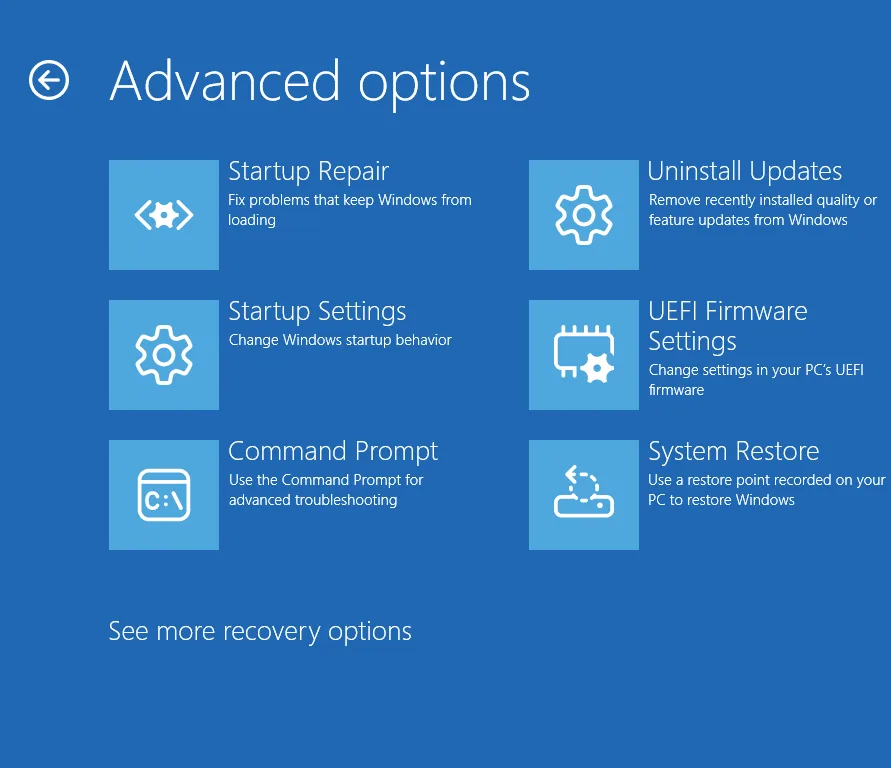
Microsoft has announced that system restore points on Windows 11 will now automatically expire after 60 days. System restore points help users fix problems by rolling back their PC to an earlier state. But Microsoft says keeping these restore points forever can take up a lot of storage space. To manage this, Windows 11 will now delete restore points after 60 days. This change helps free up disk space and keeps the system running smoothly. Users can still create manual restore points whenever they want, but those will also follow the 60-day expiration rule. This update is part of Microsoft’s ongoing effort to improve Windows 11 performance and storage management. The company advises users to back up important files regularly, as restore points are not a full backup solution. The new 60-day limit means Windows 11 users should be more proactive about backups and system maintenance. It’s a small change that Microsoft hope could help keep PCs faster and less cluttered.

Helicopters and tear gas used against unarmed protesters in Benue, activists condemn crackdown
Peaceful protesters demanding an end to ongoing killings in Benue State were met with a harsh security response involving armored vehicles, helicopters, and tear gas, sparking widespread condemnation from human rights activists and political groups. Agena Robert Ande, Chairman of the African Action Congress (AAC) in the Federal Capital Territory, described the crackdown as “state-sponsored brutality” and criticized Governor Hyacinth Alia for ordering the violent dispersal instead of engaging with the demonstrators. “The deployment of such heavy security machinery against unarmed protesters is an outrageous display of thuggishness,” Ande said in a statement on Sunday. The protesters had gathered peacefully in Makurdi to demand justice for victims of repeated attacks by armed herdsmen, which have led to significant loss of life in the state. Ande linked the violence to the government’s failure to address the root causes, particularly the activities of Fulani herdsmen accused of terrorizing communities. He also called on Governor Alia to publicly condemn the killings and collaborate with security agencies to protect citizens and hold perpetrators accountable. Reports indicate some attackers originate from neighboring Nasarawa State, prompting calls for inter-state cooperation to prevent further assaults. Ande warned that the people of Benue are losing patience with the government’s inadequate response and vowed that they “will not be silenced” in their demand for justice. Governor Alia condemned the recent attacks on Yelwata town in Guma Local Government Area, where over 100 people were reportedly killed, and announced deployment of federal tactical teams to restore security. However, his handling of the protests and the broader security crisis has drawn sharp criticism. The incident highlights the escalating tensions in Benue State, where communities continue to suffer from violence amid calls for effective government intervention and protection of human rights.