OpenAI is preparing to confidentially file for an initial public offering (IPO) in the coming weeks, according to reports from The New York Times. The move could lead to one of the largest public offerings in the history of the artificial intelligence industry. The company behind ChatGPT is reportedly working with Goldman Sachs and Morgan Stanley on preparations for the filing. Sources told The New York Times that an IPO could occur as early as September, although the timing remains uncertain and dependent on market conditions. OpenAI has emerged as one of the most influential companies in the global AI sector since launching ChatGPT in late 2022. The San Francisco-based company was valued at approximately $730 billion following a funding round earlier this year. The expected IPO was born out of the growing interest of investors in artificial intelligence companies and preparations by several major technology firms for potential public listings. Competitors including Anthropic and SpaceX are also reportedly considering public market plans. Despite rapid revenue growth, OpenAI remains unprofitable. The company reportedly generated more than $13 billion in revenue last year but expects to spend around $115 billion over the next four years as competition intensifies. OpenAI is also facing pressure from rivals including Google, whose Gemini AI platform reportedly reached 900 million active users, matching ChatGPT’s reported monthly user base. The company recently overcame a major legal challenge after a California jury dismissed a lawsuit brought by Elon Musk, who accused OpenAI of abandoning its original nonprofit mission. Musk has said he plans to appeal the ruling. According to experts, OpenAI’s public market ambitions could accelerate AI research, expand infrastructure, and strengthen global innovation in artificial intelligence technologies. OpenAI’s potential IPO could become a defining moment for the global AI industry and broader technology market. However, fear arises that increasing commercialization may intensify concerns around AI safety, market concentration, data privacy, energy consumption, and corporate influence over emerging technologies.
U.S. health advisory warns of risks from excessive screen time among children, teens
Officials at the United States Department of Health and Human Services have issued a new public health advisory warning that excessive screen use among children and teenagers may contribute to sleep problems, reduced academic performance, lower physical activity, and weaker in-person social relationships. The advisory, released on Wednesday, describes screen overuse as a growing public health concern and recommends stronger parental controls, school phone restrictions, and increased oversight from technology companies. “While screen use can have some benefits, the evidence of a range of risks to children’s overall mental and physical health is mounting” – U.S. Health and Human Services Secretary Robert F. Kennedy Jr. wrote in the report The advisory states that exposure to screens often begins before a child’s first birthday and increases during adolescence. According to the report, many teenagers now spend four or more hours daily on screens, with nearly half reporting they lose track of time spent on their phones. Health experts linked excessive screen use to issues including poor sleep, reduced school performance, and lower physical activity. The report also raises concerns about social media, gaming, online gambling, and other forms of digital interaction. The advisory recommends no screen exposure for children under 18 months old, less than one hour daily for children under six, and roughly two hours daily for older children and teenagers outside school-related activities. It also introduced a “five Ds” strategy encouraging families to discuss healthy screen habits, model responsible behavior, delay screen exposure, divert children toward offline activities, and regularly disconnect from devices. Stakeholders argue that smartphones, social media platforms, gaming apps, and digital algorithms are designed to maximize user engagement, particularly among young people. Health experts including J. John Mann said certain forms of addictive screen use may increase risks of mental health problems and suicidal behavior among adolescents. “If we look at it in that framework, what we should be doing is screening out those kids who show that” – Mann The advisory is expected to intensify ongoing debates over children’s digital safety, online regulation, and technology use in schools and homes.
Elon Musk responds after jury dismisses OpenAI lawsuit
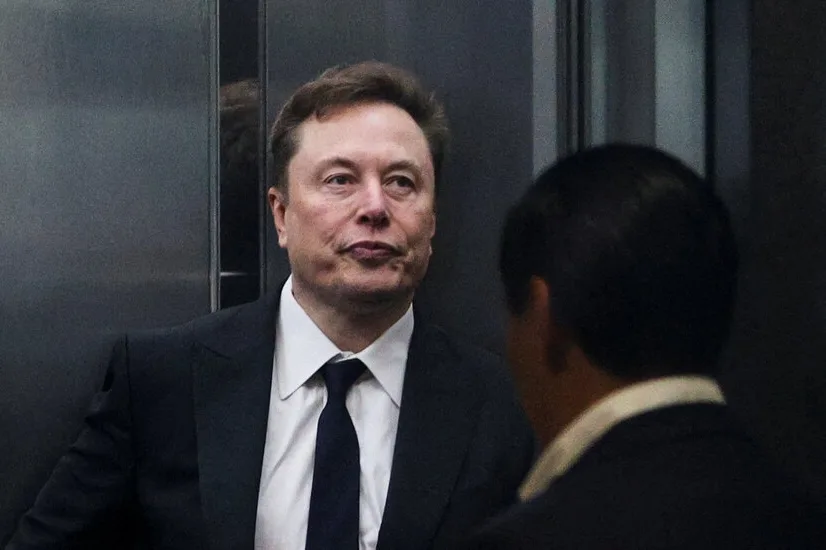
Elon Musk has responded to the dismissal of his lawsuit against OpenAI and its chief executive Sam Altman, saying the court decision was based on a calendar technicality rather than the substance of the case. In a post on X, Musk said the judge and jury did not actually give ruling on merits of the case, pointing to the jury’s finding that the lawsuit had been filed after the statute of limitations had expired. Musk also announced plans to appeal the ruling to the Ninth Circuit Court of Appeals, arguing that allowing such a precedent could damage charitable organizations in the United States. “There is no question to anyone following the case in detail that Altman & Brockman did in fact enrich themselves by stealing a charity, the only question is WHEN they did it1…I will be filing an appeal with the Ninth Circuit, because creating a precedent to loot charities is incredibly destructive to charitable giving in America” – Musk The lawsuit centered on OpenAI’s transition from a non-profit research organization into a company with significant commercial operations tied to artificial intelligence products, including ChatGPT. Musk, who co-founded OpenAI in 2015 before leaving in 2018, argued that the organization abandoned its original mission to develop AI for the benefit of humanity after accepting his financial support. OpenAI rejected the accusations during the trial as Altman testified that Musk had previously supported the idea of a for-profit structure and had sought greater control over the company. OpenAI’s legal team also argued that the lawsuit lacked factual basis. The case contributes to existing debates over how artificial intelligence organizations balance public-interest missions with commercial expansion. Details later….
Elon Musk loses OpenAI lawsuit as California jury rules claims filed too late
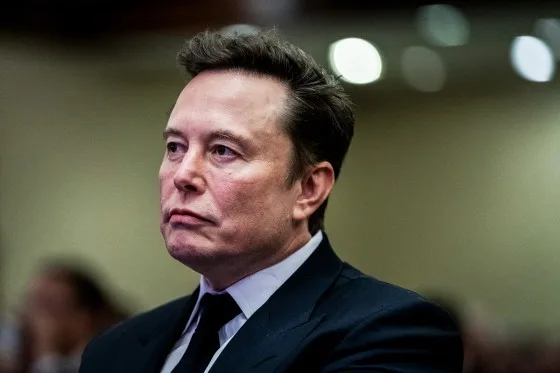
A California jury has dismissed a lawsuit filed by Elon Musk against OpenAI and its chief executive Sam Altman, stating that the legal claims were brought after the statute of limitations had expired. The unanimous decision came after a three-week trial in Oakland, California, as Jurors reviewed internal company communications and heard testimony from Musk, Altman, and Satya Nadella before reaching a verdict in about two hours. Musk argued that OpenAI violated its original non-profit mission after transitioning into a for-profit business model as he claimed Altman accepted his financial support, estimated at $38 million while later steering the company away from its founding purpose of developing artificial intelligence for the benefit of humanity. “It’s actually very simple.It’s not OK to steal a charity… If it’s okay to loot a charity, the entire foundation of charitable giving will be destroyed” – Musk Altman disputed the allegations and testified that Musk had previously supported the company’s commercial direction. According to Altman, Musk also sought long-term control of OpenAI. “A particularly hair-raising moment was when my co-founders asked, If you have control, what happens when you die? He said something like, maybe it should pass to my children” – Altman OpenAI was founded in 2015 as a non-profit artificial intelligence research organization by Musk, Altman, and other technology leaders. Musk left the company in 2018 after disagreements over leadership and strategic direction. The lawsuit also included claims against Microsoft, which has invested heavily in OpenAI. Those claims were dismissed after the jury ruled in OpenAI’s favor. OpenAI representatives described the ruling as a validation of the company’s position. Spokesman Sam Singer said the case was nothing but an effort by Musk to slow down a competitor, while William Savitt, a legal practitioner argued the lawsuit bears no relationship with reality. The ruling ends a major legal dispute between two major figures in the artificial intelligence industry. However, tensions between Musk and OpenAI are likely to continue as competition over AI development, governance, and commercial influence grows worldwide.

Train veers off track, kills 39 in Spain
At approximately 19:45 local time on Sunday evening, a Madrid-bound high-speed train operated by Iryo, a private firm, derailed on a straight stretch of track, near the town of Adamuz. Daily Tech gathered that the carriages crossed over to the opposing line, striking a southbound Renfe train traveling toward Huelva.At least 39 people have been confirmed dead, while dozens more have been injured in the collision. This is the worst rail disaster in Spain since the 2013 Santiago de Compostela derailment in Galicia, which claimed 80 livesMost casualties occurred in the leading carriages of the southbound Renfe train, which was pushed into a nearby embankment.Spanish Transport Minister Óscar Puente, while speaking to the press stated that the accident occurred on a section of track where such a derailment should have been technically impossible under normal conditions.Investigators are looking into why the automated braking and track-monitoring systems (ETCS) did not prevent the collision.The Spanish Red Cross has been deployed to offer psychological support to families waiting at stations in Madrid, Seville, and Málaga.All rail traffic between Madrid and the Andalusia region remains suspended, with delays expected throughout the week.
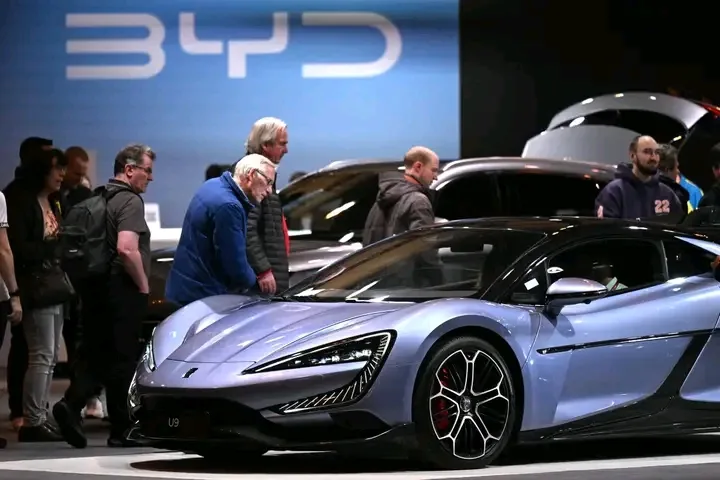
Tesla loses top spot as world’s largest electric vehicle seller to China’s BYD
By Aminu Umar Turaki Tesla has lost its position as the world’s leading electric vehicle (EV) seller to Chinese automaker BYD, marking a shift in the global EV market after a challenging year for the US company. Tesla reported vehicle sales of 1.64 million units in 2025, down 9% from the previous year, while BYD sold 2.26 million vehicles, overtaking Tesla in global rankings. The decline in Tesla’s sales comes as a result of the growing competition in the electric vehicle market, political controversy surrounding its chief executive Elon Musk, and the expiration of key electric vehicle tax incentives in the United States. Founded in 2003, Tesla long dominated the global electric vehicle space, outpacing traditional automakers and setting the pace for EV innovation. However, the market has become crowded, with Chinese manufacturers, led by BYD, expanding rapidly and gaining market share both domestically and internationally. The electric vehicle sector of China has recorded strong growth, benefiting from scale, competitive pricing, and government-backed industrial support, putting pressure on global rivals. Tesla’s challenges in 2025 were compounded by backlash linked to Elon Musk’s political activities. Musk closed alignment with US President Donald Trump in 2024, after resigning as the head of the government efficiency panel overseeing federal layoffs, a role which led protests at Tesla facilities and dampened consumer sentiment. Tesla’s sales were affected by the expiration of a $7,500 US federal tax credit for electric vehicle purchases, which ended in September after the change of a policy by the Trump administration. The loss of the incentive reduced affordability for buyers and added to downward pressure on demand. Musk exited the government panel in May to reignite the confidence of investors. Although the company continued to feel the effects throughout the year. Tesla recorded fourth-quarter sales of 418,227 vehicles, falling short of analysts’ expectations of approximately 440,000 units. Despite the sales decline, investor confidence in Tesla has remained relatively resilient. Stakeholders stated that the company’s long-term vision, includes plans to expand driverless robotaxi services and develop humanoid robots for home and industrial use.