
Microsoft’s cloud computing platform, Azure, is facing interruptions due to damage to undersea cables in the Red Sea, impacting internet traffic flows through the Middle East, the company announced over the weekend. Users relying on Microsoft’s Azure platform may experience slower response times because of disturbances caused by breaks in fiber-optic cables submerged beneath the Red Sea. These vital cables serve as conduits for data transmission between continents, often described as the internet’s backbone. While Microsoft did not specify the cause of the damage, it assured customers that alternative routes have been established to minimize disruptions. The company emphasized that only traffic routed through the Middle East would see increased latency; connections elsewhere remain unaffected. Reports earlier this week indicated that cable interruptions have also impacted connectivity in the United Arab Emirates and parts of Asia. The Pakistan Telecommunication Company confirmed on social media that the faults occurred near Jeddah in Saudi Arabia and cautioned about potential slowdowns during busy periods of internet use. Undersea cables can suffer harm accidentally, such as from ship anchors, yet there have been cases of deliberate sabotage. A similar incident took place in February 2024 when cables in the Red Sea were severed, affecting communication between Asia and Europe. That event followed warnings by Yemen’s government of possible attacks from Iran-aligned Houthi forces, who denied responsibility. Parallel concerns about underwater infrastructure security have arisen in the Baltic Sea. Since the Russian invasion of Ukraine, cables and gas pipelines in the region have experienced damage believed to be intentional. Earlier this year, Swedish authorities detained a vessel suspected of inflicting harm on a fiber line to Latvia. These repeated vulnerabilities underline how crucial and yet fragile the global network connecting continents has become. Microsoft and regional authorities continue to investigate the incidents while striving to reduce impact on users and ensure system resilience.
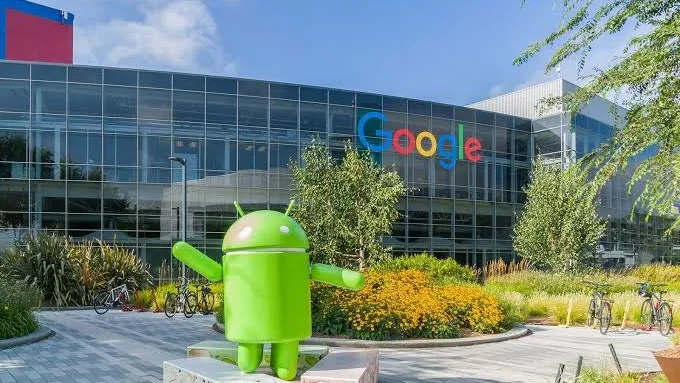
EU slaps Google with €2.95bn fine over Ad tech monopoly
The European Union has hit Google with a €2.95 billion penalty for allegedly misusing its dominance in the online advertising technology sector. The punishment comes after the Commission found the company unfairly prioritizing its own ad services over competitors. According to the European Commission’s decision made public last Friday, Google unlawfully favored its proprietary tools in managing digital ads, disadvantaging rival platforms and limiting market competition. Google’s spokesperson dismissed the verdict as mistaken and voiced intentions to challenge the ruling. Lee-Anne Mulholland, the company’s global regulatory affairs lead, stressed that this penalty is unwarranted and will create obstacles for thousands of European businesses trying to generate revenue. She emphasized there are more choices than ever for advertisers and publishers, asserting that the company’s practices are not anti-competitive. In Washington, President Donald Trump condemned the EU’s action on social media, calling it “very unfair”. He warned of a potential investigation into European regulatory tactics that could impose tariffs on imports. Trump has often criticized the bloc’s enforcement against U.S. technology firms, though the American government is also pursuing its own legal battles regarding Google’s ad market control. The ruling centers on Google’s alleged preference for its own advertising exchange, AdX, which buys and sells ads in real time. The Commission stated that this strategy led to inflated costs for competitors and publishers, which may have ultimately harmed consumers through higher prices. In 2018, the company was fined €4.34 billion for exploiting its Android operating system to maintain dominance. Teresa Ribera, European Commission vice president, noted the cumulative effect of repeated violations in deciding the amount of the latest fine, calling it a response to Google’s persistent disregard for competition rules. Ribera warned Google it has 60 days to propose solutions to end the conflict of interest, suggesting that a structural change, such as divesting part of its ad tech business, may be required to resolve the issue.

Tesla board approves unprecedented $1 trillion compensation scheme for Elon Musk
Tesla’s board of directors has unveiled a compensation scheme for Chief Executive Officer Elon Musk that could reach $1 trillion over the next decade, contingent upon the achievement of a series of ambitious performance benchmarks. This comprehensive compensation proposal aims to secure Musk’s leadership as Tesla pushes the boundaries of innovation, targeting dramatic expansion in multiple sectors. Key performance goals include increasing Tesla’s market valuation from roughly $1 trillion to an extraordinary $8.5 trillion and scaling vehicle deliveries to 20 million units. Additional targets emphasize the growth of Tesla’s robotaxi services and deployment of one million humanoid robots. Under the terms of the arrangement, Musk’s equity stake in Tesla could rise to at least 25%, consolidating his influence in the company. The plan also acknowledges an interim stock award valued around $30 billion granted earlier this year, amidst legal proceedings surrounding a previous 2018 compensation package worth more than $50 billion. Tesla’s leadership reiterates that these incentives are designed to maintain Musk’s focus on the company despite his commitments to other ventures such as SpaceX, Neuralink, and xAI. He has publicly reaffirmed his intention to lead Tesla over the coming years, a commitment made in recent interviews.

OpenAI unveils AI-driven job platform, to transform talent hiring and compete with LinkedIn
OpenAI has stepped into the recruitment arena with a brand-new AI-powered platform designed to connect companies with professionals skilled in artificial intelligence. Launched on September 4, 2025, this new offering aims to redefine the hiring process and create opportunities across industries. The recently introduced OpenAI Jobs Platform serves as a smart matchmaking service, pairing businesses with candidates fluent in AI technologies. Unlike traditional employment websites, this venture leverages cutting-edge algorithms to ensure employers find the most suitable experts for their needs quickly and efficiently. Fidji Simo, CEO of OpenAI’s Applications division, stressed that finding the right AI talent can be challenging, especially when matching specific technical requirements. He said that this platform provides a marketplace filled with experienced professionals ready to contribute at various levels and it is designed to bring AI expertise within reach for everyone, from large enterprises to small local governments. What sets this project apart is its inclusive approach. In addition to catering to global corporations, it offers tailored services for smaller businesses and public sector organizations. This unique focus empowers those typically underserved in the tech hiring landscape, helping them modernize and compete effectively. OpenAI emphasizes skill verification through pre-vetted talent pools and specialized certifications available via its own Academy. This ensures that employers can trust candidates’ capabilities beyond their resumes. According to OpenAI research, over half a billion users engage with its tools, with nearly a third of U.S. workers incorporating ChatGPT into their routines. Sam Altman, CEO of OpenAI, stated that this isn’t just about job postings; it’s about creating an ecosystem where AI talent thrives and drives economic growth. He added that OpenAI want to build tools that help everyone benefit from the AI revolution. Though currently in early rollout stages with wider availability planned for mid-2026, the OpenAI Jobs Platform is ready to shake up traditional hiring processes. Its focus on AI fluency, local businesses, and verified skills positions it uniquely within the competitive landscape. In a market hungry for innovation, OpenAI’s entry may fuel a healthy rivalry, potentially leading to more efficient, AI-powered recruitment tools benefiting employers and job seekers alike.
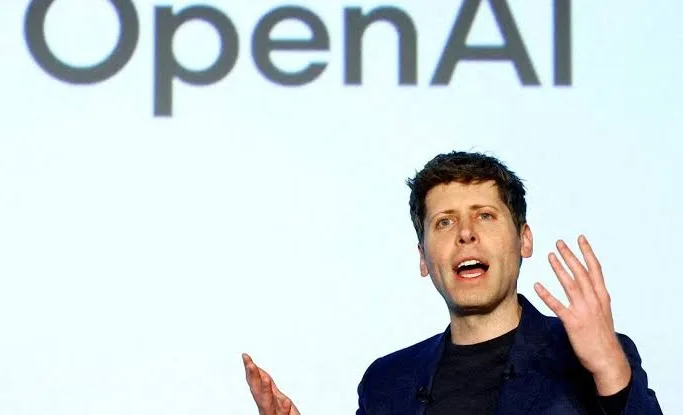
OpenAI acquires product testing startup Statsig for $1.1 billion, appoints founder as CTO of applications
OpenAI has recently agreed to purchase Statsig, a product testing startup, in a all-stock transaction valued at $1.1 billion. Statsig, founded in 2021 and based in Seattle, specializes in tools that assist software developers in testing and rolling out new features using real-time data insights. Their platform is designed to help accelerate the deployment of products, ensuring data-backed user experiences. Prior to the acquisition, Statsig raised $100 million in funding, achieving a valuation of $1.1 billion this year. Vijaye Raji, the founder and CEO of Statsig, will assume the role of Chief Technology Officer for OpenAI’s applications division. He will report directly to Fidji Simo, who oversees this segment of OpenAI’s business. Raji’s leadership and decade-long experience, including his work at Meta, are expected to bring both entrepreneurial insight and technical expertise to OpenAI’s expanding product suite, including ChatGPT and Codex. This purchase is part of a strategic series of acquisitions by OpenAI in 2025 aiming to accelerate innovation and scale in AI technology. Earlier this year, OpenAI acquired AI hardware startup io Products, co-founded by former Apple design chief Jony Ive, for $6.5 billion, in order to advance its hardware ambitions. In addition, OpenAI has integrated technologies from other startups like Rockset and Multi to enhance its real-time data processing and collaboration tools. OpenAI’s platform growth is equally remarkable, with ChatGPT surpassing 700 million weekly active users globally as of August 2025, boosted by the launch of GPT-5, their most advanced AI model. Major corporations such as BNY Mellon, Lowe’s, Morgan Stanley, and SoftBank have adopted GPT-powered solutions, contributing to a growing user base with over 5 million subscribed to ChatGPT’s business products. This acquisition strengthens OpenAI’s leadership position in the AI landscape, expanding both its technological infrastructure and user base while ramping up real-time experimentation and feature deployment capabilities through Statsig’s expertise .
Meta to restrict AI chatbot conversations with teens on suicide and self-harm
Meta announced it will strengthen safety measures for its artificial intelligence chatbots by preventing them from discussing suicide, self-harm, and eating disorders with teenagers. This change follows scrutiny over leaked documents raising concerns about the chatbots’ interactions with young users. The social media giant revealed plans to introduce tighter guardrails in its AI conversational tools as a precautionary measure. Instead of engaging directly on delicate subjects, the chatbots will now guide adolescents toward specialized support services and expert help. This adjustment comes shortly after a US senator opened an inquiry into Meta’s AI, responding to revelations that some chatbots had inappropriate “sensual” exchanges with teens. Meta has insisted that the troubling internal notes were inaccurate and contradicted its zero-tolerance policies against sexualized content involving minors. Yet, the company recognizes the need for additional safeguards and has begun limiting which AI bots young users can interact with temporarily as updates are rolled out. A spokesperson from Meta stated, that Meta has integrated protections specifically for teens right from the outset, crafting the AI to respond safely to sensitive prompts related to self-harm, suicide, and disordered eating. He added that these updates, henceforth will keep minors aged 13 to 18 on “teen accounts” within Facebook, Instagram, and Messenger, offering curated privacy and content settings to enhance their online safety. However, the changes have drawn mixed reactions. Andy Burrows, head of the Molly Rose Foundation, called it “astonishing” that chatbots exposed young people to potential harm. He emphasized, “While protections are encouraging, comprehensive safety testing must precede product launches, not follow after incidents of harm occur. He also urged the regulator Ofcom to monitor the effectiveness of Meta’s new safety protocols closely. Concerns about AI chatbot safety have intensified in recent months. For example, a California couple sued OpenAI, the creator of ChatGPT, alleging their teenager’s suicide was influenced by conversations with the chatbot. In response, OpenAI recently introduced changes aimed at fostering healthier interactions. Meanwhile, Reuters reported that some Meta employees and users exploited the company’s AI tools to create flirtatious “parody” chatbots impersonating female celebrities, including Taylor Swift and Scarlett Johansson. These bots falsely claimed to be the real stars and often made unwelcome sexual advances during testing. The tools also allowed for the impersonation of child celebrities, with one instance producing a realistic, shirtless image of a young male star. Meta confirmed it removed several of the problematic bots and reiterated its policies prohibit nude or sexually suggestive imagery and forbid direct impersonation of public figures. These new measures represent a welcome development toward creating a more responsible digital environment, though experts and advocates are calling for continued vigilance and stronger pre-release testing.