
Global index provider FTSE Russell has added Nigeria to its Watch List for a potential upgrade from Unclassified to Frontier Market status, following improvements in the country’s foreign exchange market and capital market reforms. This move, announced in October 2025, reflects growing international confidence in Nigeria’s market stability and regulatory environment. The addition to the Watch List comes two years after Nigeria was removed from all FTSE global indices in 2023 due to severe foreign exchange (FX) shortages and delays that prevented foreign investors from repatriating capital. Since early 2025, however, Nigerian authorities, led by the Central Bank of Nigeria (CBN), have implemented key reforms including exchange rate unification, FX backlog clearance, and enhanced market liquidity management. These changes have largely eliminated FX queues and improved transparency, according to reports from investors and FTSE Russell. FTSE Russell’s semi-annual Country Classification Review noted that Nigeria now meets the five Quality of Markets (QoM) criteria required to regain Frontier Market status, including regulatory oversight, market transparency, and clearing and settlement systems. Despite this progress, the review also shows ongoing challenges such as limited FX availability, high transaction costs, and restricted development of derivatives markets. But Temi Popoola, Group Managing Director of the Nigerian Exchange Group (NGX), described the Watch List inclusion as “a testament to coordinated policy reforms and renewed investor optimism.” He added, “The recent reforms in the foreign exchange market, fiscal policy, and ease of doing business have collectively helped restore investor confidence and address key structural constraints.” This development holds significant implications for Nigeria’s tech ecosystem and broader economy. Reclassification to Frontier Market status would likely attract substantial foreign portfolio inflows from institutional investors and passive funds benchmarked to FTSE indices, boosting liquidity and access to growth capital for Nigerian startups, particularly in fintech and digital innovation sectors. According to FTSE Russell, the Watch List status allows for ongoing “in-depth engagement” with Nigerian authorities and market participants ahead of a final reclassification decision scheduled for the next review cycle. The outcome will depend on maintaining FX stability, predictable capital repatriation timelines, and verified sustainability of reforms. As FTSE Russell continues its evaluation, Nigeria stands at a crucial juncture whereby a successful reclassification would mark a major milestone in restoring foreign investor confidence and accelerating the country’s digital economy and capital market development.

Trump confirms Murdochs, Oracle, and Dell in talks to acquire TikTok’s U.S. operations
President Donald Trump revealed that media executives Rupert and Lachlan Murdoch, Oracle’s Larry Ellison, and Dell CEO Michael Dell are involved in negotiations to assume control of TikTok’s U.S. branch. The agreement aims to transfer ownership from ByteDance to a predominantly American-led consortium. The potential transaction is progressing as discussions continue to unfold over the future ownership of TikTok in the U.S. Trump announced in a Fox News interview that Lachlan Murdoch is actively participating in the arrangement, with his father Rupert possibly joining. Oracle and Dell leaders are also expected to play significant roles in the acquisition group. While details remain somewhat in flux, media reports indicate that Fox Corporation, headed by Lachlan Murdoch, may also be part of the takeover. The planned restructuring involves spinning TikTok off from Chinese parent company ByteDance to secure majority ownership by U.S. investors. White House Press Secretary Karoline Leavitt confirmed that the framework of the deal is agreed upon in principle, with final signatures expected soon. Under the revamped structure, American representatives would hold six of the seven board seats, and TikTok’s algorithm would be overseen domestically, key measures to address national security concerns. Bloomberg reports that besides Oracle, venture capital firm Andreessen Horowitz and private equity firm Silver Lake Management may join the consortium. Oracle is slated to lead the platform’s security and safety operations, while ByteDance would keep less than a 20% stake. This development follows federal legislation mandating ByteDance’s divestment of TikTok’s U.S. activities, with the threat of a ban looming if unresolved. Earlier in the year, U.S. courts ordered the sale by January 19, prompting many creators to migrate to other platforms. Trump revealed he personally discussed the approval with China’s President Xi Jinping, who supported the deal’s restructuring. TikTok expressed gratitude towards both leaders for their efforts to ensure the app’s continued availability to American users.

OpenAI study finds 70% of ChatGPT usage Is for personal, not work-related tasks
A recent analysis by OpenAI reveals that the vast majority of ChatGPT users employ the AI for personal purposes rather than professional activities. Approximately 70% of all user interactions focus on everyday life rather than office-related projects. OpenAI’s Economic Research team, alongside Harvard economist David Deming, examined 1.5 million anonymized conversations to understand how people engage with ChatGPT. The report, published as a National Bureau of Economic Research paper, found that most users seek practical help, writing support, or quick information, rather than coding or job-specific tasks. By mid-2025, the chatbot boasted over 700 million weekly active individuals sending around 2.5 billion messages daily, equivalent to 29,000 per second. Of these interactions, only about 30% related directly to work, while the remainder centered on personal needs such as drafting emails, refining writing, or making decisions. Writing dominates professional use, accounting for 42% of work-related queries, especially among managers and business professionals. Yet, on a personal level, users tend to ask for everyday advice, compose messages, and seek information, with these categories making up nearly 78% of total interactions. Interestingly, about two-thirds of writing requests involved editing or enhancing existing content, illustrating that many regard ChatGPT more as a cooperative assistant than simply a tool for creating material. Less frequent activities include coding, which represented 4.2% of questions, and self-reflection, at just under 2%. The research also highlights growing global reach: female users rose from 37% in early 2024 to 52% by mid-2025, and AI adoption in lower-income nations has surged at four times the pace of wealthier countries. August 2025 marked a milestone with the release of GPT-5, OpenAI’s most advanced AI model yet, featuring enhancements in reasoning, speed, and accuracy. Businesses across sectors are already integrating this technology to revolutionize their operations.

NCAA threatens Qatar Airways with heavy penalties over alleged passenger abuse
The Nigerian Civil Aviation Authority (NCAA) has accused Qatar Airways of mistreating Nigerian flyers and flouting consumer protection rules. The regulatory body warns the airline will face strict sanctions if such actions continue. The aviation watchdog disclosed the matter in a statement by Michael Achimugu, Director of Public Affairs & Consumer Protection at NCAA, on Friday via his official X account. The latest event involves a Nigerian traveler who was accused by a Qatar Airways cabin attendant of inappropriate conduct during boarding in Lagos for a flight routed through Doha to the United States. Instead of addressing the allegation locally, claims surfaced only after the passenger arrived in Doha, where he was detained for about 18 hours, fined, and consented to signing documentation written exclusively in Arabic. The airline subsequently denied him passage, compelling him to purchase a new ticket, causing huge financial and reputational damage. Achimugu condemned the airline’s disregard for Nigerian laws under Part 19 of the NCAA Regulations 2023, stating the behavior will no longer be tolerated. He said that while boarding, a female crew member alleged that a male passenger travelling with his wife touched her improperly. The complaint was only made upon reaching Doha, leading to his arrest and extended detention. He added that the airline’s selective respect for regulations, in contrast to adherence in Europe and other regions, is unacceptable. The NCAA emphasized its dual role in safeguarding both airlines and passengers, with Director-General Captain Chris Najomo firm enforcing consumer rights and imposing heavy fines on erring carriers. The authority also revealed that Qatar Airways’ country manager neglected to attend a summoned meeting, sending junior staffers instead. The airline has reportedly ignored NCAA’s investigative notices and failed to resolve escalated customer grievances. Achimugu reaffirmed Nigeria’s rules must be upheld just like international standards, warning that falsifying information or ignoring regulatory orders constitutes a breach of law. The Nigerian bilateral air service agreements (BASAs) demand compliance, he stressed. Furthermore, Royal Air Maroc and Saudi Air have been similarly warned and face penalties if they disregard guidelines.
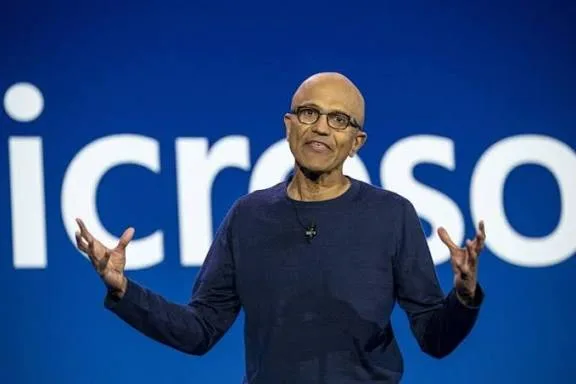
Microsoft pledges $30 billion to make UK a global AI powerhouse
Microsoft has unveiled its largest investment outside the US by committing $30 billion to expand artificial intelligence infrastructure across the UK. This funding, along with contributions from Nvidia, Google, and OpenAI, provides the opportunity for the country to emerge as a global force in AI innovation. The programme centers on building Britain’s most powerful supercomputer in Essex, backed by Microsoft’s financial commitment to pour billions into AI development and advanced technology capabilities. Nvidia, recognized as a global leader in AI hardware, announced a plan to invest up to £11 billion in the UK, one of the most substantial infrastructure rollouts in the nation’s history. Alongside partners including OpenAI and British tech company Nscale, Nvidia is facilitating a cutting-edge compute resource aimed at accelerating breakthroughs in healthcare and clean energy. According to experts from the Tony Blair Institute, these developments represent a critical juncture but require additional efforts such as reforming planning rules and boosting clean energy projects to fully realize growth potential. Dr. Keegan McBride from the Tony Blair Institute emphasized the need for continued support, stating, stressing that the unlocking AI’s full benefits depends on modernizing infrastructure and energy systems alongside investments. Meanwhile, the North East of England has been designated as a new AI growth zone, expected to generate over 5,000 skilled jobs and attract private investment nearing £30 billion. This program aims to establish UK as a vital hub for AI advancements, upskilling local talent, and integrating AI applications into public services.
Alphabet breaks $3 trillion market cap milestone, joins elite tech giants club
Alphabet, Google’s parent company, yesterday 15th September, 2025, officially reached a market valuation of $3 trillion, marking the achievement as the fourth U.S. corporation to hit this mark alongside Apple, Microsoft, and Nvidia. This financial leap shows Alphabet’s transformation from a search engine pioneer to a dominant player in cloud computing and artificial intelligence. Alphabet’s valuation surge follows more than two decades since Google’s initial public offering and a decade since the formation of Alphabet as a conglomerate. In recent years, the firm’s expansion into new territories, including cloud infrastructure, AI development, hardware, and enterprise services, has cultivated fresh revenue streams. These advancements helped mitigate regulatory challenges and maintain steady financial growth. A notable factor contributing to this milestone was a favorable antitrust ruling in the U.S., which averted any drastic measures such as breaking up the company or dismantling vital products like Android and Chrome. The court’s decision targeted specific exclusivity agreements and mandated more openness in certain search-related functions, allowing Alphabet to sustain its core operations with minimal disruption. Furthermore, Alphabet’s cloud division has been pivotal in driving growth. The segment recorded a 32% revenue increase year-over-year to $13.6 billion as of July, fueled largely by adoption of advanced AI technologies such as Tensor Processing Units and Gemini models. To accommodate rising demand, the company expanded its capital expenditure plan for 2025 by $10 billion, bringing the total to $85 billion. This financial commitment aims to boost data center capacity and support cloud expansion, which industry watchers predict could yield annual revenues surpassing $50 billion. Google Cloud and AI form the backbone of Alphabet’s strategic growth blueprint. This blend of technological investment and market diversification keeps the firm competitive against peers like Microsoft, Apple, and Nvidia, who are also ramping up their AI and cloud offerings.