
The Kenyan government confirmed it successfully contained a cyberattack that temporarily disrupted and defaced multiple official websites across ministries on Monday, November 17. The attack, which affected access to public information and services, is suspected to have been carried out by a group identifying itself as PCP@Kenya. Cybersecurity teams intervened quickly and access to most affected platforms was restored by midday.The intrusion targeted domains across various ministries, including Interior, Health, Education, Energy, and Labour, along with the official president.go.ke website.During the outage, attempts by users to access affected sites were met with defaced pages displaying unauthorized, white supremacist messages and slogans, including “Access denied by PCP”, “We will rise again”, “White power worldwide”, and “14:88 Heil Hitler”.The State Department for Internal Security initiated an emergency digital response. Dr. Raymond Omollo, Chairman of the National Computer and Cybercrimes Coordination Committee (NC4), confirmed the situation was contained and warned that the intrusion violated the Computer Misuse and Cybercrimes Act and the Data Protection Act; Those found culpable shall face the full force of the law Meanwhile, key platforms such as the eCitizen portal, the National Transport and Safety Authority (NTSA), and the Judiciary remained operational during the incident.
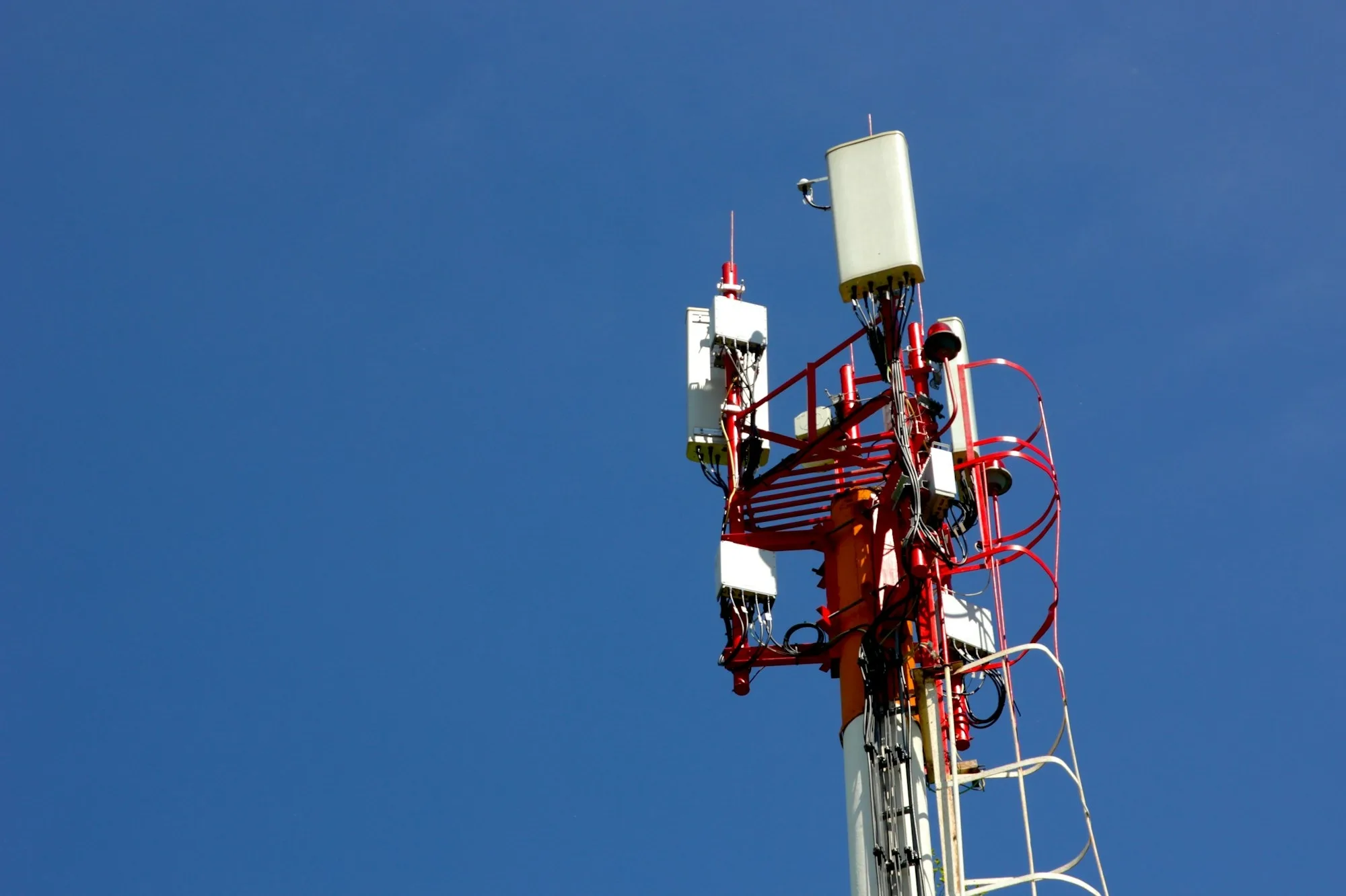
Nigerian telecom sector cuts 383 jobs as operating costs surge 85%
Nigeria’s telecommunications industry has reduced its workforce by 383 employees in one year, according to reports from the Nigerian Communications Commission (NCC). This reduction, predominantly impacting GSM operators, Internet Service Providers (ISPs), and Value-Added Service (VAS) providers, coincided with a drastic 85.35% increase in total operating expenses (OPEX), which jumped from ₦3.16 trillion in 2023 to ₦5.85 trillion in 2024. The NCC attributed the cost surge to high energy prices, currency devaluation, inflation, and excessive regulatory fees.The NCC officially cited several macroeconomic and regulatory factors as the primary drivers of the 85.35% rise in OPEX. These include higher energy costs, persistent inflation, crippling foreign exchange (FX) pressures, and multiple charges, particularly the excessive Right-of-Way (RoW) fees levied by some state and local authorities. The most massive job losses occurred within the GSM segment, which cut staff from 7,212 to 6,658. ISPs and VAS operators also saw notable reductions, reflecting an industry-wide effort to rationalize costs.The workforce cuts follow a decline in the active voice subscriber base, which fell by 26.61% (from 224.7 million to 164.9 million) after the enforcement of the NIN-SIM linkage policy. This contraction of the customer base pressured operators’ revenue streams and necessitated internal restructuring.Despite shrinking subscriber numbers and mounting operational costs, operators increased Capital Expenditure (CAPEX) from ₦990.55 billion in 2023 to ₦2.90 trillion in 2024, driven by the high cost of imported equipment and continuous network expansion.Telecom operators maintain that the increase in costs, which they cannot fully pass on to consumers through tariff increases, makes sustained operations and talent retention extremely difficult. They stress that the multiple levies, particularly high RoW fees in key states, continue to obstruct necessary infrastructure deployment.The NCC’s report showed that the sector’s overall revenue still grew by 44.70% (to ₦7.67 trillion) in 2024, and its contribution to Nigeria’s GDP marginally increased to 14.40%. The NCC pointed out that it has successfully secured zero RoW fees in some states, demonstrating regulatory efforts to ease the fiscal burden, even as the high cost of imported equipment drives up CAPEX.

Former Acces Bank manager arraigned for allegedly diverting $510,000
Obinna Nwaobi, a former Head of Operations at Access Bank Plc, has been arraigned before the Federal High Court in Enugu State on a nine-count charge that includes forgery and criminal diversion of $510,000 belonging to a bank customer. The arraignment, conducted by the Economic and Financial Crimes Commission (EFCC) on Thursday, saw the defendant plead not guilty to all charges. The court subsequently granted the defendant bail under conditions set at ₦250 millionThe EFCC investigation originated from a petition filed by the Access Bank on September 11, 2024, concerning unauthorized transfers from a corporate account belonging to Lantern Gate Nigeria Limited. The prosecution alleges that Nwaobi, while Head of Operations, authorized the movement of the $510,000 into six different accounts without the customer’s approval.The nine-count charge, heard by Justice F. O. Giwa-Ogunbanjo, alleges that Nwaobi’s actions contravene Section 1(b) of the Advance Fee Fraud and Other Fraud Related Offences Act, 2006, and included the forgery of a domestic funds transfer form.While the defense counsel sought bail on liberal terms, the EFCC counsel, Assistant Commander Mainforce Adaka Ekwu, vehemently opposed the application. The prosecution argued that the quality of evidence we have in our proof of evidence might put fear in him, and he might want to abscond.By pleading not guilty, the defendant formally denies the allegations of forgery and criminal diversion.The defendant was remanded at the Nigeria Correctional Service facility in Enugu pending the fulfillment of the bail conditions. The trial proper has been adjourned, and is scheduled to commence on March 10, 11, and 12, 2026.

Edo State e-hailing drivers announce 50% fare hike starting November 15
E-hailing drivers in Edo State, operating on platforms like Uber and Bolt, have resolved to unilaterally implement a 50% increase on all ride fares above the official prices displayed on the apps. The fare adjustment, which took effect on Saturday, November 15, is a survival strategy aimed at improving drivers’ dwindling earnings amidst skyrocketing operational costs and economic hardship in Nigeria. This move follows similar unilateral fare adjustments made recently by drivers in Port Harcourt and Abuja.The fare hike is a direct response to macroeconomic pressures that have severely eroded the profitability of ride-hailing services for drivers, due to a long-running dispute with the app companies over commission rates and pricing autonomy.The chairman of the Edo State Council of the Amalgamated Union of App-based Transporters of Nigeria (AUATON), Comrade Russell Eghaghe, stated the adjustment is necessary for improving drivers earnings and ensuring better value for their time and service. Eghaghe addressed the perception of “greed” directed at drivers, labeling it double standard; It is heartbreaking that when others increase prices, it is called ‘adjustment’, but when drivers do the same, it is called ‘greed.’ This double standard must stop Meanwhile, drivers in Port Harcourt recently declared a 50% increase, while those in Abuja and Abeokuta have also implemented similar fare adjustments to cover operational costs.The national body of AUATON supports these actions, asserting that app companies like Bolt lack the authority to unilaterally fix trip fares. They argue that drivers, as transporters, possess the mandate to set appropriate fares. Bolt previously threatened to permanently deactivate drivers in Port Harcourt who charged outside the app’s agreed-upon fee.The union argues the hike is essential for service sustainability, ensuring drivers can maintain vehicles and avoid being driven into poverty by a system that fails to account for rising fuel, maintenance, and living costs.

Paystack suspends co-founder Ezra Olubi over sexual misconduct allegation
Paystack, the Stripe-owned Nigerian fintech giant, has suspended its Co-founder and Chief Technology Officer, Ezra Olubi, following an allegation of sexual misconduct involving a subordinate. The decision, comes as the company launches a formal internal investigation into the matter. The controversy was fueled by a social media post detailing a personal complaint, which subsequently led to the resurfacing of highly inappropriate, sexually suggestive tweets Olubi had posted between 2009 and 2013.The matter gained public attention on Wednesday, November 12, after a social media post containing personal complaints by an individual who had a relationship with Olubi circulated online.The current controversy reignited public debate after old tweets posted by Olubi between 2009 and 2013 resurfaced. These posts included sexually suggestive content, sometimes referencing minors and colleagues inappropriately.Paystack confirmed the action in a statement, emphasizing the seriousness of the issue and confirming the launch of a formal probe; Effective immediately, Ezra has been suspended from all duties and responsibilities pending the outcome of a formal investigation Paystack emphasized its commitment to an independent investigation, stating it would not comment further to protect the integrity of the process. Paystack, founded in 2015 by Olubi and Shola Akinlade, was acquired by global payments company Stripe in 2020 for over $200 million, making it one of the most prominent fintech success stories in Africa.

Lawmakers halt WAEC’s CBT plan until 2030
The House of Representatives has ordered the Federal Ministry of Education and the West African Examinations Council (WAEC) to suspend the planned full adoption of Computer-Based Testing (CBT) for the 2026 West African Senior School Certificate Examination (WASSCE).The House resolved that the CBT system should not be implemented before the 2030 academic year, allowing for a critical four-year window to build essential digital infrastructure and train personnel across the country.The legislative intervention comes amidst strong concerns that a rushed transition to CBT would result in failure, particularly among students in underserved communities.The directive followed a motion of urgent public importance moved by Representative Kelechi Wogu, who warned that implementing CBT prematurely could cause massive failure, frustration, depression, and social vices among candidates.Lawmakers cited severe infrastructural deficiencies, stressing that over 70% of candidates are located in rural and public schools which lack the required facilities, including functional computers, stable internet, constant electricity (either grid or generator), and qualified ICT teachers.The House differentiated WASSCE from other CBT exams like the Joint Admissions and Matriculation Board (JAMB) exams. Wogu argued that WASSCE candidates are required to write at least nine subjects, encompassing practicals, objectives, and theory, making the transition far more complex and risky.The motion stated that the Ministry of Education intended to proceed with the digital format despite objections from the National Union of Teachers (NUT) and heads of schools.The House argues that while modernization is necessary, it must not be pursued at the expense of students’ futures. The four-year delay is seen as a necessary safeguard to bridge the technological gap between urban and rural schools.WAEC and the Ministry of Education have argued that the digital transition is necessary to curb examination malpractice, promote efficiency, and align Nigeria’s education system with global standards, citing a successful partial rollout for private candidates in 2024.The House has mandated its relevant committees to interface with all stakeholders in the education and technology sectors and submit a comprehensive report within four weeks to guide the infrastructural and legislative steps needed to ensure a fair and equitable transition by the 2030 deadline.