It looks like the days of ultra-cheap rides might be coming to an end for passengers in Kenya, but for the drivers behind the wheel, relief is finally on the horizon. Following months of intense protests and negotiations, Kenyan transport authorities have ordered ride-hailing giants Uber and Bolt to immediately increase their fares by roughly 50 percent to match rising economic costs.The directive comes straight from the Ministry for Roads and Transport, compelling the tech companies to adopt pricing guidelines that were actually suggested by the Automobile Association of Kenya (AAK) way back in 2023. For a long time, these guidelines sat on the shelf due to a lack of clear regulations, but the government is now putting its foot down.Under the new pricing structure, the cost per kilometer is seeing a steep jump. For vehicles with small engines (1050cc), the kind most commonly used for these trips, the rate will rise from Sh22 to Sh33.1. That’s a 50.4 percent increase. Medium-engine cars aren’t left out either, with rates climbing from Sh26 to Sh36.8 per kilometer.This decision didn’t happen just like that. For years, Kenyan drivers have argued that high fuel prices and the hefty commissions taken by the apps left them with peanuts at the end of the day.Tensions boiled over in July 2024 when drivers took to the streets, demanding lower commissions and a minimum trip fare of 300 Kenyan Shillings. While Bolt offered a small 10 percent hike later that year, drivers dismissed it as barely scratching the surface of their expenses.Paul King’ori, the Director of Road and Railways Transport, issued a strict ultimatum to the companies; Uber and Bolt must adjust to the new AAK rates. The firms are given a seven-day window to respond with detailed procedures adopted to address the new increases Yahya Ahmed, Head of Licensing at the National Transport and Safety Authority (NTSA), clarified that this development was not made all of a sudden and that the guidelines had been sent to the companies a year ago but were never enforced.On the drivers’ side, the frustration has been palpable. Nicholas Ogolla, General Secretary of the Transport Workers Union of Kenya (TAWU), criticized the apps for treating drivers like employees without giving them the benefits. Drivers are called ‘independent contractors’, yet Uber and Bolt control every element of work: pricing, penalties, and deactivation. That is not independence; that is exploitation The clock is now ticking on the seven-day deadline. For the drivers, this order feels like a hard-fought victory after years of feeling ignored. However, they stressed that they aren’t celebrating just yet; they have threatened to return to the streets if the apps fail to implement the new prices within the week.

NLC plans “mother of all protests” against Moove Africa over labor practices
The Lagos State Council of the Nigeria Labour Congress (NLC) is planning a major protest, dubbed the “Mother of All Protests”, against the vehicle financing company Moove Africa. The protest, which will take place at Moove Africa’s office, is aimed at tackling the company’s alleged continuous anti-labour practices and demanding the reversal of “oppressive policies,” including a 100% increase in the weekly remittance required from drivers in its drive-to-own scheme.The planned action escalates a conflict that began when Moove Africa drastically altered the payment structure for its drivers, leading to hardship and previous driver protests.The conflict centers on a 100% increase in the weekly remittance for drivers under the Moove’s drive-to-own scheme, raised from ₦56,400 to ₦112,200 in September 2025.Drivers expressed concern over the remittance breakdown showing that the actual vehicle loan repayment component (₦39,766) was less than the handling cost (₦42,735), raising questions about the fairness of the cost structure.In addition to the fee hike, the NLC and the Amalgamated Union of App-Based Transporters of Nigeria (AUATON) accuse Moove of engaging in unlawful collection and seizure of vehicles, particularly the Suzuki Espresso and Alto models, from drivers without due process or justification.Lagos NLC Chairperson, Comrade Funmi Sessi, stated that Moove Africa has refused dialogue, leaving the NLC no choice but to protest; The company’s high-handedness and disregard for dialogue have left us with no option but to exercise our democratic and constitutional right to peaceful protest AUATON accused Moove of continuously exploiting drivers by recycling drivers and manipulating remittance systems. AUATON called on all e-hailing drivers (Uber, Bolt, etc.) in the state to join the solidarity protest.The NLC and AUATON argue that the remittance hike and vehicle seizures cause untold hardship and constitute exploitation of hardworking drivers who are struggling under prevailing economic realities. They demand an immediate reversal of all oppressive policies.

Edo State e-hailing drivers announce 50% fare hike starting November 15
E-hailing drivers in Edo State, operating on platforms like Uber and Bolt, have resolved to unilaterally implement a 50% increase on all ride fares above the official prices displayed on the apps. The fare adjustment, which took effect on Saturday, November 15, is a survival strategy aimed at improving drivers’ dwindling earnings amidst skyrocketing operational costs and economic hardship in Nigeria. This move follows similar unilateral fare adjustments made recently by drivers in Port Harcourt and Abuja.The fare hike is a direct response to macroeconomic pressures that have severely eroded the profitability of ride-hailing services for drivers, due to a long-running dispute with the app companies over commission rates and pricing autonomy.The chairman of the Edo State Council of the Amalgamated Union of App-based Transporters of Nigeria (AUATON), Comrade Russell Eghaghe, stated the adjustment is necessary for improving drivers earnings and ensuring better value for their time and service. Eghaghe addressed the perception of “greed” directed at drivers, labeling it double standard; It is heartbreaking that when others increase prices, it is called ‘adjustment’, but when drivers do the same, it is called ‘greed.’ This double standard must stop Meanwhile, drivers in Port Harcourt recently declared a 50% increase, while those in Abuja and Abeokuta have also implemented similar fare adjustments to cover operational costs.The national body of AUATON supports these actions, asserting that app companies like Bolt lack the authority to unilaterally fix trip fares. They argue that drivers, as transporters, possess the mandate to set appropriate fares. Bolt previously threatened to permanently deactivate drivers in Port Harcourt who charged outside the app’s agreed-upon fee.The union argues the hike is essential for service sustainability, ensuring drivers can maintain vehicles and avoid being driven into poverty by a system that fails to account for rising fuel, maintenance, and living costs.
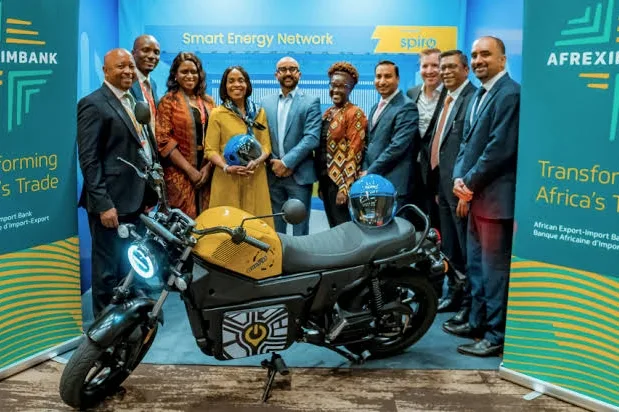
FEDA invests $75 million to boost the expansion of Spiro electric vehicle across Africa
The Fund for Export Development in Africa (FEDA), part of Afreximbank, has committed $75 million to Spiro, the continent’s leading electric two-wheeler and battery-swapping network, to accelerate clean mobility across Africa.Founded in 2022, Spiro operates Africa’s largest electric motorcycle battery-swapping network, with over 60,000 electric motorcycles and 1,200 swapping stations spanning several countries.Afreximbank’s move aligns with the increasing push towards electric vehicle adoption by governments in Nigeria, Kenya, Rwanda, and Ghana, which have recently rolled out pro-EV policies. The investment supports not only local vehicle manufacturing but also regional integration and knowledge transfer within Africa’s emerging clean energy ecosystem.Marlene Ngoyi, CEO of FEDA, said; Spiro’s success to date is a clear demonstration of the strength and scalability of its business model… it underscores the demand for sustainable mobility solutions across Africa Spiro’s approach combines commercial viability with social impact, driving practical progress toward cleaner transportation. The Federal Government’s launch of National Occupational Standards for compressed natural gas and electric vehicles further complements these efforts to reposition Nigeria’s automotive industry towards a cleaner future.
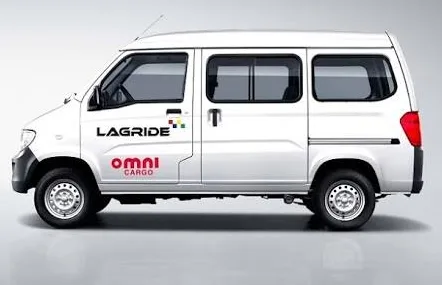
LagRide launches air-conditioned minibus service, plans to recruit 1,000 drivers in Lagos
LagRide, an e-mobility company backed by the Lagos State Government, has officially launched its new air-conditioned minibus service, LagRide Omni, aimed at transforming public transportation in Lagos. The service, introduced today, offers an affordable, clean, and comfortable alternative to the traditional Korope minibuses used by Lagosians.The LagRide Omni targets offices, churches, schools, and large groups, providing a safer and more efficient ride experience. Unlike the conventional Korope minibuses that carry up to seven passengers and make frequent stops, the Omni accommodates six passengers per trip, runs private, direct rides with no intermediate stops, and all vehicles are fully air-conditioned and GPS-enabled. Mobility is one of the greatest drivers of opportunity. By making modern transport affordable and accessible to every segment of society, LagRide is helping to build a more connected Lagos where movement creates meaning and community thrives – Chief Diana Chen, Chairman of LagRide The company also seeks to hire 1,000 manual drivers to support the Omni fleet. All drivers will undergo professional training and certification at the LagRide Academy, a collaboration among LagRide, the Lagos State Government, LASTMA, and other transport safety stakeholders, in order to ensure high standards of customer service and safety. With the Lagride Omni, one person can make a single booking, and everyone joins the same ride. From offices to churches and community events, this is how Lagos will move together safely, conveniently, and in comfort. We are creating opportunities for Lagosians to earn a sustainable income while providing a better commuting experience for everyone – Jubril Arogundade, acting Managing Director This launch follows LagRide’s recent announcement of adding 100 electric cars and aiming to recruit 10,000 drivers through a bank-backed leasing scheme. The introduction of LagRide Omni is a step towards modernizing Lagos often a congested transport system with technology-driven, customer-friendly solutions.
Women dominate Nigeria’s e-hailing market, making up 70% of users, new Bolt report
A recent report by Bolt, in partnership with Ipsos, reveals that women constitute 70% of the e-hailing passenger base in Nigeria, showing the existing gender disparity in ride-hailing service usage across the country. The “Ride Hailing Safety Perception Report,” published in November 2025, indicates that only 30% of the e-hailing users in Nigeria are men. Among female users, the largest age group (39%) falls between 25 and 34 years, followed by 36% aged 35 to 44. Younger women aged 18 to 24 represent 18%, while those over 45 make up just 6%. In terms of usage frequency, 47% of all users reported taking rides several times per week, 12% said they use e-hailing daily, and 26% use it a few times a month. Only 14% reported rarely using the services. Ride-hailing adoption in Nigeria is driven by a young, urban, and digitally active population, with women representing the majority of users – the report states. The study also found that 81% of Nigerian passengers perceive ride-hailing as safer than alternative transport options. A majority of 96% choose ride-hailing when public transport feels unsafe, especially during late-night travel, in unfamiliar locations, or after drinking alcohol. 94% have booked rides for family or friends to ensure safe arrivals. About two-thirds (66%) believe ride-hailing reduces drunk driving by providing a dependable alternative. Key safety features identified by users as confidence boosters include real-time GPS tracking (62%), driver verification (58%), and trip sharing (49%). These elements contribute to the visibility, accountability, and traceability within the ride-hailing ecosystem. The survey encompassed major Nigerian cities such as Lagos, Abuja, Port Harcourt, and Ibadan, evaluating various safety dimensions from driver trust to vehicle conditions and situational risks. Bolt Nigeria General Manager Osi Oguah emphasized; The importance of the findings Safety is at the core of everything we do at Bolt. This research gives us valuable insight into how Nigerians experience and perceive safety when using ride-hailing. We’ll continue to invest in technology, partnerships, and awareness to ensure every ride on Bolt is not only affordable and reliable but also safe