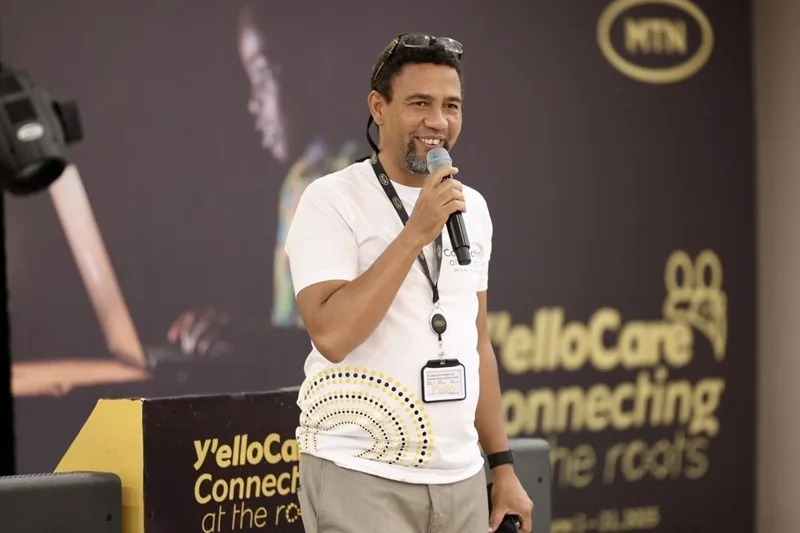
The demand for cheaper and unlimited internet access has increased in Nigeria as more people rely on digital services for work, education, entertainment, and communication. MTN Nigeria in response says affordable unlimited mobile data plans are not economically sustainable because mobile networks have finite capacity and require continuous infrastructure investment. Speaking in Lagos, MTN CEO, Karl Toriola stated mobile operators must balance affordability with service quality. He warned that offering low-cost unlimited data could strain networks and reduce service reliability. He added that unlimited mobile data is uncommon globally and is available only at high premium prices. However, MTN Nigeria and other telecom operators maintain that expanding network capacity requires massive investment in infrastructure and spectrum. “The issue of unlimited data on mobile neytwork, it does not exist anywhere in the world, except you are paying $400 a month or whatever…we cannot give unlimited as much as we desire it. We won’t be able to build the network that people would be able to use in what way whatsoever” – Karl Toriola, MTN CEO MTN also stated that network limitations and operating costs make cheap unlimited data impractical. Meanwhile, consumers continue to call for lower data costs and larger data allowances, due to the growing importance of internet access in daily life and economic activities. MTN in response says it will continue engaging customers and improving transparency around data usage and billing practices.
Airtel Africa launches $110 million share buyback programme
Airtel Africa has announced a share buyback programme worth up to $110 million, as the telecoms group seeks to return value to shareholders while maintaining investment across its African operations. In a statement signed by Group Company Secretary Simon O’Hara on May 22, the company said the programme could repurchase up to 1% of its issued share capital. Airtel Africa stated that the buyback reflects its commitment to returning value to shareholders while preserving financial flexibility to support ongoing investments across its markets. Airtel Africa operates in 14 African countries and is the continent’s third-largest wireless carrier. The company has expanded rapidly in mobile data and digital payments, driven by rising smartphone adoption and increased demand for financial inclusion services. Its mobile money division has become one of its fastest-growing business segments. According to the company’s latest financial results for the year ended March 31, 2026, mobile money generated $1.08 billion in revenue, while total group revenue rose to $6.4 billion from $4.9 billion a year earlier. The company also reported pretax profit of $1.41 billion, an increase of more than 114% year-on-year. “The programme begins today and is scheduled to run until no later than November 27, 2026, unless terminated earlier” – Airtel Africa Sunil Bharti Mittal, founder of Bharti Airtel, sees Africa as a key long-term growth market for telecoms and digital payments expansion. Stakeholders say, reducing the number of outstanding shares could improve earnings per share and strengthen investor confidence. Market attention is likely to focus on the planned Airtel Money IPO and whether the share buyback improves shareholder returns in the near term.
Airtel Africa steps up share buyback, repurchases 40.9 million shares
By Aminu Umar Turaki Airtel Africa has confirmed that it bought back an additional 40,000 ordinary shares on December 31, 2025, under its ongoing buyback programme of 40.9 million, bringing the cumulative total to 40.93 million shares since the programme began in December 2024. The company said the shares were acquired at prices ranging between 354 pence and 357 pence, with an average purchase price of 355.95 pence. Overall, the buybacks have been executed at a cumulative average price of 152.24 pence per share. The value of shares repurchased so far is estimated at about ₦122.7 billion, according to the current exchange rates. The transactions were carried out by Barclays Capital Securities Limited. It was revealed that because the repurchased shares are being cancelled, Airtel Africa’s share base has been slightly reduced. After the cancellation, the ordinary shares issued by the company, stand at roughly 3.66 billion, while total voting rights have fallen to about 3.65 billion. Airtel Africa’s shares closed at ₦2,270 on the Nigerian Exchange on January 2, 2026, placing the company among the most valuable stocks.
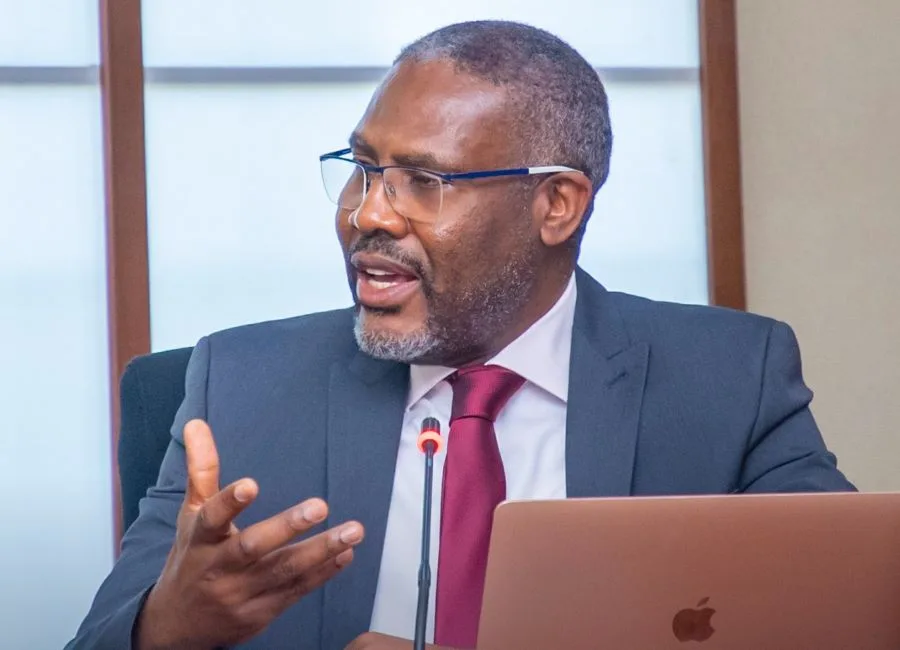
Nigeria’s telecom industry set for expansion in 2026 after stabilisation year – ATCON
By Aminu Umar Turaki Nigeria’s telecommunications sector is to move from a period of consolidation in 2025 into a phase of expansion in 2026, according to projections by the Association of Telecommunication Companies of Nigeria (ATCON). The ATCON President, Mr Tony Emoekpere, disclosed this in an interview with the News Agency of Nigeria (NAN) in Lagos, making reference to renewed investor confidence, growing digital demand, and improved coordination between industry players and government agencies as key growth drivers. Emoekpere said the sector is entering 2026 on stronger footing, following collaborative efforts among telecom operators, regulators, and the Federal Government aimed at deepening digital inclusion across the country. Thee ATCON President described the year as one of stabilisation and disciplined capital management. He stressed that despite significant challenges, including high energy costs, foreign exchange volatility, expensive equipment imports, and persistent Right-of-Way (RoW) issues, industry players remained committed to operations. According to him, telecom operators, tower companies, and internet service providers focused on strengthening networks in high-traffic areas while accelerating the adoption of solar and hybrid energy solutions to reduce dependence on diesel. He added that data from the Nigerian Communications Commission (NCC) shows Nigeria’s broadband penetration surpassed 50% in 2025, driven largely by increased data consumption. Services such as digital payments, streaming platforms, cloud computing, and other online applications have become central to daily life, boosting demand for reliable connectivity. Emoekpere also commended the NCC for sustaining investor confidence through transparent reporting, enforcement of Quality of Service (QoS) standards, and effective spectrum management. He stated that the growing demand from fintech, artificial intelligence, and other data-intensive industries will fuel further expansion. Emoekpere said telecom operators plan to ramp up investments in data centres and last-mile broadband infrastructure. This will include expanded deployment of fibre-to-the-home (FTTH) networks and fixed wireless access (FWA) solutions. He stated that the effective enforcement of telecom infrastructure as critical national assets will be crucial to achieving growth targets in 2026. He called for stronger collaboration to protect fibre routes and telecom towers from vandalism, alongside the harmonisation of Right-of-Way charges across states. The ATCON President also emphasized that the continued burden of multiple taxation on operators, urging authorities to address the issue to support sustainable sector growth. Nigeria recently crossed the 50% broadband penetration threshold for the first time since the implementation of the National Broadband Plan (2020-2025). However, the country is still expected to fall short of the Plan’s 70% target by the end of 2025. NCC data shows that Nigeria recorded 109.6 million broadband subscriptions as of November 2025, translating to a penetration rate of 50.58%, up from 49.89% in October. Despite this progress, broadband penetration has grown by just over 6% so far in 2025, compared to 44.43% at the end of 2024.

Nigeria and Google in advanced talks for new subsea cable
The Federal Government of Nigeria is currently in talks with Google Alphabet Inc., to deploy a new undersea fiber-optic cable. This was announced on Tuesday, December 23, marking a transition by the National Information Technology Development Agency (NITDA) to eliminate a single point of failure in the digital infrastructure of the country.According to NITDA Director General Kashifu Inuwa Abdullahi, Nigeria currently relies on subsea cables that follow identical geographic paths to Europe. This concentration makes the $1 trillion digital economy target of Nigeria vulnerable to disruptions if a single cable is damaged.In September 2025, Google unveiled its intention to expand its footprint in Africa by announcing plans for four new infrastructure hubs, cutting across the North, South, East, and West of the continent. These hubs include landing stations and data centers designed to link its newest cables, Equiano and Umoja, to local markets. The new cable will follow a different path than existing links to Europe, in order to provide a backup that will ensure connectivity even if primary cables are damaged.A Google spokesperson confirmed that talks are at an advanced stage, building on Google’s surpassed $1 billion investment pledge for African digital transformation. Nigeria’s current reliance on cables that follow the same path is a ‘single point of failure.’ We want to increase our existing links… to help transform Nigeria into a digital hub – Kashifu Inuwa Abdullahi, DG of NITDA The new Google cable and its associated infrastructure hubs are to be completed within the next three years. This would lower the cost of wholesale data for local providers like MTN and Airtel, leading to cheaper data plans for consumers. NITDA is also working with the World Bank on a 90,000km terrestrial fiber rollout to ensure this subsea capacity reaches the last mile in rural Nigeria.
Airtel to boost Nigeria’s mobile coverage with Starlink satellite service
By Aminu Umar Turaki Airtel Africa has partnered with SpaceX to use Starlink’s Direct-to-Cell satellite technology to improve mobile coverage in Nigeria and other African countries. The deal will allow people in remote and rural areas, where there are no mobile towers, to connect their smartphones directly to satellites, without needing special devices. According to a statement released on Tuesday, the service will first support text messages and limited data services. Faster internet and full broadband services will be added later, after regulators in each country give approval. Starlink’s new satellite system is designed to offer higher speeds and better reliability than older satellite networks. This makes it useful in places where building mobile towers is difficult or too expensive. Airtel Africa has about 174 million customers, many of whom live in areas with weak or no network coverage. The company says the partnership will help improve access to education, business, and digital services. Airtel Africa’s Managing Director, Sunil Taldar, said the deal will help set a new standard for network availability. SpaceX’s Vice President of Sales, Stephanie Bednarek, added that people will be able to stay connected without changing their phones. The system uses about 650 satellites and is meant to support existing mobile networks, not replace them.The service will be launched in 2026, starting with basic features like texting and limited data use.