
Google has announced the opening of applications for the 2025 DeepMind AI for Science Scholarships, a fully funded program designed to support African students pursuing postgraduate studies in artificial intelligence, machine learning, and mathematical sciences. The scholarships will enable students to study at the prestigious African Institute for Mathematical Sciences (AIMS), covering all tuition fees, living expenses, and research costs. Scholars will also receive relocation support, access to essential resources like computing facilities and internet, and mentorship from experts at Google DeepMind.In addition to financial support, recipients will have the chance to attend AI-related conferences and events hosted by Google DeepMind, offering valuable networking opportunities and exposure to cutting-edge developments in the field. To be eligible for the scholarship, applicants must meet the following requirements:Be African citizens or residents at the time of application.Hold a completed four-year undergraduate degree or a three-year degree with an honors year by August or December 2025.Have an academic background in mathematics, physics, computer science, statistics, engineering, or related fields with strong computational components.Not have previously received an AIMS scholarship. Interested candidates must submit their applications by March 21, 2025, through the official AIMS application portal at apply.aims.ac.za. The application process includes submitting a completed form, a CV, academic transcripts, a motivation letter (500 words), and responses to mathematics and coding problems provided on the portal.Shortlisted candidates will complete additional problem-solving tasks before being invited for online interviews in May 2025. This initiative underscores Google’s commitment to nurturing talent in Africa and advancing innovation in artificial intelligence and science. By providing financial support and mentorship, the program aims to equip scholars with the skills needed to lead groundbreaking research and solve real-world challenges using AI.

1GB of Data to Cost More as NCC Approves 50% Tariff Hike for MTN, Airtel, Others
The cost of staying connected in Nigeria is about to rise as the Nigerian Communications Commission (NCC) has approved a 50% increase in tariffs for telecom services like calls, SMS, and data. This decision, announced on Monday, January 20, 2025, comes after telecom giants such as MTN and Airtel requested tariff adjustments to cope with rising operational costs. For context, this means that the price of 1GB of data, which currently ranges between ₦300 and ₦600, could now climb anywhere between ₦450 and ₦900, depending on your service provider. The NCC explained that this is the first tariff adjustment since 2013. Over the years, telecom operators have faced skyrocketing costs due to inflation, foreign exchange challenges, and other economic pressures. While the operators initially pushed for a 100% increase, the NCC capped it at 50% to cushion the impact on consumers.In a statement signed by Reuben Muoka, NCC’s Director of Public Affairs, the Commission emphasized that the adjustment is necessary to ensure that telecom companies can continue providing quality services while investing in infrastructure and innovation. If you’re a regular user of mobile data or make frequent calls and send SMS messages, you’ll likely feel the pinch in your pocket. For example:A 1GB data plan that used to cost ₦500 may now cost up to ₦750.Call rates and SMS charges are also expected to increase proportionally.However, the NCC has mandated that network providers implement these changes transparently and inform customers about the new rates. They are also required to demonstrate improvements in service delivery, such as better network quality and wider coverage. The NCC said it arrived at this decision after consulting with stakeholders across both public and private sectors. While acknowledging the financial strain this may place on Nigerians already dealing with economic challenges, the Commission stressed that sustaining the telecom industry is critical for Nigeria’s digital economy.“The NCC recognizes the financial pressures faced by Nigerian households and businesses,” said Muoka. “To this end, we’ve ensured that these adjustments are fair and balanced to protect consumers while supporting operators.” Telecom operators are expected to roll out these new tariffs soon, though no exact date has been announced yet. Consumers are advised to monitor updates from their service providers for specific details on how this will affect their plans.While this development may not be welcome news for many Nigerians, it highlights the growing challenges faced by industries trying to navigate Nigeria’s tough economic landscape.
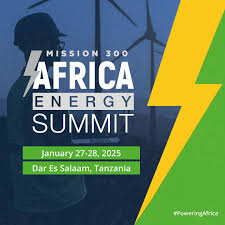
Africa energy summit 2025: Bold mission to light up 300 million lives by 2030
The World Bank and African Development Bank (AfDB) have announced an ambitious plan to bring electricity to 300 million Africans by 2030. This transformative initiative, dubbed Mission 300, will be the centerpiece of the Africa Energy Summit 2025, scheduled to take place on January 27–28 in Tanzania’s bustling capital.The summit is expected to draw global attention as leaders from across the continent and beyond come together to address one of Africa’s most pressing challenges. With nearly 600 million people, 83% of the world’s population without electricity, still living in darkness, the urgency for action has never been greater. “The time to act is now,” said Franz Drees-Gross, World Bank Director of Infrastructure for West Africa, during a recent media briefing. “Mission 300 represents not just an ambitious target but a movement… creating a lasting impact that will power Africa’s growth and enable millions to access essential services electricity provides.” Launched in April 2024, Mission 300 is a collaborative effort involving the World Bank, AfDB, and other global partners. It seeks to combine traditional grid expansion with innovative off-grid solutions tailored for remote areas. The initiative also prioritizes renewable energy and sustainable financing models to ensure long-term success. The two-day summit will culminate in the signing of the Dar es Salaam Energy Declaration, a landmark agreement where participating countries will commit to accelerating energy access and adopting clean energy solutions. Nations such as Nigeria, Côte d’Ivoire, and the Democratic Republic of Congo are expected to pledge reforms in five critical areas:Affordable Power Generation: Scaling up low-cost electricity production.Regional Energy Integration: Strengthening cross-border energy trade for efficiency.Expanded Energy Access: Reaching underserved rural communities.Private Sector Investment: Creating an environment that attracts private capital.Utility Modernization: Enhancing the resilience and efficiency of national utilities. The initiative has already secured significant backing. The Global Energy Alliance for People and Planet (GEAPP) and The Rockefeller Foundation have pledged $10 million toward a technical assistance facility for energy projects in 11 African countries. Additionally, financial institutions like the International Finance Corporation (IFC) are expected to announce new investment vehicles aimed at boosting private sector participation in renewable energy.“This initiative stands out for its ‘all-hands-on-deck’ approach,” said Sarvesh Suri, IFC Director for Infrastructure in Africa. “Institutions are working hand-in-hand to deliver on this ambitious agenda.” With just five years left until the 2030 deadline, stakeholders acknowledge the enormity of the task ahead. Daniel Schroth, AfDB’s Director for Renewable Energy and Energy Efficiency, emphasized the importance of swift action: “It’s a tight journey because 2030 is only five years away, and we have to deliver not expected connections but actual connections to 300 million people.”The summit will also showcase success stories from across Africa, highlight innovative solutions, and foster partnerships among governments, private investors, and development organizations. The Africa Energy Summit is set to attract over 1,000 participants, including 13 African Heads of State, philanthropists, private sector leaders, and international development partners. Together, they will explore strategies to scale up energy access while transitioning the continent toward clean and affordable power.As Africa stands on the brink of an energy revolution, this summit could mark a turning point in its journey toward economic transformation and improved quality of life for millions. Stay tuned as we bring you updates from Dar es Salaam on this historic mission to light up Africa!
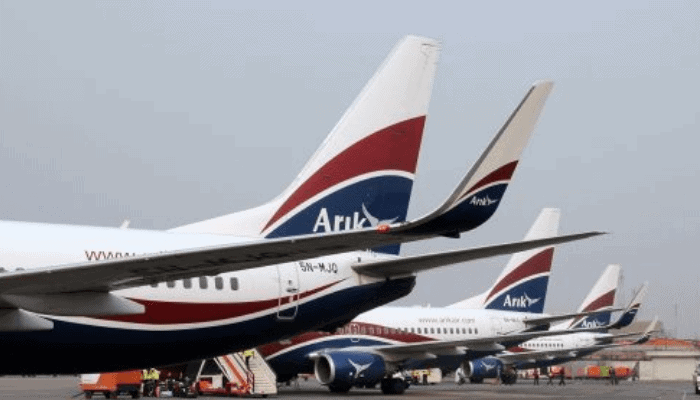
Arik air shareholders dispute AMCON’s N227.6 billion debt claim, accuse corporation of mismanagement
Shareholders of Arik Air have strongly refuted claims by the Asset Management Corporation of Nigeria (AMCON) that the airline owes a staggering N227.6 billion. In a statement released on Saturday, the shareholders accused AMCON of spreading misinformation and mismanaging the airline’s assets since taking over its operations in 2017.The shareholders, represented by spokesperson Godwin Aideloje, described AMCON’s debt claim as part of a deliberate campaign to divert attention from its alleged failures. They linked the timing of this claim to an upcoming court case scheduled for Monday, January 20, 2025, where former AMCON Managing Director Ahmed Kuru and other officials are set to be arraigned over their handling of Arik Air’s receivership. “Where Are the Planes?” Shareholders Demand Answers The shareholders criticized AMCON for reducing Arik’s fleet from 30 aircraft at the time of takeover to just three currently in operation. They alleged that several planes were abandoned in poor conditions abroad, including one seized in Lithuania and others left in South Africa and Ethiopia. Additionally, they claimed that 24 aircraft engines sent abroad for maintenance in 2019 have yet to be returned, while spare parts and ground equipment have gone missing under AMCON’s watch.“AMCON inherited a thriving airline with 30 aircraft. Nigerians deserve to know how this was reduced to just three planes flying today,” the statement read. “The public can testify to the drastic reduction in routes, the loss of key international slots like London Heathrow and JFK New York, and the collapse of Arik’s reputation.” Before AMCON’s intervention, Arik Air was widely regarded as a leader in Nigeria’s aviation sector, operating extensive domestic and international routes. The shareholders argued that the airline was not insolvent or mismanaged prior to its takeover. They pointed to audited financial reports from 2014 and management accounts from 2015 as evidence that Arik was financially stable before AMCON stepped in.They also accused AMCON of failing to comply with a Federal High Court ruling from March 2023, which required it to file audited financial reports for its period of receivership. “AMCON has not only mismanaged Arik but also failed to account for its actions during these eight years,” they alleged. The shareholders have served AMCON with a 90-day pre-action notice as they prepare to take legal action over what they describe as the “mismanagement and destruction” of Arik Air. They also dismissed AMCON’s claim that the takeover was mandated by the federal government, calling it a gross misrepresentation.In response to allegations that Arik owes Union Bank and other creditors, the shareholders maintained that these claims are still being contested in court and should not be used to justify AMCON’s actions. This latest development adds another layer of complexity to Arik Air’s troubled history under AMCON receivership. Once Nigeria’s largest airline, Arik is now a shadow of its former self, with most of its domestic routes shut down and all international operations suspended.As both parties prepare for legal battles ahead, Nigerians will be watching closely to see how this dispute unfolds, and whether it will bring any hope for the revival of one of the country’s most iconic airlines.
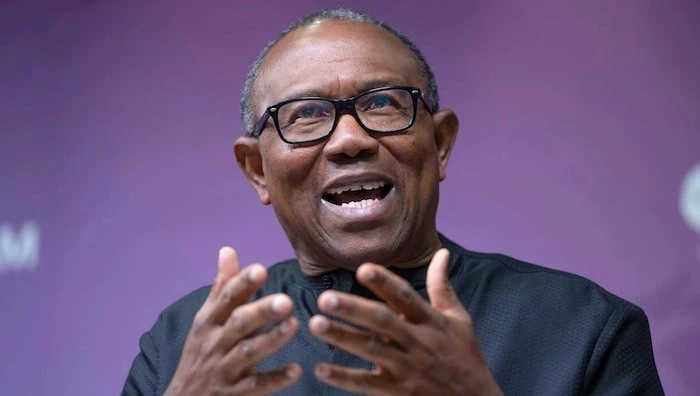
Peter Obi decries hardship in Nigeria, plans letter to president over high POS charges
Peter Obi, former governor of Anambra State and Labour Party’s presidential candidate in the 2023 elections, has expressed deep concern over the growing hardship faced by Nigerians, particularly low-income earners. He specifically criticized the exorbitant charges imposed by Point of Sale (POS) operators, which he says are making life even harder for petty traders and small business owners. Speaking during a visit to Paul University in Awka, Obi lamented the struggles of ordinary Nigerians trying to access their own money. “The hardship in Nigeria is too much,” he said. “How can the ordinary people survive? A woman selling pepper by the roadside has to pay huge charges just to withdraw her own money. How much is her profit margin, and how much will remain after paying these charges?”Obi described the situation as unsustainable and promised to take action. “No country is run like this,” he stated firmly. “I will write officially to the president about this issue and outline all these concerns.” During his visit, Obi also reaffirmed his commitment to supporting education in Nigeria. He donated ₦30 million to Paul University, a faith-based institution owned by the Anglican Church. This brings his total donations to the university in 2024 to ₦50 million, with promises of additional support in 2025.Speaking about his motivation for giving, Obi said, “I have seen the good work being done here and the contribution of faith-based organizations like the Anglican Church toward building a better society. I will continue to support you.”Archbishop Alexander Ibezim, who received Obi at the university, praised him for his selfless contributions and genuine love for humanity. “Peter Obi is one man who aspires for leadership not for personal gain but to help people,” Ibezim said. “We need more leaders like him who are committed to peace and development.” Obi’s donation is part of his broader humanitarian efforts. Independent monitors revealed that he spent over ₦1.5 billion on charitable causes in 2024 alone. However, Obi downplayed these figures, emphasizing that his acts of giving are not about self-promotion but a genuine concern for humanity.Obi’s actions and calls for reform highlight his focus on alleviating hardship and supporting critical sectors like education. His pledge to write to President Tinubu on POS charges reflects his determination to address pressing issues affecting everyday Nigerians.
MTN leads Nigeria’s mobile internet market in 2024 – nPerf
MTN Nigeria has once again cemented its position as the leader in the country’s mobile internet market, according to a new report by nPerf, a French company that evaluates internet connectivity worldwide. The report, which analyzed data from January to December 2024, highlighted MTN’s exceptional performance across key metrics such as download speed, upload speed, latency, and video streaming quality. The study also revealed MTN’s dominance in the critical 4G segment, showcasing its commitment to delivering top-notch internet services to its customers.nPerf’s findings placed MTN ahead of its competitors, Airtel and Globacom, in overall performance. The report praised MTN for its remarkable improvements in upload speed and its ability to maintain leadership in video streaming and other performance indicators.“MTN continues to excel in download speed, upload speed, latency, and video streaming. Its dominance in the 4G focus area reinforces its position as a pioneer in Nigeria’s mobile technology sector,” – nPerf While MTN led the pack, Airtel also performed well in specific categories. The report noted that Airtel excelled in browsing and video streaming experiences, securing its place as a strong competitor.“Airtel’s contributions are vital to the market’s competitiveness. Its focus on enhancing user experience is evident,” nPerf added.Globacom, on the other hand, showed steady progress with improvements across various areas. The report acknowledged Glo’s efforts in contributing positively to the dynamics of Nigeria’s mobile internet market. Interestingly, 9mobile was not included in the analysis. nPerf explained that only operators with at least 5% market share were considered for the report. As of October 2024, 9mobile accounted for just 2.15% of Nigeria’s mobile market. Data from the Nigerian Communications Commission (NCC) further highlights MTN’s dominance. As of October 2024:MTN held a commanding 51.09% market share with 69.5 million internet subscriptions.Airtel followed with 34.61% and 45.7 million subscriptions.Globacom accounted for 12.15%, representing 17.1 million subscriptions.9mobile, with only 2.15%, had 2.1 million subscriptions. nPerf conducted extensive tests during both peak hours (6 PM to 11 PM) and off-peak hours to ensure a comprehensive analysis of user experiences. The methodology provided insights into how network performance fluctuates under varying levels of congestion. MTN’s continued investment in improving internet speeds and reliability positions it as the go-to provider for Nigerians seeking high-quality mobile internet services. Airtel and Globacom are also making strides to enhance their offerings, ensuring healthy competition in the market.With over half of Nigeria’s mobile market under its belt, MTN remains a dominant force driving innovation and connectivity across the country. Stay tuned for more updates on Nigeria’s telecom sector