Four Chinese nationals have been charged by the Economic and Financial Crimes Commission (EFCC) in Lagos for their alleged involvement in cyber-terrorism, internet fraud, and cryptocurrency scams. The suspects, Xia Guang Can, Li Xu Xin, Zhang Xue Hui, and Lu Yubo, appeared before Justices M. Kakaki and Ayokunle Faji at the Federal High Court in Ikoyi on Tuesday. This legal action follows the EFCC’s extensive “Eagle Flush Operation” conducted in December 2024, which resulted in the arrest of 792 individuals linked to various fraudulent activities. This operation is recognized as the largest single-day raid in the agency’s history. The charges against the four men are serious. They include identity theft and accessing computer systems with the intent to destabilize Nigeria’s economy. Specifically, Zhang Xue Hui is accused of using a computer system to harm Nigeria’s economic stability, an offense under the Cybercrimes (Prohibition, Prevention, Etc.) Act of 2015. Lu Yubo faces additional charges for allegedly recruiting Nigerian youths into fraudulent schemes disguised as legitimate employment through a company called Genting International Co. Limited. During their arraignment, all four defendants pleaded “not guilty” to the charges. The prosecution requested that they be held in custody while awaiting trial dates. Defense attorneys asked for a short adjournment to file bail applications. Justice Kakaki set Zhang Xue Hui’s trial for March 18, 2025, while Justice Faji scheduled Lu Yubo’s trial for March 31 and April 3, 2025. Until their trials begin, all four suspects will remain at the Ikoyi Correctional Centre. The arrests stem from a significant operation carried out by the EFCC on December 10, 2024. Acting on credible intelligence, EFCC operatives raided a seven-story building on Oyin Jolayemi Street in Victoria Island. The building was found to contain high-end computers and over 500 SIM cards that were allegedly used for fraudulent activities. The operation led to the arrest of not only Chinese nationals but also individuals from other countries, including the Philippines and Kazakhstan. The EFCC revealed that foreign members of the syndicate trained their Nigerian counterparts in executing scams while using their identities as cover. This case highlights the increasing challenge of cybercrime in Nigeria and underscores the need for ongoing vigilance against such threats. The EFCC has been intensifying its efforts to combat fraudsters exploiting digital platforms for illegal activities.

Osun man steals TV eight days post-pardon from governor Adeleke
Sunday Omisakin, an ex-convict recently pardoned by Osun State Governor Ademola Adeleke, has been re-arrested for stealing a plasma television worth N600,000 just days after his release. This incident highlights concerns regarding recidivism among individuals granted state pardons. Omisakin was pardoned on December 24, 2024, as part of a group of ex-convicts, including others who had committed serious crimes. However, on January 3, 2025, he allegedly broke into a residence in the Inudun Area of Osogbo and stole the television.The charge sheet indicates that he was charged with:Breaking and entering into the home of Shittu Damilare.Theft of the plasma TV valued at N600,000.The charges against him are in violation of specific sections of the criminal code applicable in Osun State. Following his arrest, Omisakin was arraigned on January 7, 2025. He applied for bail, but the request was opposed by the prosecution. On January 10, Magistrate A. Adeyeba denied the bail application and ordered Omisakin to be remanded at Ilesa Correctional Centre. This case raises questions about the effectiveness of rehabilitation efforts for ex-convicts and the potential risks associated with granting pardons to individuals with a history of criminal behavior.

Alleged hacker steals ₦1.19 billion from moniepoint microfinance bank
Sunday Ozimede, a 43-year-old man, has been arrested for allegedly hacking into the systems of Moniepoint Microfinance Bank and stealing a staggering ₦1.19 billion. The Police Special Fraud Unit (PSFU) reports that Ozimede executed the theft by planting a bug in the bank’s data system, which allowed him to divert funds from various customer accounts into his own. The fraudulent activities reportedly took place in May 2024, raising serious concerns about the security measures in place at financial institutions. Ozimede was arraigned before Justice Ambrose Lewis-Allagoa at the Federal High Court in Lagos on multiple charges, including conspiracy and obtaining money by false pretenses. During the court proceedings, the prosecutor revealed that Ozimede had unlawfully transferred ₦945 million from Moniepoint’s operational accounts through a series of transactions to other banks. Despite denying the allegations and pleading not guilty, Ozimede’s legal team sought bail, arguing for leniency. However, the prosecutor countered this request, labeling him a “flight risk” who might evade trial if released. After considering both sides, Justice Lewis-Allagoa granted bail set at ₦50 million, requiring that he provide a surety with landed property within the court’s jurisdiction. The case has been adjourned to March 13, 2025, for further proceedings, as authorities continue to investigate the extent of the breach and its implications for customer security at Moniepoint Microfinance Bank. This incident serves as a stark reminder of the vulnerabilities that exist in our increasingly digital banking environment.
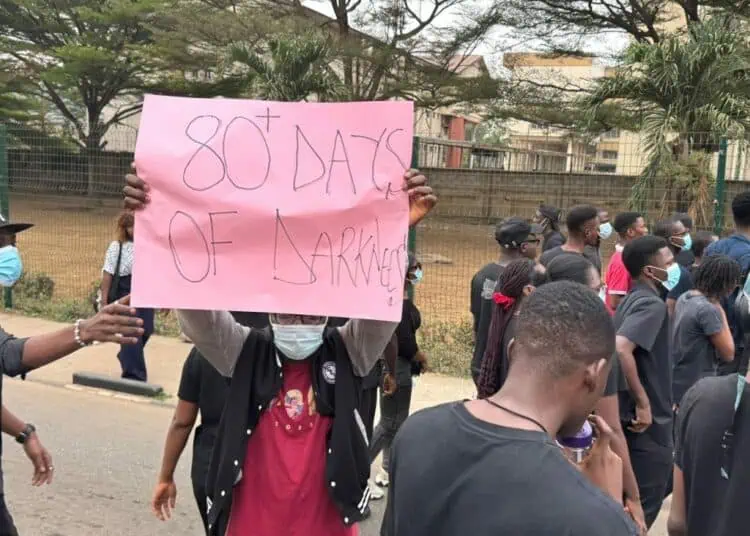
University of Ibadan students demand action after 82 days without power at teaching hospital
Students from the University of Ibadan took to the streets today to voice their frustration over an ongoing 82-day power outage at the University College Hospital (UCH). The peaceful protest, led by the President of the Students’ Union, Bolaji Aweda, highlighted the significant impact the outage has had on both patient care and the education of medical students. The power outage at UCH began in November 2023 and was exacerbated by debts owed to the Ibadan Electricity Distribution Company (IBEDC). The hospital’s power supply was disconnected in March 2024 due to unpaid electricity bills, leaving students and staff struggling to cope with the lack of essential services.During the protest, Aweda stated, “For 82 days, there has been no light at UCH. This situation is unacceptable and directly affects us as students.” He emphasized that the hospital is crucial for their training, and without reliable power, both learning and patient care are severely compromised. The students gathered early in the morning to express their dissatisfaction and call for immediate action. They demand that UCH settle its debts with IBEDC so that power can be restored promptly. The ongoing outage has raised concerns not only about the hospital’s operations but also about the quality of education for future healthcare professionals.
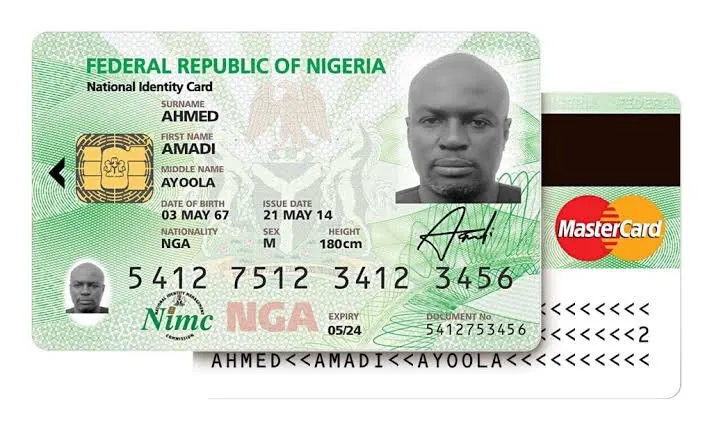
NIMC announces payment requirement for new national ID card amid financial constraints
The National Orientation Agency of Nigeria has unveiled the General Multipurpose National Identity Card (GMPC), to simplify identification for its citizens. This new card is set to replace several existing identification cards, making it easier for Nigerians to access a variety of services. The GMPC is designed to serve multiple functions, combining the roles of various cards into one. This means that Nigerians will no longer need to carry numerous forms of identification. Instead, the GMPC will facilitate financial transactions, government services, and even travel-related needs, all in one convenient card. To ensure that the GMPC is fully functional for financial transactions, the National Identity Management Commission (NIMC) has teamed up with key players in the financial sector, including the Central Bank of Nigeria (CBN) and the Nigeria Inter-bank Settlement System (NIBSS). This collaboration aims to create a seamless integration with Nigeria’s financial systems, allowing for smoother payments and enhanced access to services. What’s more, the GMPC will be backed by the AFRIGO card scheme, a domestic payment system developed by NIBSS. This initiative not only promotes the use of local financial infrastructure but also reduces reliance on foreign payment systems, marking a step toward greater financial independence for Nigeria. For those interested in obtaining the GMPC, applications can be submitted through an online self-service portal, at NIMC offices, or via participating banks. Applicants will need to provide their National Identification Number (NIN) as part of the process. Once approved, the card will be issued by the applicant’s bank, similar to how debit and credit cards are currently issued. After issuance, cardholders have the option to pick up their GMPC at designated centers or request home delivery for an additional fee.The National Orientation Agency aims to provide Nigerians with a more efficient and versatile means of identification while improving access to essential services. The GMPC promises to make life easier for citizens by consolidating multiple identification needs into a single card.
FG’s revenue from fintech transactions hits record N31.2 billion in december 2024
The Federal Government’s decision to extend the Electronic Money Transfer Levy (EMTL) to fintech platforms like OPay, PalmPay, and Moniepoint has paid off handsomely, with revenue from the levy hitting an all-time high of N31.2 billion in December 2024. This marks a staggering 107% increase compared to the N15.046 billion collected in November 2024. According to data released by the Federation Account Allocation Committee (FAAC), the EMTL contributed significantly to the total revenue of N1.424 trillion shared among the Federal, State, and Local Governments for December. The levy, which applies to electronic transfers of N10,000 and above, was introduced as part of the Finance Act 2020 but was recently extended to cover fintech transactions starting December 1, 2024. The EMTL is a N50 charge applied to electronic money transfers or receipts in Nigeria. However, there are some exemptions:Transfers below N10,000Transfers between accounts owned by the same person within the same bankDeposits made into one’s own accountThe revenue generated from this levy is shared among the three tiers of government: the Federal Government receives 15%, States get 50%, and Local Governments take 35%. Before December 2024, many Nigerians enjoyed free or low-cost transactions on fintech platforms. However, with the inclusion of fintechs in the EMTL framework, customers now pay the N50 levy on qualifying transactions. Platforms like OPay have clarified that they do not benefit from this charge; it is remitted entirely to the Federal Government.This move aligns with the government’s broader strategy to increase its revenue base amid economic challenges. The sharp rise in EMTL revenue in December suggests that extending the levy to fintech platforms was a highly effective decision.What This Means for NigeriansWhile this development has boosted government coffers, it has also ended the era of fully free transactions on most fintech platforms. Customers are now feeling the pinch of additional charges on their transactions, especially as inflation remains high at 34.8% as of December 2024. The success of this initiative signals that fintechs will continue playing a pivotal role in Nigeria’s financial ecosystem and revenue generation efforts. With projections for EMTL revenue set at N230 billion for 2025, it’s clear that electronic transactions will remain a critical focus area for government taxation policies.For now, Nigerians can expect these deductions to remain a part of their digital banking experience as the government seeks sustainable ways to fund its operations and development projects