
South Africa’s Blue Label Telecoms is set to change its name to Blu Label Unlimited Group, reflecting a fresh direction and bigger ambitions in tech and telecoms. The rebrand awaits shareholder approval and marks a major restructuring for the company. Blue Label, a key player in South Africa’s prepaid economy, plans to separate its telecoms business from other units. The new name drops “telecoms” and shortens “Blue” to “Blu” to match its updated branding seen in marketing. The company serves about 35 million customers with prepaid airtime, electricity, and mobile data, distributed through thousands of outlets like spaza shops and supermarkets. Despite fierce competition from giants like MTN and Vodacom, Blue Label remains influential in the market. South Africa’s telecom sector is expected to grow from $10.43 billion in 2025 to $12.28 billion by 2030, with mobile data driving much of that expansion. The rebrand also ties into Blue Label’s recent move to acquire a controlling stake in mobile operator Cell C. Under new leadership, Cell C is pursuing a “capex-light” strategy focused on financial recovery and sustainable growth. There are plans to possibly list Cell C separately on the Johannesburg Stock Exchange after restructuring. Once approved, the company will trade on the JSE as Blu Label Unlimited, keeping its current share code and telecom sector listing. This rebrand signals a shift towards a more diversified tech group ready to expand its footprint in South Africa’s fast-evolving digital space. The change is expected to be finalised soon after shareholder approval, with the company continuing to build on its strong distribution network and digital platforms.
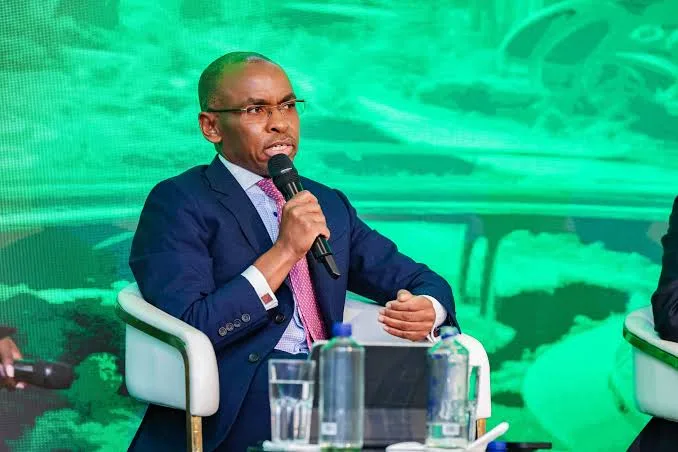
Safaricom CEO Peter Ndegwa becomes highest-paid executive on Nairobi securities exchange with $2.2 million pay
Safaricom CEO Peter Ndegwa earned $2.2 million in total compensation for the year ending March 2025, marking a 17% pay increase and making him the highest-paid executive listed on the Nairobi Securities Exchange (NSE). Ndegwa’s pay package included a $765,100 salary, a $904,600 bonus, $259,187 in non-cash benefits, and $351,155 from Safaricom’s Employee Performance Share Award Plan. This rise in pay follows Safaricom’s return to profit growth, with net earnings up 11% to $540 million, driven by strong mobile money and data services and reduced losses in Ethiopia. Other top executives also saw pay hikes. Chief Financial Officer Dilip Pal earned nearly $1 million, up from $882,000 the previous year. Together, the CEO and CFO took home $3.2 million, a 16.5% increase. Safaricom’s board members also received higher remuneration, with total director pay rising 10% to $3.8 million. Safaricom remains Kenya’s dominant telecom and digital payments company and the most profitable listed firm in East and Central Africa. The company is optimistic about its long-term growth, especially in Ethiopia, despite earlier setbacks. Safaricom’s continued financial performance and strategic moves in East Africa will be closely watched by investors and the public alike.

South African AI startup Cerebrium raises $8.5 million to boost real-time AI infrastructure
Cerebrium, a South African-born AI infrastructure startup, has secured $8.5 million in seed funding to expand its engineering team and scale its platform for growing enterprise demand. Founded in 2021 by Michael Louis and Jonathan Irwin, former tech leads at South African grocery delivery firm OneCart, Cerebrium aims to simplify how developers build and run AI applications. The startup offers a serverless platform that helps companies deploy AI chatbots, voice assistants, and video tools without the hassle of managing complex infrastructure or high cloud costs. The funding round was led by Gradient, Google’s AI venture fund, with participation from Y Combinator, Authentic Ventures, and angel investors. Cerebrium’s technology supports real-time, multimodal AI, handling voice, video, and text simultaneously, which is becoming critical for next-generation AI products. Michael Louis, CEO of Cerebrium, said, “We built Cerebrium so engineers can focus on building AI products that users love without worrying about infrastructure or security.” He added that the company is focused on performance, security, and regional compliance, including support for Africa, the US, and Europe. Cerebrium’s platform is already used by companies like Tavus, Deepgram, and Vapi to run fast, scalable AI systems that respond instantly to users. Roey Paz-Priel, a machine learning engineer at Tavus, praised Cerebrium for delivering the speed and stability needed at scale. With the global market for AI infrastructure expected to exceed $197 billion by 2030, Cerebrium aims to become the go-to platform for AI-native applications across industries, from sales to healthcare. Cerebrium plans to use the funds to hire more engineers and improve its platform’s capabilities to meet rising worldwide demand.
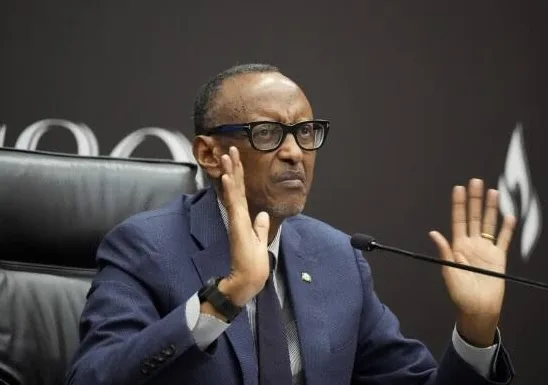
Rwanda strengthens trade, aviation, and ICT ties with Nigeria to boost economic growth
Rwanda has renewed its commitment to deepen partnerships with Nigeria in trade, aviation, and information and communication technology (ICT), aiming to foster economic growth and regional integration. At the 31st anniversary of Rwanda’s Liberation Day celebration in Abuja, Rwanda’s High Commissioner to Nigeria, Christophe Bazivamo, stated the importance of closer cooperation between the two countries. He said stronger trade links would create opportunities and improve citizens’ welfare, describing trade as the “heartbeat of any economy”. A significant step in this partnership is the recently signed Agreement on the Avoidance of Double Taxation and Prevention of Fiscal Evasion, which took place on June 27, 2025, in Abuja. This deal is designed to eliminate the risk of being taxed twice on the same income, encouraging more cross-border investment and supporting private sector growth under the African Continental Free Trade Area (AfCFTA). Bazivamo also emphasized the role of aviation in enhancing seamless connectivity between Rwanda and Nigeria, which is vital for boosting business and tourism. Additionally, he pointed to ICT as a key driver of innovation and economic transformation, with plans to strengthen digital partnerships that will benefit both nations. The High Commissioner further noted Rwanda’s commitment to regional stability, referencing a recent peace agreement with the Democratic Republic of Congo. He also shared Rwanda’s Vision 2050, a roadmap focused on inclusivity, sustainability, and innovation, aiming to elevate Rwanda to an upper-middle-income country by 2045 and a high-income knowledge economy by 2050.

AU peacekeepers’ helicopter crashes at Mogadishu Airport, fire quickly contained
A helicopter operated by the African Union Support and Stabilization Mission in Somalia (AUSSOM) crashed while landing at Mogadishu’s Aden Adde International Airport on Wednesday, carrying eight personnel, according to Somali authorities. The helicopter had departed from Balidoogle Airfield in the Lower Shabelle region before the crash. A fire broke out but was swiftly controlled by emergency responders. Despite the incident, flight operations at the airport continue as normal, the Somali National News Agency (SONNA) reported on its official X account. Eyewitnesses described thick smoke and flames rising from the crash site. An airport worker said, “We heard the blast and saw smoke and flames over a helicopter. The smoke entirely covered the helicopter.” The Somali Civil Aviation Authority confirmed the crash happened in the military section of the airport and that an investigation is underway to find the cause. The helicopter was operated by Ugandan troops, part of the AU peacekeeping force supporting Somalia’s fight against the militant group al-Shabab. Casualty details have not yet been confirmed, but officials acknowledge there were injuries. The African Union mission has not yet released an official statement.This incident shows the ongoing challenges faced by peacekeepers in Somalia and the risks involved in their operations.

MultiChoice trials weekly DStv subscriptions in Uganda, eyes expansion across Africa
Pay-TV giant MultiChoice Group is piloting a weekly subscription model for its DStv service in Uganda, aiming to better align payments with customers’ income patterns, particularly in markets where earnings are often daily or weekly. The trial, which began seven weeks ago, could expand to other African countries, including Nigeria, within the next three to six months if successful, MultiChoice CEO Calvo Mawela told South Africa’s Sunday Times. Mawela explained that offering weekly passes is a significant shift designed to ease payment burdens for subscribers facing economic challenges, likening it to the transformative effect prepaid mobile services had on telecoms. He also revealed that the company is exploring a hybrid channel packaging model, starting with a base package and allowing customers to add specific channels, though a full à la carte option remains off the table. In response to subscriber declines, especially in Nigeria and South Africa, MultiChoice is considering unbundling its sports channels into a separate subscription package to retain customers. The company’s latest financial results showed a net profit turnaround to R2.02 billion for the year ending March 2025, largely due to the sale of a stake in its insurance arm. However, overall group revenue fell 9%, driven by an 11% drop in subscription revenue, with the Rest of Africa region losing 1.8 million subscribers over two years, 77% of that loss coming from Nigeria.