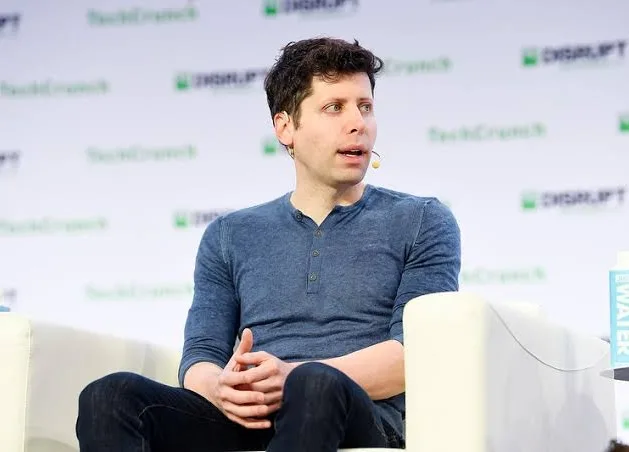
OpenAI issued a warning on Sunday cautioning the public and investors regarding illegal transactions involving its shares. The tech giant emphasized that any transfer of its equity without prior written approval is invalid and may carry serious legal repercussions. In an official blog post published on August 24, OpenAI reiterated that all shares in the company are subject to strict transfer limitations. The firm clarified that no direct or indirect sale, pledge, or encumbrance of its stock can occur without explicit consent from OpenAI’s legal department. The company has raised concerns over third-party entities promoting misleading investment opportunities. These fraudulent schemes disguise themselves as legitimate means to obtain stakes in OpenAI through various avenues, including special purpose vehicles (SPVs), tokenized assets, “forward” contracts, and other purported financial instruments. Our firm does not endorse nor participate in any of these arrangements which circumvent our share transfer rules. Any such deals are void and could expose buyers and sellers to civil and criminal liabilities – OpenAI stated. The alert also stressed that unauthorized transactions might violate U.S. securities regulations, exposing parties involved to potential penalties and rescission of the transfer. Investors are urged to exercise vigilance when approached with offers related to the company’s stock, as many are designed to dodge regulatory controls. Purchasing these illicit stakes, whether directly or through complex mechanisms, results in no genuine ownership or financial advantage. Investors who encounter suspicious propositions are encouraged to report them promptly by contacting OpenAI’s legal team at the designated corporate email.

Nigerian activist Sowore calls on citizens to use AI technology against Police brutality
Human rights advocate Omoyele Sowore has urged Nigerians to equip themselves with digital tools like AI-powered glasses and body cameras to expose police misconduct and combat systemic abuse. His appeal follows a recent incident in Lagos where a man was harassed by police simply for wearing glasses. Sowore recounted how, in January 2025, he used his Ray-Ban Meta AI glasses to record a notorious police extortion team near Lagos’s Murtala Muhammed International Airport. Rather than disciplining the corrupt officers, the Inspector-General of Police, Kayode Egbetokun, ordered Sowore’s arrest, charging him with cybercrime for allegedly filming the misconduct. During the Federal High Court trial, Sowore’s passport was seized, and his medically prescribed AI glasses became a contentious issue. At the Nigeria Police Force Headquarters protest in Abuja, his glasses were forcibly taken by police operatives, which was captured on video, and though later returned. Sowore accused Nigeria’s political elites of fearing technological advancements, citing Senate Chief Whip Opeyemi Bamidele’s description of social media as a “national threat”. He argued that this fear fuels the government’s opposition to digital resistance efforts, which have become their most formidable challenge. The activist also praised a Lagos motorist whose brave recording of police harassment has become a symbol of rising citizen defiance against corruption. In January 2025, I utilized my Ray-Ban Meta AI glasses to confront a police extortion gang on a busy Lagos road…instead of punishing these officers, the illegal IGP Kayode Egbetokun ordered my arrest and charged me with cybercrime simply for exposing their corruption. The court proceedings included seizing my passport and questioning my medicated AI glasses, which was unprecedented. I commend the bravery of the Lagos motorist who stood up to corrupt officers; his courage is immortalized on video. I urge every Nigerian to equip themselves with AI glasses, body cams, and other digital devices to reveal brutality and prevent cover-ups. The era of darkness and impunity is ending. Technology is our witness, and our resistance must be AI-powered to defeat the old order The growing digital resistance signifies a new chapter in Nigeria’s fight for justice and transparency, with technology playing a crucial role in ensuring that abuses no longer go unseen or unpunished.
Fresh tech graduates face tough job market as AI takes over coding tasks
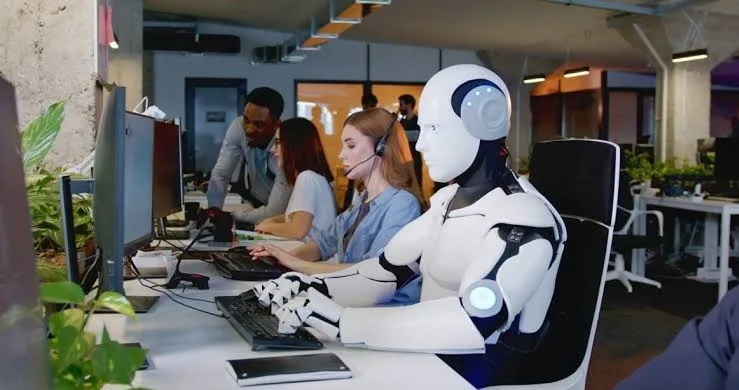
Many computer science graduates are finding it increasingly difficult to land their first jobs. Despite graduating with promising degrees, entry-level tech roles are vanishing as companies turn to artificial intelligence (AI) tools to handle coding and other tasks once done by junior engineers. In 2025, AI automation is reshaping the tech job market worldwide, including Nigeria. Companies are using AI platforms to automate simpler coding functions, reducing the demand for new graduates to gain on-the-job experience. Research shows a sharp 50% decline in entry-level tech job postings since 2019. Many junior roles now require two or more years of experience, which creates a frustrating catch-22 for fresh graduates. Graduates like Eddie Hart and Colin (pseudonym) who studied computer science recently have faced long application processes dominated by AI screening, multiple testing stages, and virtual interviews with little human interaction. This reliance on AI in hiring often leaves promising candidates rejected without human review, adding to their discouragement. Experts warn the situation threatens the future talent pipeline. Paul Dix, CTO of database firm InfluxData, says if companies stop hiring young developers now, in time the sector will face a shortage of senior engineers as well. Meanwhile, some see a silver lining, newer graduates are often more familiar with AI tools, giving them a strong edge in the evolving tech landscape. Industry research also finds that while developers increasingly use AI daily, they remain cautious about fully trusting its outputs. The tech community anticipates a time when human creativity and AI collaboration will drive new solutions and job creation again. For now, the job market for computer science graduates is challenging, with some pivoting to careers outside tech. However, as AI reshapes roles, many believe demand for skilled developers will revive, making the current downturn a rough but temporary phase. This ongoing transition stresses the need for fresh grads to build AI literacy alongside traditional skills and for companies to find balanced hiring approaches that invest in young talent as technology advances.
TD Africa earns top AI and data privacy ISO Certifications
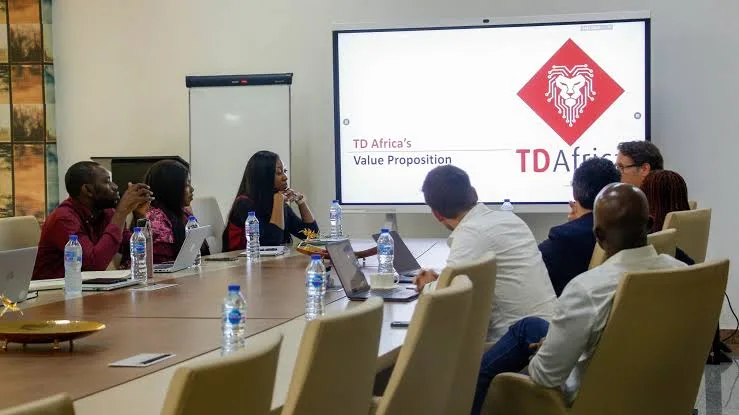
TD Africa, a top technology distributor in Sub-Saharan Africa, has made a major stride in the continent’s tech scene. The company just secured two important ISO certifications: ISO 42001 for Artificial Intelligence Management Systems and ISO 27701 for Privacy Information Management. These certifications set global standards for how AI should be used responsibly and how personal data should be protected. Mrs. Chioma Ekeh, the CEO of TD Africa, explains that these are more than just certificates. She says they show the company’s serious promise to build trust, strong governance, and accountability in Africa’s digital growth. She also states AI’s potential in important sectors like finance, farming, health, and governance, pointing out that Africa must be ready to use AI responsibly. Africa should not just consume innovations but also help design solutions that suit our unique needs…the global AI conversation shouldn’t just be for Silicon Valley or Beijing. Cities like Lagos, Nairobi, and Accra must also have a strong voice, and TD Africa is ready to amplify it. We’re not waiting for the future, we’re building it today – Mrs Ekeh ISO 42001 is the world’s first standard that guides companies on ethical and transparent AI use, ensuring AI tools align with human values and global best practices. Meanwhile, ISO 27701 certifies that TD Africa handles personal data with the highest level of security and integrity. This is crucial as data privacy faces rising risks worldwide. For almost 30 years, TD Africa has helped shape how technology spreads across Africa. It works with global tech leaders and supports innovative programs like TecHerdemy, which has trained over 400 women in tech roles. These efforts clearly show TD Africa’s commitment to inclusive digital progress.

MTN and Airtel invest $400 million to naira-priced cloud services for Nigerian startups
MTN and Airtel are teaming up to change how Nigerian startups access cloud and AI services by investing nearly $400 million (₦613.81 billion) to offer affordable, local options priced in naira. The two telecom giants want to challenge global leaders like AWS, Google Cloud, and Microsoft Azure, which currently dominate the market. Their strategy focuses on pricing cloud services in naira, not just billing in naira, promising better affordability, faster local compute power, and data sovereignty. MTN has already invested $120 million and plans to put in another $135 million. The company is building a Tier 4 data centre designed to support startups and businesses looking to digitalise operations. Our cloud is crafted for Nigerian startups, enterprises, and public institutions – Ifeanyi Otudor, senior consultant at MTN Enterprise Solutions. MTN also runs an accelerator programme with grants up to ₦100 million to support startups. Airtel’s focus, meanwhile, is on AI infrastructure. The telco broke ground in 2024 on Nigeria’s first hyperscale data centre in Eko Atlantic. It’s being built to handle massive AI workloads using high-performance GPUs, a critical resource for startups working with artificial intelligence. Airtel’s director of business, Ogo Ofomata, emphasized We are building at a hyperscale level, designed for the new server loads that modern infrastructure demands Since the naira’s sharp devaluation in 2023, many startups have struggled with soaring costs linked to dollar-priced cloud services. By offering cloud priced competitively in naira and keeping data local, MTN and Airtel hope to keep millions of dollars of tech spending within Nigeria. Startups are cautiously optimistic. Aaron Sotunde-Adesina, CEO of AI startup Quonos, pointed out the challenge ahead: If it is cheap and works, people will adopt it. If it doesn’t work or isn’t reliable, it will be a big struggle. Many local providers have struggled with reliability compared to global giants. Despite these hurdles, the Nigerian government supports efforts to build sovereign cloud infrastructure. Kashifu Inuwa, director general of NITDA, noted at MTN Cloud’s launch that local cloud services are given the opportunity to show the world we are ready to build sovereign cloud infrastructure. The move by MTN and Airtel is vital because cloud and AI services could add billions to Nigeria’s economy. According to Oxford Insights, AI alone could boost Nigeria’s GDP by $15 billion by 2030, but this depends on affordable, modern data centres.
Google launches “Build with AI” program to train 1,000 Nigerian developers in generative AI skills
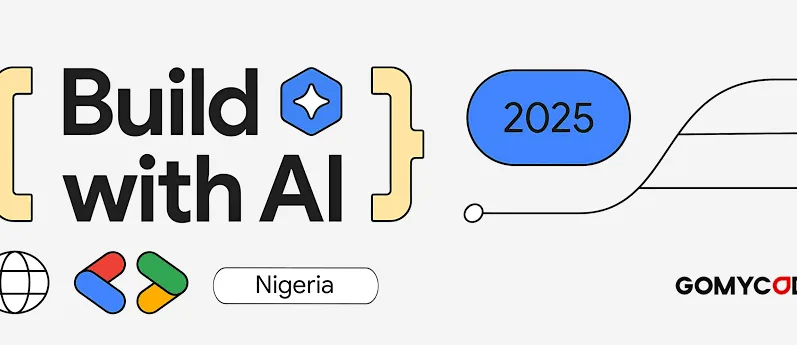
Google has just launched a new programme, Build with AI, to train 1,000 Nigerian developers in generative artificial intelligence (AI). This program aim to boost local skills so Nigerian tech talent can create innovative and globally competitive AI solutions. The programme is in partnership with GOMYCODE, a company known for teaching digital skills in Nigeria. The training will focus on industries like fintech, healthtech, and agritech, positioning Nigerian developers to lead Africa’s digital transformation. John Kimani, Google’s Head of Developer Ecosystem for Sub-Saharan Africa, said this move is a big step to accelerate Nigeria’s role in the global AI economy. He noted a technological renaissance in Nigeria fueled by passionate developers eager to solve local problems. Through this partnership, Google wants to give them the tools and expertise to build the future. The training will last 11 weeks, combining in-person classes at GOMYCODE’s hacker spaces with practical, mentored projects. Babatunde Olaifa, GOMYCODE’s Country Director, stated their role in providing the infrastructure and local support needed to help Nigeria’s tech community thrive. Applications are open nationwide, and the programme will end with a demo day where the best participants showcase their AI-powered solutions to Google and industry experts.