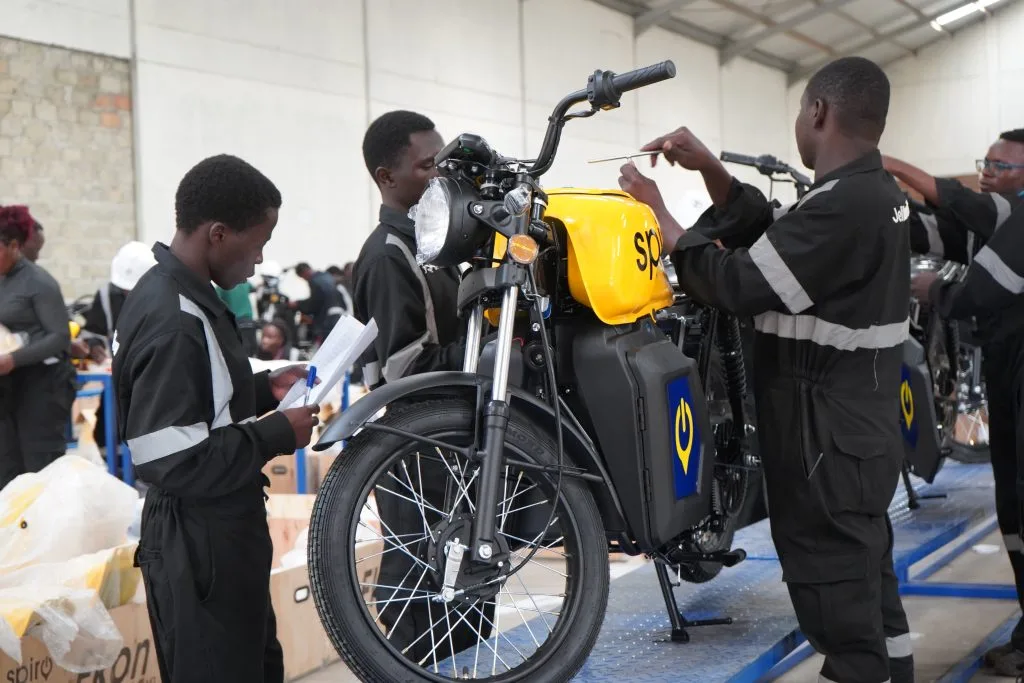
Spiro, a leading African EV manufacturer, recently unveiled three of its flagship motorcycles in Lagos, Nigeria. From the start of the event, Spiro emphasized a vision where mobility in Nigeria is increasingly electric, affordable, and accessible to all. Flora Limukii, the company’s Global Head of PR, explained their ambition to transform Africa’s transport sector. Operating in eight countries across West and East Africa, Spiro invited the press to explore not only its product range but the complete electric mobility ecosystem, including manufacturing, after-sales service, innovation, and environmental impact. Media, Flora noted, plays a crucial role in educating the public on how electric bikes can save costs, create employment, and lower emissions. According to her, the media are partners in the transition. Rahul Gaur, Spiro’s West Africa Director, detailed the company’s progress and plans. Boasting over 45,000 e-bikes deployed across Africa and nearly 23 million battery swaps completed, Spiro has cut more than 44,000 tons of carbon dioxide emissions. In Nigeria, the brand has introduced 1,000 motorcycles in Ogun State and is rapidly expanding into Delta, Cross River, and Kwara states. Rahul shared an ambitious target to increase battery swapping stations from 64 to 1,000 by January 2026, ensuring riders never face downtime due to depleted batteries. Customers have already logged more than 250 million kilometers on Spiro bikes continent-wide, saving thousands of liters of fuel and proving that electric vehicles can thrive even where infrastructure challenges exist. According to Rahul, electric motorcycles are cost-competitive. He stressed that Spiro bikes cost 40% less to maintain than petrol alternatives and that a 100km journey requires just ₦2,000 in electricity, compared to ₦3,000 or more on fuel. The company’s commitment extends to workforce development, with over 95% of employees being African and more than 130 certified technicians trained through Spiro Academy, which partners with universities to meet the servicing needs of a growing EV market. Spiro also leads the continent with over 500 battery swapping stations, allowing riders to exchange batteries in minutes rather than wait hours to recharge. During the showcase, three signature models took center stage: the durable and efficient Ekon 450M3 commuter bike; the premium Ekon Alpha+ featuring advanced tech like a 7-inch LED display and tyre pressure monitoring; and the special Ekon Collectable Limited Edition, including a version branded by superstar Davido, tailored for enthusiasts and collectors. Spiro’s in-house developed technology platform supports features such as real-time tracking, geofencing, and immobilization, offering governments and fleet operators enhanced oversight and theft prevention. Spiro is currently establishing assembly plants in Nigeria and Rwanda to boost local production and job creation, with more than 95% of staff already African. The infrastructure projects include fast charging stations capable of powering bikes for up to 100km in under 45 minutes. To ease adoption, Spiro plans to expand its mobile repair service “Service-on-Wheels”, delivering on-site repairs, while collaborating with fuel stations, malls, and logistics companies to grow the battery swapping network. An environmentally conscious tour truck will crisscross Nigeria’s major cities, educating riders on EV benefits. The company’s Alpha model, endorsed by music icon Davido, adds a touch of premium appeal to this green revolution.

E1 Lagos GP brings ‘Formula 1 on water’ race to Africa for the first time
Thousands of Lagosians gathered at the LASWA Boat Jetty in Ikoyi for a unique preview of the E1 Lagos GP. Rather than a typical press event, guests embarked on a lagoon cruise to experience the planned racecourse firsthand, setting the stage for a first ever electric raceboat competition on October 4-5, 2025. The waterways that sustain Lagos’ bustling trade and daily life will soon be home to the world’s fastest electric raceboats. This introduction invited attendees to envision the spectacle about to unfold, showcasing Lagos as a vibrant host city on the global watersport map. What Is the E1 Series? Think of it as Formula 1, but on the water. The E1 World Championship is the first-ever electric raceboat series worldwide. Central to the competition are the futuristic RaceBirds: sleek vessels powered entirely by renewable energy that slice across the water at incredible speeds. Celebrity-backed teams with names like Rafael Nadal, Tom Brady, Didier Drogba, and LeBron James add star power to what is a seven-race global tour. Lagos proudly marks the sixth stop on this exciting calendar. Each race winner earns 25 points toward the season-long championship, which culminates in Miami’s final showdown where the overall victor will be crowned. This is the future of aquatic sports, and Lagos now takes its rightful place on the circuit, with fast, eco-friendly, and futuristic innovations. Sam Egube, chairman of the local organising committee, described the city as one with destiny. He added that he wants Lagos to stand alongside Miami, Monaco, and other prestigious marine racing cities. More than just lofty goals, Lagos already commands regional dominance as Africa’s tech capital and entertainment powerhouse, boasting over eight unicorn firms. From fintech to Afrobeats, Lagos drives continental and global conversations, making this world-class sporting event a natural extension of its dynamic ethos. With a third of its geography covered by water, from lagoons to the Atlantic ocean, Lagos possesses a unique stage. This aquatic backdrop that has fostered commerce and growth will now host a fusion of sport, technology, and sustainability. For the first time on African soil, the E1 Series will race in Lagos, where electric boats, elegant and whisper-quiet, will be steered by men and women competing equally. The event promises a mix of races, fashion, concerts, culinary delights, and cultural festivities that epitomize local Lagosian flair. Partnerships Power the Vision Delivering an event of this dimension requires strong alliances. Lagos has mobilized heavyweight partners including FirstBank, Afriximbank, FESBAN, as well as investors like Toleran behind the Lekki Deep Sea Port, plus major firms such as Oando, Spiro, and Guinness. Lagos recognizes the fragile balance of its waterways. The 100% electric RaceBirds run on renewable energy systems producing zero emissions. This event offers a platform for Lagos to position itself as a leader in innovative, climate-conscious sporting events.
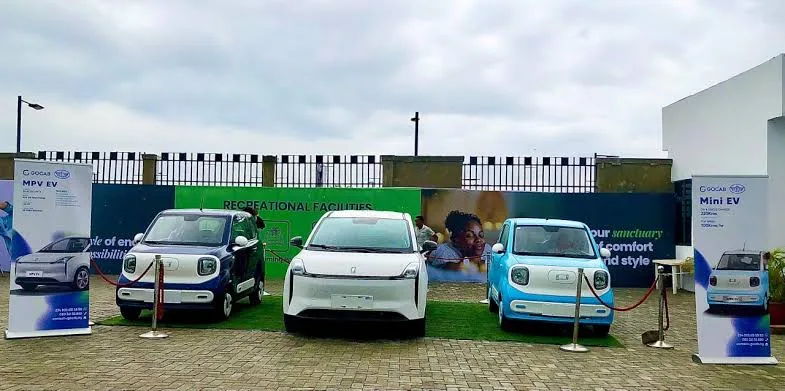
FAW Nigeria debuts luxury electric cars at Lekki Avana Phase 2 launch
FAW Nigeria made a grand entrance into the Nigerian electric vehicle market on September 11, 2025, unveiling an elegant lineup of luxury EVs during the much-anticipated launch of Lekki Avana Phase 2. The event heralded a new chapter in the nation’s pursuit of greener transport solutions. The occasion drew an esteemed gathering, including government officials, traditional leaders, real estate industry players, and prominent personalities such as football icon Kanu Nwankwo. They were all captivated by the collections of electric cars presented. Representing the Lagos State Governor, the Director of Lands and Housing Development, ESV Collins Olushina Alabi, praised the unveiling and launch, calling it a significant milestone for residents of Lagos and Nigerians nationwide. Among the vehicles that captivated attendees was the FAW Mini EV. This compact yet stylish automobile offers a maximum output of 20kW, seats four passengers, and features an innovative gaming controller-inspired dashboard. Safety takes center stage with standards like automatic emergency braking, rear parking sensors, a robust cage body, tire pressure monitoring, and ABS brakes. The Mini EV can travel up to 220 kilometers on a single charge and reach speeds of 100 kilometers per hour. Commanding equal admiration was the MVP EV, a stronger model designed for longer journeys. Powered by a 53kW motor with peak power of 120kW and 85Nm torque, it benefits from a lithium iron phosphate battery that fully charges in one hour with fast charging or in eight hours on a slower setting. The vehicle blends performance with comfort, equipped with dual airbags, ABS, Brake Assist, Traction Control System, Electronic Stability Program, rearview camera with parking assist, sliding door on one side, leather seats, a 10-inch LCD display, LED headlamps, daytime running lights, and electric air conditioning. FAW Nigeria stressed its dedication to leading sustainable automotive technology that aligns with international norms and Nigeria’s goal of lowering carbon emissions while promoting renewable energy sources. Debanjan Paul, Sales Representative for FAW Nigeria, emphasized that the reveal of these premium EV models is a pivotal moment in accelerating Nigeria’s shift towards environmentally friendly transportation and with the combination of sleek design, top safety features, and advanced tech, he said FAW cars aim to transform the driving experience and support a cleaner future. Far beyond merely adding new cars on Nigerian highways, the FAW EV presentation symbolizes innovation, eco-consciousness, and a futuristic vision for the country’s transport landscape.
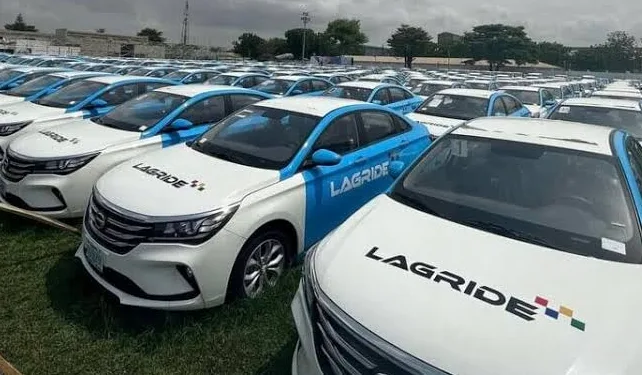
Lagride eyes 70% share of Lagos e-hailing market with electric vehicle expansion
Lagride, the e-hailing firm supported by Lagos State, announced plans to capture at least 70% of the local ride-hailing market by boosting its fleet with 100 new electric vehicles (EVs). The main purpose for this addition is to deploy over 3,000 EVs across the next three years, aligning with Lagos’ drive toward greener, more efficient transportation. The company aims to gain ground against rivals such as Uber, Bolt, and InDrive through this expansion. The newly acquired vehicles offer a range of 333 kilometers, enough to comfortably cover a round trip between Lagos and Ibadan without recharging. Lagride’s PR and Communications Lead, Ifeanyi Abraham, stated that the goal of the company is to transform the state’s mobility industry towards modern urban transit hubs like Dubai. He added that the vehicles were carefully selected to meet Lagos’ heavy transport demands, supported by dependable charging infrastructure for longer journeys. Riders will soon be able to choose between petrol and electric vehicles through an updated mobile app. Meanwhile, Lagride’s Executive Director, Adeniyi Saliu, revealed that the company’s growth will create thousands of new jobs in driver training, vehicle upkeep, and fleet management. Drivers will benefit from flexible ownership options spanning 18 months to four years, aimed at enhancing earnings and livelihoods. The company targets growing its fleet to 5,000 vehicles in three years, with more than 3,000 being electric, in order slash petrol dependence, cut running costs, and boost driver income. Last year, Lagos State entered a joint venture with CIG Motors Company Limited to procure 5,000 new vehicles for the Lagride fleet, including 1,000 electric cars. Governor Babajide Sanwo-Olu described this project as part of his administration’s scheme to modernize public transportation with an integrated, sustainable system that replaces outdated vehicles.
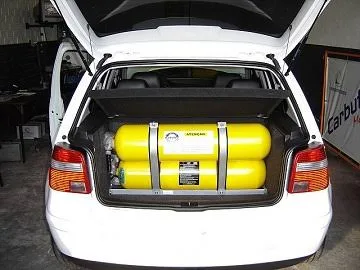
FG clarifies CNG price hike as private operators adjust rates, launches free vehicle conversion drive in Lagos
The Federal Government has firmly denied any involvement in raising the cost of Compressed Natural Gas (CNG) pumps, attributing the recent price increases solely to adjustments made by private-sector operators. According to Matilda Johnson, Brands and Corporate Communications Manager at the Presidential Compressed Natural Gas Initiative (PCNGI), no government mandate or subsidy removal prompted the hike from N230 to approximately N380 per Standard Cubic Metre (SCM). Johnson emphasized that the administration continues to support President Bola Tinubu’s directive to promote CNG as an affordable, cleaner, and more sustainable alternative fuel to petrol and diesel. The sector has attracted nearly $1 billion in private investments, showing the growth of CNG adoption in Nigeria. Since its inception in 2023, following the removal of fuel subsidies, the Presidential CNG Initiative has made strides to encourage adoption nationwide. This includes free conversion of commercial vehicles to CNG and deployment of CNG-powered buses in states like Lagos, Ogun, Oyo, and Rivers. However, the uptake is still below target levels, with around 50,000 vehicles converted as of early 2025, short of the one million goal set for 2027. In a related effort, Lagos motorists are offered free CNG vehicle modifications at six centres across the city starting September 13. The first 50 vehicles passing inspections at each site will receive conversion kits that allow refueling at the subsidized N230 rate at NIPCO stations. Locations include Femadec (Lekki-Epe), Portland (Ojota), Mezovest (Ajah), Dana Motors (Isolo), MBH Power (Ikorodu), and Autogig (Gbagada). Similar programs will take place simultaneously in Abuja, Ibadan, Abeokuta, and Kaduna. While pricing adjustments by private players aim to ensure operational viability and attract further investments, authorities affirm that CNG remains a cost-effective and environmentally friendly fuel choice. This comprehensive approach aims to balance sustainability, affordability, and sector growth to meet Nigeria’s energy and environmental goals in the coming years.
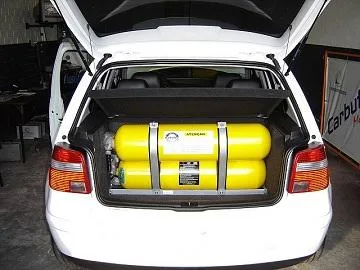
Federal Government standardizes CNG price at N380/SCM in Lagos and Abuja
Lagos and Abuja motorists face a unified compressed natural gas rate of N380 per standard cubic metre, aligning these cities with existing national pricing. Before this harmonisation, Lagos and Abuja drivers enjoyed prices as low as N230/SCM, but now pay a uniform fee that bridges gaps across regions. Officials explained that unifying costs nationwide will stabilise the market, attract investments, and support small businesses reliant on economical fuel. The Federal Government’s campaign to promote cleaner and more cost-effective energy sources began in 2023, responding to rising petrol and diesel prices after fuel subsidy removals. The Presidential Compressed Natural Gas Initiative (PCNGi) launched free CNG conversion services, particularly benefiting commercial drivers. States like Lagos, Ogun, Oyo, and Rivers have embraced the transition, introducing CNG-powered buses and expanding refuelling infrastructure. By mid-2025, over 65 satellite stations were in operation across 21 states, supported by an investment exceeding $450 million. Despite these advances, uptake has been slower than projected, with approximately 50,000 vehicles converted, well short of the one million target set for 2027. Experts stressed on the infrastructure gaps and a delicate pricing balance as factors constraining growth. For CNG adoption to flourish, expanding pipeline-fed refuelling points and reducing dependency on truck deliveries remain priorities. Analysts advocate establishing price points that accommodate both motorists’ affordability and investors’ return on investment, suggesting that a range of N407 to N520 per SCM would create a sustainable commercial environment.These measures according to them, will set the stage for mass adoption, boosting savings for drivers and a positive impact on the environment. The government has promised to refine strategies to ensure the vision of widespread CNG use by 2027 becomes a reality.