
United Bank for Africa (UBA) and Access Bank have emerged as Nigeria’s strongest brands in 2025, according to Brand Finance’s latest “Nigeria 25 2025” report released this week. UBA climbed from ninth place last year to claim the top spot in brand strength, achieving a Brand Strength Index (BSI) score of 92.4 out of 100 and earning the prestigious AAA+ rating, the highest accolade given by Brand Finance. This marks a significant recognition of UBA’s strong consumer trust, brand familiarity, and market positioning both within Nigeria and across Africa. Meanwhile, Access Bank retained its position as Nigeria’s most valuable brand for the fourth consecutive year, with its brand value more than doubling to ₦893.3 billion. The bank’s impressive growth reflects its solid financial performance and strategic expansion efforts. “UBA’s rise to the strongest brand in Nigeria highlights the bank’s commitment to innovation and customer loyalty,” said Israel Ojoko, a financial journalist who covered the report. “Access Bank’s continued dominance in brand value underscores its leading role in Nigeria’s banking sector.” Other financial institutions also featured prominently in the rankings. First Bank of Nigeria moved up to second place in brand strength with a BSI score of 92.1, while Guaranty Trust Holding Company (GTCO) secured third place. Zenith Bank and Stanbic IBTC also recorded notable gains in brand value and strength. The report highlights the dominance of financial services, which account for 59% of the total brand value among Nigeria’s top 25 brands, which shows the sector’s vital role in the country’s economic growth.
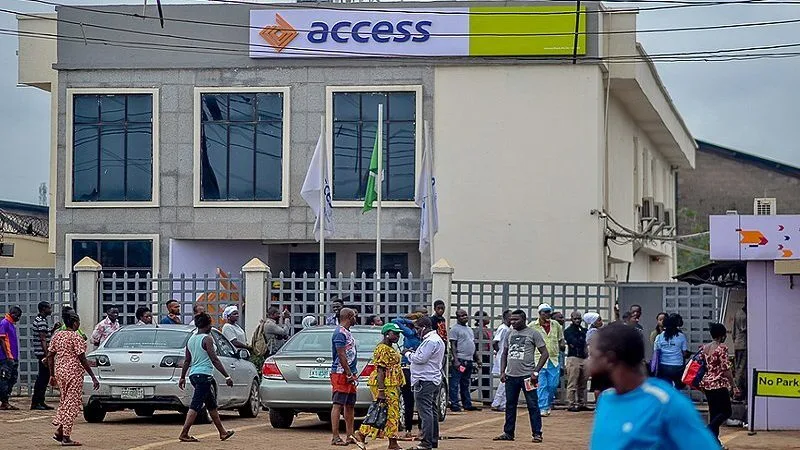
Access bank’s mortgage loans hit N289 billion, but homeownership remains out of reach for many Nigerians
Access Bank, one of Nigeria’s largest financial institutions, reported N289.3 billion in mortgage loans for the first quarter of 2025, making up just 2.3% of its total loan portfolio, according to its latest financial statement. The bank’s total loan portfolio stood at about N12.2 trillion as of March 2025. While mortgage lending is a crucial part of the housing sector, it remains a small fraction of overall banking activity. Personal mortgage loans led the category with N218 billion, while the total mortgage loan book was N318 billion at the end of 2024. The bank also reported an expected credit loss of N9.1 billion from these loans last year. Other major banks have also seen shifts in their mortgage portfolios. Stanbic IBTC’s mortgage loans under personal and private banking grew from N941 million in 2023 to N1.073 billion in 2024. Its retail mortgage loans jumped from N15.2 billion to N26.8 billion over the same period. First Holdco’s retail mortgage loans more than doubled, reaching N264.2 billion in 2024. Despite these increases, experts say Nigeria’s mortgage sector remains underdeveloped. High interest rates-often between 15% and 25%-and short loan tenures make monthly repayments unaffordable for many. “The mortgage industry has grappled with outdated and disconnected systems, often requiring mortgage professionals to juggle multiple tools to manage a single loan,” said Noah Ibrahim, Chief Strategy Officer and co-founder of Green Mortgage. Primary Mortgage Banks (PMBs) have also faced significant challenges. Their total assets dropped sharply from N454.7 billion in the third quarter of 2023 to just N1.4 billion in the same period of 2024. Liabilities rose to match assets, and PMB loans increased from N192.3 million to N269.6 million year-on-year. The Federal Mortgage Bank of Nigeria (FMBN) is working to address the housing gap. In August, the bank announced a target to deliver 5,000 new homes annually and disburse 20,000 mortgage loans each year, mainly through the Renewed Hope Cities and Estates Programme. However, the process for securing a mortgage remains slow, with 70% of PMBs reporting that it takes more than 12 months to process a loan from the National Housing Fund. Experts argue that simplifying the mortgage process and leveraging technology could help more Nigerians become homeowners. Mrs. Imelda Olaoye, a business strategist, said, “Technology has evolved, and it is crucial to leverage the most needed tools to enhance mortgage processes.” Despite government efforts, Nigeria’s housing deficit persists. For many, the high cost and cumbersome process of obtaining a mortgage remain significant barriers.

PalmPay partners with Sochitel to offer users up to 5% instant discounts on gift cards
PalmPay, one of Nigeria’s leading fintech platforms, has teamed up with Sochitel to launch a new promotion giving users up to 5% instant discounts on gift card purchases through the PalmPay app. The offer, running from April through June 2025, aims to provide millions of users with a faster, smarter, and more rewarding way to shop for gift cards from popular global and local brands. Users can choose from a wide variety of gift cards including Apple, Amazon, SPAR, PlayStation, Steam, Walmart, Adidas, and Oriki, among others. The promotion is designed to enhance the user experience by adding value to PalmPay’s digital banking and lifestyle services. Femi Hanson, Head of Marketing & Communications at PalmPay, said, “We are constantly exploring innovative ways to enhance user experience. This gift card feature adds even more value to our platform, which already serves as a one-stop hub for digital banking and lifestyle services. We are excited to reward our users with instant savings on their favorite brands.” Abiodun Odelola, Head of Marketing at Sochitel, added, “We are proud to collaborate with PalmPay to bring this offer to millions of Nigerians. As a leading aggregator and reseller of premium digital products focused on Africa, we empower partners like PalmPay to deliver seamless, top-tier services to customers. Our global network of retailers and brands makes every transaction effortless and rewarding.” To participate, users simply log into the PalmPay app, navigate to the “Gift Cards” section, select their preferred brand and amount, and complete the purchase to enjoy instant discounts.

PalmPay surpasses 15 million daily transactions in Q1 2025
PalmPay, one of Nigeria’s top fintech platforms, has recorded a significant increase in its daily transaction volume, reaching 15 million transactions per day in the first quarter of 2025. This marks a substantial rise from the approximately 10 million daily transactions reported in 2024. The company also announced that its user base has grown to 35 million, with each user conducting an average of 50 transactions monthly. PalmPay maintains an 80% customer retention rate and serves over 13 million active customers each month through a network of more than one million mobile money agents and merchants across Nigeria. In Q1 2025, PalmPay paid out N4 billion in interest to users of its PalmPay Wealth product, which offers flexible savings interest rates of up to 20% annually and Smart Earn rates reaching 22%. The platform now boasts 9 million monthly active wealth users. PalmPay has made strategic moves to enhance its infrastructure, including opening a new physical office in February to improve customer support and launching PalmPay Debit Cards in March, aiming to distribute 5 million cards nationwide. The company also plans to open new offices across Nigeria’s six geopolitical zones and deepen financial services in underserved areas. Addressing concerns about fraud, PalmPay has strengthened its security framework with real-time transaction monitoring, multi-factor authentication, and account lock features to protect users and build trust. This growth aligns with a broader trend in Nigeria’s mobile money sector, where licensed operators processed transactions worth N71.5 trillion in 2024, a 53.4% increase from the previous year. The volume of fintech transactions also rose by 23%, highlighting the increasing adoption of digital financial services in the country. PalmPay’s expansion shows its ambition to evolve beyond a mobile wallet into a comprehensive digital banking ecosystem, integrating payments, savings, credit, insurance, and merchant solutions to drive financial inclusion across Nigeria.
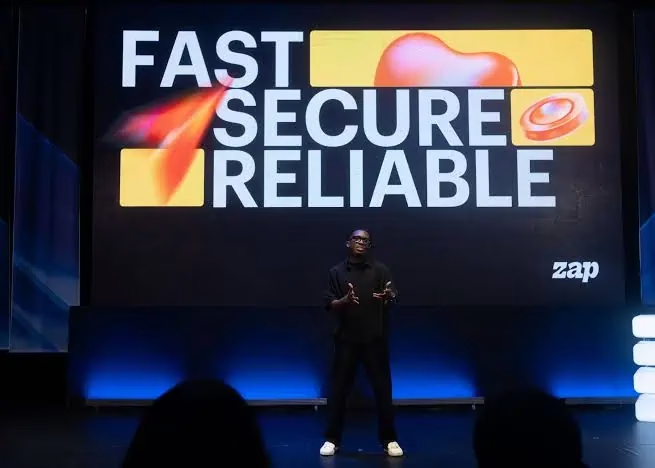
CBN fines Paystack ₦250 million over Zap App licensing breach
Nigeria’s Central Bank has fined fintech giant Paystack ₦250 million for allegedly operating its new peer-to-peer payment app, Zap, without the proper licence. The penalty, issued in late April, is the largest regulatory fine Paystack has faced since receiving approval to operate in 2016. According to sources familiar with the matter, the Central Bank claims Zap functions as a digital wallet-a service that requires a microfinance or banking licence because it involves holding customer funds. Paystack, however, only holds a switching and processing licence, which allows it to route transactions but not to store money on behalf of users. Zap, launched in March, was designed to help Nigerians send and receive money easily. While Paystack says the app does not directly hold customer funds and instead partners with Titan Trust Bank to manage deposits, the Central Bank maintains that the product’s features cross the line into regulated territory. A Paystack spokesperson said, “Paystack is working closely with the regulator as they further review Zap, and out of respect for the process, we won’t be making any public comments at this time.” In 2024, Moniepoint and OPay were each fined ₦1 billion over compliance issues, signaling a tougher stance on digital finance. Zap’s launch has also sparked a legal dispute, with crypto startup Zap Africa accusing Paystack of trademark infringement-a case that remains unresolved.
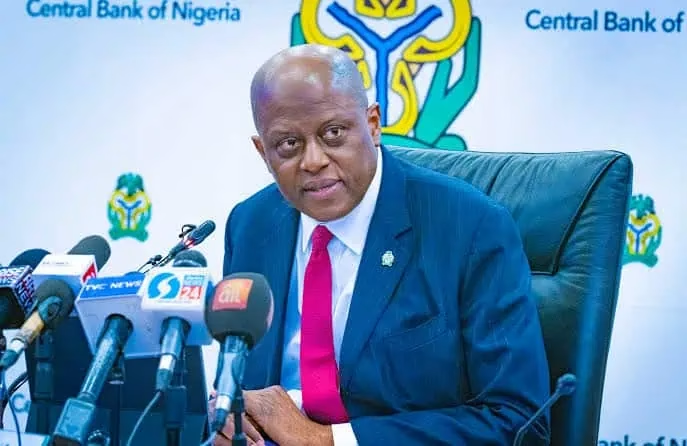
Nigeria to launch Africa’s first open banking system in August 2025
Nigeria is set to become the first African country to implement open banking, following the Central Bank of Nigeria’s (CBN) approval for a nationwide rollout beginning August 2025. This landmark move will require banks to securely share customer data-such as account balances, transaction histories, and spending patterns-with other regulated financial institutions, but only with the customer’s explicit consent. The open banking system will operate through standardized APIs, ensuring secure and consistent data access across all participating banks and fintechs. A central registry will authenticate participants, while a consent management framework tied to customers’ Bank Verification Numbers (BVNs) will give users full control over who accesses their data and for what purpose. CBN revised its approach after industry pushback against centralizing control under the Nigerian Interbank Settlement System (NIBSS). Instead, independent committees made up of financial professionals will oversee the system, without direct CBN control. Industry analysts say the new system could transform Nigeria’s financial landscape, especially lending. With access to richer customer data, lenders can better assess creditworthiness, potentially creating Nigeria’s first reliable credit scoring system and making credit more accessible to the country’s 120 million bank customers. Banks and fintechs are now preparing to integrate with the new system, which is expected to drive innovation, improve financial inclusion, and offer consumers more personalized financial products in the years ahead.