
Wema Bank Plc has strengthened its capital base by successfully listing 4.55 billion ordinary shares valued at N50 billion on the Nigerian Exchange Limited (NGX). The listing, which was completed on November 4, 2025, raises the issued share capital of the bank to 40.12 billion shares, up from 35.57 billion, at a price of N11.00 per share. The capital injection boosts the bank’s capital adequacy ratio and underpins its growth ambitions, by enhancing liquidity and supporting strategic investments, particularly in digital banking and retail expansion. Wema Bank now ranks among the top 25 most capitalized companies on the NGX, with a market capitalization of N756 billion, representing about 0.8% of the total equity market capitalization. The stock closed at N18.85 on November 7, 2025, a 107% increase from its January opening price of N9.10. Although the shares have experienced a slight correction of about 6% over the past month due to profit-taking, the bank remains one of the NGX’s most actively traded stocks, with 659 million shares exchanged in the past three months.The bank’s fundamentals were confirmed in its third-quarter 2025 financial results, showing a 42% year-on-year rise in gross earnings. This growth was driven by increased interest income from loans, higher non-interest revenue, and the success of its digital platform ALAT. Pre-tax profit surged to N35.7 billion, compared to N25.1 billion in the same period of 2024. Total assets grew 26% year-on-year to exceed N2.1 trillion, supported by steady customer deposit growth. Market analysts view the private placement as well-timed, providing necessary capital buffer for expansion and risk-weighted asset coverage, especially ahead of an anticipated recapitalization push in Nigeria’s banking sector.

UBA reports 3.2 million transaction complaints in 2024, refunds ₦2.3 billion to customers
The United Bank for Africa (UBA) disclosed receiving 3,210,708 complaints related to unsuccessful transactions in 2024, marking a 66.3% increase from 1,930,518 complaints reported in 2023. Data from UBA’s 2024 Sustainability Report, released via the Nigerian Stock Exchange (NGX) today, November 7, 2025, also revealed that the bank resolved 75% of these cases, amounting to 2,090,122 complaints.The report shows the strategy of UBA to maintain an accessible complaints management platform to address customer grievances efficiently. Despite the high volume of complaints, the total amount claimed by customers for refunds or reimbursements stood at ₦262.8 billion, which, following complaint resolutions, decreased to ₦188 billion.UBA refunded ₦2.3 billion in 2024, compared to ₦450 million reimbursed in 2023. However, unresolved complaints increased from 107,000 in 2023 to over 1.1 million in 2024. Of these, 218 cases were escalated to the Central Bank of Nigeria (CBN) for intervention, while 1,120,907 remained pending with UBA.The bank explained its complaints resolution workflow, which aligns with CBN’s regulatory timelines, particularly the mandate that failed “on-us” ATM transactions be resolved instantly and “not-on-us” transactions within 48 hours. Complaints can be lodged through multiple channels including branches, calls, emails, live chat, and social media, and are tracked through a complaint management platform. According to UBA, complaints are reviewed and resolved at first contact if possible; otherwise, cases are escalated internally. Customers receive notifications at every stage and have the option to dispute resolution or escalate the matter for further investigation compliant with CBN guidelines.Key Performance Indicators are in place to periodically review and improve complaint handling efficiency, which also informs process improvements across the bank’s platforms and products.
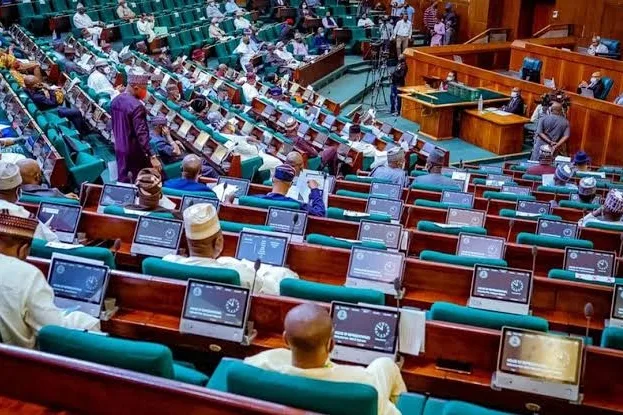
Nigerian lawmakers engage crypto industry ahead of proposed Virtual Asset Law
The House of Representatives’ ad hoc Committee on Cryptocurrency recently met with key stakeholders from the crypto industry to discuss a proposed Virtual Asset Law aimed at regulating digital assets.The meeting brought together representatives including Senator Ihenyen, executive chair of the Virtual Assets Service Providers Association of Nigeria (VASPA), who urged lawmakers to end the era of fear surrounding crypto and adopt a unified legal framework for responsible innovation and adoption.Despite the Investment and Securities Act of 2025 recognizing digital assets as securities, tensions remain. The Central Bank of Nigeria (CBN) still treats crypto with caution, limiting direct engagement with digital asset providers. This, combined with overlapping regulatory mandates among the CBN, SEC, and National Security Adviser (NSA), has created confusion and limited growth for startups.Senator Ihenyen stressed that the CBN cautious approach, though well-intentioned, fails to inspire confidence and that the ongoing web restrictions by the NSA contradict efforts to develop the sector and may violate various financial regulations.The proposed Virtual Asset Law aims to resolve these issues with key recommendations, which includes; If enacted, the law would transform Nigeria’s crypto landscape by integrating digital assets into the formal capital market system with clearer compliance and consumer protections.Lawmakers showed genuine engagement in understanding operators’ perspectives, and the committee is expected to continue consultations before drafting legislation, aiming for a harmonized legal framework with cross-agency support.

Senator Ali Ndume empowers Borno South with 5,000 free SIM cards and 1,000 POS machines
Senator Ali Ndume has unveiled a project to boost digital connectivity in Borno South by providing 5,000 free SIM cards and 1,000 Point of Sale (POS) machines to local residents, aimed towards reconnecting communities with financial and communication services.The announcement came during a meeting with MTN Nigeria’s management in Maiduguri, to rebuild digital infrastructure in a region long disrupted by Boko Haram insurgency. For years, frequent attacks on telecom masts left many communities disconnected and struggling to reclaim lost communication tools. Senator Ndume, who in 2024 successfully trained 800 youths in POS operations and equipped them with starter packs worth 100,000 naira each, is expanding the program to reach more people affected by displacement. Registration for free SIM cards has already commenced, focusing on those who lost access during the crisis. The goal is to help Borno South residents regain their place in the digital world. Connectivity is not just about phones; it’s about empowerment and economic inclusion – Ndume MTN Nigeria has confirmed network restorations in Gwoza, Damboa, Uba, and Chibok, pledging to improve the reliability of its services needed by residents. The company also endorsed plans to establish computer-based test centers, facilitating local access to educational exams without long-distance travel.
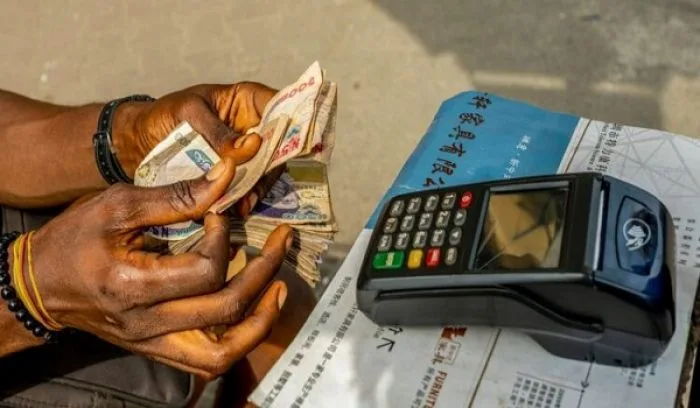
PoS operators warn CBN’s new rule could wipe out small fintechs in Nigeria
Point-of-Sale (PoS) operators across Nigeria are raising alarms over the Central Bank of Nigeria’s (CBN) recently issued agent banking regulation, warning it could force thousands of small fintech businesses out of operation and concentrate market control within a few large firms. The new policy, effective October 6, 2025, mandates that PoS agents work exclusively with one financial institution or super-agent, barring them from servicing multiple platforms. On the other hand, the Association of Mobile Money and Bank Agents in Nigeria (AMMBAN) has condemned the exclusivity rule for distorting competition in a sector critical to financial inclusion. AMMBAN’s National President, Mr. Fasasi Sharafadeen, expressed likely monopoly risks, noting that about 70% of the over 1.9 million agents in Nigeria are currently controlled by just five major service providers out of approximately 200 in the market. He said the new policy threatens to disproportionately advantage these larger players, undermining the survival of smaller fintechs that serve Nigeria’s vibrant informal economy. The restrictions limit daily transactions for each PoS terminal to ₦1.2 million, a move that operators say ignores the realities of their operations. Many agents, especially those combining PoS services with retail trading in rural and semi-urban areas, rely heavily on higher cash flows to meet customer demand. Lagos-based operator Oluwatobi described the policy’s impact on his savings and business operations as severe, explaining that his daily volumes sometimes exceed the new limit, which will affect his income and ability to serve customers. Another operator managing multiple terminals lamented the policy as a threat to a crucial steady income source for many Nigerian families. Women operators, a significant demographic among PoS agents, also decried the rule as anti-business, citing fears of income losses due to restricted cash withdrawal limits that could alienate market traders and customers who transact in bulk. They have called on the CBN to adopt more flexible measures that better reflect cash needs across Nigeria’s diverse regions. The CBN’s regulation aims to tighten control over agent banking operations to curb fraud, improve accountability, and enhance the quality of financial services. However, experts are divided on the best approach. Former CBN Director Akpan Ekpo emphasized the need to improve Automated Teller Machine (ATM) functionality nationwide, suggesting that restrictions on PoS agents might negatively impact cash accessibility where ATMs remain sparse. This policy development comes amid rapid growth in Nigeria’s fintech sector, which surged by 70% in recent years, with agent banking playing a pivotal role in driving cashless transactions and financial inclusion in underserved communities. The new exclusivity requirement may slow progress by shrinking operational viability for smaller fintech operators who form the backbone of Nigeria’s informal economy.

Payaza redeems investors’ ₦20.3 billion debt, secures triple credit rating upgrades
Payaza, a leading Nigerian fintech, has fully repaid N20.3 billion ($13.5 million) of its commercial paper obligations ahead of schedule using internal cash flow, while securing triple credit rating upgrades from top agencies. This news marks a milestone in African fintech financial discipline and operational excellence. Payaza’s landmark achievement of redeeming N20.3 billion ($13.5 million) debt entirely from internally generated revenue challenges the common narrative that African fintechs rely on external funding. This sets a new standard for sustainable growth within the continent’s fintech ecosystem and reflects strong financial discipline amidst broader economic challenges. In conjunction with the debt redemption, paying off its commercial paper obligations ahead of schedule, Payaza secured triple investment-grade credit ratings – upgraded to an “A” long-term and “A1” short-term rating by Nigeria’s DataPro, a “BBB-” long-term and “A3” short-term rating from Global Credit Ratings (GCR), a Moody’s affiliate, and a solid “Bbb” rating with stable outlook from Africa’s largest rating agency, Agusto & Co. These ratings underscore broad international and local confidence in Payaza’s accountability, resilience, and capacity to meet obligations. Founded by Nigerian entrepreneur Seyi Ebenezer, Payaza has grown from a regional payments provider to a pan-African fintech infrastructure company operating in 21 countries. The company offers innovative payment collections, cross-border disbursements, and embedded finance APIs, benefiting SMEs, traditional merchants, and digital startups. For Nigeria and Africa at large, Payaza’s success demonstrates that indigenous fintech companies can achieve global standards of governance, financial sustainability, and operational discipline.