
Kredete, a fintech company dedicated to empowering African immigrants through credit-building and financial access, has successfully raised $22 million in a Series A financing round. Led by AfricInvest through its Cathay AfricInvest Innovation Fund (CAIF) and Financial Inclusion Vehicle (FIVE), with backing from Partech and Polymorphic Capital, this latest funding will enable Kredete to extend its reach into Canada, the United Kingdom, and key European markets. Founded in 2023 by serial entrepreneur Adeola Adedewe, Kredete has rapidly developed a proprietary credit-enhancing platform that integrates stablecoin-backed transactions with international remittances. The platform allows users to send money to more than 30 African countries while simultaneously improving their credit profiles in the U.S. and elsewhere. Additionally, Kredete has created an API-driven infrastructure that supports businesses in making secure and cost-efficient cross-border payments to Africa using modern payment technologies. This new capital infusion will facilitate the rollout of innovative features designed specifically for immigrants with limited or no formal credit history. Enhancements include rent payment reporting, credit-linked savings plans, and targeted, responsible lending options. Central to this expansion is the introduction of Africa’s first stablecoin-backed credit card, which will be available in over 41 African countries. This card aims to provide seamless spending, credit building, and the avoidance of expensive foreign exchange fees. Complementary offerings such as interest-bearing USD and EUR accounts will empower Africans worldwide to protect their wealth, earn returns, and mitigate currency volatility risks. Moreover, Kredete is developing the continent’s largest unified aggregation layer of banks and wallets. This infrastructure offers businesses a single API to perform secure, real-time, and affordable payouts throughout Africa. By building this foundation, Kredete aims to revolutionize cross-border finance, enabling African diaspora members everywhere to send, spend, save, and enhance their credit scores on one comprehensive platform. Aligned with the United Nations Sustainable Development Goals, particularly Decent Work and Economic Growth (SDG 8) and Reduced Inequalities (SDG 10), Kredete has achieved significant milestones since launching. It now serves over 700,000 monthly users, has facilitated $500 million in remittances, and has helped raise customers’ U.S. credit scores by an average of 58 points.

OPay crowns winners of #MyOPaySecurityVoteChallenge promoting safer transactions
OPay, Nigeria’s leading mobile financial services platform, has crowned the winners of its nationwide #MyOPaySecurityVoteChallenge, a creative campaign designed to raise awareness about seven key security features protecting users during digital transactions. The grand prize event took place at OPay’s Lagos headquarters on September 11, 2025, celebrating content creators who produced viral videos showcasing their favourite safety tools. The campaign, launched in August 2025, invited Nigerians to creatively showcase OPay’s seven in-app protections which includes; Scam Alert, Night Guard, Large Transaction Shield, Online Subscription Control, USSD Lock, Large Transaction Double Check, and Emergency Lock. Participants submitted short videos explaining how these features keep their money secure, sharing them on social media platforms like Instagram, X, TikTok, and Facebook with the hashtag #MyOPaySecurityVoteChallenge. Over 2,000 Nigerians joined the challenge, receiving weekly rewards worth more than N10 million and exclusive OPay merchandise. Influencers including Veekee James, Folagade Banks, and Taaooma attended the award ceremony alongside media and OPay executives, emphasizing the campaign’s success in educating users on digital safety. This campaign represents one of the largest digital safety efforts in Nigeria this year, reinforcing OPay’s commitment to making financial transactions both convenient and secure for millions across the country.

UBA extends N157 billion rights issue deadline to September 19
United Bank for Africa Plc has prolonged the deadline for its N157 billion equity offer, now closing September 19, 2025, instead of the initially planned September 5. The extension is part of UBA’s strategy to meet the Central Bank of Nigeria’s directive that banks increase their capital base to N500 billion. The latest rights offer involves the issuance of approximately 3.16 billion ordinary shares at N50 each, representing one new share for every thirteen shares currently held by shareholders as of July 16, 2025. This follows a successful previous tranche in November 2024 where UBA raised N239 billion at a lower price per share . In the first quarter of 2025, the bank posted a pre-tax profit of N204.27 billion, reflecting a 30.65% increase over the same period the previous year. Net profit grew by 33.15%, reaching nearly N190 billion, driven mainly by a 36% jump in interest income from loans and investments. These impressive results increased investor confidence and set the stage for the current capital enhancement effort . With the deadline extension, shareholders now have until September 19, 2025, to subscribe to the rights offer, reinforcing their investment in Africa’s leading financial institution. This expanded timeline aims to ensure robust participation, helping UBA meet the CBN’s recapitalization threshold and continue its growth trajectory.

University of Maiduguri joins the beneficiary of OPay’s ₦1.2 billion decade-long scholarship program
The University of Maiduguri (UNIMAID) has recently been included among the beneficiaries of OPay Digital Services’ ₦1.2 billion scholarship drive set to span ten years. This collaboration promises to support talented students financially while fostering innovation and digital empowerment on campus. OPay unveiled a partnership with UNIMAID through a formal Memorandum of Understanding (MoU) and ceremoniously handed over a ₦60 million cheque to fund yearly scholarships for deserving students. Under this generous financial support scheme, 20 students from the university will each receive ₦300,000 annually. The Vice Chancellor of UNIMAID, Professor Mohammed Laminu Mele, shared his appreciation via the Provost of Postgraduate Studies, Professor Yakubu Mukhtar. He described the collaboration as a landmark occasion, expressing pride in having one of Nigeria’s leading digital financial companies commit to the institution’s future. Acknowledging UNIMAID’s stature as one of the country’s largest educational bodies by population, Professor Mukhtar noted the mutual benefits for both the university community and OPay’s customer base. This partnership is viewed not just as a philanthropic gesture but as a strategic investment in human capital development. Representing OPay, Itoro Udo, Head of Corporate Social Responsibility, characterized the effort as a sustained engagement aimed at bridging the gap left by dwindling federal educational subsidies. Beyond the scholarship fund, OPay intends to deepen its involvement through programs centered on innovation, cybersecurity, and youth empowerment. He revealed plans to establish a Cybersecurity Lab at partner universities and pilot programs designed to boost graduate employment, citing examples from current projects at the University of Ibadan and Obafemi Awolowo University. With this new alliance, both OPay and UNIMAID foresee impactful outcomes in academic growth and technological readiness for students.
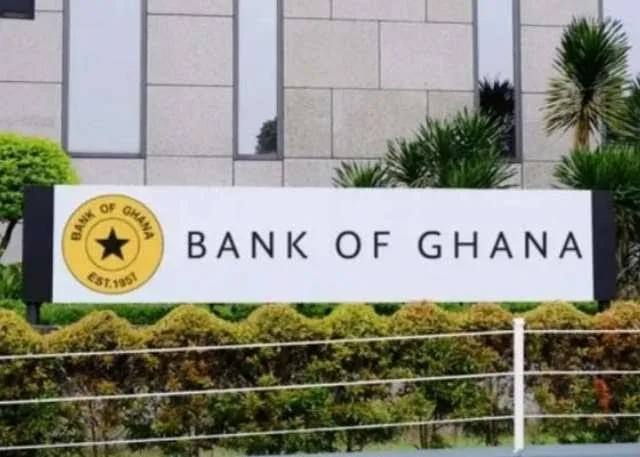
Bank of Ghana halts operations of eight fintech firms including Flutterwave and Cellulant over regulatory breaches
The Bank of Ghana has suspended remittance activities for eight fintech companies, among them Flutterwave and Cellulant Ghana, effective September 18, 2025, to enforce compliance with the country’s updated inward remittance regulations. In a recent announcement, Ghana’s central bank revealed that the affected firms have fallen short of adhering to the Updated Guidelines for Inward Remittance Services by Payment Service Providers, instituted in 2023. Flutterwave and Cellulant Ghana stand accused of violating key provisions related to licensing, operational standards, and mandatory reporting procedures. The crackdown extends beyond just these two companies, encompassing Tap Tap Send, Afriex, Halges Financial Technologies, Top Connect, Remit Choice, and Send App. While most are facing suspensions lasting one month, Halges Financial Technologies will remain barred from operations indefinitely until it secures fresh approval from the Bank of Ghana. Additionally, the regulator has imposed sanctions on the United Bank for Africa (UBA) Ghana Limited, which functions as the settlement bank for the blocked providers. UBA’s foreign exchange trading license has been revoked for thirty days starting September 18 as a measure of accountability. This action by the Bank of Ghana follows repeated violations in the fintech sector’s adherence to the Payment Systems and Services Act along with the Banks and Specialised Deposit-Taking Institutions Act. These laws require financial entities to submit regular transaction reports and maintain transparent operational practices. The central bank criticized the firms for excessive reliance on informal money transfer methods, unauthorized foreign currency swaps, and the use of unofficial exchange rates. Such practices, the regulator argued, undermined Ghana’s remittance system’s credibility and threatened household incomes, business cash flows, and the country’s foreign currency reserves. The Bank of Ghana hopes to rectify procedural shortcomings and reinforce regulatory compliance, ultimately protecting consumers and promoting stability within the financial ecosystem. These sanctions will temporarily disrupt remittance flows through some of Ghana’s most used fintech platforms, prompting users to seek alternatives during the suspension periods. Nonetheless, the Bank of Ghana anticipates that tougher enforcement will lead to a more secure and accountable remittance network moving forward. The central bank also made it clear that any future partnerships with the suspended entities will require fresh authorization, emphasizing its commitment to fostering a compliant and transparent fintech landscape in Ghana.

UBA and Mastercard unveil new prepaid card to boost financial inclusion across Africa
United Bank for Africa (UBA) Plc, in partnership with Mastercard, introduced a new prepaid card on September 2, 2025, aimed at accelerating access to digital payment services for underserved populations throughout Africa. This newly launched card targets individuals who have traditionally been excluded from formal banking, including young adults, freelancers, and lower-income earners. Unlike regular bank accounts, this product allows users to easily fund their accounts and perform transactions both locally and internationally, all while managing their money securely and with flexibility. With over 28.9 million Nigerians still unbanked, this financial tool addresses the gaps in the current payment landscape. It serves as a convenient budgeting aid for youth, provides a flexible payment method for gig workers, and offers a safe, reloadable card option for those outside the conventional banking system. During the unveiling event at UBA’s Lagos headquarters, Shamsideen Fashola, Group Head of Retail and Digital Banking at UBA, emphasized the bank’s customer-centric philosophy, stressing their dedication to delivering practical, everyday financial solutions to Nigerians. He noted, that their partnership with Mastercard once again proves their commitment to simplifying and securing payments for all. Dr. Folasade Femi-Lawal, Mastercard’s Country Manager for West Africa, restates the company’s mission to foster financial inclusion with innovative digital payment alternatives. She added that through collaboration with UBA, they are opening doors to economic participation for all segments of society, empowering Nigerians to confidently engage in the global economy and champion a more inclusive digital future. This collaboration strives to dismantle barriers in the financial sector and drive economic growth by bringing underserved communities into the fold, thereby promoting a more inclusive and sustainable African financial ecosystem.