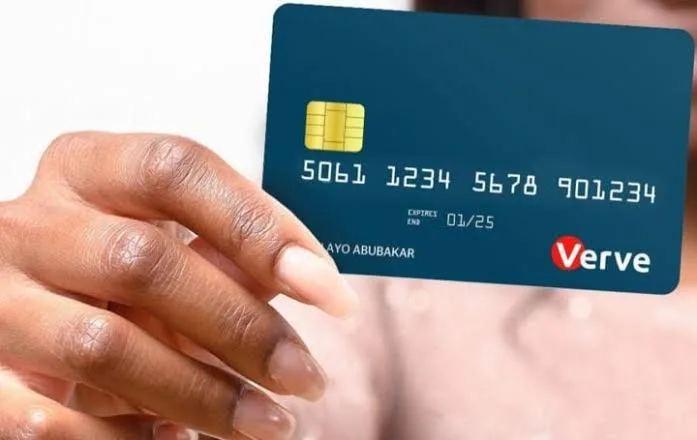
Verve, Africa’s biggest local payments brand, is making a big switch, all Verve cards issued from now on will be contactless, to make payments faster, safer, and smoother for everyone. With over 85 million Verve cards already in circulation and at least 35 million of them contactless, more Nigerians are experiencing easy, tap-to-pay transactions every day. You can now pay quicker in busy markets, at restaurants, fuel stations, and airports, simply by tapping your Verve card on a terminal. The company has been working with banks, fintechs, and thousands of merchants to support this technology. Many more payment points across Nigeria now accept the tap-and-go cards, leading to shorter queues and quicker service for shoppers and better business for merchants. Verve’s Always-On campaign positions the card as a daily, dependable choice, whether you’re grabbing a meal, shopping, or filling your tank. “We want to make every part of daily life easier, and that starts with how people pay,” a Verve spokesperson said. This upgrade goes beyond just speed. Verve’s new contactless cards come with extra security: PIN authentication. That means even though you’re tapping instead of inserting your card or swiping, your money stays safe.

First HoldCo denies N323 billion share buyout reports, clears Otedola and FG; slams Arise TV and ThisDay
First HoldCo Plc has blasted recent media claims about a major share acquisition, stressing that neither its chairman Femi Otedola nor the Federal Government took part in the massive deal on the Nigerian Exchange. On July 16, 2025, more than 10.4 billion shares of First HoldCo changed hands in an off-market transaction worth about ₦323.4billion, executed in 17 negotiated trades at ₦31 per share. The blockbuster deal caught public attention and triggered widespread speculation about ownership changes and the future direction of one of Nigeria’s oldest financial groups. First HoldCo reacted strongly to media reports from Arise TV and ThisDay Newspaper, labeling their coverage “a deliberate misrepresentation of facts” and “grossly unprofessional.” The company accused the news outlets of sensationalism designed to paint First HoldCo in a bad light and unsettle stakeholders. “We are embarrassed and disappointed at the willful distortion of facts. The action appears calculated to cast First HoldCo Plc in a negative light and incite panic among stakeholders,” the company said. First HoldCo made it clear the transaction did not involve Chairman Femi Otedola, the Federal Government, or any of its agencies. “Mr. Femi Otedola did not buy or take over the traded shares. The Federal Government of Nigeria, its agencies, and the Attorney General were not parties to the acquisition,” the statement read. The buyer was identified as an independent Bridge Holder, with no shares going back to the company itself. Kamarudeen Ogundele, Special Adviser on Communication and Publicity for the Attorney General’s office, also denied the government’s involvement. In his words: “The Office of the Attorney General of the Federation debunks this falsehood to prevent confusion or misconceptions about First HoldCo’s ownership and governance.” Ogundele explained that although the government was aware of a trustee structure, approved by the Central Bank of Nigeria and managed by Renaissance Capital (RENCAP), it had no hand in the purchase. The trustee arrangement was set up only to manage the transaction, not to benefit any government body. The trade represents the end of an era as Oba Otudeko, a founder and long-standing shareholder, officially exits the group. Tunde Hassan-Odukale, another major stakeholder, also sold out. The new shares are now held by RC Investment Management, a Renaissance Capital subsidiary. With the dust settling, First HoldCo called on the media to stick to fair and accurate reporting and urged the proprietor of the platforms involved to settle outstanding debts owed to FirstBank. For now, First HoldCo continues business as usual, looking to steady ground after one of the largest transactions in NGX history.

Parallex Bank rewards 925 customers with prizes up to N1 million in save and win promo finale
Parallex Bank celebrated the grand finale of its Save and Win Promo in Lagos, rewarding 925 customers with cash prizes ranging from N5,000 to N1 million. The event, held at the bank’s Isolo branch, saw two lucky customers, Chidiebere Azubuike and Ese Fidelis, each receive the top prize of N1 million. Additionally, 153 other winners received various amounts through draws conducted since the promo’s launch in October 2024 across cities including Ibadan, Port Harcourt, Uyo, Warri, and Abuja. Mr. Frank Alarapon, the bank’s Chief Digital Officer, on behalf of the Managing Director, said the campaign’s main aim was to appreciate customers for their trust and loyalty. He stated that this season was extra special with two millionaire winners instead of just one, making it more exciting than previous draws. Mrs. Margaret Aboluwade, Zonal Coordinator for the Southwest Region of the Federal Competition and Consumer Protection Commission (FCCPC), praised Parallex Bank for its transparency and fairness throughout the promo during the opening of the grand finale. Other prize categories included 50 winners receiving N5,000 airtime, another 50 winning N10,000 each, 30 customers getting N20,000, 10 winners with N50,000, and 3 collecting N100,000 each. Chidiebere Azubuike, one of the top prize winners, expressed initial disbelief when contacted but was soon overwhelmed with happiness upon confirmation. Azeez Arogundade, Parallex Bank’s Head of Products, noted that the Save and Win Promo is one of many ways the bank engages with customers, offering diverse products for personal, business, corporate, and private banking. He emphasized the bank’s readiness to meet the needs of Nigerians across all economic levels. This promo not only rewards loyalty but also strengthens Parallex Bank’s position as a customer-focused financial institution, creating more reasons for Nigerians to bank with them.

How to buy and sell Bitcoin in Nigeria safely in 2025 (stop by step guide)
Not sure how to buy and sell Bitcoin in Nigeria safely? This guide has got you covered. The platforms listed here are scam free. Bitcoin is getting popular in Nigeria. From Lagos to Abuja and even smaller towns, Bitcoin is being talked about by more people. Why? Because you can save, protect your naira from inflation and even make extra money online. This 2025, buying and selling Bitcoin has been made easy; but it’s risky. Many Nigerians have been left with empty pockets due to scams and misleading platforms described by scammers as crypto experts. That’s why you should be more careful and informed before you take a step. This is a step by step guide in simple English for anyone who wants to be a student, a worker, a trader or even just to learn about crypto. We will show you the best way to buy and sell Bitcoin in Nigeria so you won’t be scammed at all. If you follow these 2025 tips, you can trade with confidence and peace of mind. Why Nigerians are buying bitcoin in 2025 Before we go deep into how to trade Bitcoin, let’s know why Bitcoin is trending again in 2025: Recommended Guide: Best loan apps in Nigeria without BVN or collateral (no scam) How to buy and sell Bitcoin in Nigeria safely in 2025 (stop by step guide) Let’s just break it all down in basic steps. 1. Pick a reliable crypto broker Avoid people in your DM offering Bitcoin. That’s how scams start. Instead, choose from tested and trusted platforms like: Make sure the platform: 2. Sign up your account 3. Confirm your identity (KYC) Most platforms will ask for: 4. Fund your wallet You can add money by: For new users, P2P is often safer because banks sometimes block crypto transfers in Nigeria. 5. Buy bitcoin Once your wallet is funded: Within minutes, your Bitcoin will be in your wallet. How to sell bitcoin in Nigeria without being scammed Selling is just as easy if you follow the right process. 1. Use only the platform’s p2p market Don’t go outside the platform to deal. Scammers often ask you to “send first”. Always trade inside the app where there is escrow protection. 2. Set your offer or accept a buyer’s offer You can: Make sure their reviews are good and they have completed many trades. 3. Wait for buyer’s payment Once the buyer pays, check that the money is in your account (not just an alert). Open your banking app to check. 4. Release bitcoin After checking the payment, release the Bitcoin. It will go directly to the buyer’s wallet. Safety tips to avoid bitcoin scams in Nigeria (2025 edition) This is the part most people ignore until they are scammed. Please don’t skip this. 1. Never share your private key Your private key is like your ATM PIN. If someone has it, they can steal your Bitcoin. 2. Don’t fall for social media crypto deals Even if someone has thousands of followers or “past testimonials”, that doesn’t mean they’re real. Scammers buy fake reviews. 3. Use strong passwords and 2fa This makes it harder for hackers to break into your account. 4. Avoid trading with people who rush you Scammers love pressure. They say things like “I’m in a hurry” or “Quickly send it”. Don’t rush. 5. Always confirm bank alerts Don’t release Bitcoin until you check your bank app. Fake alerts are still common. Recommended Guide: How to convert airtime to cash in Nigeria Instantly (2025) Best platforms to buy and sell bitcoin in Nigeria 2025 Let’s look at the most reliable ones this year: Platform P2P Trading App Available KYC Required Trusted? Binance Yes Android/iOS Yes Yes Paxful Yes Android/iOS Yes Yes Luno No (direct only) Android/iOS Yes Yes Bundle Africa Yes Android/iOS Yes Yes Yellow Card Yes Android/iOS Yes Yes Roqqu Yes Android/iOS Yes Yes Real-life mistakes to learn from Here are two true stories to help you learn: Story 1: James, a student in Lagos, bought Bitcoin from a Twitter seller. He paid ₦100,000 but never got his coins. The account was deleted afterward. Lesson: Avoid DMs. Use official platforms with escrow. Story 2: Amaka sold Bitcoin to a buyer on P2P. She saw a fake SMS alert and released the coins. She never got her money. Lesson: Always confirm payment in your bank app, not by SMS alert. Conclusion Bitcoin trading in Nigeria is easy and profitable if you follow the safe path. As of 2025, the scammers are getting smarter, but so should you. Choose reliable websites, guard your wallet, avoid sweet talkers and never hesitate of verifying payments. Invest profoundly or sell in order to get cash, but more than being quick, cautiousness is a priority. FAQs Q1: Is Bitcoin authorised in Nigeria in 2025? Yes. While banks don’t allow direct crypto transfers, you can legally use P2P platforms to buy and sell Bitcoin. Q2: How much money do I need to start buying Bitcoin? You can start with as little as ₦1,000. Most platforms allow small purchases. Q3: Can I lose money in Bitcoin? Yes. Like any investment, Bitcoin can go up or down. Only invest what you can afford to lose. Q4: Which wallet is best for Nigerians? Trust Wallet, Binance Wallet, and Luno Wallet are good and easy to use. Q5: Can I use Bitcoin to shop online in Nigeria? Yes, some sites now accept Bitcoin. You can also convert it to naira and pay with your bank. Conclusion Bitcoin trading in Nigeria is easy and profitable if you follow the safe path. As of 2025, more platforms are available, and scammers are getting smarter — so should you. Use trusted apps with escrow, confirm payments in your bank app, don’t fall for sweet talker,s and never rush into any deal. Don’t trade through social media or with people you don’t know. Keep in mind your money is more valuable than immediate gain. Be it a beginner or
Five Nigerian fintechs make CNBC’s list of world’s top startups in 2025
Five Nigerian fintech companies have been named among the world’s top 300 fintechs for 2025 by CNBC.PalmPay, Moniepoint, OPay, Piggyvest, and Interswitch earn global recognition for growth and innovation. CNBC, in partnership with Statista, released its latest list of the world’s top fintech firms for 2025. PalmPay, Moniepoint, OPay, Piggyvest, and Interswitch, all Nigerian brands, secured spots based on their strong business growth, revenue, and company size. PalmPay, Moniepoint, OPay, and Interswitch feature under the payments category, which covers companies that help people and businesses send and receive money with ease. Piggyvest is the standout in wealth technology, recognized for helping Nigerians manage savings and investments online. According to CNBC, the final 300 were selected through detailed research and editorial review by Statista and the CNBC editorial team. The focus was on companies showing solid growth, high revenue, and notable impact in financial services. Nigeria, despite having more than 200 fintech startups, had only four names on the list. Notably, Moniepoint was officially listed as a UK company due to its incorporation in the United Kingdom. The United States dominated the rankings, with 126 companies making the list. The UK followed with 38, and Singapore ranked third with 16 top fintechs. Speaking after the announcement, Sofia Zab, PalmPay’s Founding Chief Marketing Officer, said, “To be recognized as one of the world’s top fintech companies by CNBC and Statista is a powerful affirmation of our mission to build a more inclusive financial system. As we scale PalmPay to more emerging markets, our focus remains on closing financial access gaps for everyday consumers and businesses.” PalmPay, which now handles 15 million daily transactions and has more than 35 million registered customers, says the recognition reflects its ongoing drive to expand in Africa and beyond. Moniepoint’s Group CEO, Tosin Eniolorunda, described the company’s selection as, “An honour and a testament to the hard work and success of the entire team while highlighting our emergence as a key player shaping the future of fintech worldwide.” CNBC’s annual list launched in 2023 to help spotlight leading players in financial technology worldwide. For Nigerian fintechs, making the cut means global attention and, potentially, more trust from investors and users at home and abroad. The recognition shows how Nigerian startups are making real strides on the global stage, even as competition remains fierce.

UBA’s LEO chatbot sets new record as Africa’s first to enable cross-border payments
United Bank for Africa (UBA) has launched a major upgrade to its AI-powered chatbot, LEO, making it the first in Africa to handle cross-border payments. With this new feature, UBA customers can now send and receive money instantly across African countries, using LEO on their mobile devices. This service runs on the Pan-African Payment and Settlement System (PAPSS), designed together with African Export-Import Bank (Afrexim Bank), so users can transfer money in their local currencies between countries where the system is approved by central banks. UBA’s Group Managing Director/CEO, Oliver Alawuba, described the move as a giant step for digital banking in the region. “The introduction of cross-border payments on LEO, in partnership with PAPSS, reflects our commitment to digital innovation, Pan-African integration, and customer-centric banking. This is not just a banking upgrade; it is a bold leap into the future of African finance,” he said. Group Head of Retail and Digital Banking, Shamsideen Fasola, also shared why it matters: “With LEO now fully integrated with the PAPSS infrastructure, UBA customers can send and receive money across African borders in their local currencies within seconds. We’re not just simplifying transactions – we’re fostering intra-African trade and breaking down longstanding barriers to financial inclusion,” Fasola said. This upgrade isn’t just about making payments easier. UBA says it will help formalize informal trade, boost business for traders and corporate clients, and support the bigger goals of the African Continental Free Trade Area (AfCFTA). Currently, UBA serves more than 45 million customers and operates in 20 African countries, with offices in the UK, US, France, and the UAE. The bank employs 25,000 people and leads the push for better digital banking and financial access in Africa. UBA’s chatbot payment feature is expected to encourage faster, safer, and more reliable cross-border transactions, giving businesses and individuals more confidence in digital finance. It puts the bank a step ahead as digital payments become central to Africa’s economy.