
Meta, which owns WhatsApp, Facebook, and Instagram, has agreed to share user details of accounts that distributed explicit content involving South African school children, ending a tense court face-off with local authorities. The story began when a South African law firm, the Digital Law Company, discovered disturbing content being shared on WhatsApp and Instagram, private images and details of schoolchildren, posted for all to see. Worse, new accounts were being created every few minutes, making it hard to stop the spread. The firm quickly got a court order forcing Meta to shut down more than 60 of these channels and pages. The court also demanded Meta hand over details, names, emails, numbers, IP addresses, of those behind the accounts so police could act. At first, Meta did not comply. This led to a contempt of court case, with the threat that Meta’s top official in Southern Africa could be jailed for ignoring the order. Meta argued the wrong corporate divisions were named in the court action and hesitated, but critics said the tech giant simply wasn’t willing to act, even though the safety of children was at risk. The tide turned as public pressure grew and more child protection groups raised the alarm. Under mounting criticism, and the hammer of the court, Meta finally said it would supply the information required within three business days, as long as the details stayed confidential. The court ruling also set up a two-year direct hotline between Meta and the Digital Law Company to respond to future urgent cases. Emma Sadleir, who led the Digital Law Company team, celebrated the verdict: “We are absolutely elated at the judgment handed down by the Johannesburg High Court today. We welcome this victory and will be celebrating.” Thandi Mokoena, a spokesperson for a Johannesburg-based child welfare group, said: “This sends a strong message that tech companies cannot hide behind privacy policies when children’s safety is at stake.” Not everyone is fully at ease. The South African Digital Rights Forum urged caution: “While protecting children is paramount, we must ensure that data disclosures do not set a precedent for unchecked surveillance.” Legal experts say this case could reshape how tech giants respond to local laws in Africa. “It’s a balancing act between user privacy and public interest,” said Karl Blom, a senior associate at a leading law firm. He noted that Meta’s move shows courts in Africa can pressure global firms, but it also opens up tough questions about just how far such orders should go. This ruling may effect changes beyond South Africa, as Nigeria and Kenya also face growing calls for big tech companies to respect tough data privacy rules. The issue touches on more than just one country, how companies handle data protection, privacy promises, and their duty to protect the public. For users, there’s a dilemma. Many are relieved to see fast action against cybercrime, but some worry this could be the first step towards less privacy on messaging platforms. WhatsApp’s encryption might protect the content of messages, but subscriber data, account details and connection info, can still reveal identities. South Africa’s privacy regulator is also not letting up, warning tech giants that scrutiny will only grow if they don’t follow local law.

Meta battles $32.8 million data privacy fine as NDPC seeks dismissal of lawsuit
The Nigeria Data Protection Commission (NDPC) has told a Federal High Court in Abuja to throw out Meta’s challenge to its $32.8 million data privacy fine, insisting the tech giant broke the rules. Federal regulators and Meta Platforms Inc., the company behind Facebook and Instagram, are in a legal fight over one of the largest data privacy fines in Nigeria’s history. NDPC fined Meta $32.8 million earlier this year and demanded the company follow eight corrective orders for allegedly mishandling the personal data of Nigerian users. The trouble started after a civil society group, Personal Data Protection Awareness Initiative (PDPAI), petitioned NDPC. PDPAI accused Meta of running targeted ads on Facebook and Instagram without clear permission from local users. NDPC’s investigation dug up several serious issues, like using sensitive personal details, including information about minors, changing journalists’ profiles, and circulating explicit childbirth videos without consent. The Commission also slammed Meta for not submitting a required compliance audit from 2022, breaking rules on moving user data abroad, and even collecting details on people who don’t use its platforms. Meta disagrees with both the findings and how the case got to this point. The company took NDPC to court, saying they were not given a fair hearing or enough warning to respond before the ruling. Their legal team is arguing that the orders go against the Nigerian Constitution’s guarantee of fair process. NDPC, on its part, asked the court to end Meta’s case right away. Their lawyer, Adeola Adedipe, SAN, said Meta’s court filings don’t add up and break the court’s rules for such lawsuits. He claimed Meta is trying to change what it is asking for under the cover of an amendment, which isn’t allowed. Meta’s lawyers responded in April, asking for permission to tidy up and match their documents. They say this correction would clear things up but would not harm NDPC’s position. Justice James Omotosho allowed Meta to start its judicial review but refused to pause NDPC’s enforcement orders. He set a faster timetable for hearings and adjourned to October 3, when he will give a combined ruling on the main points. NDPC said Meta’s actions were a serious threat to the data rights of Nigerians, and the fine is part of wider efforts to protect users since the Nigeria Data Protection Act became law in June 2023. “Meta’s suit is grossly incompetent,” NDPC argued in court. Meta’s team insists they deserve a fair hearing: “We were denied due process and an opportunity to respond before these orders were made,” the company’s lead counsel said. On October 3, 2025, the court will decide if Meta’s case moves forward or if NDPC’s fine stands. NDPC has already shown it means business, it recently fined Multichoice Nigeria over similar privacy breaches.

Nigeria says no to nuclear weapons, focuses on fighting poverty and climate change
Nigeria has made it clear it will not pursue nuclear weapons, choosing instead to tackle poverty and climate challenges at home and across Africa. Vice President Kashim Shettima announced Nigeria’s position on Monday, July 7, 2025, during a meeting with Dr. Robert Floyd, head of the Comprehensive Nuclear-Test-Ban Treaty Organisation (CTBTO), at the Presidential Villa in Abuja. Shettima said Nigeria’s main priorities are fighting poverty and dealing with the effects of climate change, not building nuclear weapons. He stressed that nuclear conflict brings only loss, not victory. “The outcome of any nuclear conflict is never a win-win situation; it is always the opposite. We are fighting poverty; we are fighting a war against the relationship between the economy and ecology in sub-Saharan Africa. We have no business dabbling in anything that has to do with nuclear weapons,” Shettima stated. Nigeria reaffirmed its commitment to the Comprehensive Nuclear-Test-Ban Treaty (CTBT), which bans nuclear weapons testing worldwide. The Vice President praised the CTBTO’s global network of over 300 monitoring stations, saying they help detect nuclear activity and natural disasters, and thanked the organisation for supporting global security. Dr. Robert Floyd, the CTBTO Executive Secretary, commended Nigeria’s leadership in the global campaign against nuclear weapons. He highlighted the important technical work done by the Nigerian Atomic Energy Commission (NAEC) and the Nigerian Nuclear Regulatory Authority (NNRA), especially in providing data to monitor environmental hazards. Other senior officials at the meeting included Engr. Anthony Ekedegwa, Acting Chairman of NAEC; Dr. Yau Idris, Director General of NNRA; and Ambassador Dunoma Ahmed, Permanent Secretary in the Ministry of Foreign Affairs. The visit cemented Nigeria’s role as a key African voice against nuclear testing and showed its commitment to peace, environmental safety, and sustainable growth.

House Committee questions N24 billion proposal for Rivers State CCTV project
The House of Representatives Ad-hoc Committee overseeing Rivers State has challenged the state government’s plan to allocate N24 billion for Closed Circuit Television (CCTV) in its 2025 budget. The committee chairman, Julius Ihonbvere, on Monday gave the Rivers State Sole Administrator, Vice Admiral Ibok-Eke Ibas (retd), 48 hours to provide a detailed breakdown of the major items in the 2025 Appropriation Bill. He also demanded the submission of the 2025-2027 Medium Term Expenditure Framework (MTEF), which is constitutionally required before the budget presentation. This move shows the committee’s insistence on transparency and accountability in the use of public funds, especially for large security-related expenditures. The MTEF is crucial as it outlines the government’s medium-term fiscal strategy and ensures that budget proposals align with broader economic goals. The Rivers State government has yet to respond publicly to the ultimatum. Observers say the outcome will affect how security infrastructure projects are funded and monitored in the state. The next steps will depend on the Rivers State administration’s response within the given timeframe and whether the committee will approve or further question the budget proposal.
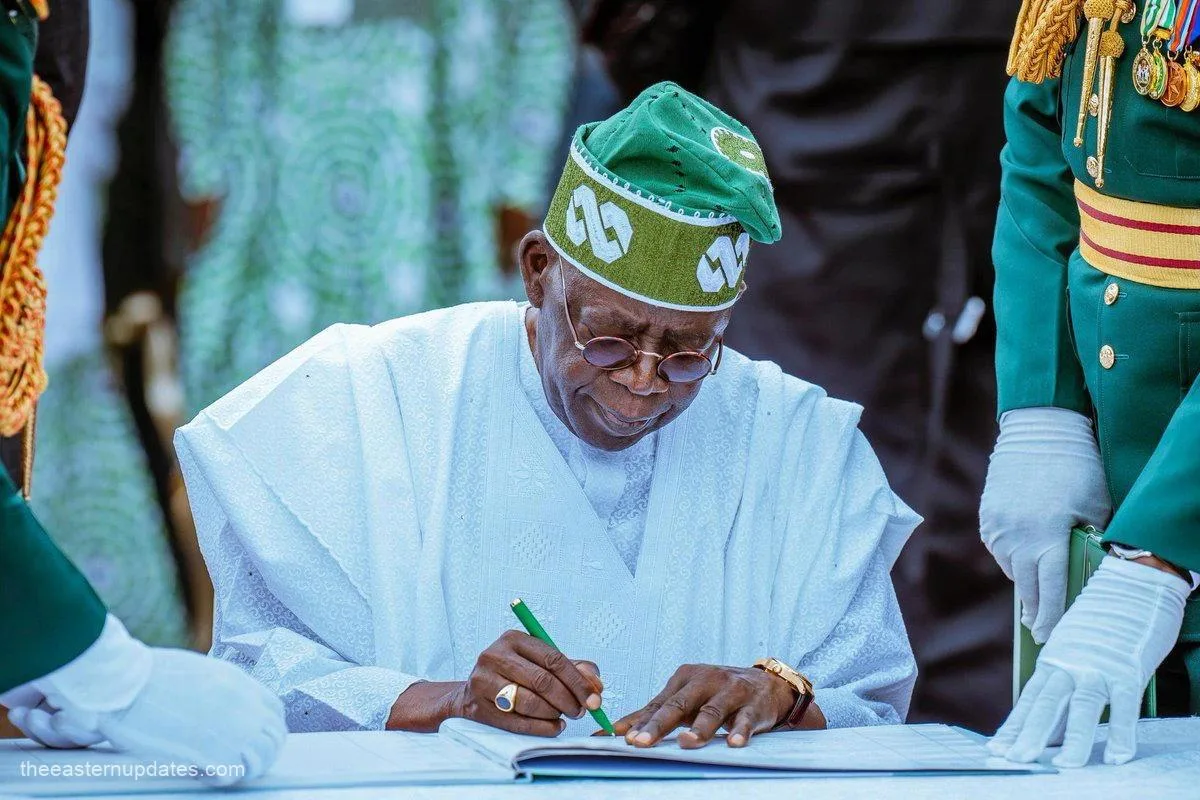
Nigeria strengthens data privacy with new Nigeria Data Protection Act, 2023
President Bola Ahmed Tinubu signed the Nigeria Data Protection Act (NDPA) into law, marking a significant milestone in the country’s commitment to safeguarding personal data and privacy rights. The NDPA replaces the earlier Nigerian Data Protection Regulations (NDPR) of 2019 and establishes a comprehensive legal framework for data protection in Nigeria. The Act creates the Nigeria Data Protection Commission (NDPC), an independent regulatory body tasked with overseeing the enforcement of data protection laws, guiding data controllers and processors, and ensuring compliance across sectors. The NDPC is supported by a Governing Council responsible for setting policy direction. The NDPA applies broadly to any individual or organization processing personal data of Nigerian residents, whether operating inside or outside Nigeria, significantly expanding the scope compared to previous regulations. However, it exempts personal or household data use and certain activities by competent authorities related to criminal justice, national security, or public health. Key objectives of the NDPA include: Protecting the fundamental rights and freedoms of data subjects as guaranteed by Nigeria’s Constitution. Regulating the processing of personal data to ensure security and privacy. Promoting responsible data handling practices. Providing data subjects with rights such as access, correction, and information about how their data is used. Strengthening Nigeria’s digital economy and enabling trusted participation in regional and global markets. The Act also introduces lawful bases for data processing, including consent and legitimate interest, and mandates the appointment of Data Protection Officers by major data controllers to ensure internal compliance. Experts say the NDPA is a crucial step for Nigeria to build trust in its digital ecosystem, protect citizens’ privacy, and attract international business. However, ongoing efforts will be needed to educate organizations, enforce compliance, and address emerging challenges posed by technologies like artificial intelligence.

Tinubu appoints Ismael Ahmed as head of Presidential CNG Initiative
President Bola Ahmed Tinubu has named Barrister Ismael Ahmed as the new Executive Chairman of the Presidential Compressed Natural Gas Initiative (PCNGi). The appointment was announced Friday, June 27, by Bayo Onanuga, Special Adviser to the President on Information and Strategy. Ahmed, 45, is expected to lead the federal government’s push to make compressed natural gas (CNG) a mainstream, affordable energy source for Nigerians. The initiative, launched in August 2023, is part of the government’s broader effort to cushion the impact of fuel subsidy removal by promoting cleaner and cheaper alternatives. As Executive Chairman, Ahmed will oversee programs to convert vehicles to CNG, deploy CNG-powered buses, and encourage local manufacturing of conversion kits. The PCNGi also plans to set up technical workshops nationwide, create jobs through technical training, and attract investment in CNG infrastructure. Ahmed brings extensive experience in public service. He previously served as Senior Special Assistant to former President Muhammadu Buhari on the National Social Investment Programme, where he helped expand welfare initiatives for vulnerable Nigerians. He holds a law degree from the University of Abuja and a master’s in international relations from Webster University, Missouri. With his appointment, the government aims to accelerate the adoption of CNG and ease the financial burden on citizens and businesses facing high fuel costs.