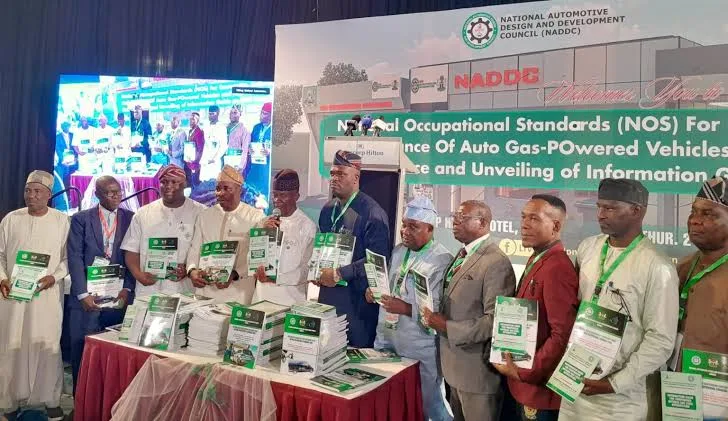
The Federal Government of Nigeria has introduced new National Occupational Standards (NOS) for Compressed Natural Gas (CNG) and Electric Vehicles (EVs) to modernize the automotive sector and speed up the country’s shift to clean energy. Announced on Thursday in Abuja by the Minister of State for Industry, Trade and Investment, Senator John Enoh, the new standards were developed by the National Automotive Design and Development Council (NADDC) with the National Board for Technical Education (NBTE). The NOS covers key areas including the conversion, calibration, and maintenance of gas-powered, electric, and hybrid vehicles. They also set national guidelines to ensure safety, consistency, and quality in CNG vehicle conversions across Nigeria. According to Enoh, the move shows the government’s dedication to industrial competitiveness, clean energy adoption, and skill development. He emphasized the automotive sector’s strong potential to drive job creation, industrial growth, and boost Nigeria’s GDP. NADDC Director-General Joseph Osanipin explained that the standards will harmonize training in universities, polytechnics, and technical colleges. They support certification up to Level Five under the National Skills Qualification Framework, helping Nigerian technicians gain internationally recognized qualifications and practical skills. Osanipin also pointed out that reducing reliance on petrol and diesel will help cut carbon emissions and allow Nigeria to better use its rich natural gas resources. Michael Oluwagbemi, CEO of the Presidential CNG Initiative, stressed the importance of private sector participation in scaling up CNG infrastructure nationwide. He stated that industry leaders are planning to roll out 200 new CNG refuelling stations, urging more businesses to get involved. This new step complements the government’s Credit Scheme launched in March 2025, which provides N2.5 billion to encourage vehicle conversion to CNG and kit manufacturing. The wider goal is to promote gas mobility, cut fuel costs, and support Nigeria’s growing autogas economy.
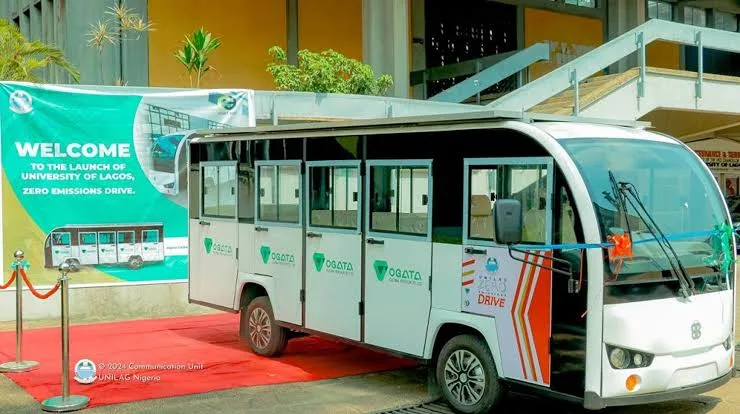
UNILAG’s electric buses transform campus commute with cleaner, cheaper rides
At the University of Lagos, electric buses are reshaping student transport by offering a more affordable and eco-friendly way to move across campus. Since Chart Eco Global Services and Ogata Global Resources launched ten electric buses in December 2024, the campus has seen a big shift from traditional cabs to these silent, zero-emission shuttles that cut fares by half. Students now pay just ₦100 to ride a bus that stops closer to their faculties, eliminating the long lines of waiting students seen before. The fleet has already doubled to twenty buses, with plans to add ten more to reduce queues further. The high cost of fuel, especially after subsidy removals raised petrol prices, pushed campus cab fares up to ₦200, forcing many students to walk or delay travel. The electric buses provide relief by offering lower fares and a more comfortable ride compared to cramped cabs. However, some students noted a frustration with priority boarding given to passengers with Cowry cards over cash payers, prompting plans for a fully automated fare system that stays affordable for all riders. Operational-wise, twelve buses run daily, completing around 60 trips between 7 a.m. and 7 p.m., moving about 6,000 students every day. The university’s support in providing space for charging stations has been crucial, making UNILAG an ideal site for this electric vehicle pilot. Beyond convenience, the project helps the university reduce its carbon footprint, aligning with its environmental goals under Vice Chancellor Prof. Folashade Ogunsola’s leadership. Experts estimate the buses’ zero emissions significantly cut the pollution normally generated by traditional campus transport. Behind the scenes, running the electric bus system faces challenges like high electricity tariffs and maintenance costs, with spare parts often needing to be imported. Still, the project is seen as a test case for expanding electric vehicles in Nigeria, where EV adoption remains low but is growing.

Bolt launches Family Profile, letting Nigerians book and pay rides for up to 9 people
Bolt has rolled out a new Family Profile feature that allows users in Nigeria to book rides and pay for up to nine family members or friends from one account. This new option is designed to make ride-hailing easier for families and caregivers who want better control over spending and trip management. Users can add loved ones, inclusive of older relatives or anyone less familiar with apps, to a shared account, monitor trip activity live, and set monthly spending limits. The Family Profile simplifies the current process, which requires separate arrangements every time someone else needs a ride. Country Manager Osi Oguah said the feature reflects Bolt’s aim to fit real-life movement patterns. “It’s about control, visibility, and freedom in one feature. We’re excited to bring this to Nigerians,” he explained. Each member added must be over 18 and have their own Bolt account. While the main user oversees payments and trip notifications, individuals can still book rides independently. Booking rides for unaccompanied minors is not permitted under this feature, ensuring safety and compliance with Bolt’s rules. Bolt points out that 2-6% of rides were already booked for others on its platform, but the Family Profile makes this smoother and more secure. It is particularly helpful for parents, caregivers, or those supporting relatives who might not use smartphones regularly. Real-time trip alerts and live location sharing also offer peace of mind to account holders, who can quickly react if anything unusual happens during a ride. This launch ties into Bolt’s ongoing improvements to its app’s safety and usability, which include emergency assistance and trip verification codes. The Family Profile could encourage more Nigerians to adopt ride-hailing, especially among older adults who face barriers with tech and payments. Bolt’s new feature changes how Nigerian families manage their daily transportation, making it more practical and safer for everyone involved.
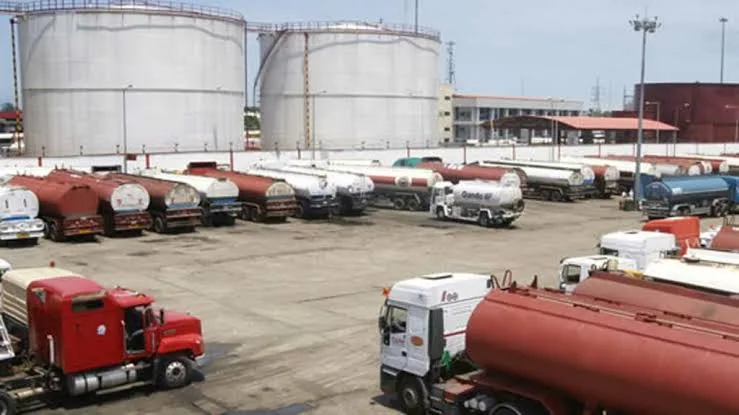
Tanker drivers, Dangote, and Lagos seal ₦10,000 e-call-up deal, preventing fuel shortage
Fuel supply in Lagos and beyond will remain steady after the Lagos State Government, leading transport unions, and Dangote Industries reached a new agreement for truck operations along the Lekki-Epe Corridor. A potential crisis was averted this week after all sides agreed on a ₦10,000 fee for trucks to access the corridor’s e-call-up system. The deal means scheduled enforcement of the new system will begin on August 1, 2025. Truck and tanker operators will now pay a ₦10,000 enforcement fee, lower than the earlier proposed ₦12,500.Full enforcement of the new system begins August 1, 2025. The agreement was signed off by the Lagos State Commissioner for Transportation, the presidents of the main transport and petroleum unions (NUPENG, NARTO, and IPMAN), and Dangote Industries. The e-call-up system uses technology to schedule truck entry, reducing the notorious gridlock and safety issues in the Lekki-Epe axis, home to the Dangote Refinery and Lekki Deep Sea Port. No revenue from the fee will go to the Lagos State Government; all funds are meant for parking, logistics, and enforcement infrastructure. For months, the fate of Lagos fuel supply hung in the balance. Tanker drivers threatened to boycott loading after the former ₦12,500 e-call-up fee was introduced, saying it was too expensive and unclear. With the Lekki corridor serving as a key channel for fuel distribution from Dangote’s new refinery, any disruption could have caused a major fuel shortage. Protests and traffic jams around ports drew concern from residents and businesses alike. Negotiations followed. Unions pushed back, demanding fairness and proper facilities for their members. Now, the agreed ₦10,000 fee will support a new tech-driven call-up system for truck movements. The system stops trucks from jamming city streets or showing up without a scheduled time, ending the chaos that once crippled Apapa. Only trucks with approved business and verified documents get a digital “call” to enter the corridor. Seven supported truck parks with security and driver lodges are in place to reduce road-side parking. Seun Osiyemi, Lagos State Commissioner for Transportation, said the deal is about balance and “making Lagos a smarter, safer city.” Residents in the Lekki area, who have long complained about truck traffic and accidents, have welcomed the move for its expected boost to road safety and local business. A union rep added: “We don’t want trouble. Trucks just need instructions and a fair deal. If the system works, everybody benefits.” All truck operators must register on the new e-call-up platform before the August 1 start. The Ministry of Transportation will run awareness campaigns for drivers and union members to explain how the system works and why it matters. Only approved trucks on a special entry list will be allowed into the Lekki Free Zone. This high-stakes deal is expected to keep fuel flowing across Nigeria and prevent the repeat of the Apapa gridlock nightmare, supporting the rapidly growing economy in Lagos and beyond
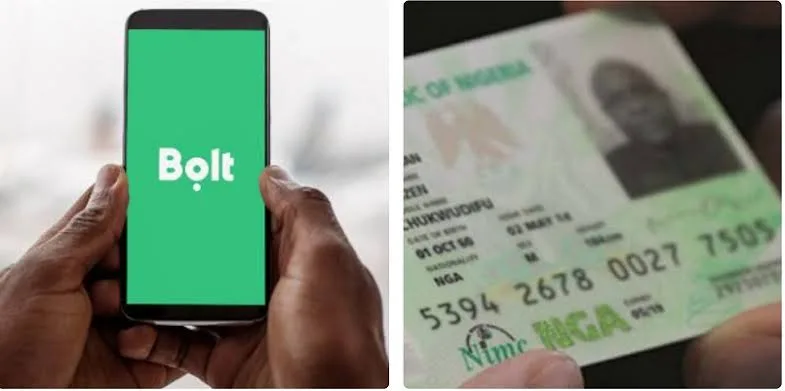
Bolt to start NIN verification for passengers by Q4 2025 to boost safety
Bolt, alongside other ride-hailing companies like Uber and inDrive, plans to begin verifying passengers using their National Identification Number (NIN) by the fourth quarter of 2025. This move aims to enhance safety for drivers and passengers by making riders traceable. Bolt’s Senior Public Policy Manager, Weyinmi Aghadiuno, revealed that the company is working closely with Lagos State Government and the Ministry of Transport to create a regulation that applies to the whole industry. The plan includes public sensitisation campaigns starting around Q3 or Q4 2025 to prepare passengers for the new verification process. Lagos State is leading the way by requiring NIN verification not just for ride-hailing but for the entire public transport system. Aghadiuno expressed hope that other Nigerian cities will follow suit once Lagos implements the policy. Drivers have long called for this measure after several tragic attacks on e-hailing drivers in cities like Port Harcourt and Abuja. The drivers’ union, AUATON, supports the NIN verification to improve security for their members. Bolt had earlier announced plans for rider verification in 2024 but paused to seek broader industry-wide regulation. The company’s Country Manager, Osi Oguah, explained that if only one platform requires NIN verification, passengers might simply switch to others, undermining safety efforts. Therefore, collaboration with government regulators is key. Oguah also stated that connecting to official databases like NIN and BVN will help identify bad actors and make ride-hailing safer for everyone. This could encourage more people to use these services, benefiting the entire industry.
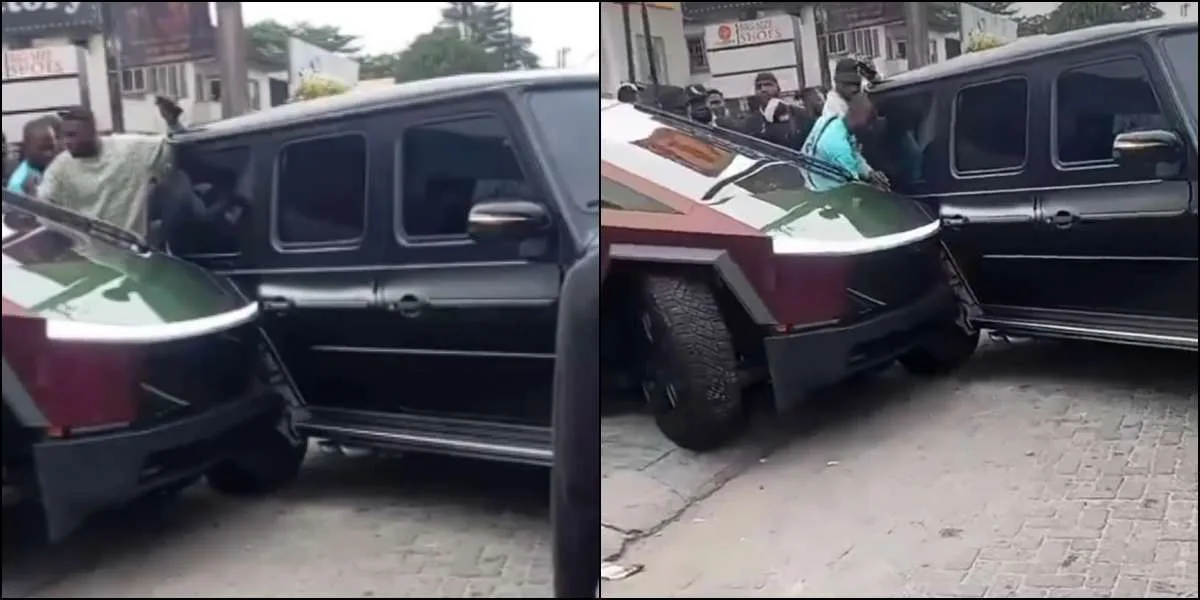
Tesla Cybertruck and G-Wagon collision sparks social media buzz
A brief video showing a collision between a Tesla Cybertruck and a Mercedes-Benz G-Wagon has gone viral, stirring widespread reactions online about the luxury vehicles involved. The incident, which occurred recently, did not result in any reported injuries, but has captured the attention of social media users intrigued by the high-end nature of the crash. The six-second clip, shared on X.com by user #dammiedammie35, shows a burgundy Cybertruck and a black G-Wagon after the collision. The caption humorously questioned who would pay for the damages, reflecting the public’s fascination with the costly vehicles. Many commenters speculated about the extent of damage, with some suggesting the G-Wagon might suffer more repairs. Others joked that the owners, presumably wealthy, would settle the matter privately. The difficulty of sourcing Tesla parts in Nigeria was also highlighted, hinting at potential challenges in fixing the Cybertruck locally. Social media users expressed a mix of amusement and admiration, calling it a “luxurious accident” and a “big men’s problem.” Some noted the irony of everyday people debating the troubles of the elite, while others sympathized with the owners facing expensive repairs. This is not the first time a Cybertruck has been involved in a notable crash. Earlier this year in Texas, a G-Wagon reportedly lost control due to a medical emergency, crashing into several vehicles including a Cybertruck, which split in two.