
The Nigerian Federal Government officially commenced the rollout of the 1Government Cloud platform in 2025 to transform MDAs into a paperless digital ecosystem. This innovative platform, developed by Galaxy Backbone Limited under the Sovereign Digitalisation Programme, aims to modernize government operations, improve accountability, and enhance service delivery nationwide. This system integrates multiple digital applications to streamline government workflow, improve data security, and reduce bureaucratic delays. It includes secure file management with GovDrive, a government-only communication system named GovMail, and tools for legal electronic signatures called GovE-Sign. Additional features such as encrypted conferencing (GovConference) and identity authentication (GovOTP) support smoother inter-agency collaboration. The rollout is already underway in key federal ministries, including Communications, Innovation & Digital Economy, Solid Minerals, Foreign Affairs, and others. The program aims to eliminate paper usage and costly manual processes around printing, storing, and sharing documents. By fostering transparency and speeding up decision-making, this endeavor aligns with Nigeria’s Renewed Hope Agenda for better public service . Mr. Wumi Oghoetuoma, the Programme Director, emphasized that this digital advancement not only curbs inefficiency but also enhances protection for sensitive government information. A phased approach prioritizing infrastructure upgrades and staff training, led by the Office of the Head of the Civil Service, sets the stage for a fully automated civil service by December 2025 . Professor Ibrahim Adeyanju, CEO of Galaxy Backbone, called the launch a pivotal moment for Nigeria’s digital transformation, promising faster decision-making and globally competitive governance. Furthermore, a senior official in Foreign Affairs stressed how the sovereign platform will bolster diplomatic communications and government responsiveness on the international stage. With nearly 70% of public services targeted for digitalization by the end of 2025 under this plan, Nigeria is setting a new standard for governance modernization. The government’s commitment to training and technological infrastructure ensures that this innovative cloud platform will become foundational to a seamless and paperless civil service in the near future .
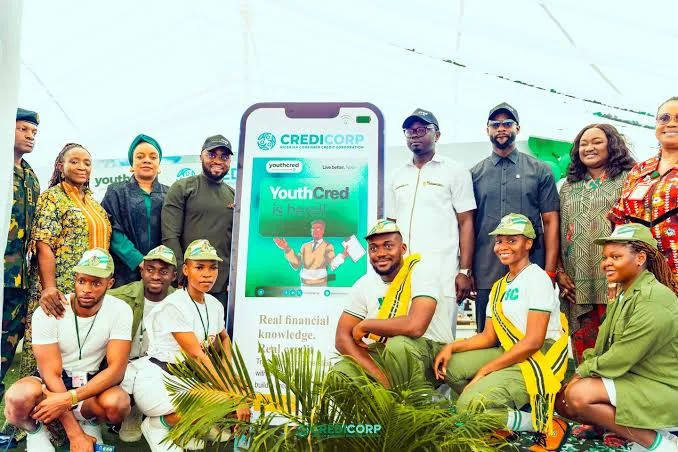
CREDICORP unveils YouthCred in Lagos, empowering youths with accessible credit and financial literacy
The Nigerian Consumer Credit Corporation (CREDICORP) has introduced YouthCred in Lagos, in alignment with President Bola Ahmed Tinubu’s Renewed Hope agenda, an innovative credit program aimed at equipping young Nigerians, including National Youth Service Corps (NYSC) members, with responsible, affordable financial access. The unveiling event, held at the Ipaja orientation camp of the Lagos State NYSC, replicated a similar launch recently conducted at Abuja’s Kubwa camp. The campaign, termed ‘Real Financial Knowledge. Real credit: transforming a generation with the right money skills to build a great future’, promises to reshape youth engagement with credit and monetary responsibility. Federal Minister of Youth Development, Comrade Ayodele Olawande, described the scheme not only as a resource for corps members but a comprehensive platform for all young Nigerians, regardless of their status. He encouraged youths to leverage the scheme to bring their entrepreneurial ideas and creative projects to fruition. Engr. Uzoma Nwagba, MD/CEO of CREDICORP, characterized the program as a revolution poised to instill a credit culture across the nation. He emphasized President Tinubu’s visionary commitment to youth empowerment and explained that CREDICORP serves as a vital anchor in enabling self-reliance among young people. Nwagba further shared that the venture is steering a nationwide movement to alter perceptions about money, borrowing, and trust among Nigeria’s youth. Adding their support, Lagos State Commissioner for Youth and Social Development, Mobolaji Ogunlende, heralded the federal government’s move as transformative. He noted the continued backing by Lagos State Governor Babajide Sanwo-Olu, focusing on social inclusion, gender balance, and youth advancement. Meanwhile, Mrs. Christiana Salmwang, Lagos NYSC Coordinator, commended President Tinubu’s administration for prioritizing the welfare of young Nigerians, especially corps members, through initiatives like YouthCred. This program aims to deliver fair, flexible, and low-interest consumer credit to over 400,000 young individuals, including those serving in NYSC. Prior to loan access, participants complete a digital credit education course designed to cultivate financial literacy and responsible borrowing habits. The loans, intended to support relocation, acquisition of work equipment, skill development, or small enterprise funding, start at single-digit interest rates with amounts reaching up to two hundred thousand naira. The program not only offers critical financial resources but champions a cultural shift toward entrepreneurship and fiscal responsibility. Young Nigerians are encouraged to embrace this opportunity to build a brighter, self-sufficient future, as the movement gathers momentum.

Nigeria teams up with tech giants to develop hyperscale data centres, to boost digital independence
The Nigerian government has announced a partnership with leading technology giants to establish large-scale data centers within the country. This development, unveiled by Kashifu Inuwa Abdullahi, Director-General of the National Information Technology Development Agency (NITDA), aims to safeguard Nigeria’s data independence and foster local technological growth. At the 3rd Biennial Corporate Governance and Enterprise Development Conference held recently in Lagos, Abdullahi outlined how the country is taking decisive steps to reclaim control over its digital assets. Currently, much of Nigeria’s data resides on platforms operated by foreign entities such as social media networks and global cloud providers, which shapes public perception and market dynamics. To reverse this trend, the government is rolling out a comprehensive program encouraging hyperscale cloud providers to build infrastructure on Nigerian soil. This program includes a “Cloud First” policy designed to entice global cloud service leaders while utilizing domestic expertise and facilities. Abdullahi explained that the administration’s blueprint involves categorizing data to decide which information should stay on local servers and what can be entrusted to public cloud environments beyond the nation’s borders. Concurrently, Nigeria is investing in cutting-edge frameworks for artificial intelligence governance and ethics, aligning these with its unique cultural values and societal needs. Abdullahi emphasized the dual approach of fostering innovation while enacting thoughtful regulations. NITDA is working on an extensive program to establish over 1,600 ICT centers nationwide to enhance digital inclusion. This includes community hubs and equipped school facilities, aiming to equip Nigerians from all backgrounds with essential digital skills. He stated that Nigerians currently lack full sovereignty over their data; most of it is controlled by platforms like Google and Microsoft, which influence what they see and believe. He added that the collaboration with Big Tech and hyperscalers, combined with new legislation, will empower Nigeria to host and manage its own data centers.

Bosun Tijani named among TIME’s 100 most influential in AI alongside Elon Musk and Sam Altman
Bosun Tijani, Nigeria’s Minister of Communications, Innovation and Digital Economy, has earned global acclaim by joining the prestigious 2025 TIME100 AI list alongside industry giants like Elon Musk and Sam Altman. Tijani oversees a transformative effort, famously known as the 3 Million Technical Talent (3MTT) program, designed to train three million Nigerians with vital technical expertise by 2027. Launched under his stewardship, this ambitious endeavor harnesses a blend of online and face-to-face training centers, having already equipped nearly 300,000 individuals across the country with cutting-edge skills in areas such as AI, cybersecurity, data science, and software development. The drive is bolstered by strategic partnerships with global and local organizations like Microsoft Nigeria, MTN Nigeria, and Airtel Africa Foundation, alongside support from international bodies including the United Nations-European Union. These alliances have enhanced opportunities for trainees by facilitating internships and job placements, cultivating a robust pipeline of tech talent ready to contribute to Nigeria’s digital economy. Beyond skill-building, Tijani is spearheading Nigeria’s National AI Strategy, a comprehensive plan co-created with over 150 experts, to responsibly harness artificial intelligence for socio-economic growth. The strategy not only prioritizes ethical AI deployment but also emphasizes digitizing local realities to develop tailored datasets and infrastructures that reflect Nigerian contexts, advancing homegrown innovation. His agenda further extends to expanding digital infrastructure, exemplified by a massive project deploying 90,000 kilometers of fiber-optic cables, funded in collaboration with the World Bank and other partners, to broaden connectivity nationwide. Tijani’s influence resonates on the international stage following his election as Vice Chair of the International Telecommunication Union (ITU) Council for 2025, the first Nigerian to secure this role in nearly five decades. Dr. Tijani stated that Nigeria may lack abundant computing infrastructure, but Nigeria’s greatest asset is their talent. He said that the program is not just about training; it is a catalyst to digitize Nigeria’s own reality and elevate the quality of AI systems that serve Nigerians. He also stressed Nigeria’s vision to build a $1 trillion digital economy, with collaboration from global partners and commitment at home.
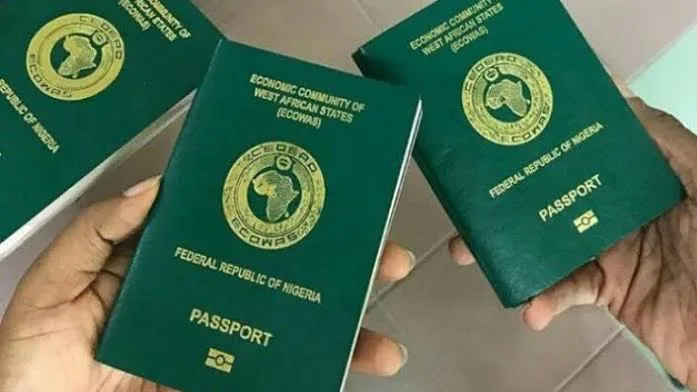
Nigeria Immigration Service doubles passport fees effective September 1, 2025
The Nigeria Immigration Service (NIS) has announced an increase in passport fees, raising the cost for the standard 32-page international passport to N100,000 and the 64-page booklet to N200,000. These changes will be implemented starting September 1, 2025. In a recent statement released by the NIS Public Relations Officer, AS Akinlabi, the federal agency explained that the adjustment is aimed at enhancing the quality and security of Nigerian passports issued domestically. This revision marks a 100% rise from the previous charges of N50,000 for the smaller passport and N100,000 for the larger version. Applications submitted by Nigerians living abroad will see no change in costs, remaining at $150 and $230 for the 32-page and 64-page documents, respectively. The fee hike applies exclusively to passport processing conducted within Nigeria. This update follows a similar price adjustment last year when fees were increased from N35,000 to N50,000 for the 32-page passport and from N70,000 to N100,000 for the 64-page size. The earlier revision was part of efforts launched by the Ministry of Interior under Minister Olubunmi Tunji-Ojo, who spearheaded ways to address a backlog of over 200,000 pending passport requests. The Nigerian passport has seen notable improvements recently, with technological upgrades including the rollout of home delivery services beginning mid-2024, designed to make obtaining passports more convenient by reducing the need for in-person visits to immigration offices. Additionally, Nigeria’s travel document improved its ranking globally, climbing to 88th place out of 199 countries in the Henley Passport Index 2025, the highest position in over a decade.

FG launches digital platform to combat housing estate fraud nationwide
The Federal Government, through the Ministry of Housing and Urban Development, has launched a new online portal enabling Nigerians to report fraudulent activities in housing estates, submit evidence, and track the status of their complaints. The platform was unveiled on Tuesday to enhance transparency and protect citizens from real estate scams. Designed as a secure and user-friendly tool, the new reporting system provides a centralized avenue for residents across Nigeria to expose deceptive practices in housing developments. Complaints lodged through this portal will undergo thorough examination by the Ministry in partnership with key stakeholders including professional bodies, law enforcement units, and the judiciary to ensure swift and effective response. This latest web-based solution supports the Ministry’s mission of enforcing stronger oversight in the real estate sector, in line with the provisions of the 2012 National Housing Policy. The policy emphasizes the necessity for rigorous regulation of the housing market, certification of estate developers, and protective measures for homebuyers. Beyond the fraud reporting portal, the Ministry has introduced a Contract Performance and Compliance Monitoring System. This tool allows real-time supervision of ongoing housing projects, evaluating contractor output against pre-set benchmarks while maintaining an organized repository of essential project documentation such as payment certificates and bills of quantities. Minister of Housing and Urban Development, Architect Ahmed Musa Dangiwa, said that this new development shows how commitment the ministry is to eradicating dishonest practices and restoring confidence in the property market. He noted that the platform was developed in collaboration with the Economic and Financial Crimes Commission (EFCC) to ensure seamless follow-up on reported cases. The Minister further stressed the importance of upholding a robust legal and regulatory framework to safeguard citizens and hold unscrupulous actors accountable. This tool offers Nigerian citizens a credible channel to raise concerns, track their complaints, and assist the government in taking decisive action against wrongdoers – Architect Ahmed Musa Dangiwa. He also warned that fraudulent schemes will no longer be tolerated under his administration Dr. Marcus Amiolemen, Deputy Director and Head of ICT at the Ministry, described the portal as an innovative approach to improving transparency, empowering users with a straightforward way to expose deceit in the property industry. During the launch, technical consultants from Freestone Investments Limited and Prunedge Development Technologies Limited demonstrated how both platforms operate. The government’s deployment of these digital channels marks a turning point towards reforming Nigeria’s housing industry. The Ministry aims to build a safer environment where Nigerians can confidently invest in quality homes, by fostering trust and encouraging public participation in combating fraud.