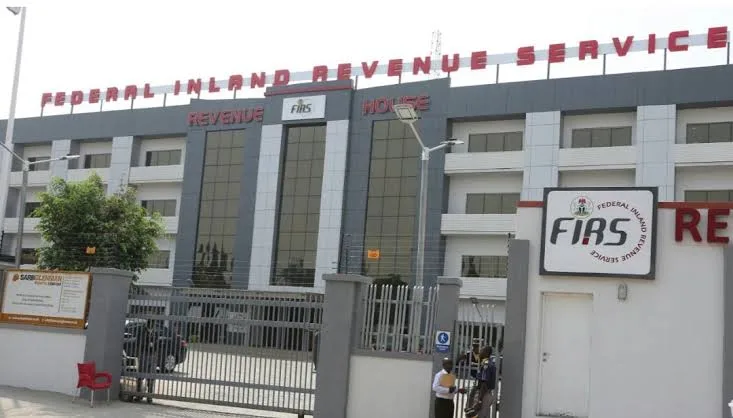
The Federal Inland Revenue Service (FIRS) has launched its new electronic invoicing (e-Invoicing) platform, with over 1,000 companies already integrating their systems within two weeks of the rollout. The platform, aimed at modernizing Nigeria’s tax administration, went live on August 1, 2025. It targets large taxpayers, companies with annual turnovers of ₦5 billion and above, representing more than 5,000 eligible firms nationwide. So far, about 20% of these companies have started using the new system. MTN Nigeria was the first to transmit live electronic invoices to FIRS, officially marking the start of this new tax compliance era. Other major companies like Huawei Nigeria and IHS Nigeria have completed testing and are preparing to go live soon. The e-Invoicing system is developed as an Electronic Fiscal System offering real-time transaction visibility and ensuring invoice accuracy and authenticity. To help businesses adapt smoothly, FIRS is working closely with the National Information Technology Development Agency (NITDA) which has brought in service providers to act as system integrators and access point providers. These partners support companies with onboarding, integration, and managing invoice transmissions. Acknowledging some companies faced difficulties meeting the initial August 1 deadline, FIRS has extended the final deadline for integration to November 1, 2025. The agency plans continued stakeholder engagements such as webinars and workshops to support a smooth transition. Nigeria aims to harmonize revenue reporting, strengthen revenue assurance, and test a single trustworthy source for government income with this technology, which is in line with the Nigeria Revenue Services Reform Act. After large companies are fully onboarded, the system will expand to medium-sized and emerging businesses across the country.
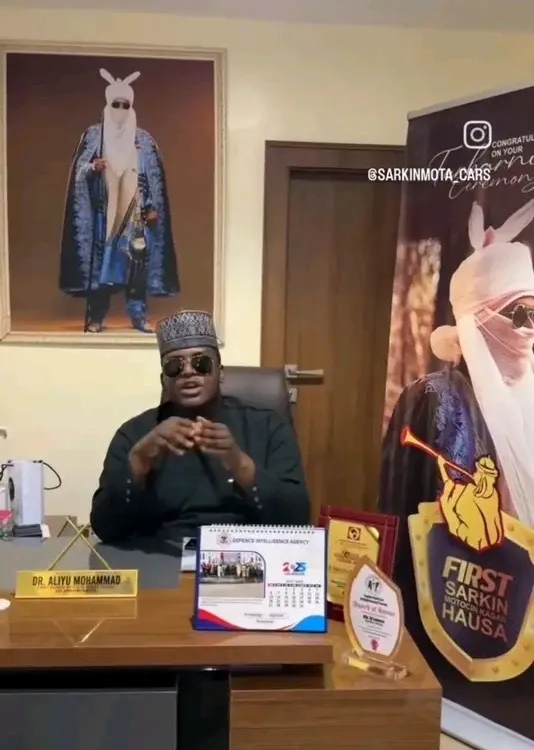
₦100,000 logo contest by Sarkinmota draws sharp criticism from design community
Sarkinmota Autos, a Nigerian car company, is hosting an exciting graphic logo design competition. Dr. Aliyu, the CEO of Sarkinmota, announced the challenge aiming to find fresh creative talent to redesign or create a new logo for the company. The contest is promoted on TikTok using hashtags #logodesignchallenge and #Sarkinmota, inviting graphic designers across Nigeria to join. The winner will receive a cash prize of 100,000 Naira and a chance to become one of Sarkinmota’s official designers. This opportunity offers exposure and a platform for designers interested in automotive branding to showcase their skills. Dr. Aliyu explained that the challenge is designed not only to find the best design but also to boost the company’s brand visibility through the creative energy of Nigerian designers. The winning logo will represent Sarkinmota in future branding and marketing efforts. However, the initiative has drawn significant criticism from within the design community. Illa Bappa Ibrahim, founder of Mediahooch Space and a brand advisor, called the challenge “an exploitative stunt dressed up as an opportunity.” He argued that such logo design contests often undervalue the skill involved. “You throw a crumb of ₦100k in the air and expect serious designers to fight over it like it’s a favor. It’s not. It’s a slap in the face,” Ibrahim said, stressing the need for fair recognition of creative work. He also shared a personal story about his experience with NIMC (National Identity Management Commission), where his design has been used for almost a year without payment. “That’s a national identifier, and yet I’ve not been paid for the rights. What I got was someone in a position of authority looking me dead in the face and saying, ‘Just go home and forget about it.’ Forget what? The value of my work?” Ibrahim said. Adding to the conversation, Safwan Idris revealed his own frustrations, saying he was tagged many times but ignored the challenge. “Many times I’ve got robbed of these so-called challenges and the winner ended up being a mediocre and apprentice in the skill work.” Ahmad Mukhtar also criticized the competition, pointing to a comment claiming someone could “just give ChatGPT to… give me a logo.” Mukhtar said this showed a lack of respect for designers and that challenges like this often have judges who don’t understand good design. “Let’s value what we do and stop falling for such. That way, people will respect what we do,” he urged These voices reflect long-standing challenges Nigerian brand designers face around fair pay, respect, and proper recognition. While Sarkinmota’s contest offers a platform for exposure, the criticism shines a light on the broader issue of how creative talent is valued in the industry.
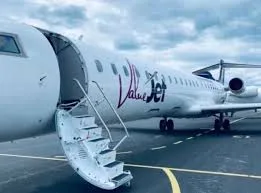
Pilots’ union calls on NCAA to lift suspension of ValueJet crew after Abuja airport incident
On August 5, a disruption involving Fuji musician K1 De Ultimate at Abuja airport led to the suspension of ValueJet pilots, but the pilots’ union says the sanctions are unfair. The National Association of Aircraft Pilots and Engineers (NAAPE) has asked the Nigeria Civil Aviation Authority (NCAA) to drop the suspension of the ValueJet captain and first officer. This followed an incident at Nnamdi Azikiwe International Airport where K1 De Ultimate caused a delay by violating security rules and disrupting boarding. NAAPE argues the blame lies mainly with the musician, who was placed on a no-fly list and is facing legal action. According to NAAPE President Galadima Abednego, the pilots have clean records and acted under pressure after K1 disobeyed security protocols and blocked the aircraft on the runway. While Abednego admits the captain might have handled the situation better, he called the NCAA’s decision to suspend only the crew, while letting K1 face separate prosecution, a case of unfair treatment. The incident reportedly started when K1 tried to board the ValueJet flight with an alcohol flask exceeding the allowed limit of 100ml. After being warned by security and the captain, K1 allegedly poured the liquid on a security officer and blocked the plane from taxiing after boarding. The pilots tried to move the plane despite the blockage, which led to NCAA suspending their licenses for taxiing without clearance. Aviation Minister Festus Keyamo criticized the sanctions as selective, saying both the crew and passenger broke safety rules. He instructed that K1 be blacklisted from flying within Nigeria until investigations conclude. NAAPE wants a transparent probe and wants ValueJet to back its pilots. The union also reminded passengers that safety at airports is non-negotiable, warning against unruly behaviour.
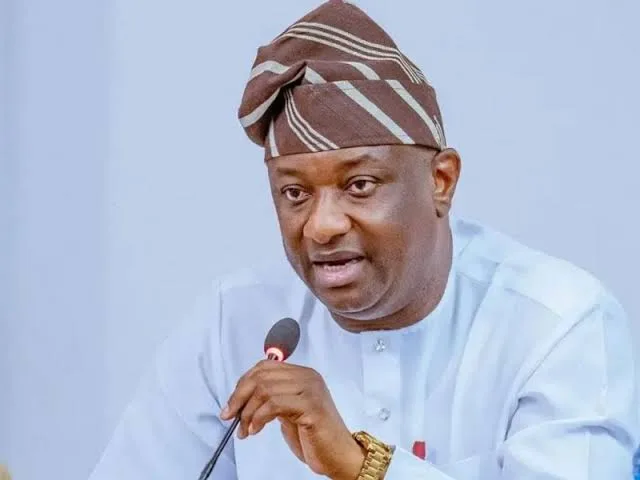
Aviation minister bars Fuji star Kwam 1 from flying after Abuja airport standoff
The Nigerian Minister of Aviation, Festus Keyamo, has ordered Fuji music legend King Wasiu Ayinde Marshal, popularly known as Kwam 1, placed on a no-fly list. This follows an incident at Abuja’s Nnamdi Azikiwe International Airport, where the musician blocked a ValueJet aircraft from taxiing. The trouble happened on August 5, 2025, during boarding for a Lagos-bound ValueJet flight. Kwam 1 reportedly tried to carry an undisclosed liquid onto the plane, which aviation rules forbid unless declared and special permission is given. When security officers asked him to comply, he refused and allegedly spilled what was later confirmed as alcohol on one of the officers. The situation escalated when the flight captain closed the aircraft doors after boarding. Kwam 1 then stood in front of the plane on the tarmac, stopping it from moving. Airport security eventually removed him, and he was released after an initial inquiry. Following the incident, the Nigerian Civil Aviation Authority (NCAA) suspended the flight’s pilot and captain for taxiing before the tarmac was fully clear. But Minister Keyamo criticized this selective punishment, stressing that Kwam 1’s actions were equally against international safety standards. He directed NCAA to inform all airlines—domestic and international—of the no-fly order on Kwam 1. Airlines ignoring this could face license withdrawal. The aviation authorities are still investigating. This case highlights the strict measures Nigeria is enforcing to protect airport safety and ensure order on its runways. Young professionals and travelers are reminded to follow airport rules closely, as disruptions have serious consequences for flight safety and operations. The aviation sector’s firm stance reinforces its commitment to safe skies across Nigeria and beyond.
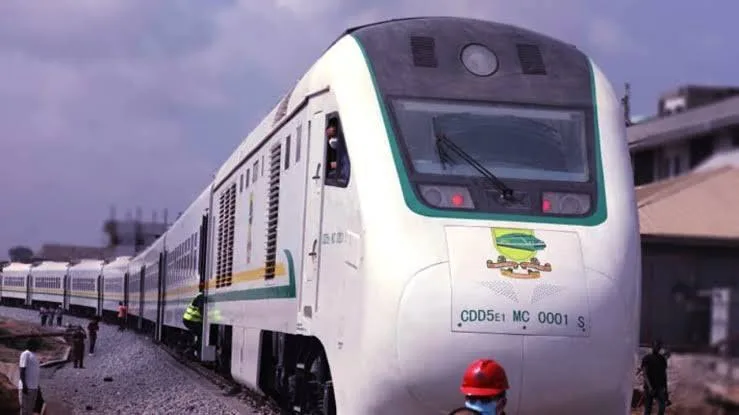
NRC refutes claims of vandalism on Lagos–Ibadan standard gauge, assures passengers of safety
The Nigerian Railway Corporation (NRC) says the Lagos–Ibadan Standard Gauge Railway is secure and not affected by vandalism, countering recent online reports that raised safety fears. NRC’s Managing Director, Dr. Kayode Opeifa, spoke through a statement shared in Lagos this weekend. He described the videos and reports making the rounds online as misleading. The corporation clarified that the vandalism incidents making headlines actually happened on the old narrow-gauge railway in Oyo State, not the modern standard gauge connecting Lagos and Ibadan. Opeifa explained that those thefts, where E-clips and short rails were stolen, took place between August 7 and 27, 2024, on the narrow-gauge tracks near Erunmu, Oyo State. He said: “The Nigerian Railway Corporation (NRC) has refuted an online publication claiming that the Lagos–Ibadan Standard Gauge Line has been vandalised and is unsafe for usage.” To address the problem, NRC worked with the village head of Erunmu, local vigilantes, and police right after the incident. They also ran awareness campaigns to stop scrap dealers from buying stolen railway parts. Thanks to these efforts, suspects were arrested and handed over to the authorities. NRC reports that since then, there have been no new cases of vandalism in the area, and train services on the Lagos–Ibadan Standard Gauge remain unaffected. The NRC stressed that damaging railway infrastructure is an act of economic sabotage and warned that anyone caught will be prosecuted. The Lagos–Ibadan Standard Gauge, built by China Civil Engineering Construction Corporation (CCECC), is a crucial transport link officially opened in June 2021. The 157km main line (plus a 7km branch) moves both passengers and cargo between Lagos and Ibadan, with trains running up to 150km/h. Since going into operation, the line has helped millions of Nigerians travel safely and has boosted trade from Lagos ports to the country’s interior. As of March 2024, CCECC reported that the modern railway had safely completed over 1,000 days in service, carrying more than 2 million passengers. NRC urges the public to ignore misleading online reports about the safety of the Lagos–Ibadan Standard Gauge and assures riders that measures are in place to keep the route secure.
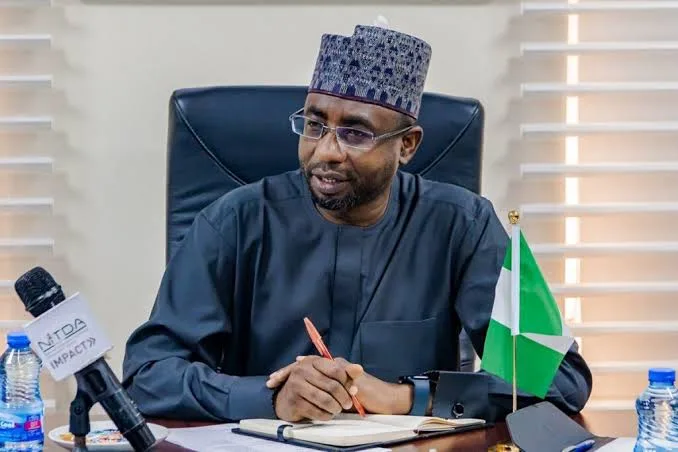
NITDA ramps up push for national data harmonization in Nigeria
Nigeria’s technology agency, NITDA, says Nigeria must urgently unify data systems across government agencies to power digital identity and better planning for the future. At a recent meeting in Abuja, the Director-General of the National Information Technology Development Agency (NITDA), Kashifu Inuwa, called for all government institutions to harmonize their databases. He explained that lack of coordination has slowed evidence-based national development, while a seamless digital system could make government services smarter, faster, and more accessible for everyone. “From birth registration to linking people’s legal identities to national planning, technology can help us bring everything together. Without harmonizing our data, we cannot generate the insight we need for national development.” – Inuwa said He stated that this data harmonization move is in line with President Bola Tinubu’s “Renewed Hope Agenda,” which focuses on building digital public infrastructure and using data for decision-making. Agencies like the National Population Commission (NPC), National Identity Management Commission (NIMC), and National Bureau of Statistics (NBS) are expected to play major roles in this process. Inuwa assured stakeholders that NITDA will set standards and offer support. “Our goal is to make sure every institution involved in civil registration and vital statistics (CRVS) has the right digital tools and advice. We want every process to be digital, seamless, and secure—nobody wants to fill out endless forms or move from office to office,” he stated. Fragmented data systems have been a major challenge for years, leading to repeated identity registrations and wasted resources. The recent push is not the first time officials are highlighting this problem. Olubunmi Tunji-Ojo, Minister of Interior, also recently stressed the benefits of harmonization, noting it would save costs and make things easier for both citizens and government. “When we harmonize our data, there will be seamless data exchange among government agencies. With their National Identification Number (NIN), citizens will be able to access passport services and bank registration without submitting the same data again and again,” Tunji-Ojo said. He promised that the Ministry of Interior would back the project fully. While progress has been slow in the past, both NITDA and the Ministry of Interior now say they are committed to making data harmonization a reality. If successful, Nigerians could look forward to faster, simpler digital services and an end to repeated paperwork, a major step toward a more efficient, digital future.