
The Nigerian government has approved the launch of four new satellites to strengthen surveillance and tackle growing insecurity across the country. Minister of Innovation, Science and Technology, Uche Nnaji, announced the decision following the Federal Executive Council’s recent approval. The satellites-three for Earth observation and one equipped with radar aperture-are expected to provide around-the-clock imaging, regardless of weather or time of day. “These satellites are worth millions of dollars,” Nnaji said during the 22nd National Council on Innovation, Science, and Technology in Abuja. “The search satellite will pick images both day, night, during rain, every time of the day, and that is technology in play.” The move comes as Nigeria faces increasing threats from armed groups, especially in the northeast. Military officials have raised alarms over terrorists’ use of armed drones, which have been linked to a series of deadly attacks. Major General Abdulsalam Abubakar, commander of Operation Hadin Kai, noted that the use of such drones was first detected in November last year, making it harder for security forces to respond quickly. The new satellites are expected to support military operations by providing real-time surveillance of remote areas like the Sambisa Forest, reducing the need to purchase foreign imagery and data. This capability is seen as crucial in monitoring insurgent activities and responding to evolving threats. Beyond security, the satellite initiative is part of a broader push to close the gap between research and real-world application in Nigeria. The government is reviewing its National Science, Technology and Innovation Policy and considering the creation of a National Research and Innovation Fund to support local inventors and researchers. “We can no longer afford to ignore the widening gap between research and real-world impact,” Nnaji said. “For decades, valuable research conducted in our universities and institutions has remained underutilised, disconnected from industries and policy.” He called for stronger collaboration between scientists, the private sector, and academia to commercialise indigenous research and foster innovation among Nigeria’s youth.

NITDA to launch 1,600 ICT centres nationwide to boost digital inclusion in Nigeria
The National Information Technology Development Agency (NITDA) has announced plans to establish over 1,600 ICT centres across Nigeria in the coming years, aiming to ensure every Nigerian has access to digital technology and skills. Speaking at the commissioning of a new community ICT centre in Lagos, NITDA’s Director General, Kashifu Inuwa, revealed that the agency has already set up 222 ICT facilities in the last two years. These include school ICT tools, community centres, and ICT hubs. So far, 18 community centres and three ICT hubs have been built. “Our goal is to have every community and every Nigerian participate in the digital economy,” Inuwa said, emphasizing the government’s commitment to inclusivity and economic diversification under President Bola Tinubu’s Renewed Hope Agenda. The initiative targets underserved and remote areas to bridge the digital divide, providing access to technology and digital skills regardless of social status or location. The Ministry of Communications, Innovation and Digital Economy, represented by Director Johnson Bareyei, highlighted that these centres will support digital skills development through programs like the 3 Million Technical Talent initiative. They will also offer support for startups and tech entrepreneurs, regulatory guidance, and foster collaboration with local institutions.
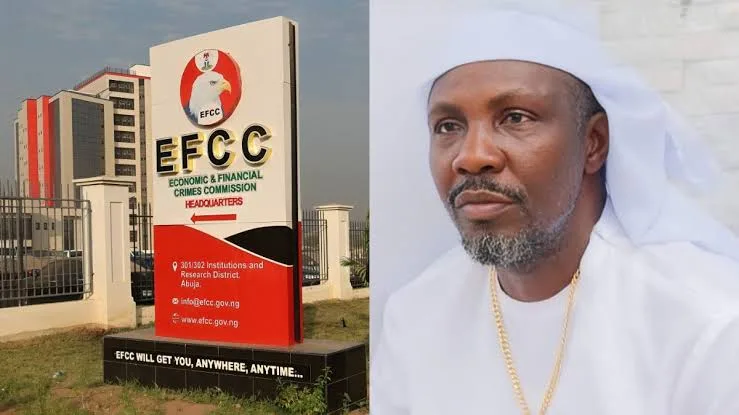
EFCC summons ex-militant leader Tompolo over viral naira abuse video
The Economic and Financial Crimes Commission (EFCC) has officially invited former Niger Delta militant leader, Chief Government Ekpemupolo-widely known as Tompolo-for questioning following allegations of naira abuse and financial misconduct. The controversy began after footage from Tompolo’s 54th birthday celebration in April circulated on social media platforms, especially X (formerly Twitter). The video shows Tompolo dancing while another individual sprays him with bundles of ₦1,000 notes-a practice explicitly prohibited by Section 21(3) of the Central Bank of Nigeria Act. The law forbids spraying, stepping on, or otherwise mishandling the naira at public events, with offenders liable to fines, imprisonment, or both. ad: Public reaction was swift and intense. Many Nigerians accused the EFCC of double standards, pointing out that celebrities such as Bobrisky, E-Money, Iyabo Ojo, and Cubana Chief Priest have previously faced prosecution for similar offences, while Tompolo appeared to have been overlooked. Social media users and rights advocates demanded equal treatment under the law, insisting that Tompolo should not be exempt from prosecution. In response to the mounting pressure, the EFCC issued a statement on its official X handle, emphasizing its commitment to impartiality: “Nobody is above the law. Tompolo will have questions to answer!” According to sources within the EFCC, the invitation delivered to Tompolo is a procedural step in the investigation and not an arrest warrant. The agency is currently awaiting his response and expects his cooperation as the inquiry progresses. As of the time of reporting, Tompolo has not made any public statement regarding the EFCC’s invitation.

Delta hotel manager confesses to murder of 22-year-old PoS operator
A hotel manager in Delta State has confessed to the shocking murder of a 22-year-old Point-of-Sale (PoS) operator, Onoriode Bethel, who was reported missing in December 2024. The suspect, identified as Iboirode, managed Century Home Hotel in Owehlogbo, Isoko North Local Government Area. According to the Delta State Police Command, Iboirode lured Bethel into the hotel under the pretense of resolving a financial dispute. He then killed her and secretly buried her body within the hotel compound. Delta State Police spokesperson, SP Bright Edafe, confirmed the arrest and provided details of the investigation. “The suspect murdered Bethel and buried her body on the hotel premises,” Edafe stated. Police investigations revealed that the motive for the killing was revenge. Bethel had previously accused Iboirode of using a fake bank alert to fraudulently withdraw ₦10,000 from her account. Although she managed to recover the money, the suspect reportedly felt his reputation had been tarnished by the incident. In a further disturbing twist, the suspect’s wife admitted to knowing about the crime. She told police, “My husband called her into the hotel; she is a friend of his. That day, he called her on the phone and took her into a room. I don’t know how he killed her because I was in our room. It was when he came out around midnight that he told me he had killed her.” After the murder, Iboirode used Bethel’s mobile phone to contact her father and demand a ransom. He also accessed her PoS device, coercing her for the password before killing her and withdrawing money from her account. Bethel’s disappearance on December 13, 2024, sparked concern in the community. The case gained renewed attention in March 2025, when Iboirode and other hotel staff were arrested over an unrelated murder at the same hotel. Police say the investigation is ongoing and have assured the public that justice will be served. The tragic incident has sent shockwaves through the Delta community, with residents calling for swift prosecution and better security measures for young business operators.

CBN launches NRBVN to simplify banking for Nigerians abroad
The Central Bank of Nigeria (CBN) has introduced the Non-Resident Bank Verification Number (NRBVN) platform, a new digital service that allows Nigerians living overseas to register for their Bank Verification Number (BVN) without needing to travel back home. This initiative aims to boost financial inclusion and make banking more accessible for the Nigerian diaspora. CBN Governor Olayemi Cardoso described the launch as a major step in removing the physical barriers that have long hindered Nigerians abroad from accessing financial services. “For too long, many Nigerians abroad have faced difficulties accessing financial services at home due to physical verification requirements,” Cardoso said. The NRBVN platform enables remote enrollment with advanced biometric and digital verification processes, ensuring security and compliance with global Know Your Customer (KYC) and Anti-Money Laundering (AML) standards. The platform also supports opening domiciliary accounts in major foreign currencies like USD, GBP, and EUR, providing greater flexibility for investments and remittances. The CBN hopes this will encourage more formal remittance flows, targeting $1 billion monthly-an ambitious goal compared to the $4.73 billion remitted in 2024. Applicants must submit valid identification, proof of residency, and employment verification documents through the NRBVN portal. They will also undergo a liveness check and thorough KYC screening to ensure secure transactions. Mr. Premier Oiwoh, Managing Director of the Nigeria Inter-Bank Settlement System (NIBSS), highlighted that the platform meets global standards for transparency and security. Deputy Governor Muhammad Abdullahi emphasized the NRBVN’s role in strengthening economic ties between Nigeria and its diaspora, calling it a transformative tool for enhancing the banking experience. The NRBVN is part of a broader framework that includes special accounts and investment opportunities tailored for Nigerians abroad, allowing them to participate more fully in Nigeria’s financial ecosystem while maintaining the ability to repatriate investment proceeds.

EFCC removes foreign national Elie Bitar from CBEX crypto fraud wanted list
The Economic and Financial Crimes Commission (EFCC) has officially removed Elie Bitar, a foreign national and former suspect in the Crypto Bridge Exchange (CBEX) fraud case, from its wanted list. This development follows new information that cleared Bitar of involvement in the alleged cryptocurrency scam. Bitar, who was previously declared wanted in connection with the CBEX fraud investigation, had his profile deleted from the EFCC’s website. The commission stated that the fresh evidence did not support his inclusion among the wanted persons. CBEX Solutions Ltd., the company linked to Bitar, reportedly operated legitimately between 2018 and 2020 and was not part of the fraudulent activities under investigation. The EFCC continues to pursue eight other suspects believed to be involved in the CBEX collapse, working closely with international law enforcement agencies to track and apprehend them. The commission reaffirmed its commitment to bringing all perpetrators of the scam to justice. This case stems from a Federal High Court order for the arrest of promoters of the now-defunct CBEX platform, which allegedly defrauded Nigerian investors of approximately $1 billion through a cryptocurrency investment scheme. EFCC spokesperson Dele Oyewale has pledged to recover the lost funds and ensure accountability for all involved.