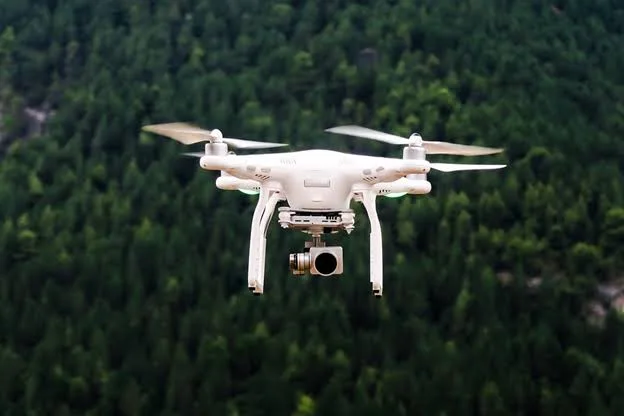
Boko Haram insurgents have intensified their campaign in Nigeria’s Borno State by deploying armed drones, a development that has raised serious concerns among security officials and local communities. The use of these drones, similar to those seen in conflicts in Israel and Ukraine, marks a new phase in the group’s tactics and has complicated the efforts of the Nigerian military to restore peace in the region. In the early hours of Tuesday, Boko Haram launched coordinated assaults on military bases in Rann, Gajiram, and Dikwa, resulting in the deaths of at least four soldiers and injuries to several others. Security sources confirmed that while the military successfully repelled attacks in Dikwa and Gajiram, the base in Rann was overrun after hours of intense fighting. The insurgents looted weapons and set military vehicles ablaze before retreating when air support arrived. These attacks come on the heels of another deadly incident in Marte, where an unspecified number of soldiers were killed and others remain missing. The recent surge in violence has left both military personnel and civilians on edge, with local officials urging for increased vigilance and support for the armed forces. Military sources revealed that Boko Haram’s recent successes are partly due to their use of drones for surveillance and precision strikes. “The terrorists are now having a field day because they are using sophisticated technology. It is becoming much easier for the terrorists to attack with precision because they have drones, just the way it happened yesterday,” one intelligence source said. The Nigerian Army has reiterated its commitment to defeating terrorism, highlighting recent successes in neutralizing over 20 insurgents and reclaiming territory. However, officials acknowledge that the influx of weapons from neighboring Sahel countries and the adoption of new tactics by insurgents have complicated the fight. Borno State Governor Babagana Zulum condemned the renewed violence and expressed sympathy for the families of victims, including civilians killed in recent improvised explosive device (IED) attacks. He reaffirmed the state’s support for military and local volunteer forces, emphasizing the need for unity and vigilance. Security experts and lawmakers have called on the military high command to deploy more personnel and modern technology to the North East. Dr. Kamar Hamza, a security analyst, stressed the importance of intelligence-driven operations, noting that insurgents have adapted by targeting military installations to seize weapons and using guerrilla tactics to evade capture. The Nigerian Senate has also urged the military to review its strategies and equip troops with advanced technology to counter the evolving threat. Despite recent setbacks, the Nigerian military maintains that normalcy is gradually returning to the North East, with thousands of internally displaced persons returning to their communities. However, the emergence of armed drones in the hands of insurgents signals a need for continued vigilance, technological upgrades, and stronger collaboration between the military and local communities to secure lasting peace.
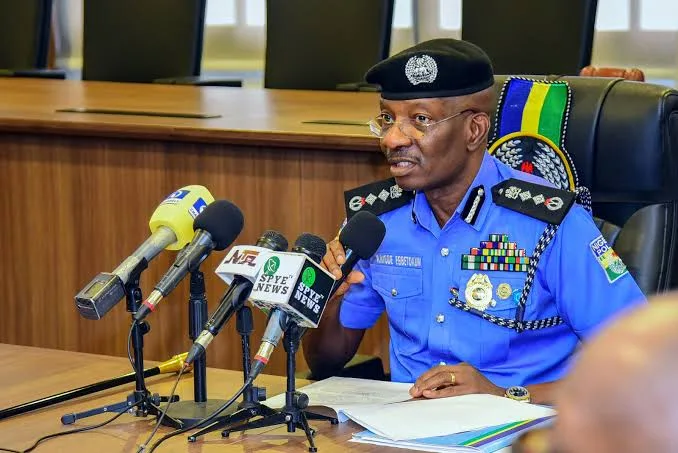
Nigeria police arrest Canadian and Nigerian over $210,000 and ₦452 million investment fraud and cybercrime
The Nigeria Police Force, through its INTERPOL National Central Bureau in Abuja, has apprehended two suspects linked to significant investment fraud and cybercrime involving over $210,000 and ₦452 million. Robert Harms, a Canadian national, was arrested for orchestrating a fraudulent investment scheme targeting Tepison Enterprises in Akwa Ibom State. According to police, Harms convinced the company to invest $210,000 in a fictitious Waste-to-Energy project in Canada, promising a $30,000 return within four weeks that never materialized. Investigations uncovered that Harms fabricated project documents and transferred the funds to an account in Dubai. He was arrested on February 7, 2025, at Nnamdi Azikiwe International Airport while attempting to flee the country. Harms has since been arraigned and remanded at the Uyo Custodial Centre. In a separate operation, Okeke Ogechi Njaka, a Nigerian woman, was re-arrested for multiple cybercrime offenses, including cyberbullying, cyberstalking, and fraud involving her NGO, Ogechi Helping Hands Foundation. The foundation allegedly obtained ₦452,821,982 through a medical assistance scam. Njaka had initially been arrested in January 2025 but absconded after jumping bail. She was recaptured on May 8, 2025, in Abuja and is set to be arraigned before the Federal High Court. The Nigeria Police Force, led by Inspector-General Kayode Egbetokun, reaffirmed its commitment to combating transnational financial crimes and urged the public to exercise caution when engaging in high-value international transactions. “The arrests demonstrate our unwavering resolve to tackle financial and cyber-related threats,” said Olumuyiwa Adejobi, Force Headquarters Public Relations Officer. Members of the public are encouraged to report suspicious activities promptly to law enforcement agencies to aid ongoing efforts against financial crimes.
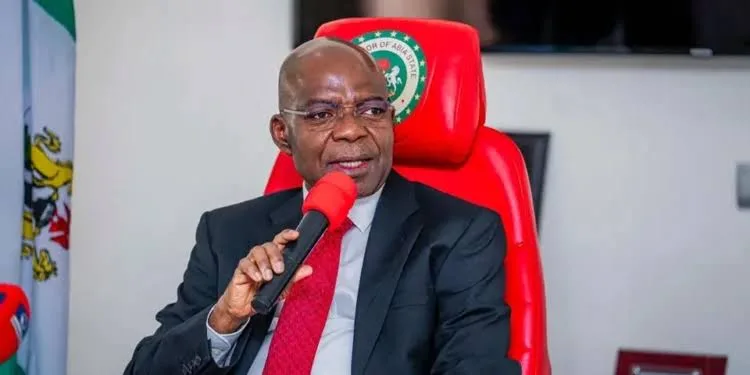
Abia State and EU launch €2.6 million solar project to power healthcare facilities
Abia State Government, in partnership with the European Union (EU), is set to invest over €2.6 million in the Solar for Health project, aiming to provide renewable energy to healthcare facilities across the state. Commissioner for Power and Public Utilities, Mr. Ikechukwu Monday, announced the project during a press briefing in Umuahia. He explained that the EU will contribute more than €2 million, with Abia State providing over €624,000 as counterpart funding. The project will install solar systems with a total capacity of 500 kilowatts. “This initiative is not just about powering health centers; it’s about sustainability,” Monday said. “We plan to extend power supply to nearby shops and productive users to ensure ongoing benefits.” Each solar installation will include metering systems and battery storage to maintain power during low sunlight periods, such as the rainy season. Over 50 personnel from the State Ministries of Power and Health have already been trained to operate and maintain the systems. Energy audits are currently underway at the selected facilities to determine the best deployment strategies. The project is expected to significantly enhance healthcare services and contribute to socio-economic development in Abia. In a related development, the state is negotiating to acquire a 60% stake in the Enugu Electricity Distribution Company’s assets within Abia to further improve electricity access. Monday emphasized, “Reliable energy is essential for development, and this project marks a significant step forward for our state.”
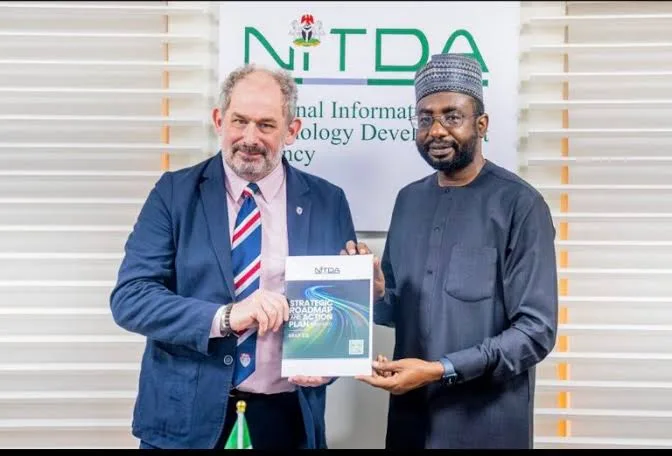
NITDA and Lancaster University join forces to accelerate Nigeria’s digital transformation
The National Information Technology Development Agency (NITDA) has announced a strategic partnership with Lancaster University, United Kingdom, aimed at boosting Nigeria’s digital transformation through research and innovation. Unveiled during a visit by a Lancaster University delegation led by Professor Kirk Semple, Director of International Research, the collaboration centers on the Research and Innovation Partnership for Entrepreneurship (RIPE) programme. This initiative seeks to convert academic research into practical solutions that promote entrepreneurship and economic growth across Nigeria. Malam Kashifu Inuwa, Director-General of NITDA, highlighted the critical role of research and development (R&D) in building a sustainable, knowledge-driven economy. “Many Nigerian farmers still lack access to digital tools and data that could improve productivity and resource use,” Inuwa said. He stressed that investing in R&D is essential not only to address sector-specific challenges but also to develop data-driven policies that will fast-track Nigeria’s digital future. The partnership aligns with President Bola Tinubu’s Renewed Hope Agenda, which aims to position Nigeria as a global digital leader through innovation and international collaboration. NITDA plans to focus on emerging technologies including Artificial Intelligence (AI), Internet of Things (IoT), drones, blockchain, robotics, and additive manufacturing to tackle local challenges and create new economic opportunities. Professor Semple described the RIPE programme as a vital tool for turning academic knowledge into real-world impact. “Universities must demonstrate value beyond creating knowledge. Partnerships like this ensure research supports policy, innovation, and community transformation,” he said. The collaboration aims to build a vibrant ecosystem involving academia, industry, government, entrepreneurs, and venture capitalists. NITDA also called on Nigerian universities to realign their curricula to meet the needs of the digital economy and produce talent capable of driving innovation.
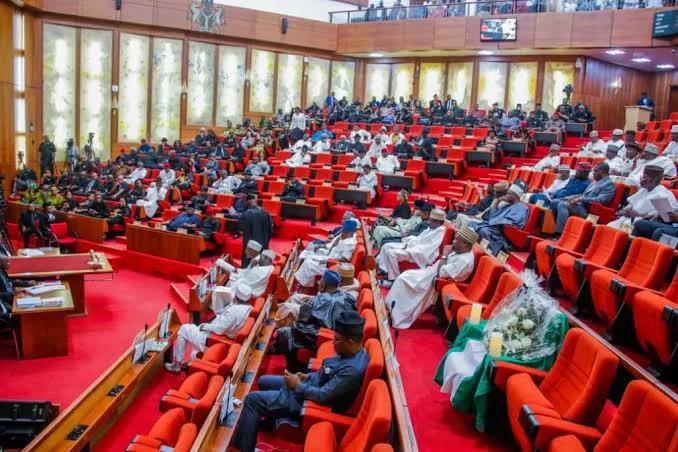
Nigerian Senate denies viral video involvement, says man kissing woman Is not a senator
The Nigerian Senate has firmly denied allegations that a man seen kissing a woman in a widely circulated video is a serving senator or that the incident took place within the National Assembly complex in Abuja. The video, which resurfaced on social media this week, shows a man and an unidentified woman in what appears to be an office setting. Social media users quickly speculated that the man was Senator Yau, fueling widespread discussion and criticism online. Senate spokesman and Chairman of the Senate Committee on Media and Public Affairs, Senator Yemi Adaramodu, addressed the controversy, stating that the claims are unfounded. “That’s not the picture of any senator who is presently serving in the Nigerian Senate. That video has been online for the past four to five years,” Adaramodu said during an interview with Sahara Reporters. He emphasized that the office shown in the video does not match any within the Senate. “When you look at the environment, that room is not in the Senate. You can visit the Senate to see the offices. There are no offices that have that kind of architecture. Come to our offices. I will open about 10 offices for you to see. There is no office architectural configuration like that,” he explained. Adaramodu further insisted there is no resemblance between the man in the video and any current senator. “There’s nobody that looks like that. You can come to the Senate; I will grant you access. My conclusion is that it is not true that the man in the video is a senator or that the incident happened in the Senate. That is not the Senate and that is not one of our senators,” he said. The Senate’s strong denial aims to put an end to the rumors and clarify that neither the institution nor any of its members are connected to the viral footage.

China lifts ban on boeing deliveries after US-China tariff deal
China has officially lifted its ban on domestic airlines accepting Boeing aircraft, following a landmark trade agreement with the United States that temporarily reduces tariffs between the two countries. The decision comes after Beijing and Washington agreed to cut steep reciprocal tariffs by 115% for 90 days, easing tensions that had stalled Boeing deliveries to China since tariffs were imposed during the Trump administration. Chinese aviation officials have now informed carriers that they can resume accepting Boeing planes, ending a months-long suspension that had caused inventory backlogs for the American manufacturer. China represents a crucial market for Boeing, accounting for about 10% of its commercial aircraft backlog. The trade deal allows Chinese airlines to accept 25 of the 737 MAX jets that had been held up by previous restrictions, along with other aircraft currently in production. “This marks a turning point in US-China aviation relations,” said an industry analyst. “It reflects broader efforts to normalize trade and investment flows between the world’s two largest economies.” The temporary tariff reduction follows intense negotiations in Geneva and is seen as a step toward resolving broader trade disputes. Boeing executives had planned to deliver 50 jets to Chinese carriers this year, a goal now back on track with the lifting of restrictions. While the 90-day tariff cut offers immediate relief, both countries continue talks to secure a long-term agreement that would provide stability for the aerospace and aviation sectors.