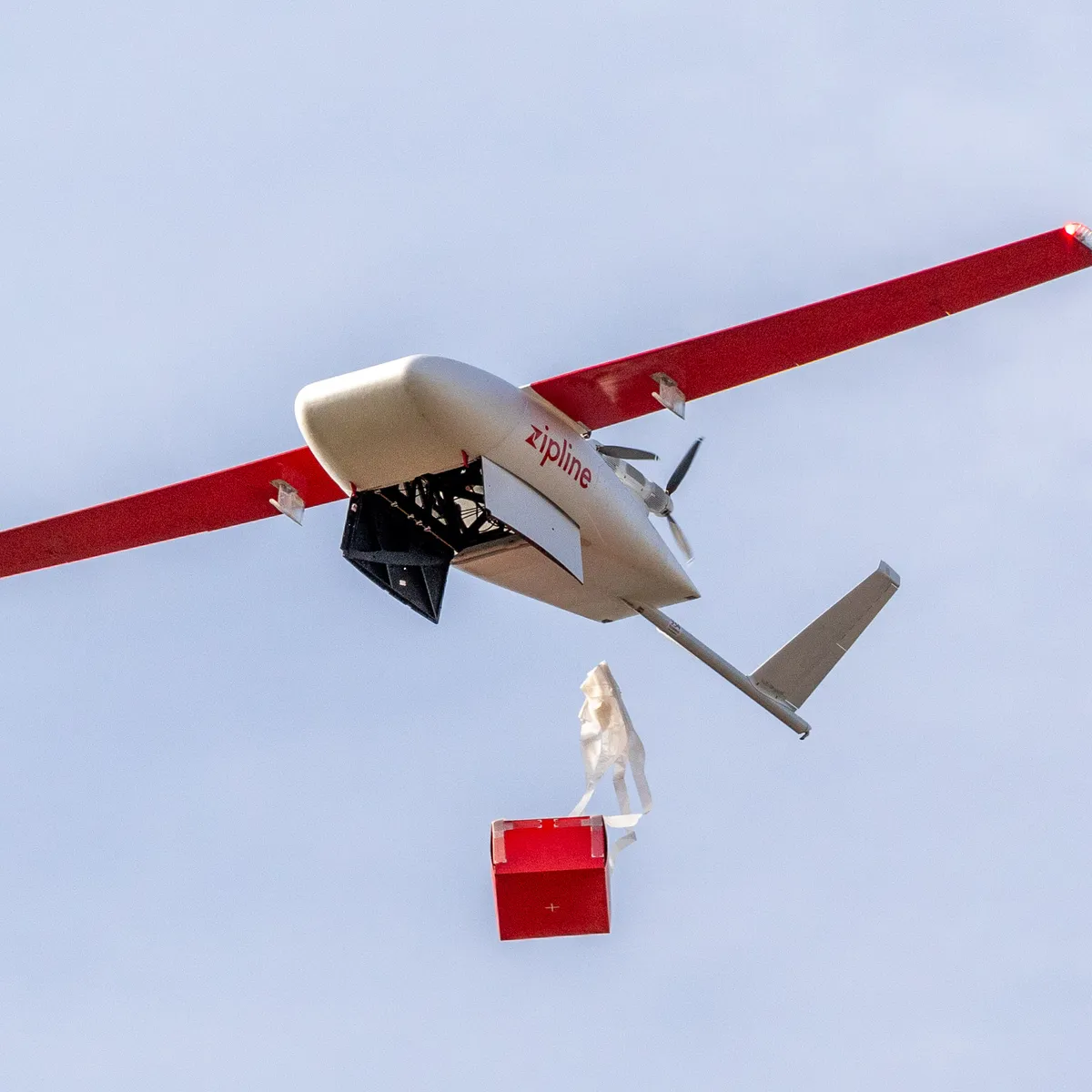
Zipline, a U.S.-based drone logistics company, is set to expand its operations in Nigeria by launching services in five additional states by the end of 2025. This move follows a memorandum of understanding signed with the Nigerian government in September 2024, enabling Zipline to use its cutting-edge drone technology to deliver essential medical supplies to underserved and remote areas. Currently operating in Bayelsa, Kaduna, and Cross River states, Zipline plans to increase its network to seven drone deployment stations, known as “nests.” These hubs play a crucial role in addressing Nigeria’s healthcare challenges, including poor infrastructure, counterfeit drugs, and delays in medical supply distribution. According to Akin Oyediran, Zipline Nigeria’s country manager, the expansion aims to strengthen healthcare delivery systems across different states. Each Zipline nest can support up to 300 drone flights daily, delivering life-saving supplies such as vaccines, anti-malaria drugs, and emergency medications within a 38,000 km² radius. The drones can complete deliveries in under 30 minutes, significantly faster than traditional methods that often take hours or even days due to poor road networks. Since entering the Nigerian market in 2022, Zipline has leveraged its expertise from operations in countries like Rwanda and Ghana. With funding exceeding $900 million and a valuation of $4.2 billion as of May 2023, the company is well-positioned to scale its services. Beyond healthcare, Zipline is exploring opportunities in agriculture and e-commerce logistics to further enhance supply chains across Nigeria. This expansion shows Zipline’s commitment to improving healthcare access for millions of Nigerians while laying the groundwork for broader applications of its innovative drone technology.

Zone hits ₦1 trillion milestone as blockchain gains traction in Nigeria’s banking sector
Zone, a Nigerian payment infrastructure company, has reached a groundbreaking milestone, processing over ₦1 trillion in transactions on its blockchain network between November 2022 and December 2024. This achievement, which includes 100 million transactions averaging ₦10,000 each, marks a significant step in integrating blockchain technology into Nigeria’s financial ecosystem. Transforming ATM and POS PaymentsZone initially focused on automated teller machine (ATM) transactions as a pilot for its blockchain-powered network. Despite the decline in ATM usage, transaction values dropped from ₦32.65 trillion in 2022 to ₦28.2 trillion in 2023, the company recorded notable success. Twelve banks currently use Zone’s blockchain for faster settlement rates on ATMs, with plans to expand further. In June 2024, Zone extended its blockchain to Point-of-Sale (POS) terminals, addressing persistent challenges like transaction failures and chargebacks. By August, it partnered with the Nigeria Inter-Bank Settlement System (NIBSS) to integrate POS transactions into its regulated blockchain ledger. This collaboration allows NIBSS to manage interactions between banks and POS terminals on Zone’s network, ensuring compliance and enhancing reliability. Balancing Innovation and RegulationZone’s success stems from its ability to align blockchain innovation with regulatory requirements. CEO Obi Emetarom explained that the company adopted a semi-decentralized approach to meet compliance standards while maintaining blockchain’s transparency and efficiency. This strategy has earned the trust of major financial institutions like Zenith Bank and UBA. The Central Bank of Nigeria (CBN) approved Zone’s partnership with NIBSS in December 2024, following delays caused by regulatory processes. Currently, Zone is testing its network to ensure data integrity before full-scale deployment. Zone plans to expand its services to account-to-account fund transfers, bringing blockchain technology closer to everyday Nigerians. With its innovative solutions and growing partnerships, the company is poised to redefine digital payments in Nigeria and potentially export its technology across Africa.

Nigerian drivers launch Simpliride to challenge Uber, Bolt with affordable subscription model
Nigerian ride-hailing drivers have launched SimpliRide, a homegrown app challenging industry giants like Uber, Bolt, and inDrive with a flat ₦500 ($0.33) daily subscription fee, a sharp departure from the commission-based models that deduct up to ₦15,000 ($10.03) monthly from drivers’ earnings. The move comes amid rising fuel costs, inflation, and long-standing dissatisfaction with existing platforms, signaling a potential shift in Nigeria’s gig economy dynamics. Frustrated by steep commissions and stagnant policies, drivers behind SimpliRide aim to create a fairer system. The app, available on the Google Play Store, offers separate interfaces for drivers and riders. Since its soft launch, the driver app has seen 500 downloads with positive reviews, though rider adoption remains modest at 100 downloads. “We’re tired of platforms that prioritize profits over people,” said a driver who requested anonymity. “With SimpliRide, we keep more of our earnings, especially now that fueling a car costs ₦180,000 ($120) weekly”2. This isn’t the first driver-led initiative, MyKab, launched in 2020, later evolved into the government-backed LagRide. However, SimpliRide marks the first direct challenge to multinational players in a market projected to grow by 12.56% annually, reaching $477 million by 2029. The App-Based Transporters of Nigeria (AUATON), a drivers’ union, has endorsed SimpliRide but denies direct involvement. Jolaiya Moses, AUATON’s National Treasurer, clarified, “The union isn’t behind the app, but we support its non-commission structure”. Industry insiders, however, claim AUATON holds a 40% stake, fueling speculation about its role. Skepticism persists among union leaders. Ibrahim Ayoade, AUATON’s General Secretary, questioned drivers’ capacity to manage the app: “Can drivers develop and sustain this? AUATON is a regulator, not a competitor”. SimpliRide enters a fiercely competitive arena. inDrive, recently ranked Nigeria’s #2 ride-hailing app, reported 6.1 million global downloads in December 2024 alone, leveraging its peer-to-peer pricing model. Meanwhile, established players like Bolt offer conditional health insurance, a perk SimpliRide aims to expand through partnerships. Analysts warn that network effects could hinder SimpliRide’s growth. “Ride-hailing thrives on user density. Without riders, even low fees won’t attract drivers,” said Timothy Oladimeji, inDrive’s Nigeria representative. The launch coincides with Nigeria’s push for fairer labor practices. In 2024, SimpliRide joined 11 other platforms to provide drivers health insurance covering surgeries, cancer treatments, and antenatal care, a landmark achievement for gig workers. Yet challenges loom. Inflation and regulatory hurdles persist, while platforms like Chowdeck, a food delivery startup, are cutting 68% of contract staff to automate operations. For SimpliRide, success hinges on balancing affordability with scalability. SimpliRide plans an official rider app launch in April 2025. If successful, it could inspire similar worker-led ventures across Africa’s gig economy. As urban populations swell and smartphone penetration deepens, Nigeria’s ride-hailing market remains a battleground for innovation, and survival. “This is about reclaiming control,” said a SimpliRide co-developer. “Drivers aren’t just labor; we’re stakeholders.”

Ahmadu Bello University set to overcome decades-long power crisis with 12MW solar plant
Ahmadu Bello University (ABU), Zaria, one of Nigeria’s largest tertiary institutions, is poised to resolve its persistent electricity challenges following the approval of a 12MW solar hybrid power plant funded by the Rural Electrification Agency (REA). The project, part of the federal government’s Renewed Hope Infrastructure Fund, will commence construction immediately and is slated for completion by December 2025. The REA, under its special intervention initiative, will fully fund the 12MW solar plant as a grant to ABU. Once operational, the facility will provide uninterrupted clean energy to the university’s academic buildings, research centers, student hostels, and administrative offices. REA Managing Director Alhaji Abba Abubakar Aliyu emphasized that the agency will collaborate closely with ABU to design a sustainable energy model, ensuring cost-effective operations and long-term maintenance. A term sheet formalizing the partnership is expected to be signed within weeks, with the university contributing minimally to cover future asset replacements and system upkeep. ABU Vice-Chancellor Prof. Kabiru Bala described the project as a “transformative intervention” during a recent visit to REA headquarters in Abuja. He highlighted the university’s monthly expenditure of over ₦85 million on grid electricity and diesel generators, which has strained budgets and disrupted academic activities for years. “This solar plant will not only stabilize our power supply but also redirect funds toward critical research and infrastructure development,” Prof. Bala stated. For over a decade, ABU has relied on Nigeria’s erratic national grid and expensive diesel generators, with frequent outages paralyzing laboratories, lecture halls, and medical facilities. The university’s 2025 announcement follows earlier stalled efforts, including a 2019 plan for a 10MW solar plant that never materialized due to funding gaps. The new initiative aligns with the REA’s Energizing Education Programme (EEP), which has deployed hybrid systems in seven universities since 2021, including Bayero University Kano’s 7.1MW plant, Africa’s largest off-grid solar hybrid facility. The ABU project advances Nigeria’s commitment to deriving 30% of its energy from renewables by 2030, as outlined by former Vice President Yemi Osinbajo during the 2021 commissioning of a 1.12MW plant at Abubakar Tafawa Balewa University. Unlike earlier EEP installations, which faced delays in activation, the REA has incorporated lessons from prior deployments, including modular designs and localized workforce training. REA’s recent successes, such as the 352kWp interconnected mini-grid in Nasarawa’s Toto community, demonstrate the agency’s refined approach to public-private partnerships. The Toto project, operational since November 2023, now powers 2,800 households and businesses through a hybrid system linked to the national grid. Upon completion, ABU’s solar plant will reduce the institution’s carbon footprint by an estimated 18,000 tons annually while saving ₦1.02 billion in yearly energy costs. The facility may also serve as a training hub for engineering students, mirroring the EEP’s female STEM training programs at other universities. Prof. Aliyu Rafindadi Sanusi, ABU’s Deputy Vice-Chancellor for Research, confirmed that the solar plant will integrate battery storage and smart metering infrastructure, enabling future energy sharing with neighboring communities. This interconnectivity model, pioneered in Toto, positions ABU as a potential anchor client for regional mini-grid expansions. The REA has concurrently accelerated its university electrification drive, with ongoing projects at the University of Lagos and Usmanu Danfodiyo University Sokoto anticipated to commission 8.5MW and 2MW systems, respectively, by mid-2026. ABU’s transition to solar energy marks a critical milestone in Nigeria’s renewable energy transition, offering a replicable blueprint for other institutions grappling with power shortages. As the December 2025 deadline approaches, stakeholders will monitor the project’s execution closely, particularly its integration with existing grid infrastructure and long-term sustainability mechanisms. Success here could catalyze further investments in academic energy solutions, aligning educational advancement with national climate objectives.

Google launches Hustle Academy 2025 to empower African SMEs
Google has announced the opening of applications for the 2025 edition of its Hustle Academy program, designed to support small and medium-sized businesses (SMBs) in Kenya, Nigeria, and South Africa. This initiative aims to bridge the gap in business skills and funding that often hinders the growth of African SMBs. The 2025 program will focus on AI-powered business training, equipping entrepreneurs with the skills to integrate AI into operations, enhance marketing strategies, and leverage AI insights for strategic growth. Participants will also receive training in core business fundamentals such as strategy, financial management, digital marketing, and leadership development. Eligible businesses must have been operational for at least one year and be seeking to expand. The program offers expert mentorship, practical case studies, and networking opportunities. Additionally, a new season of the “Hustle Academy Brings You” speaker series will feature inspiring stories from successful African entrepreneurs like Adenike Ogunlesi and Brian Jura. Applications for the free, virtual bootcamp are now open at g.co/hustleacademy. This initiative builds on the success of previous years, having supported over 15,000 SMBs since its launch in 2022.
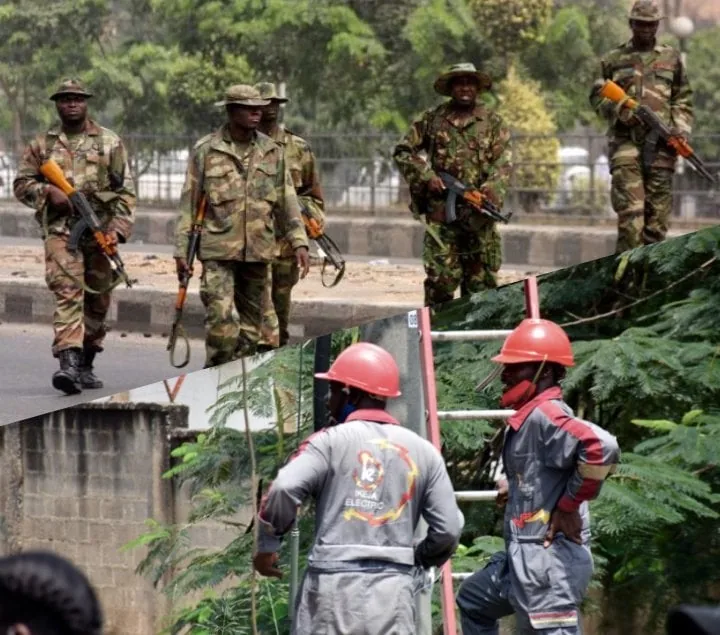
Air Force personnel storm Ikeja Electric offices, assault staff over power disconnection
The Nigerian Air Force (NAF) allegedly invaded the headquarters of Ikeja Electric Distribution Company (IKEDC) and its Oshodi business unit on Thursday, March 6, 2025, following a dispute over power disconnection to the NAF base in Lagos. The incident, which occurred in the early hours of Thursday, saw uniformed Air Force officers forcefully entering IKEDC premises, demanding immediate reconnection to the power grid. Eyewitnesses reported that when their demands were not met, the officers resorted to violence, causing significant damage to property and disrupting operations. Approximately 12 NAF personnel from the Logistics Command in Ikeja were involved in the invasion. The attackers reportedly assaulted IKEDC staff, with about 15 employees, including the Oshodi Business Unit’s Commercial Manager, allegedly battered and arrested. Personal belongings of staff, such as phones and laptops, as well as company vehicles and office equipment, were allegedly destroyed during the rampage. The situation took a dire turn when the officers allegedly searched for and located Mrs. Folake Soetan, the Chief Executive Officer of Ikeja Electric. Reports indicate that she was physically assaulted and forcibly removed from the premises in a vehicle. While the extent of her injuries remains unclear, sources suggest she was later released following intervention from security operatives. The conflict stems from IKEDC’s disconnection of power to the NAF base in Lagos, reportedly due to unpaid electricity bills amounting to approximately ₦4 billion13. An agreement had previously been reached for NAF to pay IKEDC ₦60 million monthly for 10-12 hours of daily electricity supply. IKEDC’s Head of Corporate Communications, Kingsley Okotie, stated that the disconnection was not solely due to financial reasons but also because of other operational concerns, including safety issues for IKEDC personnel. The Air Officer Commanding Logistics Command, AVM Adeniran Ademuwagun, described the invasion as “unfortunate”. However, official statements from both NAF and IKEDC are still pending, as efforts to reach their spokespersons have been unsuccessful. The incident has raised serious questions about the relationship between military institutions and public utility providers, as well as the appropriate channels for resolving such disputes.