
Alibaba Group has announced plans to invest approximately $53 billion over the next three years in AI infrastructure. This monumental commitment marks the largest private computing project to date, underscoring Alibaba’s ambition to become a global leader in AI and cloud computing. The investment will primarily focus on expanding data centers and enhancing cloud computing capabilities, positioning Alibaba to compete with tech giants like Microsoft, Google, and OpenAI. CEO Eddie Wu emphasized the company’s focus on Artificial General Intelligence (AGI), a vision of AI that mimics human cognition. Despite challenges posed by U.S. restrictions on semiconductor exports, Alibaba sees AI as a key driver of future growth. The move follows a period of regulatory scrutiny and signals a potential thaw in relations with the Chinese government. Alibaba’s cloud division will be central to this initiative, aiming to provide critical infrastructure for businesses developing AI applications. The company has already seen success with its Qwen AI model and has partnered with global tech firms like Apple

Bybit recovers from $1.4 billion hack, restores full client reserves
Cryptocurrency exchange Bybit has announced a full recovery from a devastating $1.4 billion hack, one of the largest thefts in crypto history. The attack, believed to have been carried out by the North Korea-backed Lazarus Group, targeted Bybit’s multisignature cold wallet, resulting in a massive loss. However, through a combination of strategic moves, the company has managed to restore its reserves and reassure its users. To bridge the gap left by the hack, Bybit took swift and decisive action. The exchange purchased 266,694 ETH (worth approximately $742 million) to stabilize its reserves. This large-scale acquisition contributed to a 6% rebound in Ethereum prices after a recent market dip. In addition to direct purchases, Bybit received significant support from institutional investors and whale deposits. Blockchain data shows that the exchange secured 446,870 ETH (worth roughly $1.23 billion) from various sources: A single over-the-counter transaction brought in 157,660 ETH (valued at $437.8 million). Another 109,033 ETH ($304.1 million) came from centralized and decentralized exchanges. Institutional contributors included Bitget (40,000 ETH worth $106 million), MEXC (12,653 stETH worth $33.9 million), and other entities like Mirana Ventures and Fenbushi Capital. These efforts allowed Bybit to fully recover its reserves and ensure that all client assets remain secure. Bybit CEO Ben Zhou confirmed the recovery in a statement on social media platform X (formerly Twitter), saying the exchange has “fully closed the ETH gap.” Zhou also announced plans to release an audited proof-of-reserves report soon. Using a Merkle tree system, this report will verify that all client assets are backed on a 1:1 basis, underscoring Bybit’s commitment to transparency and security. The attack on Bybit appears to be part of a broader pattern of crypto thefts linked to the Lazarus Group. Blockchain investigator ZachXBT found on-chain evidence connecting the Bybit hack to a recent breach at Phemex, another cryptocurrency exchange. The attackers reportedly used similar tactics to merge stolen funds across both incidents. While the hack was a major setback for Bybit, the exchange’s rapid response and transparent recovery efforts have helped restore user confidence. With plans to publish an audited report and maintain full client asset backing, Bybit is positioning itself as a resilient player in the volatile world of cryptocurrency.
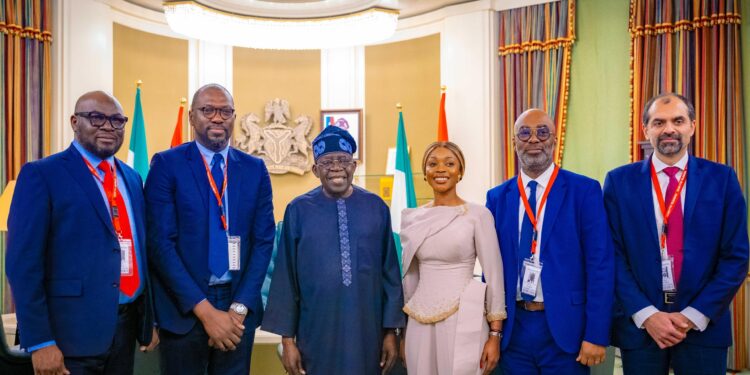
President Tinubu pledges support for Flutterwave’s digital economy expansion and SME growth
President Bola Ahmed Tinubu has reaffirmed his administration’s commitment to supporting Flutterwave, a leading African financial technology company, in its efforts to expand the digital economy, empower youth, and promote small and medium-sized enterprise (SME) development. During a strategic meeting at the Presidential Villa in Abuja, President Tinubu engaged with Flutterwave’s leadership to discuss initiatives aimed at fostering job creation, entrepreneurship, and economic diversification. The meeting builds on a recent Memorandum of Understanding (MoU) between Flutterwave and the Federal Ministry of Youth Development. This partnership focuses on mentorship programs, access to start-up funding, and skill development for young Nigerians, key components of Tinubu’s Renewed Hope Agenda. The collaboration between Flutterwave and government agencies such as the National Youth Service Corps (NYSC) and the Citizenship and Leadership Training Centre (CLTC) is set to provide young entrepreneurs with technical training, leadership development, and business funding. The initiative aims to strengthen Nigeria’s entrepreneurial ecosystem by leveraging digital innovation to create sustainable employment opportunities. Hon. Ayodele Olawande, Nigeria’s Minister for Youth Development, highlighted the importance of this initiative in equipping young Nigerians with essential entrepreneurial skills. Similarly, the Small and Medium Enterprises Development Agency of Nigeria (SMEDAN) has partnered with Flutterwave to enhance financial access for micro, small, and medium-sized enterprises (MSMEs). This includes offering advanced digital payment solutions, working capital loans, and capacity-building programs to help Nigerian businesses compete globally. Flutterwave is also collaborating with the National Information Technology Development Agency (NITDA) to lead digital transformation initiatives aimed at increasing technology adoption among SMEs. Kashifu Inuwa Abdullahi, Director-General of NITDA, emphasized that improving digital infrastructure is critical for economic growth. Flutterwave CEO Olugbenga Agboola reaffirmed the company’s dedication to empowering Nigerian youth and businesses through technology-driven solutions. He noted that public-private partnerships are essential for fostering innovation and achieving long-term economic impact. Tinubu’s Vision for Nigeria’s EconomyPresident Tinubu praised Flutterwave’s leadership in the fintech sector as an example of how homegrown innovation can drive national progress. He stressed his administration’s commitment to removing obstacles that hinder business growth, positioning Nigeria as a global leader in fintech. “Together, we’re removing barriers so businesses can thrive,” Tinubu stated. “Nigeria is open for business.” With operations in over 30 countries across Africa and beyond, Flutterwave continues to play a pivotal role in diversifying Nigeria’s economy by providing cutting-edge payment infrastructure services. The company is also seeking support as it prepares for a potential listing on the Nigerian Exchange (NGX), further solidifying its position as a global fintech leader.

FG to monitor third mainland bridge via CCTV from Abuja
The Federal Government has announced plans to remotely monitor activities on the Falomo-Third Mainland Bridge and its ramps using newly installed Closed Circuit Television (CCTV) cameras. This surveillance will be conducted from Abuja, marking a significant step in enhancing security and traffic management on one of Lagos’ busiest thoroughfares. Minister of Works, Senator David Umahi, revealed this development during a stakeholder engagement on the Lagos-Calabar Coastal Highway project. The initiative extends beyond mere surveillance, as it’s part of a broader rehabilitation effort that has seen improvements from the Third Mainland Bridge to Falomo. “We’ve extended the bridge rehabilitation beautifully from Third Mainland Bridge down to Falomo,” Umahi stated. “We’ve installed street lights and CCTV cameras. Whatever you’re doing on that stretch of Falomo to Third Mainland Bridge and the ramps, we’re seeing you. It’s on camera, and we’re routing it down to Abuja.” This system mirrors the one already in place on the Second Niger Bridge, allowing officials to monitor traffic flow and respond quickly to any incidents. The minister also expressed concern about excessive speeding on the newly rehabilitated bridge, urging motorists to slow down. “The speed there is terrible. If we put speed bumps, it will create heavy hold-ups on the bridge,” he warned. To enforce speed limits, officials will rely on footage from the installed CCTV cameras. This development comes after the Third Mainland Bridge reopened in April 2024 following five months of extensive repairs. The government had previously set a speed limit of 80 km/hr on the bridge to reduce the risk of accidents.

Gmail shifts away from SMS-based authentication
Gmail is set to replace SMS-based authentication with a QR code system. This change is part of Google’s broader strategy to enhance user safety by moving away from traditional two-factor authentication methods that have proven vulnerable to phishing and fraud. For years, Gmail has relied on SMS codes to verify user identities and prevent abuse. However, this method has been exploited by cybercriminals, who can intercept or manipulate these codes, especially if they can trick mobile carriers into transferring phone numbers. The rise of scams like traffic pumping, where fraudsters generate revenue by triggering mass authentication messages, has further highlighted the need for more secure alternatives. Gmail’s new QR code system aims to reduce these risks by eliminating the need for users to receive and enter security codes. Instead, users will see a QR code on their screen during authentication, which they can scan using their phone’s camera. This approach not only reduces the risk of phishing but also removes the reliance on mobile carriers for security. While Google has not announced a specific rollout date, users can expect to stop receiving six-digit SMS verification codes in the coming months. The shift aligns with the industry’s move towards more secure authentication methods, such as passkeys, which offer a biometric approach to logging in. As technology evolves, so do the threats to our digital security. Gmail’s transition to QR codes is a step forward in protecting users from increasingly sophisticated cyber threats. With this change, Gmail users can look forward to a safer and more secure experience online.

NIGCOMSAT empowers North-East youths with space-tech hackathon
The Nigerian Communications Satellite (NIGCOMSAT) Limited has launched a regional Space-Tech Hackathon in the North-East region. The event, themed “Building Grassroots Innovation in Satellite Technology,” is being held from February 24 to 28 in Yola, Adamawa State. This empowering program is designed to engage and empower university students, local innovators, and young professionals from six states in the region, including Borno, Taraba, Bauchi, Gombe, Yobe, and Adamawa. Participants will undergo comprehensive training in Very Small Aperture Terminal (V-SAT) technology and work on identifying community challenges that can be addressed using space technology, leveraging NIGCOMSAT’s communication satellites and the National Space Research and Development Agency’s (NASRDA) satellites. The hackathon is co-hosted by the Adamawa State Government in collaboration with NIGCOMSAT Ltd. Winning teams will transition into the NIGCOMSAT Accelerator Programme 2025, where they will refine their solutions and receive mentorship to bring their products to market. This initiative aims to drive sectoral growth, promote satellite technology awareness, and create economic and social impact by equipping young Nigerians with skills to address community challenges and reduce youth unemployment