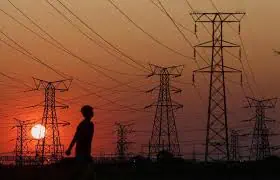
Residents of Abuja are bracing for a weekend of power outages as the Transmission Company of Nigeria (TCN) embarks on essential maintenance work at one of its key substations. The planned annual preventive maintenance exercise is set to take place at the Apo 132/33 kilovolt transmission substation, affecting several areas across the Federal Capital Territory. The maintenance, scheduled for Saturday and Sunday from 9:00 a.m. to 4:00 p.m., will involve two critical transformers, TR3 and TR4, at the substation. These transformers play a vital role in supplying bulk power to the Abuja Electricity Distribution Company (AEDC), which in turn distributes electricity to homes and businesses. On Saturday, residents in areas such as The National Hospital G2 injection station, Garki, Area 1, and Asokoro can expect disruptions in their electricity supply. Meanwhile, on Sunday, communities including APO Legislative Quarters, APO Resettlement, Gudu, APO Mechanic Village along with surrounding neighborhoods will experience similar outages. TCN’s General Manager for Public Affairs, Mrs. Ndidi Mbah explained that these interruptions are unavoidable due to the nature of the work involved. She assured residents that once the maintenance is completed each day; power supply would be restored immediately. While this may cause inconvenience for some residents who have grown accustomed to more reliable services recently improved by TCN’s efforts elsewhere in Nigeria, such as commissioning new transformers, the company emphasizes that these exercises are crucial for ensuring long-term reliability and efficiency of power distribution systems. In recent months Abuja has seen significant improvements with major projects like relocating transmission towers along road dualization projects by FCDA contributing positively towards stabilizing energy supplies across various parts of FCT despite occasional disruptions caused by necessary technical interventions like this one happening now over weekends when demand typically drops slightly compared with weekdays peak hours usage patterns observed historically within urban settings globally including here locally too where infrastructure remains under constant upgrade cycles aimed ultimately enhancing overall consumer satisfaction levels overtime gradually moving forward progressively into future times ahead hopefully soon enough

Federal government empowers 270 educators with digital literacy skills
The Federal Government has embarked on several initiatives aimed at equipping educators and students with the skills necessary for global competitiveness. Recently, a significant milestone was achieved with the training of 270 technical teachers in digital literacy and trade-specific skills. The intensive 21-day program, held in Ibadan, focused on bridging the gap between theoretical knowledge and practical applications. This effort is part of a broader strategy to strengthen technical and vocational education (TVE), which plays a pivotal role in preparing students for real-world challenges. According to Dr. Olatunji Alausa, Minister of Education, who was represented by Dr. Muyibat Olodo, Director of Technology and Science Education, well-trained educators are crucial in shaping the future of students by fostering innovation and adaptability. “As technological advancements reshape industries and create new opportunities,” Dr. Alausa emphasized, “the need for skilled professionals who can adapt and innovate becomes paramount.” The Oyo State Commissioner for Education, Prof. Salihu Adelabu, commended these efforts while urging participants to apply their newfound knowledge effectively. He highlighted that Oyo State has revamped its technical colleges to support this initiative fully. Furthermore, Mrs Blessing Ogwu from the Innovation Development and Effectiveness in Acquisition of Skills (IDEAS) project noted that such training programs are cost-effective ways to improve educational outcomes without compromising equity. In addition to teacher training programs like this one being implemented across Nigeria’s educational landscape is an upcoming curriculum reform set for 2025: introducing subjects such as plumbing alongside digital literacy into primary school curricula will help prepare younger generations with essential life skills early on.

Bybit suffers historic $1.4 billion crypto hack
Cryptocurrency exchange Bybit has been hit by one of the largest hacks in history, losing over $1.4 billion worth of Ethereum and related tokens. The attack targeted a cold wallet, exploiting advanced phishing techniques to manipulate smart contract logic and drain funds. Bybit CEO Ben Zhou explained that hackers used a sophisticated “masked” transaction method to deceive signers into approving malicious operations without realizing it. This allowed them to gain control of the cold wallet and transfer all its contents to an unknown address. The hack sent shockwaves through the crypto market, causing Ether’s price to drop by about 4% initially before rebounding slightly due to speculation about potential buybacks. However, after clarifications from Bybit that no large-scale ETH purchases were planned, market sentiment turned bearish amid concerns over selling pressure from the hacker. Despite this setback, Bybit remains solvent with all client assets fully backed. The stolen funds are being tracked across multiple wallets by blockchain security teams.

EFCC returns over $120,000 and N70 million to fraud victims from the US, Spain, and Switzerland
The Economic and Financial Crimes Commission (EFCC) has returned $120,548.43 and N70,602,841.46 to victims of fraud from the United States, Spain, and Switzerland. The restitution, which also included luxury vehicles and real estate documents, was handed over to representatives of the victims at the EFCC headquarters in Abuja on Friday. Speaking at the event, EFCC Chairman Ola Olukoyede reaffirmed Nigeria’s commitment to combating financial crimes and ensuring justice for victims. “We don’t just recover; we restitute. Once proceeds of crime are recovered, the most responsible thing to do is to return them to the victims,” he said. He also called on foreign countries holding Nigeria’s recovered assets to expedite their return. Among the restituted items were $1,300 and N30 million handed to Maria Velasco, Spain’s Acting Ambassador to Nigeria, for a Spanish victim; $100,011.43 given to Florent Geel of Switzerland for a Swiss national; and funds alongside property transferred to Charles Smith of the FBI for American victims. The EFCC emphasized that this action demonstrates Nigeria’s dedication to international collaboration in fighting financial crimes while restoring confidence in its anti-corruption efforts.

Access Bank to shut down digital channels for system upgrade this weekend
Access Bank Plc, a subsidiary of Access Corporation, is set to undergo a significant upgrade to its core banking system, Flexcube by Oracle, beginning this weekend. This marks the second major system upgrade for the bank in just four months, following a similar update in October 2024. The upgrade process will commence on Friday, February 21, 2025, with branches closing early at 2 PM and all internal processing systems shutting down by 5 PM. Customers are advised that digital channels will be temporarily unavailable during the upgrade period. Specifically, services will be disrupted on Saturday, February 22, from 2:00 AM to 3:00 AM and again on Sunday, February 23, from 2:00 AM to 1:00 PM. Despite the inconvenience, Access Bank assures customers that its USSD code – *901#, will remain operational for essential transactions such as funds transfers, bill payments, and purchasing airtime and data during the upgrade. Access Bank has emphasized that the upgrade aims to enhance security and improve overall service functionality for its millions of customers. However, past upgrades at various Nigerian banks have raised concerns among customers about potential glitches and service disruptions. For instance, after GTBank’s recent system transition, many users reported issues such as missing funds and transaction discrepancies. In light of the upcoming upgrade, Access Bank encourages customers to plan their transactions accordingly. It is recommended that customers avoid making transactions within three hours before and after the scheduled upgrade times. For urgent transactions during this period, utilizing the USSD service is advisable.

Twenty foreign nationals charged by EFCC with cybercrime in plot to destabilize Nigeria’s economy
The Economic and Financial Crimes Commission (EFCC) has arraigned 20 foreign nationals before the Federal High Court in Lagos on charges of cybercrime and attempts to destabilize Nigeria’s economy. The defendants include 15 Filipinos, one Indonesian, and four Chinese nationals, who were part of a larger group arrested in December 2024 during a raid on the Big Leaf Building in Victoria Island. The EFCC accused the defendants and a linked company, Genting International Co. Limited, of orchestrating schemes involving identity theft by recruiting Nigerian youths to impersonate foreign nationals for financial gain. These activities allegedly violated sections of the Cybercrimes (Prohibition, Prevention, Etc.) Act, 2015 (as amended in 2024). During the court session presided over by Justice Musa Kakaki, all defendants pleaded not guilty to the charges. The prosecution requested their remand in custody pending trial, a motion opposed by defense counsel Bridget Omoteno and B.A. Ukpai, who sought time to explore a plea bargain. However, Justice Kakaki ordered their remand and adjourned the trial to March 18 and 20, 2025.