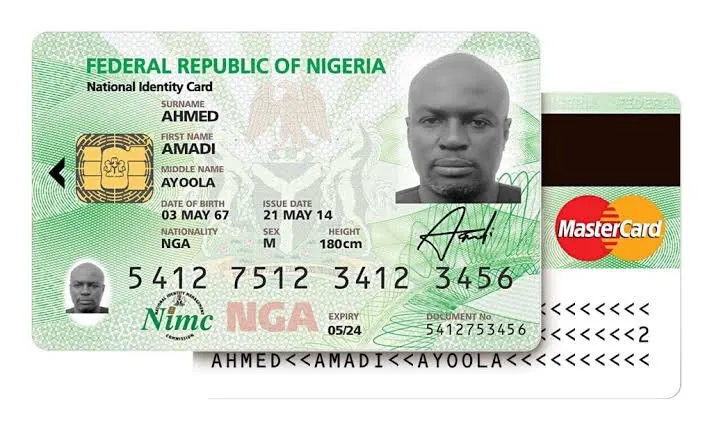
The National Orientation Agency of Nigeria has unveiled the General Multipurpose National Identity Card (GMPC), to simplify identification for its citizens. This new card is set to replace several existing identification cards, making it easier for Nigerians to access a variety of services. The GMPC is designed to serve multiple functions, combining the roles of various cards into one. This means that Nigerians will no longer need to carry numerous forms of identification. Instead, the GMPC will facilitate financial transactions, government services, and even travel-related needs, all in one convenient card. To ensure that the GMPC is fully functional for financial transactions, the National Identity Management Commission (NIMC) has teamed up with key players in the financial sector, including the Central Bank of Nigeria (CBN) and the Nigeria Inter-bank Settlement System (NIBSS). This collaboration aims to create a seamless integration with Nigeria’s financial systems, allowing for smoother payments and enhanced access to services. What’s more, the GMPC will be backed by the AFRIGO card scheme, a domestic payment system developed by NIBSS. This initiative not only promotes the use of local financial infrastructure but also reduces reliance on foreign payment systems, marking a step toward greater financial independence for Nigeria. For those interested in obtaining the GMPC, applications can be submitted through an online self-service portal, at NIMC offices, or via participating banks. Applicants will need to provide their National Identification Number (NIN) as part of the process. Once approved, the card will be issued by the applicant’s bank, similar to how debit and credit cards are currently issued. After issuance, cardholders have the option to pick up their GMPC at designated centers or request home delivery for an additional fee.The National Orientation Agency aims to provide Nigerians with a more efficient and versatile means of identification while improving access to essential services. The GMPC promises to make life easier for citizens by consolidating multiple identification needs into a single card.
FG’s revenue from fintech transactions hits record N31.2 billion in december 2024
The Federal Government’s decision to extend the Electronic Money Transfer Levy (EMTL) to fintech platforms like OPay, PalmPay, and Moniepoint has paid off handsomely, with revenue from the levy hitting an all-time high of N31.2 billion in December 2024. This marks a staggering 107% increase compared to the N15.046 billion collected in November 2024. According to data released by the Federation Account Allocation Committee (FAAC), the EMTL contributed significantly to the total revenue of N1.424 trillion shared among the Federal, State, and Local Governments for December. The levy, which applies to electronic transfers of N10,000 and above, was introduced as part of the Finance Act 2020 but was recently extended to cover fintech transactions starting December 1, 2024. The EMTL is a N50 charge applied to electronic money transfers or receipts in Nigeria. However, there are some exemptions:Transfers below N10,000Transfers between accounts owned by the same person within the same bankDeposits made into one’s own accountThe revenue generated from this levy is shared among the three tiers of government: the Federal Government receives 15%, States get 50%, and Local Governments take 35%. Before December 2024, many Nigerians enjoyed free or low-cost transactions on fintech platforms. However, with the inclusion of fintechs in the EMTL framework, customers now pay the N50 levy on qualifying transactions. Platforms like OPay have clarified that they do not benefit from this charge; it is remitted entirely to the Federal Government.This move aligns with the government’s broader strategy to increase its revenue base amid economic challenges. The sharp rise in EMTL revenue in December suggests that extending the levy to fintech platforms was a highly effective decision.What This Means for NigeriansWhile this development has boosted government coffers, it has also ended the era of fully free transactions on most fintech platforms. Customers are now feeling the pinch of additional charges on their transactions, especially as inflation remains high at 34.8% as of December 2024. The success of this initiative signals that fintechs will continue playing a pivotal role in Nigeria’s financial ecosystem and revenue generation efforts. With projections for EMTL revenue set at N230 billion for 2025, it’s clear that electronic transactions will remain a critical focus area for government taxation policies.For now, Nigerians can expect these deductions to remain a part of their digital banking experience as the government seeks sustainable ways to fund its operations and development projects

Google launches fully funded ai scholarships for african students
Google has announced the opening of applications for the 2025 DeepMind AI for Science Scholarships, a fully funded program designed to support African students pursuing postgraduate studies in artificial intelligence, machine learning, and mathematical sciences. The scholarships will enable students to study at the prestigious African Institute for Mathematical Sciences (AIMS), covering all tuition fees, living expenses, and research costs. Scholars will also receive relocation support, access to essential resources like computing facilities and internet, and mentorship from experts at Google DeepMind.In addition to financial support, recipients will have the chance to attend AI-related conferences and events hosted by Google DeepMind, offering valuable networking opportunities and exposure to cutting-edge developments in the field. To be eligible for the scholarship, applicants must meet the following requirements:Be African citizens or residents at the time of application.Hold a completed four-year undergraduate degree or a three-year degree with an honors year by August or December 2025.Have an academic background in mathematics, physics, computer science, statistics, engineering, or related fields with strong computational components.Not have previously received an AIMS scholarship. Interested candidates must submit their applications by March 21, 2025, through the official AIMS application portal at apply.aims.ac.za. The application process includes submitting a completed form, a CV, academic transcripts, a motivation letter (500 words), and responses to mathematics and coding problems provided on the portal.Shortlisted candidates will complete additional problem-solving tasks before being invited for online interviews in May 2025. This initiative underscores Google’s commitment to nurturing talent in Africa and advancing innovation in artificial intelligence and science. By providing financial support and mentorship, the program aims to equip scholars with the skills needed to lead groundbreaking research and solve real-world challenges using AI.

1GB of Data to Cost More as NCC Approves 50% Tariff Hike for MTN, Airtel, Others
The cost of staying connected in Nigeria is about to rise as the Nigerian Communications Commission (NCC) has approved a 50% increase in tariffs for telecom services like calls, SMS, and data. This decision, announced on Monday, January 20, 2025, comes after telecom giants such as MTN and Airtel requested tariff adjustments to cope with rising operational costs. For context, this means that the price of 1GB of data, which currently ranges between ₦300 and ₦600, could now climb anywhere between ₦450 and ₦900, depending on your service provider. The NCC explained that this is the first tariff adjustment since 2013. Over the years, telecom operators have faced skyrocketing costs due to inflation, foreign exchange challenges, and other economic pressures. While the operators initially pushed for a 100% increase, the NCC capped it at 50% to cushion the impact on consumers.In a statement signed by Reuben Muoka, NCC’s Director of Public Affairs, the Commission emphasized that the adjustment is necessary to ensure that telecom companies can continue providing quality services while investing in infrastructure and innovation. If you’re a regular user of mobile data or make frequent calls and send SMS messages, you’ll likely feel the pinch in your pocket. For example:A 1GB data plan that used to cost ₦500 may now cost up to ₦750.Call rates and SMS charges are also expected to increase proportionally.However, the NCC has mandated that network providers implement these changes transparently and inform customers about the new rates. They are also required to demonstrate improvements in service delivery, such as better network quality and wider coverage. The NCC said it arrived at this decision after consulting with stakeholders across both public and private sectors. While acknowledging the financial strain this may place on Nigerians already dealing with economic challenges, the Commission stressed that sustaining the telecom industry is critical for Nigeria’s digital economy.“The NCC recognizes the financial pressures faced by Nigerian households and businesses,” said Muoka. “To this end, we’ve ensured that these adjustments are fair and balanced to protect consumers while supporting operators.” Telecom operators are expected to roll out these new tariffs soon, though no exact date has been announced yet. Consumers are advised to monitor updates from their service providers for specific details on how this will affect their plans.While this development may not be welcome news for many Nigerians, it highlights the growing challenges faced by industries trying to navigate Nigeria’s tough economic landscape.
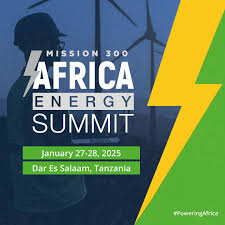
Africa energy summit 2025: Bold mission to light up 300 million lives by 2030
The World Bank and African Development Bank (AfDB) have announced an ambitious plan to bring electricity to 300 million Africans by 2030. This transformative initiative, dubbed Mission 300, will be the centerpiece of the Africa Energy Summit 2025, scheduled to take place on January 27–28 in Tanzania’s bustling capital.The summit is expected to draw global attention as leaders from across the continent and beyond come together to address one of Africa’s most pressing challenges. With nearly 600 million people, 83% of the world’s population without electricity, still living in darkness, the urgency for action has never been greater. “The time to act is now,” said Franz Drees-Gross, World Bank Director of Infrastructure for West Africa, during a recent media briefing. “Mission 300 represents not just an ambitious target but a movement… creating a lasting impact that will power Africa’s growth and enable millions to access essential services electricity provides.” Launched in April 2024, Mission 300 is a collaborative effort involving the World Bank, AfDB, and other global partners. It seeks to combine traditional grid expansion with innovative off-grid solutions tailored for remote areas. The initiative also prioritizes renewable energy and sustainable financing models to ensure long-term success. The two-day summit will culminate in the signing of the Dar es Salaam Energy Declaration, a landmark agreement where participating countries will commit to accelerating energy access and adopting clean energy solutions. Nations such as Nigeria, Côte d’Ivoire, and the Democratic Republic of Congo are expected to pledge reforms in five critical areas:Affordable Power Generation: Scaling up low-cost electricity production.Regional Energy Integration: Strengthening cross-border energy trade for efficiency.Expanded Energy Access: Reaching underserved rural communities.Private Sector Investment: Creating an environment that attracts private capital.Utility Modernization: Enhancing the resilience and efficiency of national utilities. The initiative has already secured significant backing. The Global Energy Alliance for People and Planet (GEAPP) and The Rockefeller Foundation have pledged $10 million toward a technical assistance facility for energy projects in 11 African countries. Additionally, financial institutions like the International Finance Corporation (IFC) are expected to announce new investment vehicles aimed at boosting private sector participation in renewable energy.“This initiative stands out for its ‘all-hands-on-deck’ approach,” said Sarvesh Suri, IFC Director for Infrastructure in Africa. “Institutions are working hand-in-hand to deliver on this ambitious agenda.” With just five years left until the 2030 deadline, stakeholders acknowledge the enormity of the task ahead. Daniel Schroth, AfDB’s Director for Renewable Energy and Energy Efficiency, emphasized the importance of swift action: “It’s a tight journey because 2030 is only five years away, and we have to deliver not expected connections but actual connections to 300 million people.”The summit will also showcase success stories from across Africa, highlight innovative solutions, and foster partnerships among governments, private investors, and development organizations. The Africa Energy Summit is set to attract over 1,000 participants, including 13 African Heads of State, philanthropists, private sector leaders, and international development partners. Together, they will explore strategies to scale up energy access while transitioning the continent toward clean and affordable power.As Africa stands on the brink of an energy revolution, this summit could mark a turning point in its journey toward economic transformation and improved quality of life for millions. Stay tuned as we bring you updates from Dar es Salaam on this historic mission to light up Africa!
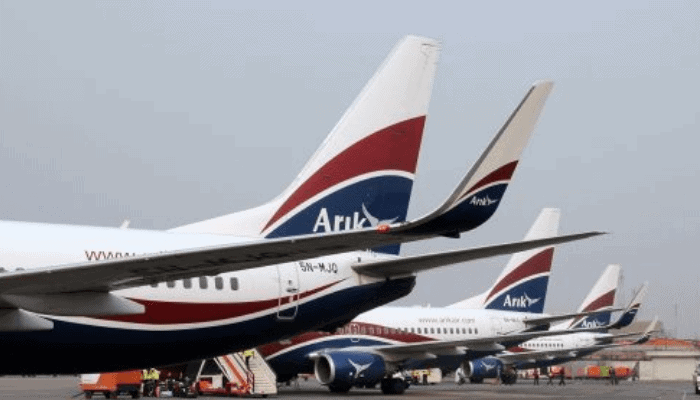
Arik air shareholders dispute AMCON’s N227.6 billion debt claim, accuse corporation of mismanagement
Shareholders of Arik Air have strongly refuted claims by the Asset Management Corporation of Nigeria (AMCON) that the airline owes a staggering N227.6 billion. In a statement released on Saturday, the shareholders accused AMCON of spreading misinformation and mismanaging the airline’s assets since taking over its operations in 2017.The shareholders, represented by spokesperson Godwin Aideloje, described AMCON’s debt claim as part of a deliberate campaign to divert attention from its alleged failures. They linked the timing of this claim to an upcoming court case scheduled for Monday, January 20, 2025, where former AMCON Managing Director Ahmed Kuru and other officials are set to be arraigned over their handling of Arik Air’s receivership. “Where Are the Planes?” Shareholders Demand Answers The shareholders criticized AMCON for reducing Arik’s fleet from 30 aircraft at the time of takeover to just three currently in operation. They alleged that several planes were abandoned in poor conditions abroad, including one seized in Lithuania and others left in South Africa and Ethiopia. Additionally, they claimed that 24 aircraft engines sent abroad for maintenance in 2019 have yet to be returned, while spare parts and ground equipment have gone missing under AMCON’s watch.“AMCON inherited a thriving airline with 30 aircraft. Nigerians deserve to know how this was reduced to just three planes flying today,” the statement read. “The public can testify to the drastic reduction in routes, the loss of key international slots like London Heathrow and JFK New York, and the collapse of Arik’s reputation.” Before AMCON’s intervention, Arik Air was widely regarded as a leader in Nigeria’s aviation sector, operating extensive domestic and international routes. The shareholders argued that the airline was not insolvent or mismanaged prior to its takeover. They pointed to audited financial reports from 2014 and management accounts from 2015 as evidence that Arik was financially stable before AMCON stepped in.They also accused AMCON of failing to comply with a Federal High Court ruling from March 2023, which required it to file audited financial reports for its period of receivership. “AMCON has not only mismanaged Arik but also failed to account for its actions during these eight years,” they alleged. The shareholders have served AMCON with a 90-day pre-action notice as they prepare to take legal action over what they describe as the “mismanagement and destruction” of Arik Air. They also dismissed AMCON’s claim that the takeover was mandated by the federal government, calling it a gross misrepresentation.In response to allegations that Arik owes Union Bank and other creditors, the shareholders maintained that these claims are still being contested in court and should not be used to justify AMCON’s actions. This latest development adds another layer of complexity to Arik Air’s troubled history under AMCON receivership. Once Nigeria’s largest airline, Arik is now a shadow of its former self, with most of its domestic routes shut down and all international operations suspended.As both parties prepare for legal battles ahead, Nigerians will be watching closely to see how this dispute unfolds, and whether it will bring any hope for the revival of one of the country’s most iconic airlines.