
The Department of State Services (DSS) has demanded that X, formerly known as Twitter, deactivate the account of Omoyele Sowore, publisher and former presidential hopeful, within 24 hours. This action follows a controversial tweet deemed threatening to Nigeria’s national security. Sowore posted a message, on August 25, 2025, at about 11:38 PM local time, criticizing President Bola Tinubu. The secret police flagged the remark for its potential to incite unrest. According to an official letter signed by B. Bamigboye on behalf of the DSS Director-General, the tweet accused the President of dishonesty regarding corruption claims. The message emphasized concerns that the content might provoke violent reactions, particularly from Tinubu’s supporters who had already begun public demonstrations. Government officials argued that the post disrespected the President’s reputation and jeopardized the nation’s image internationally. The petition referenced several sections of Nigerian law, emphasizing that spreading false information and inflammatory statements online is illegal. They cited the Criminal Code Act, the Cyber Crimes Act 2025, and the Terrorism (Prevention and Prohibition) Act 2022 as relevant legal frameworks that criminalize such behaviour and hold both the author and the hosting platform accountable. Despite the seriousness of the allegations, Sowore had yet to respond to the government’s request by the time this report was published. The DSS stressed that failure to comply could lead to comprehensive enforcement actions to uphold security and public order. This development raises eyebrows about freedom of expression and the limits of online speech in Nigeria’s digital landscape.

Meta and X violate Nigeria’s Internet Code, face potential NITDA penalties
Social media giants Meta and X have breached Nigeria’s Interactive Computer Service Platforms Code by failing to submit mandatory content moderation reports for 2024, putting them at risk of sanctions from the National Information Technology Development Agency (NITDA). According to the latest compliance assessment from NITDA, Meta, the parent company of Facebook and Instagram, and X, formerly known as Twitter, have neglected critical obligations under the Nigerian Internet Code of Practice. While Meta has fulfilled some requirements like local incorporation, physical presence, and tax filings, it has not delivered its content moderation report in the format specified by NITDA, complicating effective oversight. On the other hand, X failed entirely to meet any criteria, including registering a Nigerian office, submitting reports, or appointing a local compliance officer. The 2024 review, which also evaluated platforms such as LinkedIn, Google, and TikTok, noted moderate adherence from these companies, showing the varying degrees of cooperation within the industry. The report also revealed that these compliant platforms collectively disabled more than 13.5 million user accounts last year and enforced 58.9 million content removals. Additionally, over 420,000 appeals resulted in content being restored after initial takedowns. NITDA voiced sharp concern over the accountability deficit displayed by Meta and X, emphasizing the necessity of uniform reporting to maintain digital responsibility. “Meta’s inability to conform to the prescribed reporting template impedes comparative assessments across the sector,” the agency remarked. It was particularly alarmed by X’s wholesale disregard for the Code’s provisions, describing the situation as a serious breach of Nigerian regulations. While the report stops short of naming specific punishments, NITDA officials confirmed non-compliance contravenes the NITDA Act and warrants sanctions. The agency remains in deliberation over the appropriate penalties, given that the current Code does not elaborate on enforcement measures. Prof. Isa Pantami, the immediate past Minister of Communications and Digital Economy and a key architect of the Internet Code, stated, This regulatory framework was designed to prevent tech behemoths from overshadowing sovereign governance, ensuring they remain accountable within Nigeria’s jurisdiction. A NITDA spokesperson added, We are committed to enforcing the Code to uphold online safety and protect Nigerians from harmful content. Companies must demonstrate proactive cooperation, or face consequences Meta and X’s refusal to comply marks a crucial turning point for digital governance in Nigeria. As regulators consider possible penalties, the fact that some other platforms are only partially cooperating exposes the challenges in meeting the industry’s regulatory standards. We can from now, expect stricter enforcement and clearer rules to make sure all tech companies follow Nigeria’s digital laws, ultimately creating safer online spaces for everyone across the country.

YouTube launches AI to guess users’ ages, aiming to protect young viewers
YouTube has started using artificial intelligence (AI) to estimate users’ ages to help keep minors away from unsuitable content. The new system, rolled out this week in the US, looks at how users watch and search on the platform to figure out if they are under 18. This goes beyond just trusting the birthdate people give during sign-up, which can be easily faked. If the AI decides someone is a teen, YouTube automatically applies safety measures like limiting violent or sexually suggestive videos, adjusting recommendations, and turning off targeted ads. But if an adult is misidentified as a minor, they must prove their age by submitting an official ID, credit card, or a selfie before regaining full access. YouTube says this AI tool has worked well in other countries and is part of a wider effort by social media platforms to protect young users. Facebook’s parent company Meta and TikTok also use similar technology to verify ages and enforce safety rules. However, some users worry about privacy and the hassle of providing sensitive documents to prove their age if the AI makes a mistake. Privacy experts have raised concerns about how this data will be handled. YouTube told CNN that Google, its parent company, uses strong security to protect users’ personal information and does not keep submitted IDs or credit cards for advertising. While this AI system only works for logged-in users, meaning kids could still access some content without an account, age-restricted videos remain off-limits to signed-out visitors.This new approach restates YouTube’s efforts to creating a safer space for young people on the platform.
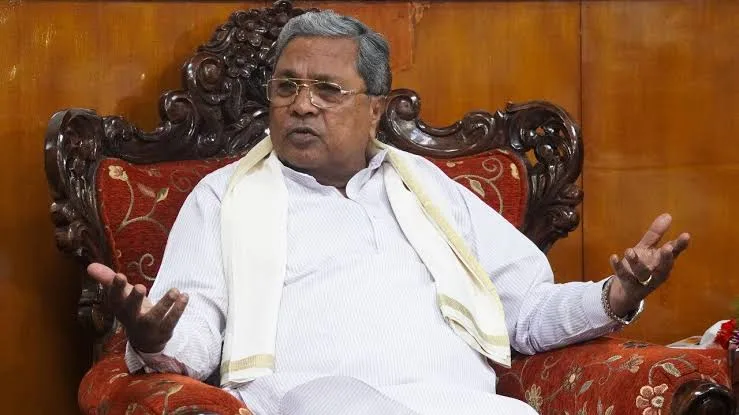
Meta blames translation error after Indian politician wrongly declared dead
Meta, the company behind Facebook and Instagram, has apologised after its auto-translate feature wrongly claimed a top Indian politician had died. Earlier this week, Karnataka Chief Minister Siddaramaiah posted a condolence message in Kannada on his official Facebook and Instagram pages. He was mourning the death of veteran actress B Saroja Devi. However, when the post was auto-translated to English, Meta’s algorithm mistakenly stated that Siddaramaiah himself had died. Meta has now fixed the translation issue. In a statement reported by Indian media, a spokesperson said, “We apologize that this happened.” The company confirmed that they had quickly resolved the problem and are working to improve the quality of translations from Kannada. The mistake ignited anger from Siddaramaiah’s team. The chief minister publicly criticised Meta, saying the translation fault did not just distort the facts but also misled users. He also said mistakes like these can be especially risky when they happen on official communication channels. On Thursday, Siddaramaiah’s media advisor sent a letter to Meta. He asked them to correct the error and consider suspending the auto-translation of Kannada until they could guarantee it works better. He encouraged Meta to consult with Kannada language experts to avoid similar mishaps. When checked a day later, the English translation on Facebook still read, “The multilingual star, senior actress B Sarojadevi who passed away yesterday, paid his last respects,” which was still confusing and inaccurate. Translation mistakes on social media can cause confusion and, in serious cases, harm reputations or even fuel false news. As platforms like Facebook grow across Africa and India, getting local-language tech right isn’t just helpful, it’s necessary for trust and safety online.

TikTok star Peller responds after TVC host Riyah calls him uneducated
Popular TikTok creator Peller has spoken out after TVC host Riyah reportedly called him uneducated during a recent show. In a video shared online, Peller expressed how hurt and disappointed he felt. He said he has worked hard through tough times without much support and questioned why Riyah was attacking him. Peller explained that he completed secondary school but couldn’t afford university. He also reminded people of the millions of naira he has donated to those in need through his TikTok platform. “Why are you talking about me? When I was struggling in Ikorodu, who was there to help me?” he asked. The conflict began after Riyah criticized Peller for offering ₦500,000 to hire graduates and people with master’s degrees as cameramen. This led to a wider discussion online about the importance of qualifications and how people are valued. Many are watching to see if Riyah or Peller will say more about this or if the matter will quietly calm down. Either way, it shows how Nigeria’s media scene is changing as new voices push back against older ones.

Nigerian leaders struggle to connect online, new report shows social media gap
Nigeria’s top government officials reach just 17 million people on social media, a fraction of the country’s 141.5 million internet users, new research shows. A study by digital communications firm Column has found that most government ministers, including those in positions critical to national development, are missing out on the chance to talk directly with Nigerians on popular platforms like X (formerly Twitter), Facebook, and Instagram. Only 17 million people reached by the president, chief of staff, and all top ministers combined across X, Facebook, Instagram, TikTok, and LinkedIn. Nigeria has over 141 million internet users, showing a large untapped digital audience. Twitter/X is the favourite among government officials, with over 9.3 million followers from 51 ministers. Facebook follows with 4.8 million from 45 ministers; Instagram trails at 2.1 million from 46 ministries. TikTok and LinkedIn are barely used, just 7 ministers on TikTok and 17 on LinkedIn. Ministers with the Biggest VoiceJust five people, President Bola Tinubu, Chief of Staff Femi Gbajabiamila, Health Minister Muhammad Ali Pate, Aviation Minister Festus Keyamo, and FCT Minister Nyesom Wike, make up over 60% of the total followers. Tinubu alone has 4.5 million online fans. Meanwhile, some ministers have almost no digital presence. Two ministers have zero followers, and many others have less than 500, despite holding high-profile positions in key ministries. The report points to a growing disconnect between the government and the people. Social media platforms are where millions of young Nigerians and professionals share opinions, seek accountability, and ask questions. Yet, the lack of a strong government presence online makes it harder for citizens to engage or get timely information. Even ministries with youth-focused mandates, like Education, Youth Development, and Women’s Affairs, are far behind in building digital identities, despite having audiences eager for updates and engagement. “The absence of these ministries online for engagement contributes to the country’s struggles with youth unemployment, public distrust in institutions, and limited access to real-time information,” the report says. The study also found that many ministers’ accounts are dormant or unverified. Some don’t even link their accounts to official government pages, making it tough for Nigerians to know which accounts are real. This creates space for impersonation and misinformation, and shuts out feedback from citizens. Health Minister Muhammad Ali Pate stands out for his regular updates across multiple platforms, earning him 1.46 million followers and a reputation for openness. Others, including ministers handling Justice and Finance, fall far below the online median. Experts say digital presence is now a basic part of leadership. The report calls on ministries and officials to adopt clear digital communication plans to foster open conversations and build trust.