Malaysia is set to implement a nationwide restriction next year that will prevent individuals under the age of 16 from creating social media accounts. This is a growing global movement by governments to enhance online protections for children and address concerns over mental health and exposure to harmful content.Communications Minister Fahmi Fadzil announced the planned restriction, stating that the government is currently developing compliance systems that major platforms, including Facebook, Instagram, and X, will be required to adhere to.The initiative mirrors similar actions in other nations. Australia, for example, mandates social networks to deactivate accounts belonging to users under 16 starting in December. The US has seen 24 states enact age-verification laws.For Malaysia, the primary concerns driving this policy are the impact of social media use on young people’s mental health, safety, and exposure to harmful content and online manipulation.

Nigerian creators dominate 2025 TikTok SSA Awards nominations
Nigerian digital creators have demonstrated their continental influence by securing the highest number of nominations for the 2025 TikTok Awards Sub-Saharan Africa (SSA).The nominations span nearly every major category, recognizing Nigerian talent from music and comedy to social commentary and education. The annual awards ceremony, which celebrates creators who have engaged, inspired, and connected communities, is scheduled to take place on December 6, in Johannesburg, South Africa.Nigerian content creators, artists, and commentators are prominent across the entire nominee list, placing Nigeria as a digital powerhouse in the SSA region.Public voting for the 2025 TikTok Awards Sub-Saharan Africa is currently open.The voting window closes at midnight (CAT) on Friday, November 14, 2025, which is tomorrow.Fans are permitted to cast one vote per category per person per day via the official TikTok voting page. The public is encouraged to follow the official TikTok pages and use the hashtag #TikTokAwardsSSA in their posts to boost their favorite nominees.
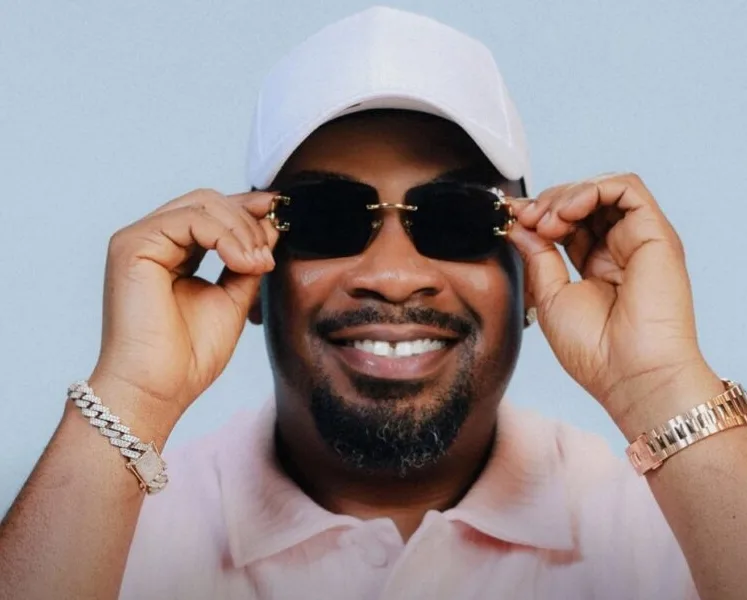
Don Jazzy donates N20 million to empower 10,000 Nigerian youths with laptops
Popular music artist Don Jazzy has pledged N20 million to support The Tech Access Project, a campaign aimed at equipping 10,000 Nigerian youths with laptops to boost their digital skills and entrepreneurship.The Tech Access Project, driven by Ayilola Ayotomiwa and three other conveners, seeks to empower Nigerian youths passionate about tech, music production, design, and digital entrepreneurship. The goal of this initiative is to provide laptops that will enable young talents to turn their ideas into reality. Bro, I hail o. Your initiative is commendable. But sir, 10,000 laptops is not beans. At this time, I can only afford to support with 20 million Naira and a repost. Hopefully, some other well-meaning Nigerians can help achieve the goal – Don Jazzy The conveners confirmed receiving the donation and reported that over N21 million has now been raised. They have reached out to other prominent figures like DJ Cuppy, Davido, Adekunle Gold, Olamide, and Victor Osimhen, as well as companies such as VAAS Global, which has committed to scholarships supporting the beneficiaries.The initiative, trending with the hashtag #10klaptopsproject, has drawn massive public support for a cause that recognizes young talents needing a helping hand to develop their ambitions in technology and digital fields.

WhatsApp to let Nigerians use app without phone number via new username feature
WhatsApp is rolling out a major privacy update that will allow Nigerians and users worldwide to use the app without needing to share their phone numbers, by introducing unique usernames for login and communication. This new feature, currently in beta testing, promises enhanced privacy and safer interactions starting late 2025. Owned by Meta, WhatsApp serves over two billion users globally and has long required a phone number for account registration and messaging. However, recent beta versions of WhatsApp for Android and iOS show the introduction of unique usernames, enabling users to create personalised handles as an alternative to phone numbers. Through these usernames, users can chat and join groups without revealing their personal phone numbers. The username system allows users to register handles made up of lowercase letters, numbers, and special symbols. While the username reservation feature is available now in WhatsApp’s beta version, the full rollout is anticipated in the coming weeks or months after further verification and conflict prevention measures are tested. In the past, many WhatsApp users have expressed concern over exposing their personal phone numbers to businesses, unknown contacts, or potential spammers during group interactions. Given Nigeria’s large WhatsApp user base, estimated at over 100 million mobile internet users relying heavily on messaging apps for personal and business communication, this change could reduce the risk of phone number misuse and identity exposure to scammers. WhatsApp has not yet announced an exact date for the nationwide rollout in Nigeria, but the beta testing’s positive reception suggests the feature will arrive soon after completion of necessary adjustments. Users can already reserve usernames via the beta app settings to secure their preferred handles ahead of the official launch.

Airport drama: singer Portable demands government action against pranksters after Port Harcourt incident
Nigerian singer Habeeb Okikiola Badmus, popularly known as Portable, has called on the federal government to ban prank videos following a chaotic altercation at the Port Harcourt International Airport on Sunday, October 5, 2025. The incident, which quickly went viral, involved Portable and a group of individuals he described as “death pranksters” who staged a dangerous prank against him. The tense 53-second video circulating on social media shows Portable dressed in beige attempting to confront an unidentified person amid pushing, shoving, and restraint by security personnel. At one point, a man appears barefoot, while another wields what looks like a belt or whip, intensifying the chaotic scene. Airport security guards eventually pulled Portable toward a waiting vehicle, diffusing what could have escalated into a violent confrontation. In a video response posted on his Instagram page the following day, Portable alleged that he was targeted by “death pranksters” – pranksters who stage extreme, often life-threatening hoaxes for online content. He said, “Those people came to prank me. They were death pranksters. It almost turned to cultist level. Ten yellows no fit stand one blue,” blending English and Yoruba to emphasise the severity of the incident and his resilience. Portable claimed that these pranksters had been tarnishing his reputation for social media fame and warned that the situation was beginning to resemble a cult-related conflict. The “Zazu Zeh” crooner urged the government to put a stop to such dangerous pranks and fake news spread by bloggers on social media platforms. “Make government stop all those prankers and some fake bloggers. Make them stop all this fake news post just because of small fame. Why una dey spoil person wey get glory name with una platforms?” he appealed. Portable also revealed he had checked the TikTok account of one of the pranksters, which contained multiple prank videos, some involving fake deaths staged to elicit prolonged emotional responses. He described the prank team as consisting of six individuals, some of whom had placed a price tag on him following these viral episodes. This incident is the latest in a series of public controversies involving Portable, including previous legal issues and police attention. His demand for government intervention highlights rising concerns about the impact of reckless prank culture on public safety and personal reputations in Nigeria. For Nigerians and the broader African tech ecosystem, Portable’s call shines a light on the growing challenge of regulating online content, especially prank videos that blur the line between entertainment and harm. With social media platforms serving as primary content distributors, deliberate misinformation and dangerous stunts pose risks that national agencies must address to protect citizens and public order. As the debate on content regulation continues globally, Nigerian authorities face pressure to impose stricter controls on prank videos and online hoaxes that escalate into real-life dangers. Portable’s public outcry could be a catalyst for renewed focus on legal frameworks governing digital content and social media ethics in Nigeria.

Trump confirms Murdochs, Oracle, and Dell in talks to acquire TikTok’s U.S. operations
President Donald Trump revealed that media executives Rupert and Lachlan Murdoch, Oracle’s Larry Ellison, and Dell CEO Michael Dell are involved in negotiations to assume control of TikTok’s U.S. branch. The agreement aims to transfer ownership from ByteDance to a predominantly American-led consortium. The potential transaction is progressing as discussions continue to unfold over the future ownership of TikTok in the U.S. Trump announced in a Fox News interview that Lachlan Murdoch is actively participating in the arrangement, with his father Rupert possibly joining. Oracle and Dell leaders are also expected to play significant roles in the acquisition group. While details remain somewhat in flux, media reports indicate that Fox Corporation, headed by Lachlan Murdoch, may also be part of the takeover. The planned restructuring involves spinning TikTok off from Chinese parent company ByteDance to secure majority ownership by U.S. investors. White House Press Secretary Karoline Leavitt confirmed that the framework of the deal is agreed upon in principle, with final signatures expected soon. Under the revamped structure, American representatives would hold six of the seven board seats, and TikTok’s algorithm would be overseen domestically, key measures to address national security concerns. Bloomberg reports that besides Oracle, venture capital firm Andreessen Horowitz and private equity firm Silver Lake Management may join the consortium. Oracle is slated to lead the platform’s security and safety operations, while ByteDance would keep less than a 20% stake. This development follows federal legislation mandating ByteDance’s divestment of TikTok’s U.S. activities, with the threat of a ban looming if unresolved. Earlier in the year, U.S. courts ordered the sale by January 19, prompting many creators to migrate to other platforms. Trump revealed he personally discussed the approval with China’s President Xi Jinping, who supported the deal’s restructuring. TikTok expressed gratitude towards both leaders for their efforts to ensure the app’s continued availability to American users.