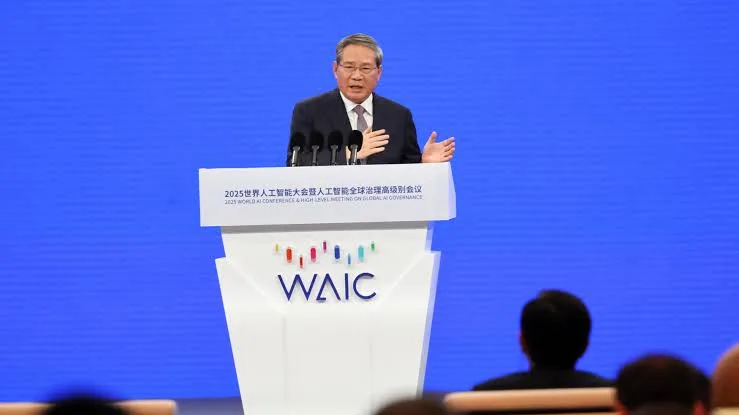
China is proposing a new international organization to oversee the use and sharing of artificial intelligence worldwide, aiming to rival the United States in the fast-moving tech arena. At the World Artificial Intelligence Conference in Shanghai on Saturday, Chinese Premier Li Qiang called for the creation of a global AI governance body. He said the new group would help countries work together, open access to AI technologies, and manage the risks that come with them. Li also stressed the need for fair participation, saying, “We advocate for open sharing of AI technologies, where every country and enterprise has equal rights to participate. China is open to sharing its experience, products, and platforms with others, particularly developing nations.” While Li didn’t mention the United States directly, he criticized efforts by “a few countries and companies” to control AI. This comes just days after the U.S. rolled out a plan to boost AI exports to its allies, strengthening its own advantage while restricting China’s access to advanced AI chips and tech over security concerns. Despite these U.S. curbs, China has kept up steady progress in AI, even as American regulators keep a close eye on its activities. At the conference, Vice Foreign Minister Ma Zhaoxu said China is considering making Shanghai the headquarters for the new global AI group. Representatives from more than 30 countries, including South Africa, Russia, Qatar, South Korea, and Germany, joined the talks. China’s Ministry of Foreign Affairs also rolled out a fresh “Action Plan for Global AI Governance.” The plan asks governments, companies, and research groups to join hands, encourage open-source cooperation, and make international data sharing easier. Premier Li pointed out there are still challenges, like shortages of computer chips and skilled workers. He urged countries to close the gap in rules and work towards a shared system for responsible AI development. The three-day Shanghai summit conveyed China’s ambitions not just to catch up with the U.S., but to shape how AI is rolled out and governed worldwide.
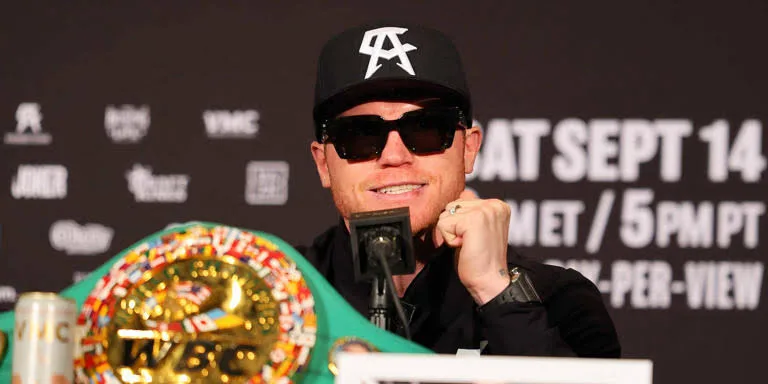
Canelo Alvarez wins big with N476 million bet on Usyk’s knockout at Wembley
Canelo Álvarez, the famous Mexican boxing champion and 1win global ambassador, has made headlines again, this time for a massive win outside the ring. On July 19, 2025, Alvarez placed a $500,000 bet with 1win on Ukrainian heavyweight Oleksandr Usyk to defeat Daniel Dubois at Wembley Stadium in London. After Usyk delivered a dominant performance and won by knockout in the fifth round, Canelo’s decision paid off. He walked away with a $630,000 prize, about N476 million. Canelo made his bet live on air, confidently saying, “Over the past five years, Usyk has beaten the best, including Joshua and Fury. Oleksandr has very strong stamina; he’s very technical and smart. His maturity in sports helps him mobilize under pressure. When I see someone with that kind of focus, I back them. That’s why I placed a big bet on his victory. Oleksandr, you do you.” The fight added another milestone to Usyk’s career. With this win, he kept his WBA, WBC, WBO, IBF, IBO, and The Ring belts, remaining unbeaten with a perfect 24–0 record and 15 knockouts so far. Dubois, meanwhile, struggled to keep up with Usyk’s speed and tactics, leading to an early finish. Alvarez’s victory on 1win comes just months after he became an official brand ambassador for the gaming platform. 1win, founded in 2016, operates across Asia, Africa, and Latin America, offering sports betting, casino games, and even cryptocurrency payment options. Other big names like cricket legend David Warner have also signed on as global ambassadors.
Jeff Bezos cashes in $5.7 billion from Amazon shares
Amazon founder and chairman Jeff Bezos has just wrapped up one of the biggest stock sales of 2025, pocketing nearly $5.7 billion as the e-commerce giant’s shares soar. Bezos began selling his Amazon stock after his wedding in Venice last month. He kicked things off by unloading $737million worth of shares. Now, based on new filings with the U.S. Securities and Exchange Commission, Bezos has completed the spree by selling about 4.2 million more shares, valued at $954 million, within just two days this week. In total, he has sold 25 million Amazon shares this year, all under a pre-arranged 10b5-1 trading plan. This plan is used by top company leaders to sell shares over time without breaking insider trading rules. Amazon’s stock has surged 38% since April’s slump, as investors get excited about the company’s big push into artificial intelligence. The company is set to report earnings next week, with a lot of attention expected on its progress in AI. Despite selling a large chunk, Bezos is still Amazon’s single biggest shareholder. He holds around 884million shares, over 8% of the company, keeping most of his $252.3 billion fortune locked into Amazon. He continues to rank as the world’s third-richest person, according to the Bloomberg Billionaires Index. This isn’t Bezos’s first big cash-out. In 2024, he sold 75 million shares for $13.6 billion, with much of that money backing his other projects like Blue Origin, his space company. He has also donated about $190million worth of Amazon shares to charity just this year. Other tech leaders have also sold shares recently, but none come close to Bezos’s big payday. Oracle’s CEO Safra Catz, for example, sold $2.5billion in shares so far this year, while Dell Technologies founder Michael Dell sold a $1.2billion stake. Earlier in May, Bezos announced he planned to gradually sell up to 25million Amazon shares by May 2026. This strategy helps him avoid shaking up the market while funding his ventures and philanthropy.
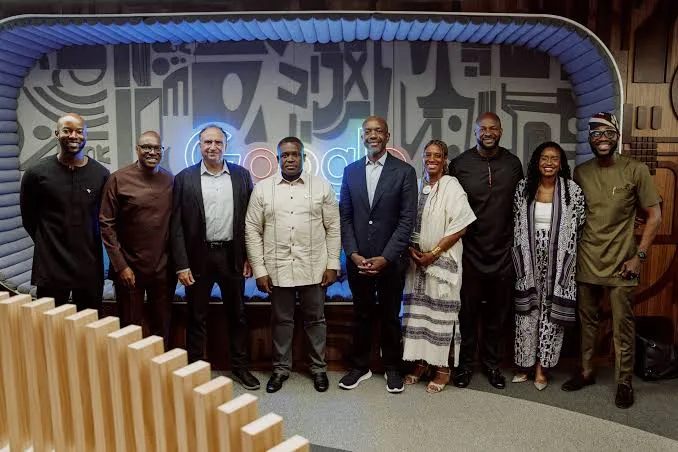
Google launches $37 million drive to power AI growth across Africa
Google has announced a $37 million investment plan to encourage more innovation and responsible use of artificial intelligence (AI) across Africa. The tech giant revealed its latest strategy on Thursday, saying it will channel the funds into AI research, infrastructure, skilled talent, and practical tools. The focus is on helping Africa overcome big challenges like food insecurity, limited access to digital technology, and a shortage of technical skills. A major part of Google’s plan is the AI Collaborative for Food Security. This $25 million initiative from Google.org will unite researchers and non-profits to build AI-powered solutions for early hunger detection, boosting crop resilience, and giving small farmers better advice. The goal is to create food systems that can stand up to Africa’s tough climate and economic pressures. To help make the internet more inclusive, Google is setting aside $3 million for the Masakhane Research Foundation. This group wants to build better AI for more than 40 African languages, making sure millions can go online in their mother tongue. The grant will fund new datasets, smarter translations, and voice tools. Google is also providing fresh support for African startups. The company is launching new funding to back over 100 early-stage businesses using AI in sectors like agriculture, healthcare, and education. Startups will get a mix of grants, venture capital, mentorship, and expert guidance to help them scale up. A key part of the announcement is Africa’s first AI Community Center, opening soon in Accra, Ghana. The center is designed to be a home for learning, research, and creative collaboration, bringing together students, developers, and content creators focused on African needs. Google is rolling out 100,000 Google Career Certificate scholarships in Ghana as well. These online programs will train people in AI, data analytics, cybersecurity, and more. The commitment goes further, as Google.org is pledging $7 million for AI education across Nigeria, Kenya, South Africa, and Ghana. The support will fund custom-made AI courses, programs for online safety, and resources for schools and non-profits. To back deeper research, two $1 million grants have been awarded to top African institutes including, African Institute for Data Science and Artificial Intelligence (AfriDSAI) at the University of Pretoria, for applied AI projects, Wits Machine Intelligence and Neural Discovery (MIND) Institute in South Africa, for postgraduate research on AI foundations. James Manyika, Google’s Senior Vice President for Research, Labs, and Technology & Society, said, “Africa is home to some of the most important and inspiring work in AI today. We are committed to supporting the next wave of innovation through long-term investment, local partnerships, and platforms that help researchers and entrepreneurs build solutions that matter.” Yossi Matias, VP of Engineering and Research at Google, added, “By building with local communities and institutions, we’re supporting solutions that are rooted in Africa’s realities and built for global impact.” This new investment builds on previous Google projects in Africa, like AI-powered health dashboards in Nigeria and Ghana, wildfire alert systems in East Africa, and regional language models developed in Accra and Nairobi. With more funding and a bigger push for digital inclusion, African innovators could soon have more tools to tackle the continent’s toughest problems and unlock new opportunities for millions of people.
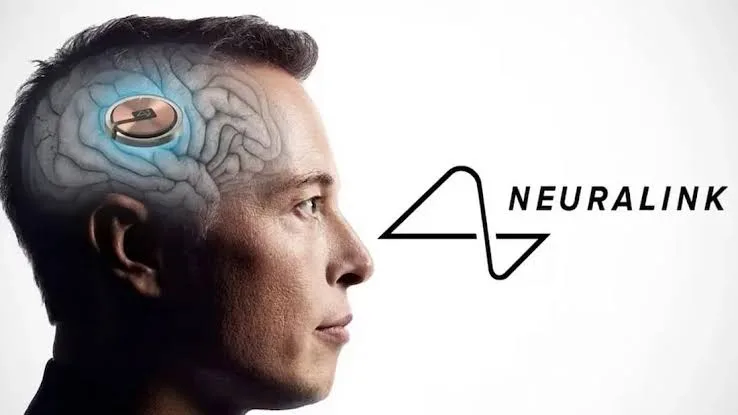
Neuralink plans 20,000 brain implants a year, targets $1 billion in revenue by 2031
Elon Musk’s Neuralink wants to fit brain chips in 20,000 people every year by 2031, hoping to make over $1 billion in annual revenue. Neuralink’s internal documents, seen by Bloomberg, show the company’s huge ambitions for changing how humans and technology connect. So far, fewer than 10 people have publically received a Neuralink implant. But the company expects things to ramp up quickly in the next few years. Neuralink expects U.S. approval for its first commercial brain chip, called Telepathy, by 2029. This device is designed to let people control computers and other devices just by thinking. By 2030, the company wants to run five large clinics and launch at least three devices: Telepathy: Links your brain to devices. Blindsight: Aims to restore sight for blind people, set to launch in 2030. Deep: Targets neurological conditions like tremors and Parkinson’s disease. Neuralink hopes to do 10,000 surgeries a year by 2030, bringing in over $500 million. Each surgery is estimated at $50,000. The company has already raised $1.3 billion in funding and is valued around $9 billion, according to PitchBook. Neuralink is still in the research stage. The company must get approval from U.S. health regulators before its devices become widely available. The U.S. Food and Drug Administration (FDA) has not yet fully approved any brain-computer interface for permanent use in humans. Musk isn’t alone in this race. Several other neurotech companies are building their own brain-machine interfaces and face similar safety and testing requirements. Early trials are promising. Some paralyzed patients have used Neuralink implants to surf the internet, play games and even edit videos using their thoughts. The company has also shown that its chips can help blind monkeys detect objects. Founded in 2017, Neuralink wants its technology to help people with serious neurological problems move, see, or communicate better. Its first brain implant in a human happened in January last year. In April, Neuralink started searching globally for people to join new studies on mind-controlled devices. While Elon Musk is known for setting big targets and sometimes overshooting timelines, Neuralink’s plans are already pushing the boundaries of science and medicine. The next five years will show whether brain chips can really change lives as promised. But safety, regulation and affordability remain big questions.
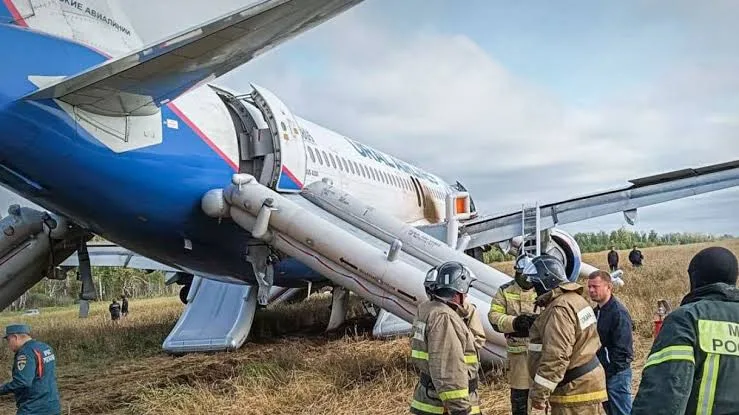
Russian passenger plane crashes in remote Siberia, rescue mission underway
A Russian passenger plane with 49 people on board crashed on Thursday morning near Tynda, a remote town in Russia’s Far East, as emergency teams scour rugged terrain hoping to find survivors. The Angara Airlines An-24, a reliable twin turboprop model often used for regional flights, lost radar contact shortly before it was meant to land at Tynda Airport, close to the Chinese border. According to Russia’s Ministry of Emergency Situations, the aircraft went down in a forested area about 15km from the airport. Search and rescue crews responded quickly. Local authorities told RIA Novosti that parts of the burning wreckage were found on a mountainside. So far, no survivors have been spotted from the air, but search teams are moving across rough ground in hopes of finding people alive. “While no survivors have been seen from the air, ground searches are ongoing and we remain hopeful,” an Amur regional emergency command spokesperson said. There are conflicting reports about how many people were on the plane. The regional governor, Vasily Orlov, put the figure at 43 passengers, including five children, plus six crew, totaling 49. However, the local emergency ministry gave a lower estimate of around 40 on board. Officials say the crash site is difficult for rescuers to reach, as thick forests, hills, and lingering poor visibility in this Siberian region frequently complicate emergency response. Video from Russian media has shown heavy smoke rising over dense trees at the crash scene. The Antonov An-24 has served Russia and other former Soviet states since the 1960s, popular for its sturdy build on remote routes. However, experts have long pointed out that ageing planes and Siberia’s harsh weather can threaten air travel safety. At the time of the crash, conditions were said to be moderate, though it’s still too early to rule out any technical or environmental cause. Authorities said no distress signal was sent before the aircraft disappeared from radar. Emergency teams continue working at the site as families anxiously await news. Aviation authorities are expected to begin a full investigation soon, as the country works to clarify what led to the crash and improve safety for future flights.