
The UK’s Competition and Markets Authority (CMA) has proposed new rules to curb Google’s dominance in online search and give users more choice. The CMA wants to give Google “strategic market status” under Britain’s new Digital Markets Competition Regime. This would allow the regulator to impose rules on how Google runs its search engine in the UK. Google currently handles over 90% of all online searches in the country and is used by more than 200,000 UK businesses for advertising. The proposed changes include making Google’s search rankings fairer and more transparent. The CMA also plans to require Google to offer “choice screens” that let users easily pick and switch between different search services, including AI assistants. This aims to open up the market to more competition and innovation. Publishers will get more control over how their content appears in search results, especially with AI-generated answers. Google may also have to make its data more portable to help new companies build innovative products. The CMA began investigating Google’s market power in January 2025. CEO Sarah Cardell said the changes would give UK users and businesses more control and unlock new opportunities for growth in the tech sector. Google warned that the proposed rules could hurt UK growth and innovation. Oliver Bethell, Google’s competition director, said the CMA’s plans are broad and could create challenges before all evidence is reviewed. Google promised to work constructively with the regulator but cautioned against “punitive regulations.” A final decision on the new rules is expected by October after public consultation. “Google has delivered tremendous benefits, but there are ways to make these markets more open, competitive and innovative,” says Sarah Cardell, CMA chief executive. On the other hand, Oliver Bethell, Google competition director says, “proportionate, evidence-based regulation will be essential to preventing the CMA’s roadmap from becoming a roadblock to growth in the UK.” If approved, these changes could reshape how millions of people in the UK search online.
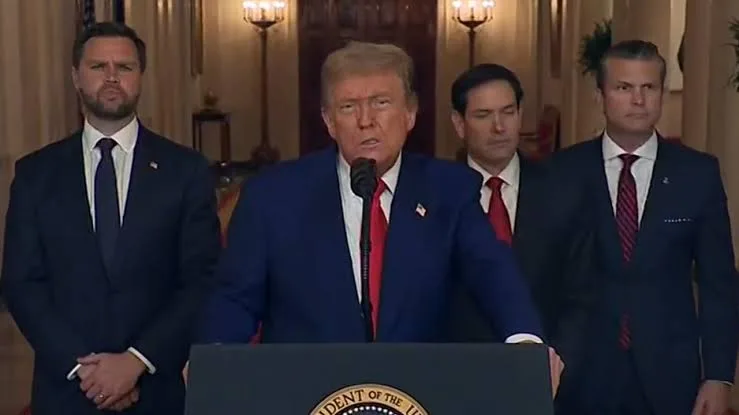
U.S. conducts airstrikes on Iranian nuclear sites, Trump calls mission a ‘spectacular military success’
U.S. military forces launched targeted airstrikes on three major Iranian nuclear facilities, Fordow, Natanz, and Isfahan, marking a significant escalation in Middle East tensions. President Donald Trump confirmed the operation, describing it as a “spectacular military success” aimed at destroying Iran’s nuclear enrichment capacity after diplomatic efforts failed. The strikes were reportedly carried out using B-2 stealth bombers equipped with bunker-busting ordnance designed to penetrate fortified underground sites. Trump stated the mission “completely and totally obliterated” key enrichment facilities, emphasizing the goal to halt the nuclear threat posed by Iran, which he called “the world’s number one state sponsor of terror.” The operation was coordinated with Israel, whose Prime Minister Benjamin Netanyahu praised the strikes as a historic move toward regional stability. U.S. Senator Lindsey Graham also supported the action, calling it the “right call.” Iran acknowledged the attacks but claimed nuclear materials had been removed prior, minimizing the damage. Iranian officials condemned the strikes as violations of international law and vowed to continue their nuclear program. Saudi Arabia reported no radioactive contamination in the region. The United Nations Secretary-General Antonio Guterres expressed grave concern over the escalation, warning of potential catastrophic consequences for civilians and the wider region. This development follows weeks of escalating airstrikes between Israel and Iran amid fears over Iran’s nuclear ambitions. Whether this military action will deter further conflict or provoke wider hostilities remains uncertain.
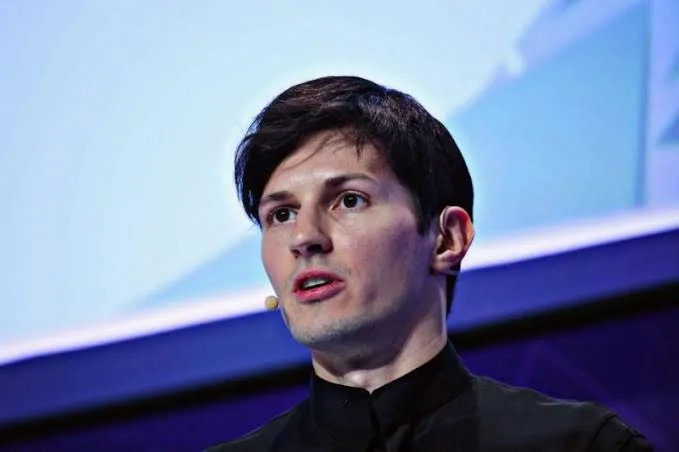
Telegram CEO Pavel Durov to divide $17 billion fortune equally among 106 children
Telegram co-founder and CEO Pavel Durov has announced plans to divide his $17.1 billion fortune equally among his 106 children, which include six biological children and over 100 others conceived through anonymous sperm donations across 12 countries. In a recent interview with French media outlet Le Point, the 40-year-old tech billionaire revealed that he recently wrote his will, ensuring all his children, both biological and donor-conceived, will have the same inheritance rights. However, Durov has stipulated that none of his children will have access to the fortune for the next 30 years. He explained this decision is designed to encourage them to live independently, build their own lives, and develop self-reliance rather than depend on inherited wealth. “There are those who were conceived naturally and those who come from my sperm donations. They are all my children and will all have the same rights,” Durov said. “I want them to live like normal people, to build themselves up alone, to learn to trust themselves, to be able to create, not to be dependent on a bank account.” Durov also highlighted that his decision to formalize his will was influenced by the risks involved in his work defending digital freedoms and maintaining Telegram’s independence from state control. He noted that if he were to disappear, a non-profit foundation would take over the company to ensure its continued independence and commitment to privacy and freedom of expression. Telegram has recently surpassed $1 billion in revenue, with 12 million premium subscribers and significant cash reserves. The platform also secured a $300 million investment from Elon Musk’s AI company xAI, marking a major collaboration in AI messaging.

North Korean flag disrupts South Korean church livestream in suspected cyberattack
A major South Korean megachurch’s online worship service was briefly hijacked on Wednesday, June 18, when its YouTube livestream suddenly displayed the North Korean flag and played what sounded like propaganda music. The incident occurred during the early morning service at Onnuri Church, one of the country’s largest congregations. According to church officials, the unexpected footage lasted about 20 seconds before the regular broadcast resumed. The church immediately reported the matter to police and issued a statement confirming it was investigating the cause of the breach. South Korea’s state-run Korea Internet & Security Agency said it is looking into the case. The church assured its members that it is taking urgent steps to strengthen online security and prevent future disruptions. A similar hacking incident was reported by another Seoul-based church, Naesoo-Dong Church, whose livestream was interrupted by an “inappropriate” video for nearly a minute. While that footage was not linked to North Korea, both incidents have raised concerns about the vulnerability of online religious broadcasts. South Korea, known for its advanced digital infrastructure, has frequently been targeted by North Korean hackers in recent years. Authorities have previously blamed North Korean groups for large-scale cyberattacks on financial institutions, government agencies, and even attempts to steal sensitive defense data. No group has claimed responsibility for the latest incidents, and investigations are ongoing. Church officials have apologized to their congregations and promised to keep members updated as more information becomes available. This event highlights ongoing cyber tensions on the Korean peninsula and the growing challenges faced by organizations as they move more of their activities online.

UK’s new eVisa system, digital convenience or privacy headache?
From July 2025, the UK will scrap physical visa stickers for many non-European skilled workers and students, rolling out a fully digital eVisa system. Instead of a stamp in your passport, your immigration status will now live online, linked to a UK Visas and Immigration (UKVI) account. Applicants must create a UKVI account and link it to a valid passport. Immigration status, right to work, and access to services like banking or renting will be checked online using secure codes. No more sending passports to visa centers, everything is managed digitally. While the government says this move will speed up processing and cut paperwork, critics warn it could cause real problems for vulnerable groups. The system requires a stable internet connection and a modern smartphone, barriers for many migrants, especially those with low digital skills or limited resources. The eVisa system relies on real-time database checks every time your status is verified. Any technical glitch or data mismatch could mean denied boarding, job offers, or even housing. Migrants are more exposed to cybercrime, like phishing and hacking, which could compromise their immigration status. There’s no physical backup. If you can’t access your UKVI account or generate a share code, you may be unable to prove your right to stay, work, or rent in the UK. Advocacy groups say there’s little evidence of support for people with disabilities, older migrants, or those with language barriers. The Home Office has yet to publish full human rights or data protection impact assessments for the scheme, despite repeated calls from experts. The UK’s eVisa system promises speed and efficiency, but for many, it could mean new risks and barriers. As the deadline approaches, migrants and employers alike are urged to prepare, and to stay alert for technical and privacy pitfalls.
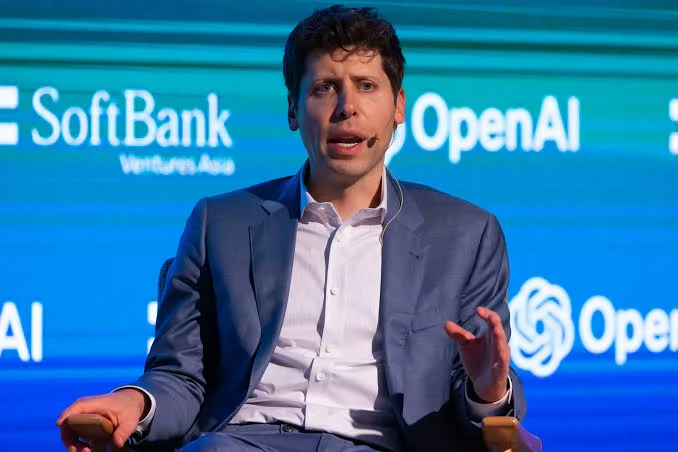
Meta offers $100 million signing bonuses to lure OpenAI’s top AI talent, says Sam Altman
Meta is making headlines with its aggressive push to attract top artificial intelligence experts, reportedly offering signing bonuses as high as $100 million to OpenAI staff. The claim was made by OpenAI CEO Sam Altman, who spoke candidly about the tech giant’s recruitment tactics during a recent episode of the “Uncapped” podcast, hosted by his brother. Altman described Meta’s offers as “crazy,” emphasizing that while Meta has tried to hire many OpenAI employees, none of the company’s best talent have accepted the lucrative deals so far. “They’ve tried to hire a lot of people at OpenAI. So far, none of our best people have decided to take them up on that,” Altman said. The move comes as Meta CEO Mark Zuckerberg takes a hands-on approach to building a new “superintelligence” team. In a major show of intent, Meta recently invested $14.3 billion in Scale AI, bringing on its CEO, Alexandr Wang, to help lead its AI efforts. The company has also recruited talent from other leading AI labs, including Google DeepMind. Despite Meta’s aggressive strategy, Altman believes OpenAI’s culture and mission keep its staff loyal. “I respect being aggressive and continuing to try new things. But I don’t think they’re a company that’s great at innovation,” he said, adding that meaningful work and a strong workplace culture are more important than large paychecks. Meta has not responded to requests for comments. Industry observers note that Meta’s push comes at a time when the company has faced staff departures and delays in launching new open-source AI models, as it seeks to compete with rivals like Google, China’s DeepSeek, and OpenAI.