
London’s Heathrow Airport, one of the world’s busiest, was forced to shut down on Friday, March 21, 2025, due to a significant power outage caused by a fire at an electrical substation in Hayes, west London. The incident led to widespread disruptions, with over 1,351 flights canceled and at least 120 flights diverted to other airports like Amsterdam and Frankfurt. The fire, which ignited late Thursday night, prompted a massive response from the London Fire Brigade, with around 70 firefighters and 10 fire engines deployed to combat the blaze. The power outage not only affected the airport but also left thousands of homes in the surrounding area without electricity. Heathrow announced it would remain closed until midnight, citing safety concerns for passengers and staff. Travelers were advised to avoid the airport and contact their airlines for updates. The disruption is expected to have lasting impacts, with significant travel chaos anticipated over the coming days. Counter-terrorism police are also investigating the incident, adding another layer of complexity to the situation. As the situation unfolds, passengers and residents alike are bracing for the aftermath of this major disruption.

Eu charges tech giant Google for violating antitrust rules
The European Commission has issued preliminary findings accusing Alphabet Inc., the parent company of Google, of violating the Digital Markets Act (DMA) in two key areas: Google Search and Google Play. The Commission alleges that Alphabet unfairly prioritizes its services in search results and restricts app developers from directing consumers to alternative purchasing options, violating the DMA’s requirement for fair and non-discriminatory practices. Key Allegations:Google Search Practices: Alphabet is accused of favoring its own services, such as shopping and financial results, over those of third-party providers by placing them prominently in search results. Google Play Restrictions: The Commission claims that Alphabet restricts app developers from steering customers to alternative purchasing options through technical barriers and excessive fees. Regulatory Response:Alphabet has the opportunity to respond to these findings before the Commission makes a final decision. If confirmed, this could lead to significant financial penalties or regulatory actions. Meanwhile, Google has also opened applications for its Building Opportunities for Leadership and Development (BOLD) Internship Program for 2025. This paid summer internship targets undergraduate students interested in non-technical roles like marketing and finance, emphasizing diversity and inclusion. The program offers a 12-week experience starting in May or June 2025.

Telegram founder Pavel Durov temporarily leaves france on five million euros bail amid ongoing probe
The Agence France-Presse reports that Pavel Durov, the founder and CEO of Telegram, has been granted permission to temporarily leave France. This move comes as part of an ongoing investigation into alleged criminal activities linked to the messaging app. Durov, who holds Russian, French, and UAE passports, was detained at Le Bourget airport near Paris in August 2024 and charged with multiple infractions, including failing to curb extremist content. He was released on a €5 million bail and had been prohibited from leaving France until now. An investigating judge has authorized Durov to leave for several weeks, and he is believed to have departed for Dubai on Saturday morning. This decision marks a relaxation of his obligations under the probe, which has strained relations between Paris and Moscow and sparked debates on free speech and digital regulation. Durov’s departure has been met with mixed reactions, with some viewing it as a victory for freedom of speech, while others question whether it signals a strategic mover to evade further legal complications. The case continues to attract international attention, with support from figures like Elon Musk, who has publicly backed Durov.

South Africa to eliminate luxury tax on smartphones starting April 1, 2025
South Africa is set to remove luxury excise duties on smartphones priced below 2,500 rand (approximately $136) starting April 1, 2025, as part of a bold initiative to make digital technology more accessible to low-income citizens. The move, announced by the South African Treasury in its recent budget statement, aims to significantly reduce the cost of entry-level smartphones and accelerate digital inclusion across the nation. Currently, South Africa imposes a 9% ad valorem excise duty on smartphones, a tax typically reserved for luxury items, which is charged in addition to standard Value Added Tax and import duties. This tax structure has contributed to higher device costs, placing smartphones beyond the reach of many lower-income South Africans despite their essential role in modern communication and economic participation. “The government proposes that as of 1 April 2025, this duty rate be applied only to smartphones with a price paid greater than 2,500 rands at the time of export to South Africa,” the Treasury explained in its budget statement. The proposal explicitly aims to “enhance smartphone affordability at the lower end of the price spectrum and support efforts to promote digital inclusion for low-income households.” Communications Minister Solly Malatsi has been a vocal advocate for the tax reduction, having engaged in preliminary discussions with the Treasury about making smart devices more affordable. “Our proposal is that the ad valorem tax contributes to the high cost of smart devices. When you eliminate that cost it will help drive down affordability and that’s my key interest,” Malatsi stated in November. The tax reduction comes at a critical time as South Africa prepares for a major telecommunications transformation. The government has set December 31, 2027, as the deadline for the complete shutdown of 2G and 3G networks to free up radio spectrum for faster 4G LTE and 5G networks. This transition, outlined in the Next Generation Radio Frequency Spectrum Policy paper, represents a significant step toward modernizing the country’s digital infrastructure. However, experts have expressed concerns that phasing out older network technologies could potentially widen the digital divide. Many lower-income consumers, particularly those in remote areas and underserved communities, rely on more affordable feature phones that operate on 2G and 3G networks. Without access to affordable smartphones capable of connecting to newer networks, these populations risk being left further behind in the digital economy. Data from Statista shows that smartphone penetration in South Africa is expected to grow steadily between 2024 and 2029, with projections indicating an increase of 11.8 percentage points over this period. By 2029, smartphone penetration is forecast to reach 39.05% of the population, continuing an upward trend that began in 2020. South Africa already demonstrates strong mobile connectivity overall. According to GSMA Intelligence, as of January 2025, there were approximately 124 million mobile connections in the country, equivalent to 193% of the total population of 64.4 million. This high percentage reflects the common practice of individuals using multiple mobile connections. Between early 2024 and 2025, mobile connections increased by 5.2 million, representing a 4.4% growth. The GSMA report also indicates that 97.5% of mobile connections in South Africa now operate on “broadband” networks (3G, 4G, or 5G), though not all of these connections necessarily utilize cellular mobile data. Some subscription plans may be limited to voice and SMS services only. The country’s leading telecom operators, MTN and Vodacom, have emphasized the need for collaboration between operators, regulators, and the government to ensure a smooth network transition. Industry groups, including the Association of Comms and Technology, have advocated for government assistance through tax reductions and flexibility regarding implementation deadlines. The removal of excise duties on more affordable smartphones represents a concrete step toward addressing these concerns. By reducing the tax burden on lower-priced devices, the government hopes to accelerate the adoption of smartphones capable of operating on modern networks, thereby easing the eventual transition away from 2G and 3G technologies. The tax reduction initiative reflects growing recognition that smartphone access has evolved from a luxury to a necessity in the digital age. As South Africa continues its digital transformation journey, measures that enhance affordability and accessibility of essential technologies will play a crucial role in ensuring that all citizens can participate in and benefit from the digital economy. For many South Africans, this tax reduction could represent the difference between digital inclusion and being left on the wrong side of the digital divide.
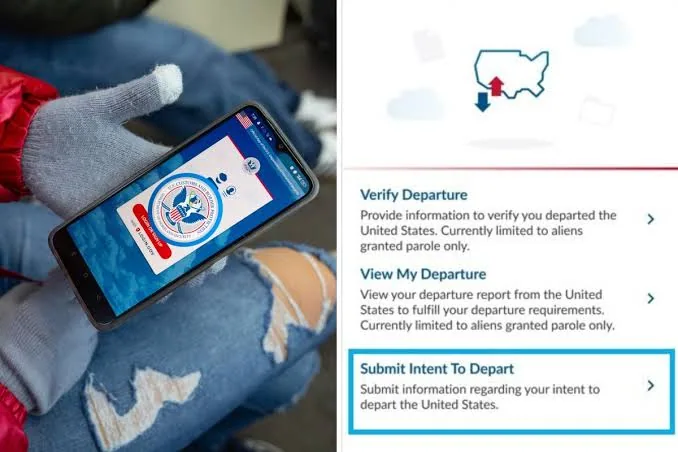
Trump administration transforms migrant app into self-deportation tool
The Trump administration has revamped a mobile application originally designed to help asylum seekers, turning it into a platform for undocumented migrants to voluntarily leave the United States. The app, formerly known as CBP One and now rebranded as CBP Home, represents a significant shift in immigration enforcement strategy as the administration pursues its hardline approach to immigration policy. The CBP Home app now allows undocumented migrants to submit an “intent to depart” form, effectively declaring their plan to leave the country without facing what officials describe as “harsher consequences” that might come with formal deportation proceedings. This transformation marks a dramatic departure from the app’s original purpose, which was established in 2020 and later expanded by the Biden administration to help prospective migrants schedule appointments at U.S. ports of entry, creating safer pathways for those seeking asylum. Under its new iteration, the platform encourages self-deportation by allowing migrants to identify themselves and declare their intention to leave the United States voluntarily. U.S. Customs and Border Protection hopes this approach will motivate undocumented individuals to depart on their own accord rather than face detention and forced removal. Homeland Security Secretary Kristi Noem has framed the self-deportation option as an opportunity for migrants, suggesting it provides a path to potentially return legally in the future. “If they don’t self-deport, we will find them, deport them, and they will never be able to return,” Noem warned, emphasizing the stark choice facing undocumented individuals under the new policy. This messaging clearly communicates that those who use the app to leave voluntarily may preserve future options to “live the American dream” legally, while those who remain would face permanent consequences. The administration’s approach reflects a carrot-and-stick strategy: offering potential future benefits for compliance while threatening severe penalties for those who remain without documentation. This dual approach forms part of the broader immigration policy overhaul being implemented since the administration took office. App Functionality and RequirementsThe CBP Home application goes beyond simply recording intentions to leave. It also performs a practical assessment, asking users whether they have “enough money to depart the United States” and if they possess “a valid, unexpired passport from their country of citizenship”. These questions highlight the practical considerations of self-deportation, acknowledging that voluntary departure requires both documentation and financial resources. Additional features include the ability to apply for and pay for I-94 entry and exit cards, which remain valid for up to seven days before departure. The app also maintains some of its original utility functions, such as services for booking inspections for perishable cargo and checking wait times at U.S. border crossings. These continued services suggest an effort to maintain the app’s broader border management functionality while adding the self-deportation component. The rebranding of the app comes amid a comprehensive shift in U.S. immigration policy. The administration has moved quickly to dismantle previous immigration measures, including pausing parole programs that had provided temporary legal status to certain groups. Simultaneously, Immigration and Customs Enforcement (ICE) has reportedly increased enforcement operations, creating a climate of heightened pressure on undocumented communities. In late February, the administration announced plans to establish a national registry for undocumented migrants, requiring all individuals aged 14 and older to provide their U.S. address and fingerprints. Those failing to register could face criminal prosecution, adding another layer of enforcement pressure alongside the self-deportation initiative. The feasibility of the new approach has raised questions among immigration experts, particularly regarding the national registry component. Critics have highlighted significant enforcement challenges and logistical issues that could complicate implementation. The scale of the undocumented population in the United States, estimated at approximately 11 million people, presents a formidable operational challenge for any registration or self-deportation initiative. Additionally, the administration’s approach raises questions about due process and humanitarian considerations, particularly for individuals who may have legitimate asylum claims or deep community ties in the United States. The transformation of a tool originally designed to facilitate safer, more orderly migration into one focused on removal reflects the administration’s prioritization of enforcement over humanitarian considerations in its immigration approach. The rebranding of CBP One to CBP Home represents more than a simple name change or app update, it symbolizes a fundamental shift in U.S. immigration policy. By transforming a tool once used to facilitate legal entry into one that encourages self-deportation, the administration has clearly signaled its enforcement priorities.

Indonesian TikToker sentenced to nearly three years in prison for Jesus hair comment
A court in Medan, Sumatra, has sentenced 23-year-old TikToker Ratu Thalisa to two years and ten months in prison for blasphemy after she jokingly told an image of Jesus Christ to “get a haircut” during a livestream. The ruling, delivered on Monday, March 11, 2025, sparked condemnation from human rights groups, who called it a severe infringement on freedom of expression. The case stemmed from a livestream in which Thalisa engaged with followers about her hairstyle. After a viewer suggested she cut her hair to “look more like a man,” she humorously directed the comment at a digital depiction of Jesus, whose iconic long hair is widely recognized in religious imagery. The exchange, which Thalisa later claimed was lighthearted, drew immediate backlash from Christian groups in Indonesia, prompting them to file formal complaints under the country’s strict blasphemy laws. Presiding Judge Wahyu Prasetyo stated that Thalisa’s remarks violated Article 156a of Indonesia’s Criminal Code, which prohibits religious defamation, and the Electronic Information and Transactions (EIT) Law. The court argued her comments risked “disrupting public order and religious harmony” in the Muslim-majority nation, where 87% of the population practices Islam. Prosecutors had initially sought a harsher sentence of over four years, citing the “viral nature” of the video. Amnesty International Indonesia swiftly condemned the verdict, calling it a “shocking attack on free speech.” Usman Hamid, the organization’s executive director, emphasized that while Indonesia should curb hate speech inciting violence, Thalisa’s comment did not meet that threshold. “Authorities are weaponizing the EIT Law to punish benign social media activity,” Hamid said, urging lawmakers to revise the legislation and demanding Thalisa’s immediate release. The case highlights Indonesia’s contentious use of blasphemy laws, which have led to over 120 convictions since 2018. While most cases involve religious minorities accused of insulting Islam, this ruling marks a rare instance of a Christian-led complaint resulting in prosecution. Legal experts note the verdict shows the subjective application of these laws, which critics argue stifle dissent and disproportionately target women and youth in digital spaces. Thalisa, who has been in custody since her arrest in January 2025, has seven days to appeal the sentence. Her legal team plans to challenge the court’s interpretation of blasphemy, asserting her comment lacked malicious intent. “This sets a dangerous precedent,” said defense attorney Luhut Sirait. “Every casual remark online could now be criminalized.” For now, Thalisa’s fate rests on the appeals process, leaving the Indonesian judiciary to decide whether to uphold her nearly three-year sentence for blasphemy. The case has drawn global attention, with human rights groups warning of potential implications for democratic freedoms, while others argue the ruling reflects the country’s commitment to maintaining religious harmony.