
OpenAI issued a warning on Sunday cautioning the public and investors regarding illegal transactions involving its shares. The tech giant emphasized that any transfer of its equity without prior written approval is invalid and may carry serious legal repercussions. In an official blog post published on August 24, OpenAI reiterated that all shares in the company are subject to strict transfer limitations. The firm clarified that no direct or indirect sale, pledge, or encumbrance of its stock can occur without explicit consent from OpenAI’s legal department. The company has raised concerns over third-party entities promoting misleading investment opportunities. These fraudulent schemes disguise themselves as legitimate means to obtain stakes in OpenAI through various avenues, including special purpose vehicles (SPVs), tokenized assets, “forward” contracts, and other purported financial instruments. Our firm does not endorse nor participate in any of these arrangements which circumvent our share transfer rules. Any such deals are void and could expose buyers and sellers to civil and criminal liabilities – OpenAI stated. The alert also stressed that unauthorized transactions might violate U.S. securities regulations, exposing parties involved to potential penalties and rescission of the transfer. Investors are urged to exercise vigilance when approached with offers related to the company’s stock, as many are designed to dodge regulatory controls. Purchasing these illicit stakes, whether directly or through complex mechanisms, results in no genuine ownership or financial advantage. Investors who encounter suspicious propositions are encouraged to report them promptly by contacting OpenAI’s legal team at the designated corporate email.

Meta and X violate Nigeria’s Internet Code, face potential NITDA penalties
Social media giants Meta and X have breached Nigeria’s Interactive Computer Service Platforms Code by failing to submit mandatory content moderation reports for 2024, putting them at risk of sanctions from the National Information Technology Development Agency (NITDA). According to the latest compliance assessment from NITDA, Meta, the parent company of Facebook and Instagram, and X, formerly known as Twitter, have neglected critical obligations under the Nigerian Internet Code of Practice. While Meta has fulfilled some requirements like local incorporation, physical presence, and tax filings, it has not delivered its content moderation report in the format specified by NITDA, complicating effective oversight. On the other hand, X failed entirely to meet any criteria, including registering a Nigerian office, submitting reports, or appointing a local compliance officer. The 2024 review, which also evaluated platforms such as LinkedIn, Google, and TikTok, noted moderate adherence from these companies, showing the varying degrees of cooperation within the industry. The report also revealed that these compliant platforms collectively disabled more than 13.5 million user accounts last year and enforced 58.9 million content removals. Additionally, over 420,000 appeals resulted in content being restored after initial takedowns. NITDA voiced sharp concern over the accountability deficit displayed by Meta and X, emphasizing the necessity of uniform reporting to maintain digital responsibility. “Meta’s inability to conform to the prescribed reporting template impedes comparative assessments across the sector,” the agency remarked. It was particularly alarmed by X’s wholesale disregard for the Code’s provisions, describing the situation as a serious breach of Nigerian regulations. While the report stops short of naming specific punishments, NITDA officials confirmed non-compliance contravenes the NITDA Act and warrants sanctions. The agency remains in deliberation over the appropriate penalties, given that the current Code does not elaborate on enforcement measures. Prof. Isa Pantami, the immediate past Minister of Communications and Digital Economy and a key architect of the Internet Code, stated, This regulatory framework was designed to prevent tech behemoths from overshadowing sovereign governance, ensuring they remain accountable within Nigeria’s jurisdiction. A NITDA spokesperson added, We are committed to enforcing the Code to uphold online safety and protect Nigerians from harmful content. Companies must demonstrate proactive cooperation, or face consequences Meta and X’s refusal to comply marks a crucial turning point for digital governance in Nigeria. As regulators consider possible penalties, the fact that some other platforms are only partially cooperating exposes the challenges in meeting the industry’s regulatory standards. We can from now, expect stricter enforcement and clearer rules to make sure all tech companies follow Nigeria’s digital laws, ultimately creating safer online spaces for everyone across the country.

Fresh tech graduates face tough job market as AI takes over coding tasks
Many computer science graduates are finding it increasingly difficult to land their first jobs. Despite graduating with promising degrees, entry-level tech roles are vanishing as companies turn to artificial intelligence (AI) tools to handle coding and other tasks once done by junior engineers. In 2025, AI automation is reshaping the tech job market worldwide, including Nigeria. Companies are using AI platforms to automate simpler coding functions, reducing the demand for new graduates to gain on-the-job experience. Research shows a sharp 50% decline in entry-level tech job postings since 2019. Many junior roles now require two or more years of experience, which creates a frustrating catch-22 for fresh graduates. Graduates like Eddie Hart and Colin (pseudonym) who studied computer science recently have faced long application processes dominated by AI screening, multiple testing stages, and virtual interviews with little human interaction. This reliance on AI in hiring often leaves promising candidates rejected without human review, adding to their discouragement. Experts warn the situation threatens the future talent pipeline. Paul Dix, CTO of database firm InfluxData, says if companies stop hiring young developers now, in time the sector will face a shortage of senior engineers as well. Meanwhile, some see a silver lining, newer graduates are often more familiar with AI tools, giving them a strong edge in the evolving tech landscape. Industry research also finds that while developers increasingly use AI daily, they remain cautious about fully trusting its outputs. The tech community anticipates a time when human creativity and AI collaboration will drive new solutions and job creation again. For now, the job market for computer science graduates is challenging, with some pivoting to careers outside tech. However, as AI reshapes roles, many believe demand for skilled developers will revive, making the current downturn a rough but temporary phase. This ongoing transition stresses the need for fresh grads to build AI literacy alongside traditional skills and for companies to find balanced hiring approaches that invest in young talent as technology advances.

No signs of physical harm in autopsy of popular streamer found dead in Contes
An autopsy report on Raphaël Graven, the French live streamer known as Jean Pormanove, has revealed that his passing was not a result of physical trauma, according to authorities involved in the investigation. Mr. Graven, who broadcasted on the platform Kick, was discovered deceased on Monday inside a home located in Contes, a village north of Nice. The circumstances surrounding his death have prompted a judicial probe. Government official Clara Chappaz called the events “an utter tragedy”, emphasizing the gravity of the situation and the need for thorough inquiry. However, Prosecutor Damien Martinelli clarified on Thursday that the medical examiners found no evidence to support the idea that Mr. Graven’s death involved any external injury or interference. The forensic analysis indicated an absence of injuries or burns, with only minor bruises and older wounds noted. Instead, preliminary findings point toward medical or toxicological factors as the possible reasons behind the streamer’s death. Mr. Martinelli explained that additional examinations will be conducted to investigate further. Reports have mentioned that Graven might have endured a heart condition, alongside ongoing treatment for thyroid issues. A representative from Kick confirmed that the platform is conducting a swift and thorough review of the circumstances tied to Mr. Graven’s final moments. Local news outlets have mentioned that the 46-year-old streamer faced episodes of violence and severe sleep deprivation during his online broadcasts, and it is believed he passed away in his sleep while streaming live. Authorities interviewed several individuals present when the incident happened. Equipment and recordings have been seized as part of efforts to determine what preceded his death and what factors may have contributed. This investigation continues to unfold in France as officials seek to bring clarity to the tragic event.

Children using VPNs to bypass porn age checks, UK report warns
The Children’s Commissioner for England has called on the government to close a loophole allowing children to use virtual private networks (VPNs) to access online porn without age verification. Dame Rachel de Souza, speaking on BBC Newsnight, stressed how VPNs let users hide their location online, making it possible for young people to get around the new Online Safety Act rules requiring age checks on adult content sites. VPNs connect through remote servers and mask IP addresses, so children can trick websites into thinking they are in a different country where controls may be weaker. The commissioner’s latest report shows a rise in the number of children exposed to pornography in the last two years. Alarmingly, some young people surveyed said they first saw porn as early as six years old, often by accident. The report also raised concerns about harmful content, with many respondents exposed to violent or abusive scenes, such as strangulation or non-consensual acts. Dame Rachel urged ministers to require VPN providers to enforce age verification to protect underage users. “It’s absolutely a loophole that needs closing,” she said, adding that the online landscape’s design and recommendation algorithms often push harmful material in front of children. The government said VPNs remain legal for adults, and while there are no plans to ban them, companies promoting ways to bypass protections to minors will face strict penalties. Kerry Smith, CEO of the Internet Watch Foundation, warned that children’s exposure to violent sexual content risks normalising harmful behaviour and increasing sexual violence against women. The Online Safety Act, implemented recently, aims to make the internet safer by demanding robust age checks for adult websites. This new focus comes as VPN apps surged to the top of the UK’s download charts after some sites began enforcing verification. The report’s findings serve as a serious wake-up call. They show that tech laws need constant updates to keep pace with tricks like VPN use that undermine child protection online.
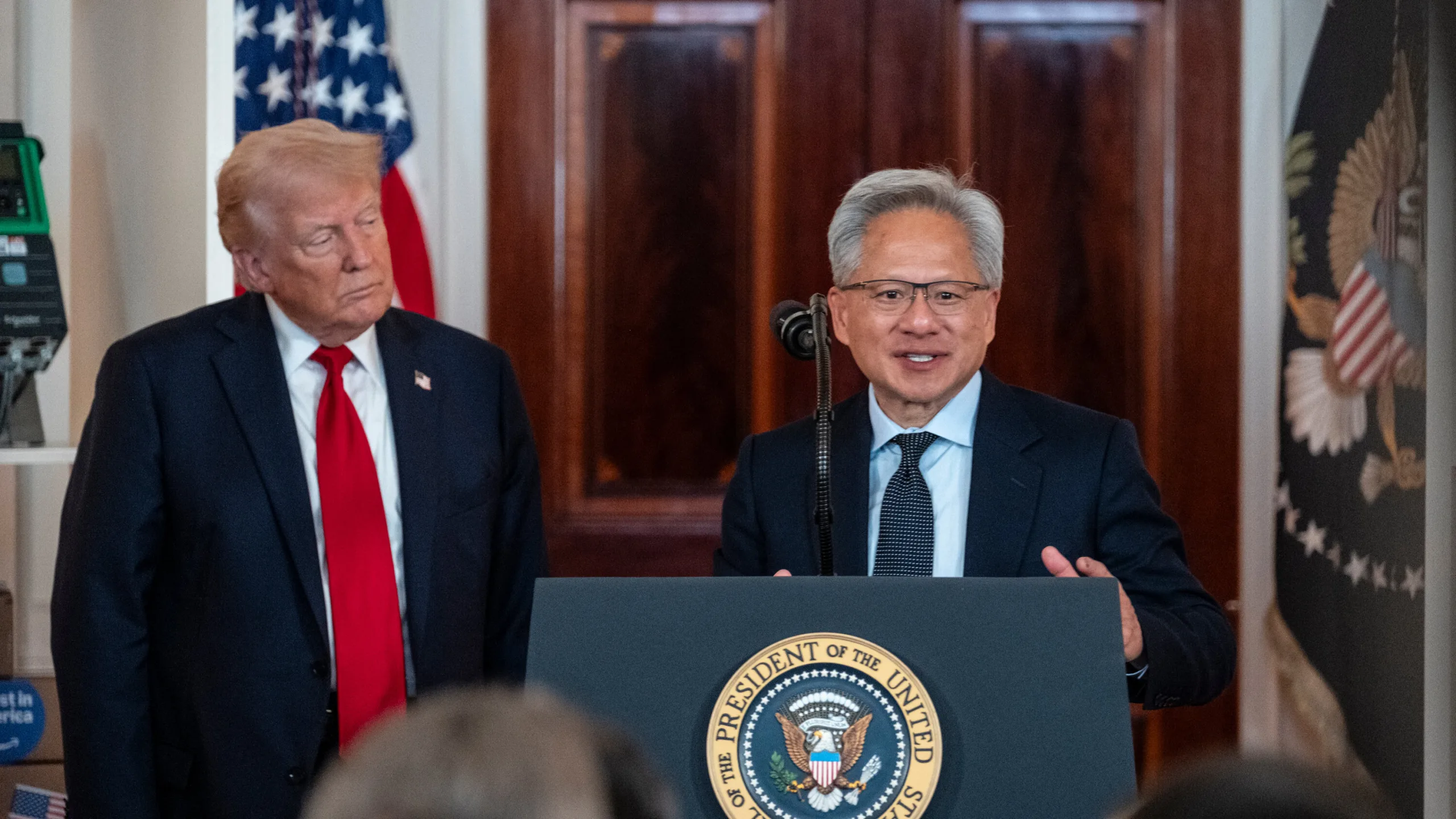
Trump lifts ban on Nvidia AI chips for China, but Beijing Is not saying thank you
After years of US restrictions, President Trump recently allowed Nvidia to sell a key AI chip to China, yet Beijing greeted the move with suspicion rather than thanks. Last month, Donald Trump reversed parts of the longstanding US export controls, permitting Nvidia to resume sales of its H20 AI chip in China. The H20, released last year, was designed to keep Nvidia’s technology accessible to the Chinese market despite earlier bans placed under the Biden administration. However, instead of welcoming this change, China expressed concerns over the chip’s security. Authorities in Beijing labeled the H20 a potential risk, claiming it could have tracking or remote shutdown features, accusations Nvidia denies. Chinese regulators even summoned Nvidia for explanations and advised local companies to avoid using the chip. Analysts say China’s cautious reaction reflects its push for a self-reliant semiconductor sector. While China has made big strides in chip technology, including advanced AI chips from Huawei, it still depends on US suppliers for some components. Experts note that Huawei’s chips excel in computing power but lag behind Nvidia’s H20 in memory bandwidth, a key factor for handling AI data efficiently. Nvidia’s CEO Jensen Huang and US Commerce officials have defended the sales, framing it as a way to keep Chinese developers tied to American technology. Trump himself called the H20 “obsolete,” saying it lags behind Nvidia’s latest AI chips like the Blackwell and H100. China, meanwhile, pushed back against what it sees as unfair US tactics. Technology adviser Xiang Ligang said Beijing wants access to top-tier chips but sees US export controls as dumping less advanced products to dominate China’s market. “Do you really think we’re that naive?” Xiang added. Despite Beijing’s warnings, demand for Nvidia’s chips remains high among Chinese tech giants like ByteDance, Alibaba, and Tencent. Research suggests shipments could reach 1.5 million units this year if not for restrictions. China’s semiconductor industry is rapidly growing, with projections showing domestic AI chip production jumping from 17% in 2023 to 55% by 2027. Still, local firms face challenges in scaling production and matching the software ecosystem Nvidia offers, which keeps many AI developers loyal to its platform. NVIDIA does not have ‘backdoors’ in our chips that would give anyone remote access or control. Banning H20 sales to China would harm US economic and technology leadership without any national security benefit – An Nvidia spokesperson said We have this capability, it’s not as they imagine. For Chinese companies, the only way to ensure chip supply security may be to rely on domestically produced chips – Xiang Ligang, a Beijing-based tech adviser While the H20 chip sale is now allowed, the bigger battles over cutting-edge AI technology and supply chains are far from over. Both nations continue racing to lead the global AI market, with national security and economic power hanging in the balance.